Employee Exit Interview Feedback Management Dashboard

Rating:
100%
Employee Exit Interview Feedback Management Dashboard
Slide 1 of 7
Favourites Favourites

Try Before you Buy Download Free Sample Product

Audience Impress Your
Audience
Editable 100%
Editable
Time Save Hours
of Time
The Biggest Sale is ending soon in
0
0
:
0
0
:
0
0
AI-Ready
Upload this template to AI and ask it to make any changes to content or color
100% editable Powerpoint Template for AI-assisted presentations. Finish your work in less time. Download Prompt Kit ​
Works with
Microsoft PowerPoint
Microsoft 365
Claude for PowerPoint
ChatGPT
Google Slides
Microsoft Copilot
Rating:
100%
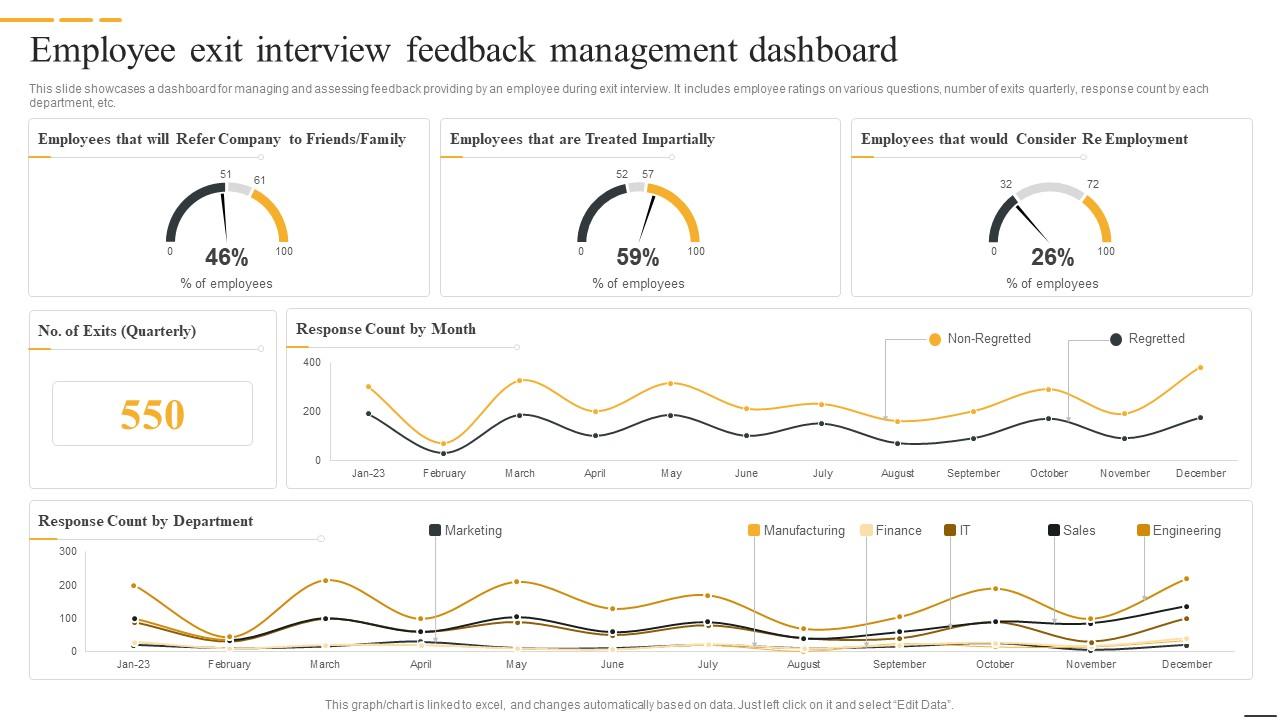
This slide showcases a dashboard for managing and assessing feedback providing by an employee during exit interview. It includes employee ratings on various questions, number of exits quarterly, response count by each department, etc. Introducing our Employee Exit Interview Feedback Management Dashboard set of slides. The topics discussed in these slides are Response Count By Month, Response Count By Department, Treated Impartially. This is an immediately available PowerPoint presentation that can be conveniently customized. Download it and convince your audience.

FAQs for Employee Exit Interview

Honestly, it's usually a mix of things that pile up. Money problems, crappy managers, no room to grow, terrible work-life balance - you know the drill. Cultural fit can be huge too, which people don't always think about. When someone gives you that generic "found a better opportunity" answer, that's basically useless for figuring out what went wrong. You've gotta push for specifics. What would've made them stay? Most people don't just bail over one bad day - it's more like death by a thousand cuts. The real insight comes from those follow-up questions.

Be honest but don't torch any bridges, you know? Start with the good stuff - what you learned, cool projects you worked on, people you connected with. I mean, there's probably something positive even if the job sucked. If you need to mention problems, stick to bigger issues that could actually get fixed, not like "my boss was weird about coffee breaks" or whatever. Don't just vent (tempting as hell, I know). Frame it as feedback that might help the next person. You want to come across as thoughtful, not bitter.

Yeah, two big things happened that week that just broke me. My manager totally called out my project approach in front of everyone - so embarrassing. Then a few days later? Didn't get the promotion I'd been busting my ass for. That sucked, but honestly the real issue was months of crappy communication and zero recognition for my work. Like, why was I even trying anymore? My take: don't wait around for some dramatic final straw. If you keep seeing the same red flags pop up, just start looking elsewhere. Trust me on this one.

Oh this question is actually amazing for them! They want to know what's broken about the role itself, not your personal flaws. Talk about the job structure - maybe you loved having autonomy and chances to learn new stuff, but the priorities were always shifting around or you had way too many projects at once. Be specific about what made things hard or awesome. Honestly, I'd go into detail here because your feedback might actually fix things for whoever comes next. Don't sugarcoat the messy parts - they need to hear it.

Oh this one's pretty straightforward - they want to know if your team actually supported you or just threw you in the deep end. Think about whether you got proper feedback, resources when you needed them, someone checking in on how you were doing. Did they celebrate when you crushed a project? Honestly, so many places are terrible at this stuff. Also consider if you felt comfortable asking for help when things got rough. Be specific about what your manager did well and what sucked, since that'll help them not mess up with whoever replaces you.

Just be honest but don't trash anyone - they actually want to make things better. Give them real examples instead of being vague about it. Maybe meetings dragged on forever with no clear next steps, or you were always the last to know about stuff that directly impacted your work. Frame it positively though, like "communication could be more proactive" instead of "my boss sucked at updates." Nobody wants to hire someone who throws people under the bus. Your feedback might genuinely help whoever comes after you - that's worth something, right?

Just be straight up about it. Tell them the growth stuff didn't pan out like you expected - maybe they promised you'd get promoted in 6 months but it's been two years, or those "amazing training programs" turned out to be like... one webinar. Companies actually need to hear this feedback or they'll keep losing people for the same reasons. Focus on the specifics of what they said during interviews versus what actually happened. Don't get all emotional about it, but definitely don't sugarcoat it either. You might even throw in what could've changed your mind about staying.

So you want to be specific about actual missed opportunities, not just general whining. Focus on concrete stuff - like they never had real career development talks, or that one toxic manager everyone complained about but HR did nothing. Skip saying "better pay" unless they were seriously underpaying for your role. The whole point is being honest but helpful since this feedback might actually help the next person. What would've made you think twice about leaving? Frame it that way. I always think the best exit feedback is stuff they can realistically fix, you know?

Okay so when they ask about culture, don't just vent but be honest. Break it down by specific stuff - communication, work-life balance, how they handle recognition, teamwork, etc. I hate when people just say "the culture sucks" without explaining anything lol. Give them actual things they could fix, like better feedback or more chances for different teams to work together. Oh and mention what actually worked well too! You want them to get why people stay or leave, so be concrete about it rather than just giving some random overall rating.

Honestly, they're trying to figure out if you were actually set up to succeed or just tossed in blindfolded. Be real about what sucked but don't just trash-talk - get specific. Like maybe the technical stuff was solid but nobody explained how anything actually worked day-to-day? That's useful feedback for them. I'd focus on what gaps you hit and how it messed with your work. Companies actually want this info since onboarding new people is expensive when it goes wrong. Think about what would've helped you and throw that in there too.

Honestly? Focus on times you actually made a difference - like solving tough problems or mentoring someone. Those moments hit different. But here's the weird thing - you'll probably miss the boring daily stuff more than you think. Definitely talk about when you felt energized by learning something new or working with teammates you actually liked. I'd mention specific projects that got implemented too. Think about what tasks made you excited vs. what felt like total drudgery. That contrast shows you know what motivates you.

Oh this one's tricky - they want you to call out broken stuff without sounding whiny. Focus on actual system problems, not personal drama. Like outdated software that crashes constantly or approval processes that take forever because nobody knows who's supposed to sign off. I'd avoid the whole "Karen from accounting is impossible" route. Instead say something like "the remote work guidelines were pretty vague, which led to confusion across teams." Give them something they can actually work with. Keep it constructive and specific - that's what separates useful feedback from just complaining.

Honestly? The workload killed me. I was pulling 60+ hour weeks with impossible deadlines, couldn't even disconnect on weekends. Management kept promising it was "temporary" for literally eight months - such BS. My mental health tanked and I barely saw friends anymore. Here's what I wish I'd done sooner: track everything. Write down your actual hours, which deadlines you missed because of capacity issues, all of it. That stuff becomes gold when you're trying to push back or get them to hire more people. Don't be like me and wait until you're completely fried to say something.

Honestly, most people quit their managers, not the actual job - so better manager training is huge. Pay attention to whether your salary/benefits are actually competitive too, because people definitely notice when they're getting lowballed. Career stuff matters a lot - mentorship programs, workshops, whatever helps people grow. Flexible work helps if you can swing it. But here's the thing that drives me crazy - companies do these exit interviews then just... file them away? Actually use that feedback or you'll keep losing people for the exact same reasons. It's not rocket science.

Oh yeah, definitely use that section if you've got something worthwhile to share! I usually think of random stuff while filling out the other parts anyway. Maybe mention culture things that stood out, or processes that could work better. Honestly, it's perfect for highlighting what actually worked well too. Just keep it constructive - nobody wants to read you complaining about the broken coffee machine or whatever. Focus on feedback that'd genuinely help them or future hires. If nothing comes to mind though, don't stress it. You can totally keep it short or skip it.

Ratings and Reviews

100% of 100
Review Form
Write a review
Most Relevant Reviews
  1. 100%

    by O'Brien Parker

    What a stunning collection of customizable templates! Really a time-saver.. 
  2. 100%

    by Edgardo Chapman

    SlideTeam is very efficient when it comes to saving time. I am happy that I chose them for my presentation.

2 Item(s)

per page: