

Employee Dashboard For Effective Reward And Recognition




Try Before you Buy Download Free Sample Product
 Impress Your
 Audience
 100%
100% Editable
 Save Hours
 of Time


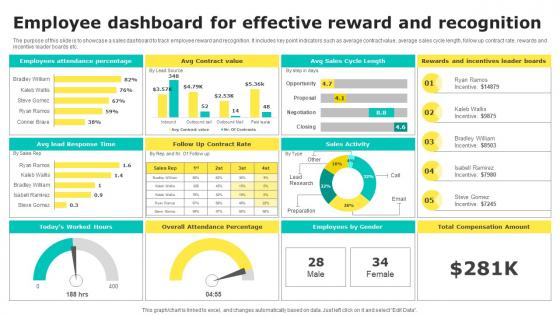
The purpose of this slide is to showcase a sales dashboard to track employee reward and recognition. It includes key point indicators such as average contract value, average sales cycle length, follow up contract rate, rewards and incentive leader boards etc.
People who downloaded this PowerPoint presentation also viewed the following :
Employee Dashboard For Effective Reward And Recognition with all 7 slides:
Use our Employee Dashboard For Effective Reward And Recognition to effectively help you save your valuable time. They are readymade to fit into any presentation structure.





FAQs for Employee Dashboard For Effective
Look for high retention rates and people actually showing up to meetings engaged, not just physically there. Ownership is huge - are they taking initiative or just doing the bare minimum? Attendance patterns tell a story too. Honestly, I'd do pulse surveys maybe quarterly, but walking around and listening to actual conversations gives you way more insight. Collaborative work happening naturally is another good sign. The office energy is pretty telling - engaged teams have less petty drama and more of that productive buzz. Oh, and constructive feedback during reviews instead of people just nodding along.
Your engaged workers are seriously 23% more profitable and 18% more productive - the data's pretty solid on this. They actually give a damn, so they work harder and think better. Turnover drops too, which saves you from that nightmare of constantly onboarding people (ugh). Here's what I've noticed though - the mood boost spreads to everyone else, and customers feel it too. Short sentences work. Want to actually improve performance? Start with some engagement surveys to figure out where you stand right now. You'll probably be surprised by what you find.
Honestly, regular one-on-ones are huge - people just want to feel heard, you know? Skip the fancy recognition stuff and literally just say "thanks" when someone does good work. Way more effective than those cheesy award ceremonies anyway. Clear growth paths matter too because nobody wants to feel stuck forever. Oh, and whatever values your company claims to have? Actually live by them instead of letting them collect dust on the wall. But here's the real game-changer: teach your managers how to lead people, not just assign tasks. That alone fixes like half the problems.
Look, your leadership style is everything when it comes to team engagement. Micromanagers kill motivation faster than anything - I've seen it happen so many times. The leaders who actually inspire people? They listen, give clear direction without hovering, and let their team breathe. Transformational types get the best results because they develop people instead of just bossing them around. Hands-off leaders aren't much better though - people end up feeling lost and disconnected. You want that middle ground where you're involved but not suffocating. Honestly, just ask your team what motivates them. Their answers might surprise you.
Look, culture is honestly everything when it comes to engagement. Bad culture? All the pizza parties in the world won't save you. People need to feel like they can speak up without getting thrown under the bus, and they want to see actual growth opportunities - not just empty promises. Trust matters huge here. If employees think leadership is full of it, you're done. I've seen companies spend crazy money on engagement surveys while completely ignoring toxic managers. Start by looking at what behaviors you actually reward versus what's in your mission statement. That gap will tell you everything.
Okay so feedback mechanisms work because people actually want to know they're being heard, you know? Like, when you do regular check-ins or surveys, employees realize their opinions count for something. Most folks are just sitting there wondering if they're doing okay anyway - might as well give them some answers. But here's the thing that trips up a lot of managers: you can't just collect all this feedback and then ignore it. That's worse than not asking at all. I'd start small - maybe monthly one-on-ones or quick pulse surveys. Then see what your team says they actually need and go from there.
Honestly, pulse surveys are your friend here - short, regular check-ins that won't annoy people to death. Culture Amp's solid, or just use Google Forms if budget's tight. Stay interviews beat exit interviews every time (wish more companies figured this out). Track the obvious stuff too: turnover, sick days, who's actually getting promoted internally. One-on-ones with managers can tell you a lot, and team retros are goldmines for real feedback. My advice? Pick one thing first. Get decent data for a couple months, then layer on more methods.
Honestly, it's all over the place with remote work. Some people absolutely love the flexibility and get way more done without office distractions. Others? They're dying without that random hallway chat or grabbing lunch together. I've literally seen both happen on the same team, which is wild. You really have to be super deliberate about staying connected though - like actually scheduling those casual check-ins and virtual coffee breaks. Can't just wing it and hope engagement stays the same. Regular one-on-ones help too, plus making sure remote folks aren't left out of important conversations.
Oh absolutely, there's a huge link between the two. Engaged people just don't leave as much - it's honestly one of the best predictors we have for who'll stick around. When someone feels connected to their work and actually valued, they're not constantly updating their resume on lunch breaks (we've all done it lol). Instead of plotting their escape, engaged employees are thinking about where they can grow within the company. The data backs this up too - higher engagement basically equals lower turnover every time. If you're stressed about keeping good people, start with engagement. That's your real solution right there.
Honestly, training opportunities are huge for keeping people engaged. Your employees need to feel like you actually care about their growth, not just what they can pump out today. Nobody wants to be stuck in the same role forever - that's soul-crushing. Development programs give people something to aim for within your company. Plus, when someone's learning new skills, they're way more invested in their work. I'd start simple though - just ask your team what they want to learn. You'll probably be surprised by their answers, and it beats guessing what they need.
Honestly? Poor communication from leadership kills engagement faster than anything else. Your people feel undervalued and there's zero career development happening. Remote work made everything worse - nobody feels connected anymore when they're all scattered. Here's what really gets me: managers claim engagement matters but won't actually invest in it. Different generations want totally different things too, so whatever blanket approach you're using isn't cutting it. Oh, and stop guessing what's wrong. Just ask your employees what's actually frustrating them - you might be surprised by their answers.
Dude, recognition stuff seriously works. People just want to feel seen, you know? When you call someone out for good work - especially in front of others - it's like instant motivation fuel. Don't do the generic "thanks for everything" BS though. Be specific about what they actually did well. Tie it to real results that matter. Honestly, I've seen managers mess this up by waiting weeks to say anything - timing matters way more than you'd think. Even something simple like mentioning someone's win at your next team meeting can totally shift the vibe.
Honestly, just be real with people and keep showing up. Those quarterly surveys? Total waste - nobody cares about them. Do regular check-ins instead, face-to-face when you can (Zoom counts). Share the messy stuff too, not just wins, because people aren't dumb. Actually listen when they talk and follow through if possible. Oh, and ditch email for the important conversations - it's terrible for this kind of thing. Start small: grab three people this week and just ask what's bugging them. You'll learn more in 20 minutes than from months of surveys.
Honestly, you gotta actually talk to people first - don't just assume what they want. Do some surveys, yeah, but also grab coffee and ask what really motivates them. Your younger folks probably want growth opportunities and flexible schedules, while others care more about recognition or decent work-life balance. And here's the thing - some people love being called out in meetings, others would literally hide under their desk! So create different ways for people to get involved that don't feel forced. Start with small pilot programs for different groups and see what actually works.
Dude, tech is everything for keeping your team engaged these days. Slack and Teams let people actually talk to each other instead of drowning in email chains. Pulse surveys are clutch for figuring out if everyone's miserable or not - way better than guessing. Oh, and those recognition apps where people can give each other props? Game changer. Without decent tools, you're basically stabbing in the dark trying to measure engagement. Just don't go crazy buying the most expensive stuff. Pick something that fits how your team already works. Start with one thing they'll actually use.
-
If you have visited their site and failed to find the products, try reaching the customer service because it will be the case that you didn't use the search bar well.
-
Wonderful ideas and visuals. I'm really pleased with the templates, which are unique and up to date.