


Employees Reward And Recognition Dashboard To Track Performance Of Employee Reward





Try Before you Buy Download Free Sample Product
 Impress Your
 Audience
 100%
100% Editable
 Save Hours
 of Time


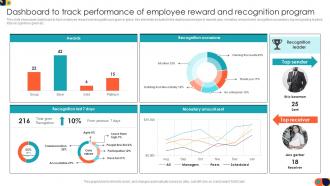
This slide showcases dashboard to track employee reward and recognition program in place. Key elements included in the dashboard are type of awards give, monetary amount sent, recognition occassions, top recognizing leaders, total recognitions given etc.
People who downloaded this PowerPoint presentation also viewed the following :
Employees Reward And Recognition Dashboard To Track Performance Of Employee Reward with all 7 slides:
Use our Employees Reward And Recognition Dashboard To Track Performance Of Employee Reward to effectively help you save your valuable time. They are readymade to fit into any presentation structure.





FAQs for Employees Reward And Recognition Dashboard To Track Performance
Start with participation rates - who's actually giving and receiving recognition? Then look at how often it happens and whether it's spread evenly across teams. Honestly, manager participation is huge because it sets the tone for everyone else. Track sentiment from employee surveys too. Oh, and definitely compare retention between recognized vs non-recognized people - that data can be pretty eye-opening. Performance correlations are worth checking out as well. You can always add more specific metrics later once you see what patterns emerge, but these basics will give you a solid starting point.
Honestly, just map your awards to whatever your company actually cares about. Like if you're big on customer service, make a "Customer Champion" badge or something. Don't use those boring generic templates everyone has - nobody gets excited about those. Think about what you really celebrate. Innovation? Mentorship? People who go crazy for clients? Make nomination categories around that stuff. Oh, and use language that sounds like how your team actually talks, not corporate speak. Start with your top 3-5 values and build recognition around each one. Way more authentic that way.
So most teams go with dedicated HR stuff like BambooHR, 15Five, or Bonusly. Others build their own dashboards using Tableau or Power BI - even Google Data Studio works. I've actually seen some really clean setups made with just Airtable and basic integrations, which surprised me. The main thing is pulling together all your recognition data - peer nominations, manager feedback, achievement tracking - into one spot where you can see everything. Power BI's probably your best bet starting out since it plays nice with most systems and won't make your head spin learning it.
Honestly, visual data is a game changer for recognition stuff. Bar charts showing who's getting recognized by team? You'll immediately see patterns that would take forever to find in spreadsheets. Like which managers are actually good at this vs. the ones who forget their team exists. Charts make it super obvious if your recognition program is working or just... existing. You can spot seasonal trends too - maybe Q4 recognition drops because everyone's stressed? Simple graphs show you gaps before they turn into bigger issues. It's way easier than staring at endless rows of data.
Honestly, you can't run a good recognition program without actually asking people what they want. Most managers just assume they know what motivates their team - spoiler alert, they don't. Survey your employees about what recognition feels meaningful to them, then track that feedback in your dashboard alongside the usual metrics. I'd do this quarterly at minimum, maybe more if you're rolling out new stuff. The key is spotting patterns between what people say they want and how they actually respond to recognition. Oh, and obviously you have to act on the feedback or people will stop giving it to you.
So dashboards basically pull data from all your tools - project management stuff, sales systems, whatever - and show you in real time who's actually getting things done. No more waiting months to figure out who's been killing it. You can set up feeds that update automatically as achievements happen, which is honestly game-changing for recognition timing. The key is picking 3-4 metrics that actually matter for your team's specific goals. Custom tracking lets you spot your top performers way earlier than traditional reviews. Plus people feel way more appreciated when recognition isn't delayed forever. Start small though - don't go overboard initially.
So I'd set up team milestone trackers and those visual progress bars - honestly, nothing beats seeing your quarterly goals fill up in real time! Throw in some "Team of the Month" spotlights with actual photos and what they accomplished. Real-time feeds work great too for showing off cross-department wins or innovation stuff. The trick is helping people connect their individual work to the bigger team success. Oh, and definitely automate those milestone notifications so teams get instant recognition when they crush it. Maybe add some achievement badges while you're at it - people eat that stuff up.
Honestly, people just want to feel like their work matters. Recognition hits that sweet spot - when you acknowledge someone's effort, they're way more engaged because they feel seen. Plus loyalty goes through the roof. I read somewhere that recognized employees are 31% less likely to quit and score 2.3x higher on engagement surveys, which is pretty wild. The trick is making it regular though, not saving it for performance reviews once a year. Nobody wants to wait twelve months to hear they're doing good work, right? It's such a simple thing but most managers totally overlook it.
Honestly, the hardest part is getting everyone actually on board instead of just pretending to care. You know how it is - leadership says they want feedback culture but then doesn't follow through themselves. Makes the whole thing feel fake. Your biggest headaches will be the tech side too. HR systems never play nice together, and you'll spend forever trying to get clean data flowing. Oh, and those generic dashboards? They're useless. My advice: pick one team first. Get them genuinely excited about it, then build from there. Way easier than forcing it company-wide right away.
Look, you've gotta track more than just the people who speak up in meetings. Set up your system to catch mentoring, problem-solving, teamwork - all that stuff the quiet contributors do. Some people love being called out publicly, others would literally die from embarrassment (cultural thing, personality thing, whatever). Train managers to actually hunt for different types of wins, not just the obvious ones. Peer nominations help too. Oh, and definitely check your data regularly - you'll probably find some weird patterns in who's getting recognized and who's being totally overlooked.
Make those "nominate a colleague" buttons impossible to miss. Put recognition categories that match what your team actually cares about, then showcase the shoutouts right on your main dashboard. Gamification is honestly where it's at - points, badges, monthly leaderboards. People get weirdly competitive about those little achievement icons! You could also set up automated nudges or prompts that suggest recognizing someone based on recent project work. Bottom line though? If it takes longer than 30 seconds, nobody's gonna bother doing it regularly.
Weekly updates work great for most teams - gives everyone that regular boost without being overwhelming. Daily is even better if you can swing it. Real-time updates are amazing when your system can handle it, but honestly, weekly is totally fine to start with. Just pick whatever schedule works and stick with it so people actually know when to check. I'd probably go weekly first, see how much your team gets into it, then maybe bump it up to daily later. Oh and definitely avoid stale data - nothing kills the vibe like seeing old stuff when you're trying to celebrate wins.
Honestly, start with basic points and badges - don't overthink it. Your team earns points for peer recognition, hitting goals, stuff like that. Leaderboards work great but fair warning, some people get weirdly intense about rankings lol. You could do progress bars for team targets or seasonal challenges too. Themed campaigns are fun - maybe holiday recognition drives or whatever fits your vibe. Just don't make it feel like mandatory fun, you know? Build on what actually works instead of launching everything at once. Oh, and unlock special rewards at certain point levels - people love that dopamine hit.
Check your dashboard analytics - they'll show you what actually motivates your team vs what you think does. Which recognition gets engagement? When do people respond most? Who's being missed? Honestly, the data can be shocking. We found peer shoutouts crushed manager recognition last quarter, which totally caught me off guard. Also track if you're reaching everyone or just the same people over and over. Pull 3 months of data first. Find your biggest 3 gaps, then tweak your timing and methods from there.
Honestly, privacy's your biggest worry here - don't expose sensitive performance stuff or pit different departments against each other unfairly. Gamification can backfire too if it turns toxic or makes people feel left out. You want recognition that actually builds people up, not something that creates drama or resentment. I've seen this go wrong before when companies only highlight the same loud personalities over and over. Focus on celebrating all kinds of contributions instead. Oh, and definitely let employees control whether their wins get shared publicly - some people hate being in the spotlight.
-
I am a big fan of their newsletters because that is how I found my perfect requirement at the time of urgency. Thank God, I kept opening those.
-
I faced no difficulty while searching for the slide I wanted. Honestly, the website’s interface is easy to use and can be navigated easily!