


Effective pipeline management sales customer deal tracking in dashboard




Try Before you Buy Download Free Sample Product
 Impress Your
 Audience
 100%
100% Editable
 Save Hours
 of Time


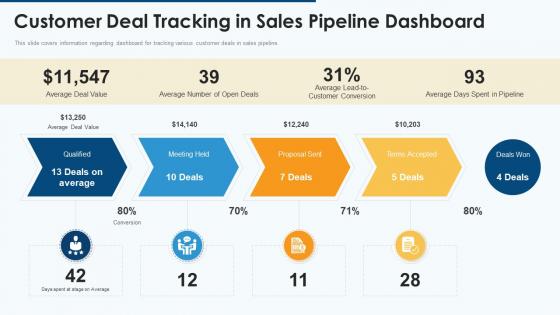
This slide covers information regarding dashboard for tracking various customer deals in sales pipeline.
People who downloaded this PowerPoint presentation also viewed the following :
Effective pipeline management sales customer deal tracking in dashboard with all 6 slides:
Use our Effective Pipeline Management Sales Customer Deal Tracking In Dashboard to effectively help you save your valuable time. They are readymade to fit into any presentation structure.





FAQs for Effective pipeline management sales customer deal
You need the basics first - lead tracking, stage definitions, activity management. Basically seeing where every prospect is and what's happening. Forecasting tools are crucial too because flying blind with your pipeline is honestly terrifying. Make sure it integrates with your other tools so everything talks to each other. Automation helps with follow-ups and task stuff. But here's the thing - none of this matters if your team won't actually use it consistently. I've seen so many fancy systems just collecting dust. Start simple, then add complexity as you figure out your process. The shiniest features mean nothing if people ignore them.
Honestly, you gotta track both sides - what's happening now and what's coming. Conversion rates between stages are clutch, plus average deal size and how long your sales cycles actually take. Pipeline velocity shows if deals are actually moving or just sitting there forever (which happens more than we'd like to admit). Revenue forecasting accuracy is probably the biggest one since it tells you if your pipeline data means anything. Also watch pipeline coverage - basically how much you've got versus what you need to hit targets. Win rates by source help too. The real magic happens in those pipeline reviews though. Don't just stare at spreadsheets - dig into why stuff's stalling and fix it.
Honestly, get a good CRM first - it'll change everything about how you handle your pipeline. All that manual tracking? Forget it, too many mistakes waiting to happen. The automation handles the boring stuff while you focus on actually selling. Real-time alerts tell you when deals are getting stuck, and the AI predictions are pretty solid for figuring out what's actually gonna close. I mean, I probably spend way too much time looking at the analytics, but they show you patterns you'd never spot otherwise. Makes forecasting so much easier when you're not just guessing.
So here's the thing - every industry does pipelines totally differently based on what they're selling. Tech companies automate everything and keep cycles short with demos and trials. B2B manufacturing though? Those deals drag on forever with like 10 people involved and formal RFPs (seriously, it's brutal). Healthcare and finance throw in compliance stuff at every stage. Retail just keeps things super straightforward since it's mostly quick transactions. Your best bet is just mapping your stages to however your actual buyers make decisions, not copying whatever Google or someone else does.
Honestly, the worst part is getting everyone on board when they're already comfortable with their messy spreadsheets. Data silos are a nightmare too - everything's scattered everywhere. Integration is where most companies get burned because connecting old systems is way harder than sales reps pretend it is. Training takes forever, and half your team will resist it anyway. Oh, and picking software that actually works with how you do things (instead of forcing you to change everything) is basically impossible. My advice? Test it with just one department first. Work out all the disasters there before going company-wide.
Honestly, data analytics is a game-changer for pipeline forecasting. No more throwing darts blindfolded. Look at your historical data first - you'll see which lead sources actually convert and where deals get stuck (usually somewhere predictable, trust me). The cool part? Algorithms can tell you which opportunities will likely close and when. So that monster Q4 deal you're banking on? You'll know if it's realistic or wishful thinking. Track conversion rates at each stage - that's your baseline gold. Oh, and it catches bottlenecks before they torpedo your deals. Way better than crossing your fingers and hoping.
Validation is everything - input checks, transformation monitoring, and output verification. Build automated tests that catch duplicates and schema changes before they mess up downstream stuff. Seriously, most pipeline disasters I've seen happen because people skip monitoring (learned that the hard way). Log everything and have rollback plans ready. Version control your schemas and logic - no exceptions there. Don't just validate at the end though, set up checkpoints throughout the whole flow. Oh and start simple with one solid validation layer, then build out from there. Way easier than trying to do everything at once.
Pipeline management is basically how smoothly work moves through your project stages. If you can see where things get stuck - like approvals or resource crunches - you'll catch delays before they snowball. I've watched entire projects get pushed back weeks because nobody noticed a bottleneck early on. Pretty frustrating when it's totally preventable. Check your pipeline weekly and you'll start seeing patterns. Some stages always take longer than expected, right? Once you know that, you can shuffle resources around or adjust deadlines before everything goes sideways. Makes a huge difference honestly.
Honestly, start with weekly standups between teams - way better than playing phone tag all day. Get everyone sharing pipeline updates and blockers in one place. Slack channels work great for this stuff, keeps people looped in without another damn meeting on the calendar. You'll need solid handoff docs when deals move around too. I'd map out where things go sideways in your current process first though. Those are your biggest wins. Oh, and shared dashboards help - people can check status without bugging each other constantly.
Honestly, I'd start by figuring out where you actually need tight control vs where being flexible gets better results. Create some core stuff everyone has to follow - stage gates, approval limits, reporting schedules - but let teams figure out the "how" within those boundaries. Map out your "must-haves" versus "nice-to-haves" first though. Give people room to execute their way while you keep visibility on progress. Regular check-ins help you spot when rules are actually helping or just getting in the way. It's like... you set the guardrails but don't micromanage the steering, you know?
So for complex stuff, Apache Airflow is probably your best bet - super battle-tested but yeah, the learning curve sucks at first. Prefect's way more modern and Python-friendly though. Dagster's great if you're doing data-specific work. Jenkins works too but that's more CI/CD territory. Honestly? I'd just start with Prefect's free tier and mess around with it. Way easier to wrap your head around than Airflow, and you can actually test it out properly without committing to anything. The dependency handling doesn't make you want to scream into the void, which is always a plus.
Think of pipeline management as your project radar system - it shows you what's coming before it smashes into you. Map out your stages and dependencies so you can catch bottlenecks early. Track your metrics obsessively: lead times, completion rates, how you're burning through resources. Honestly, most people skip this part and then wonder why everything's on fire. You'll want to identify your three worst chokepoints right now and make backup plans. It's way better than scrambling when deadlines start colliding.
Honestly, AI-powered analytics are where it's at right now - they catch stuff we totally miss. Real-time collaboration is finally becoming standard (no more endless email chains, thank god). Everyone's going mobile-first since we're all hybrid now. Your pipeline needs to actually talk to your other systems too, so integration is key. Oh, and revenue intelligence is wild - it'll literally predict which deals will close. Start by looking at what you've got and figure out what's missing. The whole space is moving fast right now.
Honestly, regulatory stuff will completely reshape how you build your pipeline - especially if you're in oil & gas, pharma, or finance. You're looking at compliance checkpoints everywhere, endless documentation, approval workflows that drag things out. But hey, beats getting sued later right? Healthcare is the absolute worst though. FDA requirements mean validating literally every single step. My advice? Map out what regulations hit your sector first, then build around those rules from day one. Trust me, trying to add compliance after the fact is a nightmare you don't want.
Dude, stakeholder engagement literally makes or breaks your pipeline - I can't stress this enough. When sales, marketing, and leadership aren't talking regularly, deals just vanish into thin air. You'll avoid so many headaches by getting everyone aligned on priorities and timelines upfront. Plus your stakeholders give you the real context behind opportunities, not just random hunches about what might work. Honestly, those "why didn't anyone tell me this?" moments are the worst. Start doing weekly check-ins now before things get messy.
-
Excellent design and quick turnaround.
-
I discovered this website through a google search, the services matched my needs perfectly and the pricing was very reasonable. I was thrilled with the product and the customer service. I will definitely use their slides again for my presentations and recommend them to other colleagues.