

Effective pipeline management sales monitoring of opportunities sales




Try Before you Buy Download Free Sample Product
 Impress Your
 Audience
 100%
100% Editable
 Save Hours
 of Time


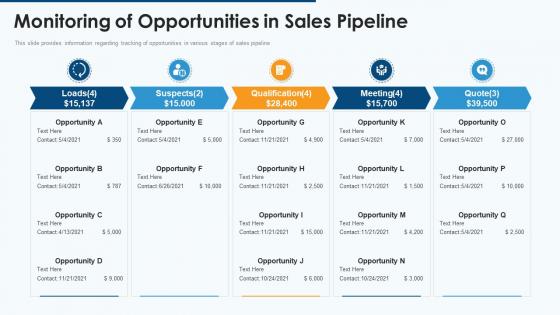
This slide provides information regarding tracking of opportunities in various stages of sales pipeline.
People who downloaded this PowerPoint presentation also viewed the following :
Effective pipeline management sales monitoring of opportunities sales with all 6 slides:
Use our Effective Pipeline Management Sales Monitoring Of Opportunities Sales to effectively help you save your valuable time. They are readymade to fit into any presentation structure.





FAQs for Effective pipeline management sales monitoring
Look, most pipelines follow the same basic flow: generate leads, qualify them, send proposals, negotiate, then close. SaaS companies usually throw in demo and trial phases. Manufacturing? Way more complex with RFPs and committee decisions - honestly such a pain. B2B has tons of qualification hoops while B2C moves fast and light. Here's the thing though - don't just steal someone's template. Map out what your buyers actually do, not what you think they should do. Those natural pause points where deals sit? That's where your stages belong. I see too many people forcing prospects into stages that don't match reality.
So basically, everyone on your team can see all the deals at once - no more hunting down whoever's handling the Johnson account to figure out where it stands. The automation stuff handles boring tasks like follow-up reminders, which honestly saves so much time. You'll spot problems way earlier before they blow up. When Sarah goes on vacation or quits unexpectedly, you won't be scrambling to piece together her deals. Real-time tracking shows you exactly what's moving and what's stuck. But here's the thing - it only works if people actually update their pipeline info consistently. That part's kinda crucial.
Track conversion rates first - that's where you'll spot bottlenecks fast. Sales cycle length matters too, plus your win/loss ratio (seriously, most teams ignore why they're actually losing deals). Average deal size and pipeline velocity are solid indicators. Oh and pipeline coverage - aim for 3x your quota minimum. Don't go crazy with metrics though. Pick maybe 4-5 max and check them weekly. Otherwise you'll drown in spreadsheets. Start with conversion rates and cycle length if you're new to this stuff.
Honestly, CRM software is a game-changer for managing your sales pipeline. It keeps all your prospect info in one place and shows you exactly where each deal stands. No more guessing which leads are stuck or wondering what stage everything's at. The automation stuff handles follow-ups and data entry (seriously saves your sanity). You can actually forecast revenue properly and figure out what activities work. Oh, and set up your pipeline stages to match how you really sell - most people just use the default settings and wonder why nothing makes sense. Reporting helps you spot patterns too.
Start with cleaning up your data - seriously, bad data is probably killing your forecasts right now. Get your team to actually update deal probabilities and close dates consistently. Look at your historical win rates by stage and rep, then use those numbers instead of just guessing (we're all guilty of being way too optimistic). Pipeline reviews catch stalling deals before they mess up your numbers. Track stuff like demo-to-close rates too. Oh, and lead scoring helps a ton. Just audit what you've got first - you'll be shocked how much junk data is in there screwing everything up.
Okay so basically you can't treat all leads the same way - it depends where they jumped into your funnel. Early ones need education first, like helpful content and discovery calls to figure out what they actually want. Mid-stage people are already informed so hit them with demos and case studies. Late-stage leads? Those are the dream because they're ready to talk money and timelines right away. Don't blast newbies with sales pitches or they'll run, and definitely don't waste time explaining basics to someone who's already done their homework. Set up different email sequences for each stage and use your CRM reminders so you don't mess it up.
So basically these tools take care of all the boring stuff - data entry, lead scoring, follow-ups, moving deals around your pipeline. When someone opens your email or grabs a download, boom - they get tagged and bumped to the next stage automatically. No more updating your CRM every two seconds (which honestly drove me nuts). The software handles nurture sequences and schedules follow-ups based on what prospects actually do. I'd start with whatever's killing you most - probably lead capture or those endless follow-up emails. Then just keep adding more automation from there.
Honestly, the worst thing you can do is let dead deals just sit there rotting in your pipeline - totally kills your forecasting. I used to be guilty of this too. Don't get overly optimistic either just because you have some gut feeling about a prospect. That's pure wishful thinking. Skipping stages is another trap, even when someone seems super eager to buy. You'll miss key qualifying stuff that way. Actually base your stage changes on what the buyer does, not just because time's passing. Oh, and do weekly reviews without fail - sounds boring but it's a game changer.
Ugh, market changes are the worst - they mess up your entire pipeline. Your lead scoring goes haywire when buyers start acting differently or new competitors show up. Honestly, I've seen forecasts become completely worthless overnight! You gotta adjust your pipeline stages to match how people actually buy now. Update your qualification stuff too. Check which stages have the weirdest conversion rate changes first - that's where you'll find the real problems. Also review your data way more often when everything's crazy volatile. Flexibility is everything right now.
Dude, switch up your whole approach. Been emailing? Call them instead or hit them up on LinkedIn. Maybe send over a case study or just ask how things are going - no sales pitch attached. Honestly, half the time people just got swamped and totally forgot about you. There's also this "breakup email" trick where you basically say you're removing them from your list unless they respond. Sounds harsh but it actually works pretty well. Hit them with 2-3 different attempts over a few weeks, then just move on if they're still ghosting you.
So here's what worked for us - map out where your leads are in the pipeline, then have marketing hit them with the right stuff at each stage. Case studies for people evaluating, demos for qualified prospects, that kind of thing. Both teams need to see the same data though, otherwise it's chaos. Connect your CRM to whatever marketing platform you're using and agree on how you're scoring leads. Oh, and automate what you can so marketing keeps them warm while you're trying to close. Honestly, the hardest part is just getting everyone to stop doing their own thing and actually collaborate.
Dude, visual pipeline tools are a game changer - you'll spot bottlenecks right away and actually know where your revenue's headed instead of guessing with spreadsheets. I swear, once you see deals mapped out visually, Excel just feels ancient. Salesforce and HubSpot are solid if you want the full CRM experience, but honestly? Start simple with Trello or Monday.com if your team isn't super tech-savvy. The biggest thing is finding something everyone will actually use. Oh, and make sure it shows you exactly where deals are dying - that's where the real money insights happen.
Dude, customer feedback is seriously underrated for fixing your sales process. Most of us think we know what buyers want, but we're usually wrong about something. Ask your recent customers about their actual buying experience - where did they get confused? What made them hesitate? Then map that stuff back to your pipeline stages. You'll probably find patterns like certain stages dragging on forever or the same objections coming up repeatedly. Use those insights to restructure things and coach your team better. I've seen companies completely miss obvious friction points until customers spelled it out for them.
Honestly, you've got a bunch of good options here. HubSpot Academy and Salesforce Trailhead are solid starting points - both free too. LinkedIn Learning has decent pipeline courses if you already have access. In-person workshops can be worth it, especially if your team vibes better learning together (and who doesn't love catered lunch?). Your CRM provider probably offers training specific to their platform, which actually makes sense since that's what they'll use every day. Sales consultants work too but cost more. I'd honestly just pick one online course first, see how your team responds, then figure out what specific gaps you're still seeing in your process.
Your pipeline needs to track way more than just calls and emails now. Social media, website clicks, downloads - all that stuff matters because buyers research everything before they'll even hop on a call with you. It's wild how much they know already! Set up different nurturing tracks since people bounce between "just looking" and "ready to buy" constantly these days. Segment by how they actually behave, not just job title or company size. Those marathon discovery calls? Nobody has time. Try shorter, more frequent touchdowns instead - works way better honestly.
-
Best Representation of topics, really appreciable.
-
Appreciate the research and its presentable format.