


Sales Pipeline Management Powerpoint Presentation Slides
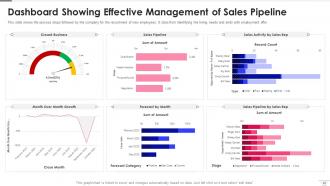
Sales pipeline management is a technique that allows you to monitor and direct the opportunities in your sales pipeline. At present, the company wants to determine the current issues in the sales pipeline and identify suitable strategies. Grab our professionally designed Sales Pipeline Management template that provides the details on best practices to manage sales pipeline, actions for smooth functioning of the sales pipeline, key focus areas at each sales pipeline stage, a successful pipeline review structure, and ways to clean up the sales pipeline. This presentation also covers details on the challenges of the sales pipeline, the impact of sales pipeline challenges on business, and practical strategies to eliminate the obstacles. Additionally, this PowerPoint presentation provides details on various sales pipeline management tools, critical features of pipeline management tools, and critical sales management effectiveness priorities. Also, this presentation provides details on statistics of sales pipeline after strategy implementation, a dashboard showing effective management of sales pipeline, and a dashboard showing sales pipeline opportunities. Download it now.




























































You must be logged in to download this presentation.


Do you want to remove this product from your favourites?
PowerPoint presentation slides
Enthrall your audience with this Sales Pipeline Management Powerpoint Presentation Slides. Increase your presentation threshold by deploying this well-crafted template. It acts as a great communication tool due to its well-researched content. It also contains stylized icons, graphics, visuals etc, which make it an immediate attention-grabber. Comprising sixty slides, this complete deck is all you need to get noticed. All the slides and their content can be altered to suit your unique business setting. Not only that, other components and graphics can also be modified to add personal touches to this prefabricated set.

People who downloaded this PowerPoint presentation also viewed the following :
Content of this Powerpoint Presentation
Slide 1: This slide introduces Sales Pipeline Management. State Your Company Name and begin.
Slide 2: This slide states Agenda of the presentation.
Slide 3: This slide presents Table of Content for the presentation.
Slide 4: This slide highlights title for topics that are to be covered next in the template.
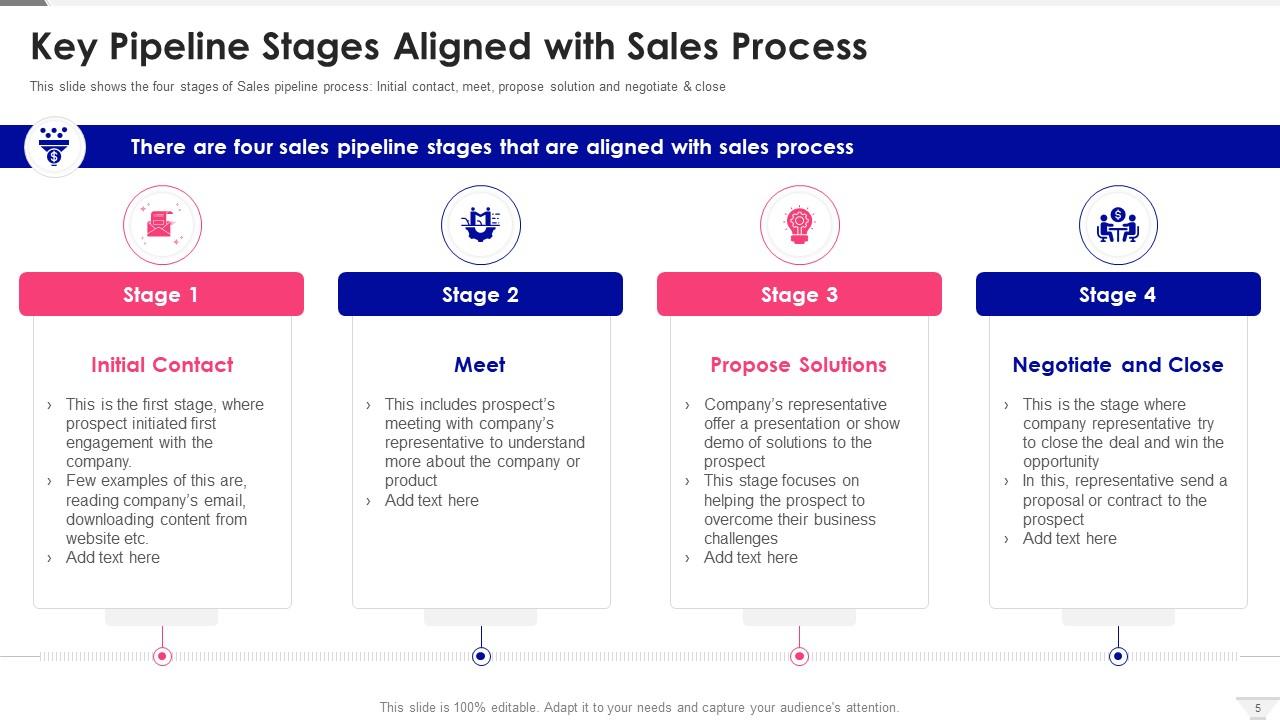
Slide 5: This slide shows Key Pipeline Stages Aligned with Sales Process.
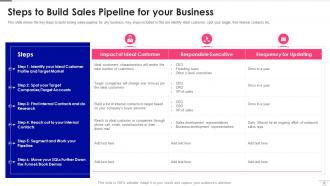
Slide 6: This slide presents Steps to Build Sales Pipeline for your Business.
Slide 7: This slide displays Best Practices to Manage your Sales Pipeline.
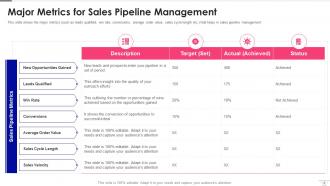
Slide 8: This slide represents Major Metrics for Sales Pipeline Management.
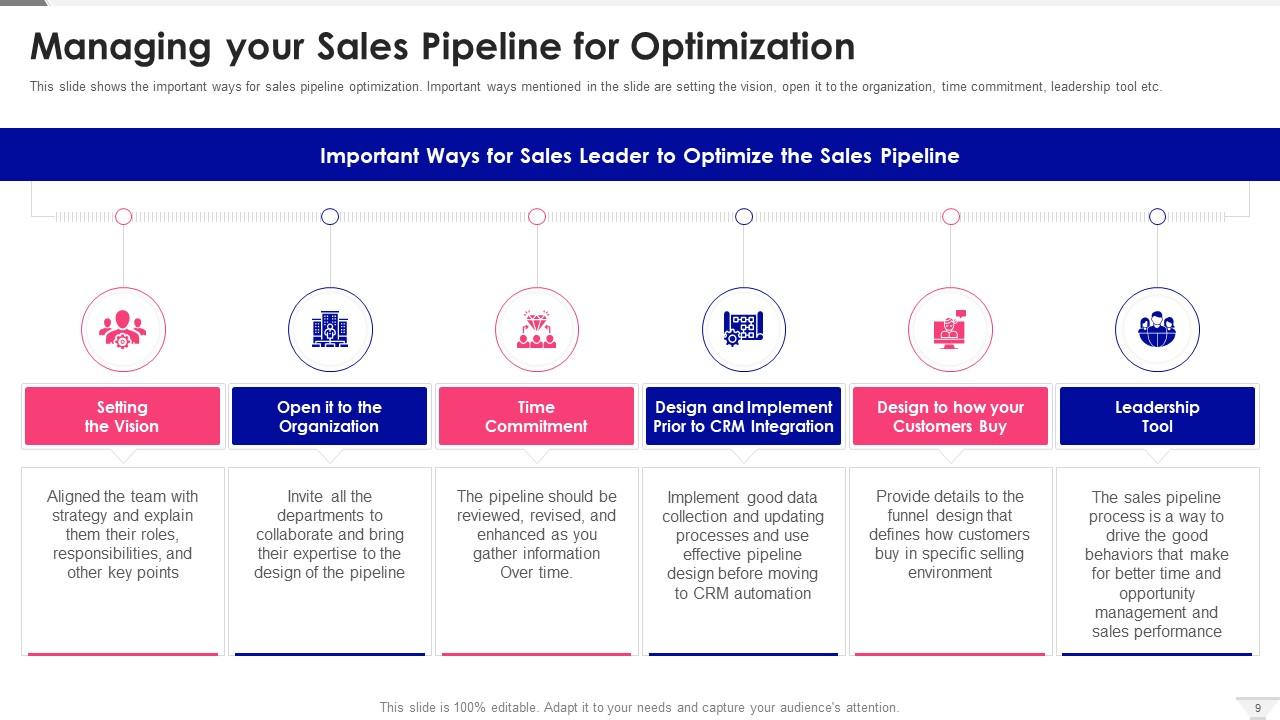
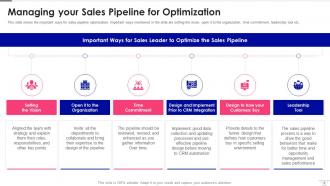
Slide 9: This slide showcases Managing your Sales Pipeline for Optimization.
Slide 10: This slide shows Review and Improve Pipeline Management.
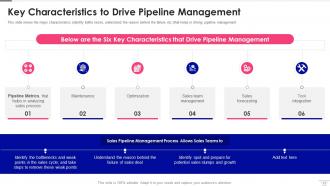
Slide 11: This slide presents Key Characteristics to Drive Pipeline Management.
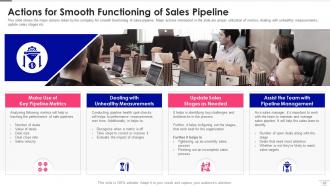
Slide 12: This slide displays Actions for Smooth Functioning of Sales Pipeline.
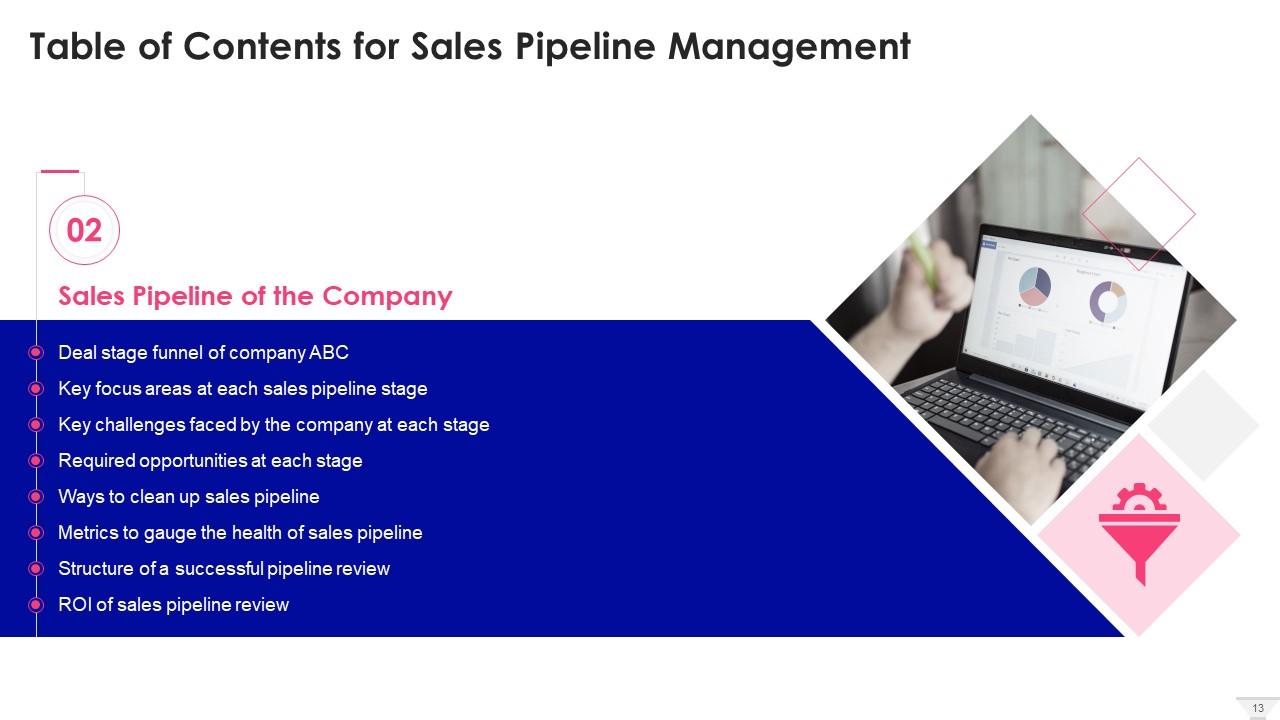
Slide 13: This slide highlights title for topics that are to be covered next in the template.
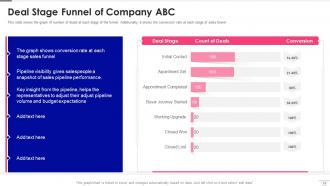
Slide 14: This slide represents the graph of number of deals at each stage of the funnel.
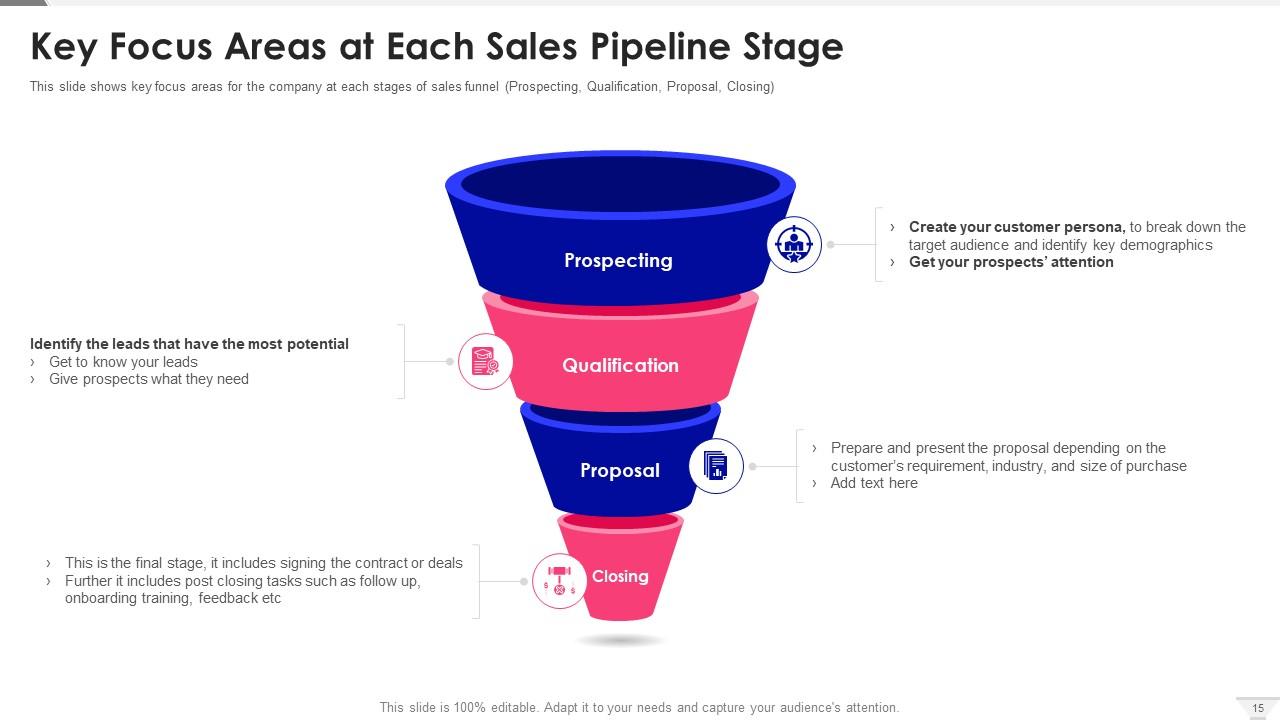
Slide 15: This slide showcases Key Focus Areas at Each Sales Pipeline Stage.
Slide 16: This slide shows Key Challenges Faced by the Company at Each Stage.
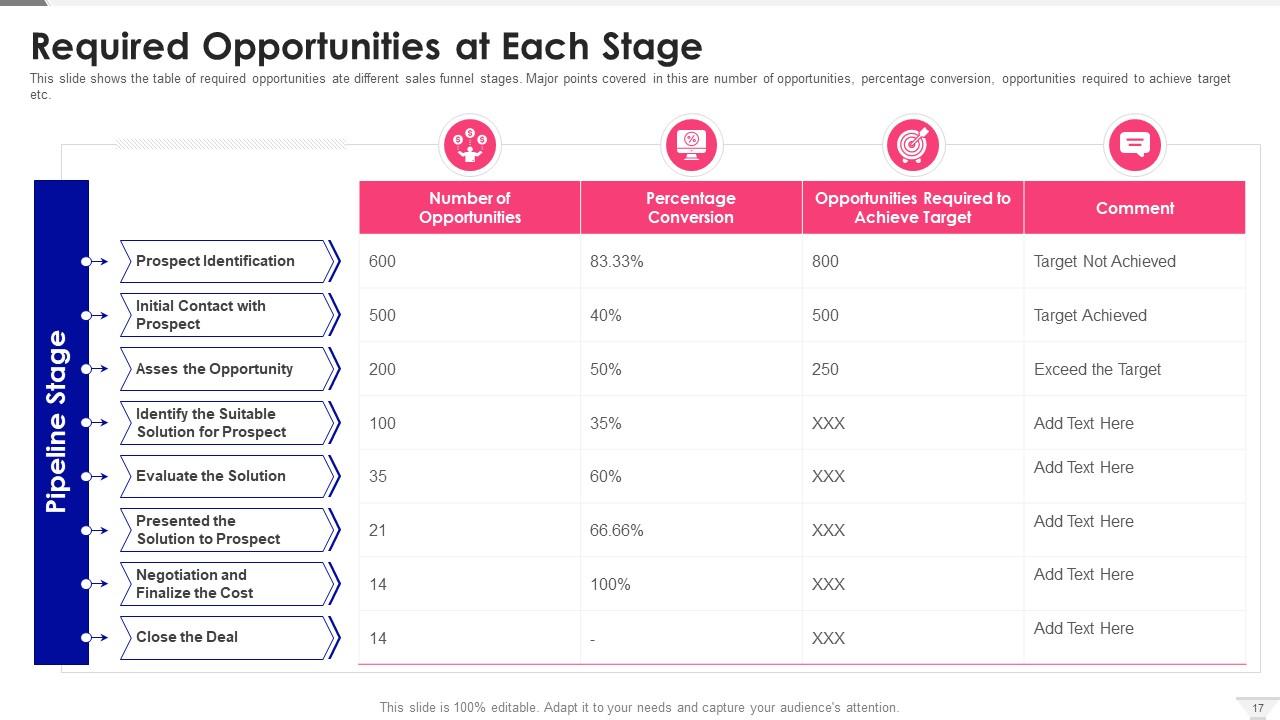
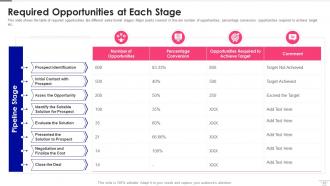
Slide 17: This slide presents Required Opportunities at Each Stage.
Slide 18: This slide shows various ways to clean up sales pipeline for smooth operations.
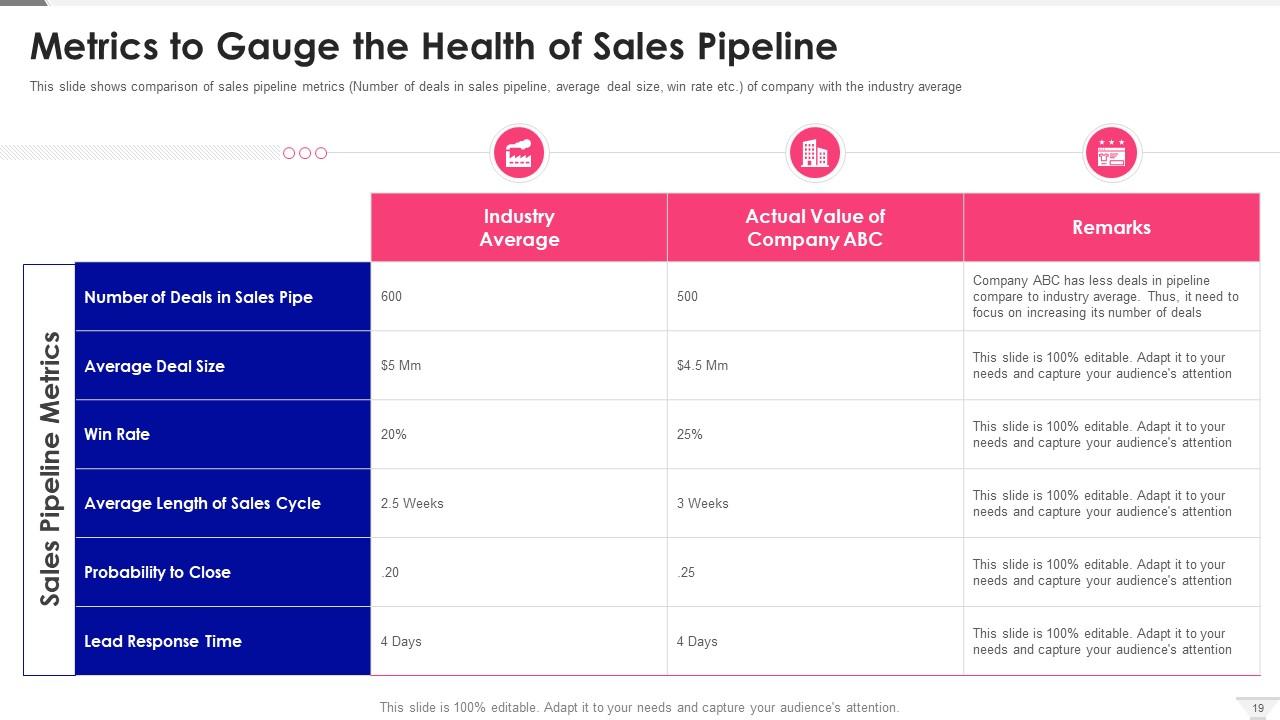
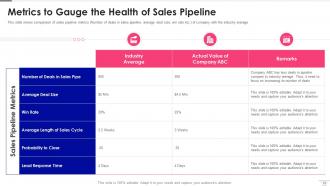
Slide 19: This slide displays Metrics to Gauge the Health of Sales Pipeline.
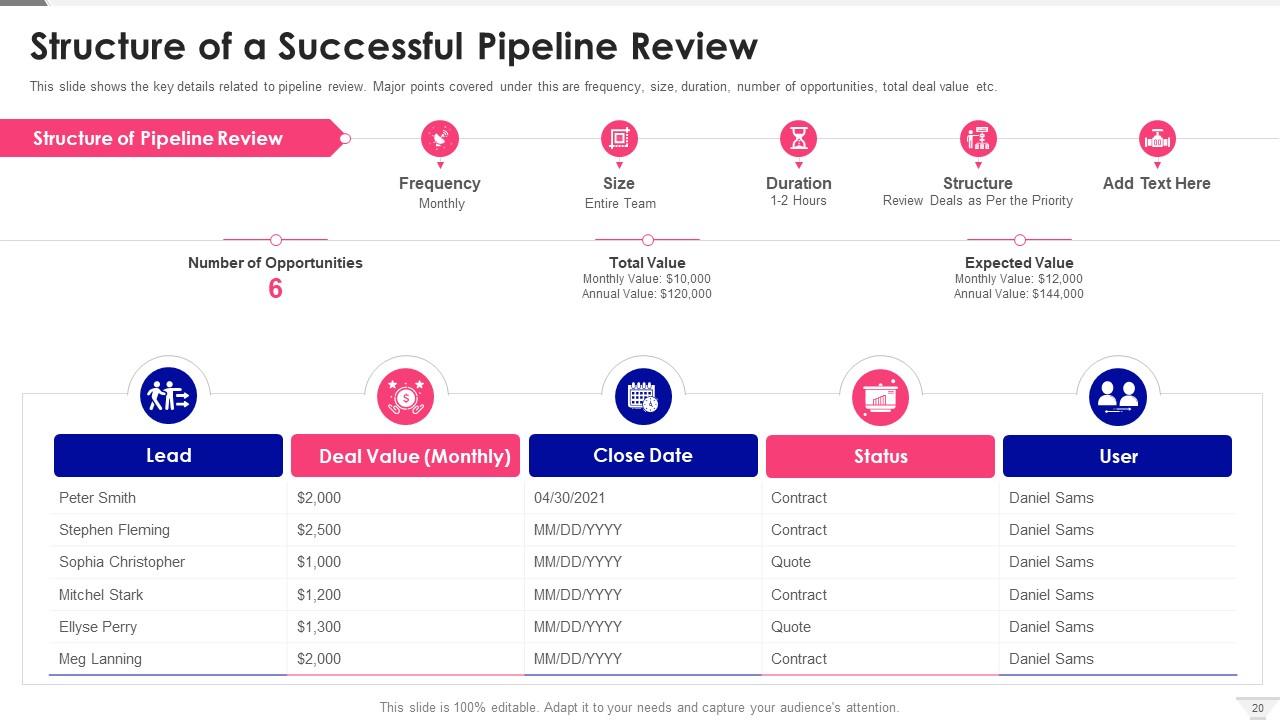
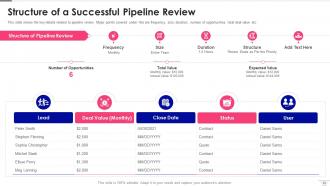
Slide 20: This slide represents Structure of a Successful Pipeline Review.
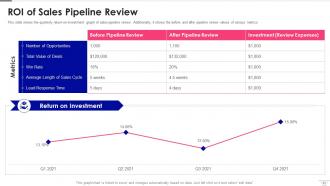
Slide 21: This slide shows the quarterly return-on-investment graph of sales pipeline review.
Slide 22: This slide highlights title for topics that are to be covered next in the template.
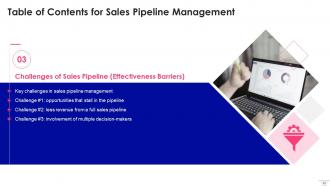
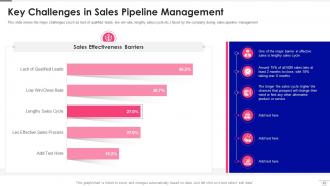
Slide 23: This slide presents Key Challenges in Sales Pipeline Management.
Slide 24: This slide shows the sales pipeline challenges related to ‘Opportunities that Stall in the Pipeline.
Slide 25: This slide shows the sales pipeline challenges related to ‘Less Revenue from a Full Sales Pipeline.
Slide 26: This slide displays the sales pipeline challenges related to ‘Involvement of Multiple Decision-makers.
Slide 27: This slide highlights title for topics that are to be covered next in the template.
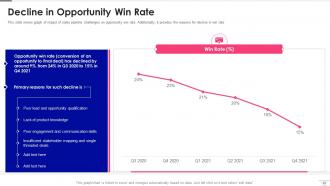
Slide 28: This slide shows graph of impact of sales pipeline challenges on opportunity win rate.
Slide 29: This slide presents graph of impact of sales pipeline challenges on overall sales of the company.
Slide 30: This slide displays Key Impacts of Poor Sales Pipeline Management.
Slide 31: This slide highlights title for topics that are to be covered next in the template.
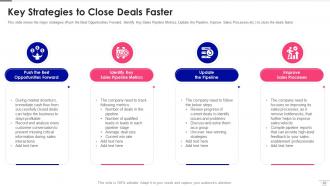
Slide 32: This slide represents Key Strategies to Close Deals Faster.
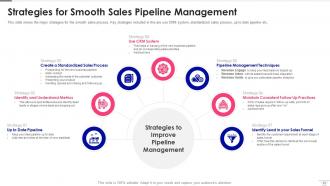
Slide 33: This slide showcases Strategies for Smooth Sales Pipeline Management.
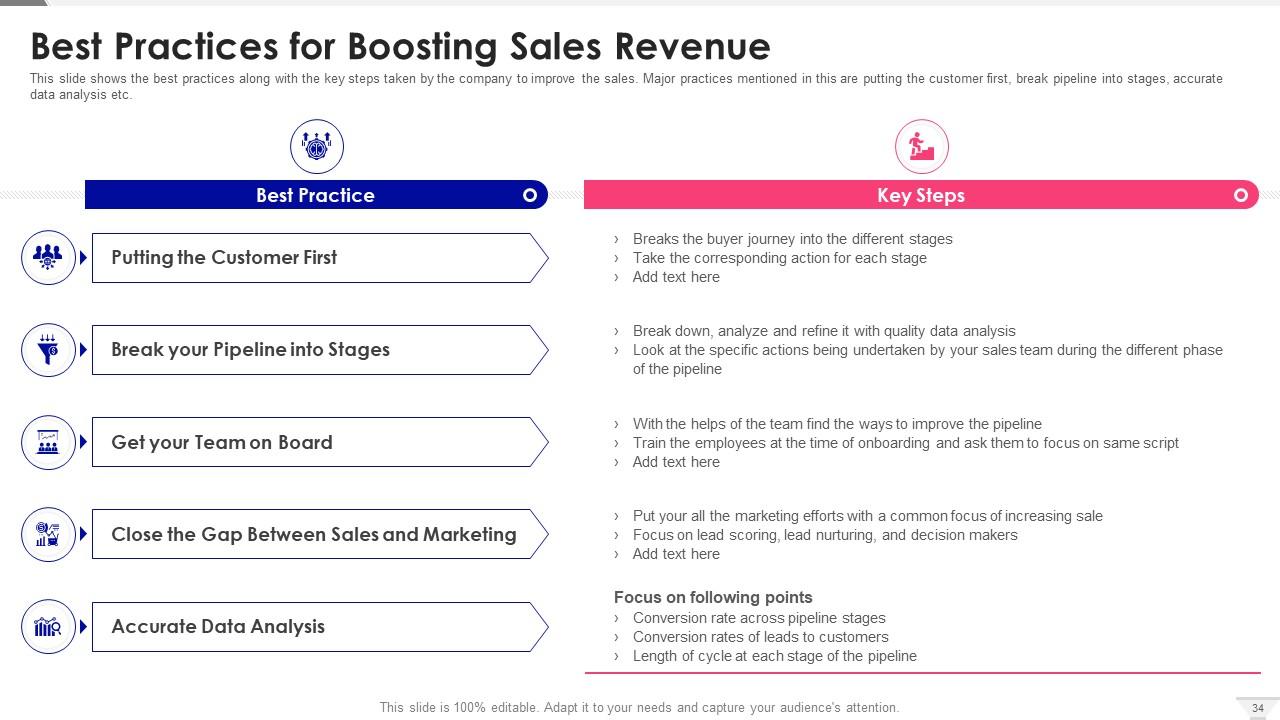
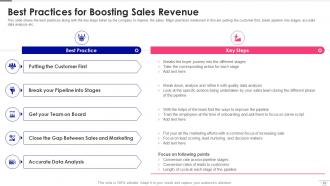
Slide 34: This slide shows Best Practices for Boosting Sales Revenue.
Slide 35: This slide highlights title for topics that are to be covered next in the template.
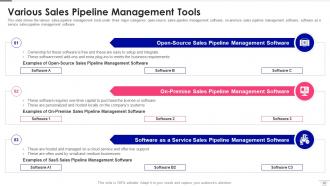
Slide 36: This slide presents Various Sales Pipeline Management Tools.
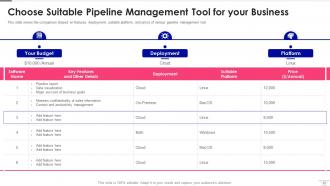
Slide 37: This slide displays Choose Suitable Pipeline Management Tool for your Business.
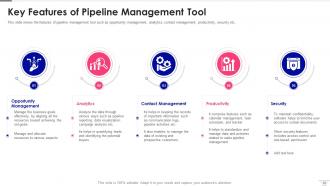
Slide 38: This slide represents Key Features of Pipeline Management Tool.
Slide 39: This slide showcases Cost Benefit Analysis of Selected Software.
Slide 40: This slide highlights title for topics that are to be covered next in the template.
Slide 41: This slide shows Key Sales Management Effectiveness Priorities.
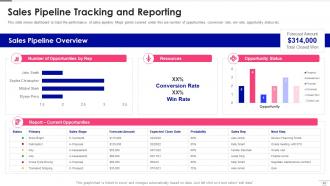
Slide 42: This slide presents Sales Pipeline Tracking and Reporting.
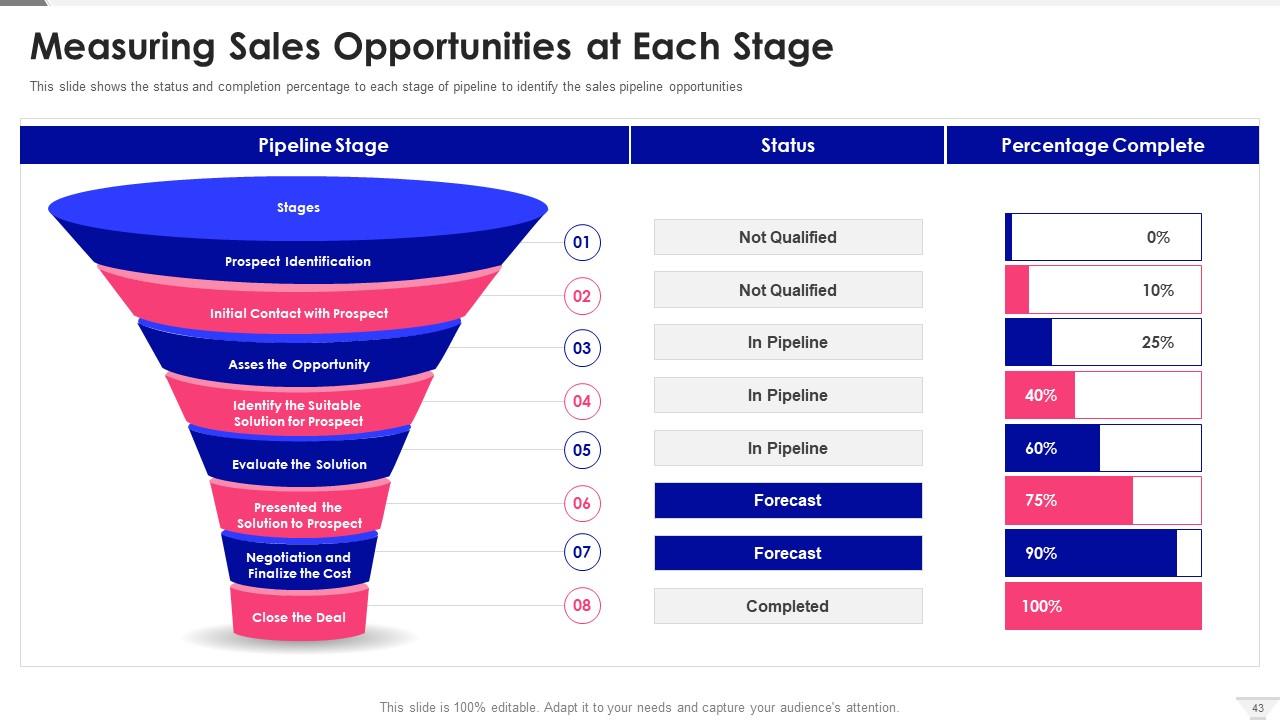
Slide 43: This slide displays Measuring Sales Opportunities at Each Stage.
Slide 44: This slide highlights title for topics that are to be covered next in the template.
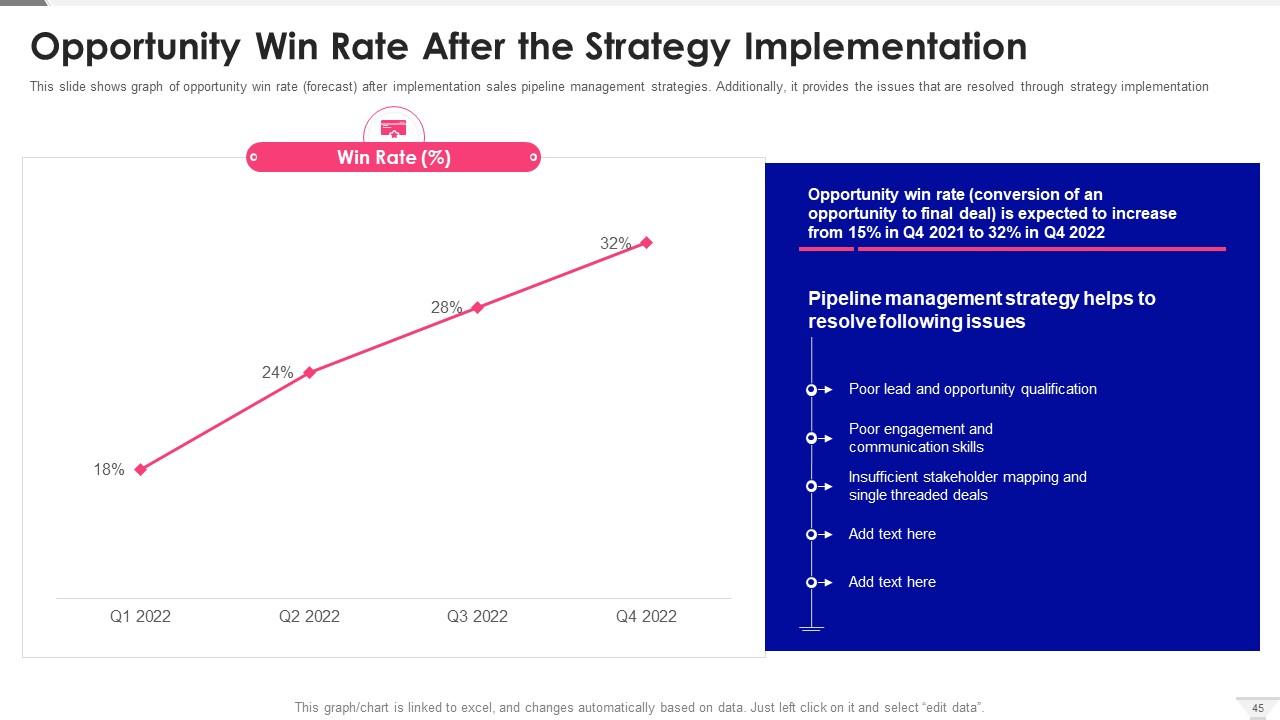
Slide 45: This slide represents Opportunity Win Rate After the Strategy Implementation.
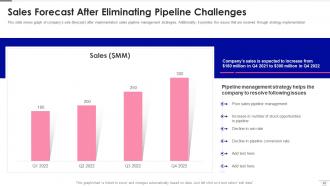
Slide 46: This slide showcases Sales Forecast After Eliminating Pipeline Challenges.
Slide 47: This slide highlights title for topics that are to be covered next in the template.
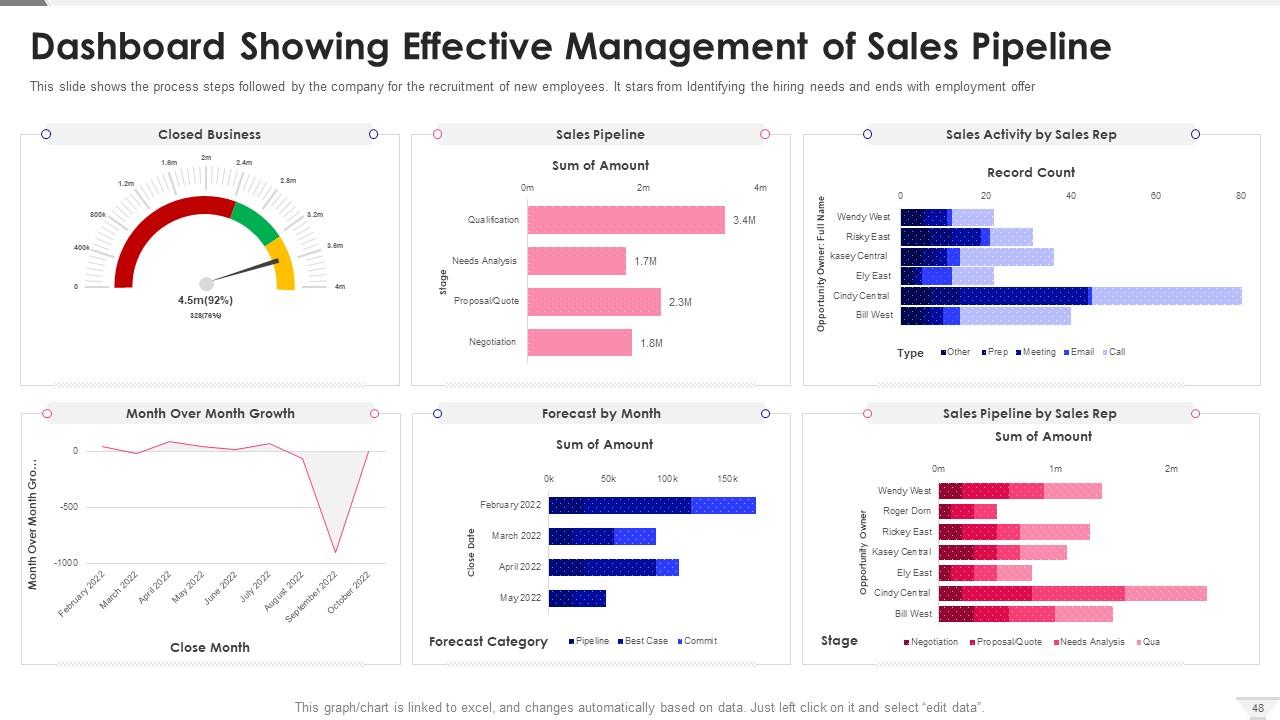
Slide 48: This slide shows Dashboard Showing Effective Management of Sales Pipeline.
Slide 49: This slide presents Opportunity and Forecast Summary.
Slide 50: This slide displays Sales Pipeline Management Dashboard with Top Ten Customers.
Slide 51: This slide showcases Icons for Sales Pipeline Management.
Slide 52: This slide is titled as Additional Slides for moving forward.
Slide 53: This is Our Mission slide with related imagery and text.
Slide 54: This is About Us slide to show company specifications etc.
Slide 55: This is Our Team slide with names and designation.
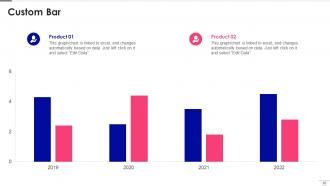
Slide 56: This slide presents Custom Bar chart with two products comparison.
Slide 57: This slide depicts Area chart with two products comparison.
Slide 58: This slide provides 30 60 90 Days Plan with text boxes.
Slide 59: This slide presents Roadmap with additional textboxes.
Slide 60: This is a Thank You slide with address, contact numbers and email address.
Sales Pipeline Management Powerpoint Presentation Slides with all 65 slides:
Use our Sales Pipeline Management Powerpoint Presentation Slides to effectively help you save your valuable time. They are readymade to fit into any presentation structure.
-
Good slide
-
Wide collection of templates available. SlideTeam has made it easier to create presentations in just a few minutes.
-
Placing an order on SlideTeam is very simple and convenient, saves you a lot of your time.
