


Improving Employee Performance Management Dashboard Tracking Employee Effectiveness




Try Before you Buy Download Free Sample Product
 Impress Your
 Audience
 100%
100% Editable
 Save Hours
 of Time


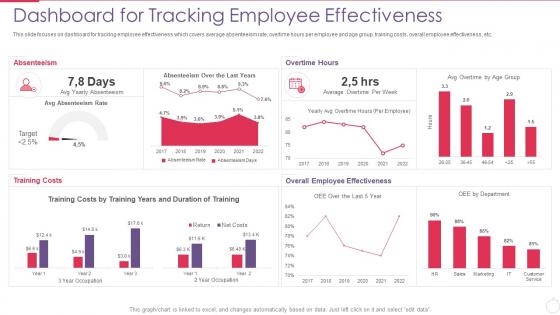
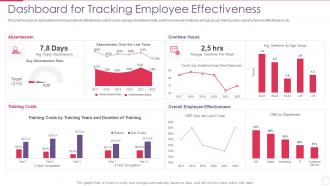
This slide focuses on dashboard for tracking employee effectiveness which covers average absenteeism rate, overtime hours per employee and age group, training costs, overall employee effectiveness, etc.
People who downloaded this PowerPoint presentation also viewed the following :
Improving Employee Performance Management Dashboard Tracking Employee Effectiveness with all 7 slides:
Use our Improving Employee Performance Management Dashboard Tracking Employee Effectiveness to effectively help you save your valuable time. They are readymade to fit into any presentation structure.





FAQs for Improving Employee Performance Management Dashboard
Honestly, you need four things: clear goals, regular check-ins, real feedback, and growth planning. Goals are everything - people have to know what winning looks like upfront. Can't just disappear after that though (trust me on this one). Book those one-on-ones and stick to them. Give feedback as stuff happens, not months later. Always connect their performance to where they want to go career-wise. The whole thing should feel more like you're coaching them than judging them, you know? I'd say pick whichever piece you suck at most and nail that first.
Honestly, data analytics is a game changer for performance reviews. Instead of going off memory or whatever drama happened last month, you're looking at real numbers - productivity trends, how often people hit their goals, collaboration stuff. I've noticed it catches things you'd totally miss otherwise, like maybe someone always crushes it in Q4 but struggles in summer. Worth tracking just 2-3 metrics per person at first though - don't go crazy with it. The whole picture thing really works better than just winging it based on recent stuff.
Honestly, feedback is what makes performance management actually matter instead of just being another boring HR checkbox. Regular check-ins throughout the year beat those useless annual reviews every time. Your people need to know how they're doing way before December rolls around - like, monthly conversations work great. It's kind of like having GPS constantly updating your route instead of getting directions once and hoping for the best. I'd start with quick 15-20 minute monthly sit-downs with each person. Just talk about what's going well and what isn't. Way more effective than waiting a whole year to tell someone they've been screwing something up.
Quarterly is the sweet spot for most companies. Annual reviews? Total waste of time - way too late to fix anything. You need regular check-ins to catch problems early, but monthly feels like you're breathing down people's necks. Three months gives everyone enough time to actually accomplish stuff between meetings. For new hires or someone struggling, maybe bump it to monthly until they're solid. But honestly, just start quarterly and see how it goes. My old boss used to do them every six weeks which was... weird timing, but it worked for our team.
Ugh, honestly the worst part is getting managers to actually have those awkward conversations instead of avoiding them. Employees think it's all pointless paperwork too. Ratings are all over the place - what one manager calls "amazing" another barely considers average. And don't get me started on the tech problems. I'd say start with a small test group first, maybe just one department? Train those managers really well because they're basically make-or-break for the whole thing. If they suck at it, the entire system falls apart.
Honestly, SMART goals are a game changer because they make people stop and figure out what they're actually trying to do. Half the time employees are just spinning their wheels, right? But when goals are Specific, Measurable, Achievable, Relevant, and Time-bound, suddenly everyone knows exactly where they're headed. Your team gets way more focused, less confused, and they can actually celebrate wins along the way. Performance reviews become so much smoother too - no more awkward conversations about whether someone "did well" or not. Just pick one person and have them try writing a SMART goal this week. You'll see what I mean.
Start with the wins - seriously, people shut down if you jump straight into critiques. I always ask "what support do you need from me?" instead of just dumping a list of fixes on them. Way more effective. Let them set their own goals too, don't just dictate everything. Makes it feel collaborative rather than some corporate lecture nobody wants to sit through. Oh, and I end by asking what energizes them most about their work - usually leads to really good conversations about motivation and keeps things positive.
Honestly, I'd go about 70-30 quantitative to qualitative, but it really depends on what they do. Sales and ops people? Hit them with more numbers since those are pretty straightforward to measure. The soft skills stuff still matters though - like how they work with others or handle pressure. Those things actually predict long-term success way better than people think. Start with your quantitative baseline, then use the qualitative feedback to explain what's really happening behind those metrics. Oh, and get input from more than just their direct manager - you'll get a much better read that way. Both together give you the real story.
Talk about what they actually did wrong, not their personality - like "your presentation jumped around" vs "you're scattered." Give feedback soon after whatever happened, but wait until things aren't heated. I usually mention something they did well too, though don't do that fake sandwich thing where you're obviously just being nice. Say "I noticed" instead of "you always do this" so they don't get defensive. Ask what they think happened too - makes it way less one-sided. The biggest thing though? End with actual steps you both agree on, not just vague "do better next time" stuff.
Honestly, the magic happens when you actually connect performance reviews to development planning instead of treating them like separate things. Got someone who sucks at delegation? That's their next coaching priority, boom. I've watched so many companies keep these processes totally disconnected - drives me crazy because it's such a missed opportunity. Use those performance ratings to spot your high performers for leadership programs too. The trick is flipping those review conversations forward. Don't just rehash what already happened. Ask stuff like "what skills do you need for your next role?" Makes all the difference.
Honestly, it just takes care of all the annoying stuff that makes reviews such a headache. Automated reminders mean you won't miss deadlines anymore. The data side is actually pretty cool - you'll see patterns you never would've noticed before. Instead of that last-minute scramble, you can track goals year-round and pull feedback from everywhere into one spot. Oh, and it keeps things fair since everyone gets judged by the same standards. My advice? Don't go crazy trying to digitize everything at once. Pick one thing first, maybe goal tracking, then build from there.
Your company's culture is basically the puppet master behind performance reviews. Open, growth-focused cultures? People actually have real conversations about development. But toxic or super rigid places turn the whole thing into this dreaded annual ritual where everyone just goes through the motions. Think about it - how often you get feedback, whether goals feel realistic, if anyone's brave enough to admit they're struggling... that's all cultural stuff. Honestly, I've seen companies spend forever tweaking their review process when the real problem is just a crappy culture underneath it all.
Oh definitely do peer reviews! Your coworkers see stuff managers miss completely - like how someone actually handles stress or whether they're a team player. Managers only care about hitting targets, but peers know if this person's genuinely helpful or just talks a good game. The trick is asking specific questions though, otherwise you get useless feedback like "yeah they're fine." Trust me, I've seen those generic responses way too many times. But when done right? You'll learn way more about someone's real work style than any formal review process.
So I've tried a bunch of these at different companies. BambooHR and Workday are pretty solid if you want everything in one place - performance reviews, goals, the whole deal. 15Five is actually my favorite for regular check-ins, way better than those awkward quarterly reviews. Lattice does 360 feedback really well too. Honestly though? I've seen teams crush it with just Monday.com or even fancy spreadsheets when they're starting out. Pick whatever your team won't ignore after two weeks.
Honestly, self-assessments are a total game-changer for performance reviews. Your employees actually come prepared instead of just sitting there being defensive while you do all the work. They've already thought through their wins, struggles, and what they want to work on next. The conversations end up being way more collaborative - almost like you're problem-solving together rather than you just lecturing them. Plus you get to see where their self-perception doesn't match reality, which gives you great insight into what they need coaching on. I mean, some people are way too hard on themselves while others... well, you know.
-
Well-designed and informative templates. Absolutely brilliant!
-
Very unique and reliable designs.