


Improving Employee Performance Management Timeline For Employee Performance




Try Before you Buy Download Free Sample Product
 Impress Your
 Audience
 100%
100% Editable
 Save Hours
 of Time


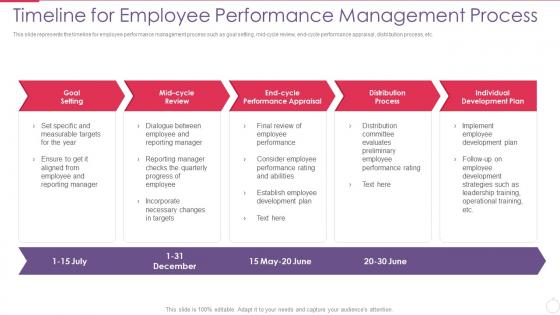
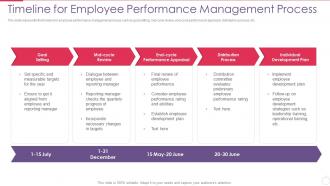
This slide represents the timeline for employee performance management process such as goal setting, mid cycle review, end cycle performance appraisal, distribution process, etc.
People who downloaded this PowerPoint presentation also viewed the following :
Improving Employee Performance Management Timeline For Employee Performance with all 6 slides:
Use our Improving Employee Performance Management Timeline For Employee Performance to effectively help you save your valuable time. They are readymade to fit into any presentation structure.





FAQs for Improving Employee Performance Management Timeline
So you want to nail this performance review thing? Start with goal setting in January, then do monthly or quarterly check-ins - though honestly, most places totally flake on these and then act shocked when the annual review goes sideways. Mid-year reviews are clutch for fixing course. Document stuff as it happens because nobody remembers what Sarah did in March when December rolls around. Those casual conversations throughout the year? Way more valuable than the formal sit-downs. Seriously, block time for check-ins now before you forget.
Look, timing is everything here. You want your performance reviews happening 4-6 weeks before the big decisions get made - like if your company does annual planning in Q4, run reviews in Q3. That way the data actually matters for promotions and budget stuff. Most companies just do calendar year reviews because... I dunno, tradition? It's pretty dumb when you think about it. Figure out when your leadership team makes their biggest calls first. Then work backwards from there. Otherwise you're just doing reviews that sit in a filing cabinet while real decisions happen without that info.
Honestly, feedback is what holds your whole performance management thing together. Don't just wait for those formal review meetings - you need it happening all year long. It connects your goals, check-ins, and annual reviews so nothing feels disconnected or weird. Regular feedback means no surprises when review time comes around (trust me, those awkward conversations are the worst). Make it go both ways too. Short wins, quick course corrections - whatever comes up, just address it. Flying blind until your annual review is basically setting yourself up to fail.
Ugh, yearly reviews are such a waste if that's all you're doing. Most places stick to annual but quarterly is way better - you can actually fix stuff before it becomes a problem. I do monthly quick check-ins too, nothing fancy. The yearly thing just becomes paperwork at that point. Some teams go with twice a year plus regular chats, which works. Really depends on how crazy busy everyone is. But seriously, don't wait 12 months to tell someone they're screwing up or doing great. Those quarterly sessions will actually move the needle instead of just checking boxes.
Honestly, just pick 3-4 metrics that actually matter to your company instead of going crazy tracking everything. Goal completion rates are solid. So are skill development scores and feedback from managers/peers. Revenue stuff works if it connects to the role - though that's not always obvious. Employee engagement scores are clutch because they'll tell you if your process is helping people or just making them miserable. I'd set quarterly check-ins to look at the numbers and tweak things. The whole point is finding what works, not drowning in data.
Honestly, the right tech makes performance reviews so much less painful. Automated reminders mean you're not constantly bugging people for feedback, and everything gets stored in one spot instead of being buried in email chains. Real-time goal tracking is pretty clutch too - you can actually see how your team's progressing without digging through old notes. The analytics side is where it gets interesting though, you start spotting patterns in development that you'd never catch manually. I'd probably start with just one platform rather than trying to change everything overnight. Way less overwhelming that way.
Get those performance goals locked down in the first 2-3 weeks - seriously, don't procrastinate on this one. Everyone scrambles at the end and it's a mess. Aim for 3-5 goals tops (I learned this the hard way with like 8 goals one year). Make them specific and tie back to your team's quarterly stuff. Actually sit down with your people to hash these out together instead of just firing off some generic template. Oh, and make sure they're measurable - sounds obvious but you'd be surprised. Getting everyone aligned early saves you from those awkward review conversations later.
Okay so the big thing is having the same rubric for everyone - like actually write down what "exceeds expectations" means instead of winging it. I do quarterly coffee chats with other managers to make sure we're all on the same page about standards. Document stuff as it happens too, because honestly I forget half the things people did by December if I don't write them down. Have HR spot-check some of your reviews - they're pretty good at catching when you're being too harsh on one person or whatever. The whole point is making it less about gut feeling and more systematic. Your team will definitely notice when things feel fair.
Your managers need solid training on goal setting first - fuzzy goals doom everything from the start. Also cover how to give real feedback (most people think they're decent at this but... yeah, no). Documentation is huge too, plus having those uncomfortable conversations about poor performance. Honestly, I'd add some basic coaching skills since performance management is really just ongoing coaching dressed up as formal reviews. Maybe start with a half-day workshop hitting these points, then circle back quarterly to reinforce it. The follow-up sessions make a difference - otherwise people forget half of what they learned.
So you'll usually get asked to do your self-assessment right when performance review season kicks off - maybe a week or two before your manager does theirs. They actually read what you write first, which is kinda nice because it helps them remember stuff they might've forgotten about. The whole thing flows like: you do yours, then they do theirs, then there's some behind-the-scenes calibration stuff with other managers (honestly no idea what happens there), and finally you sit down together. Don't just phone it in though. I learned that the hard way my first year - really think through what you accomplished and where you struggled.
Here's what I've learned the hard way - remote folks need way more check-ins. Monthly beats quarterly since you can't just walk over and chat. Honestly, collecting feedback is such a headache when everyone's in different time zones, so add an extra week or two for that part. In-office people? Standard timelines work fine because you're already talking face-to-face regularly. The trick is starting remote reviews like two weeks earlier than normal. More buffer time saves your sanity. Trust me on this one - being intentional about scheduling those conversations makes all the difference.
Honestly, weekly check-ins are a game changer - way better than those awkward annual reviews nobody likes. Train your managers to actually listen instead of just dumping more tasks on people. Don't wait for things to blow up before giving feedback, that's the worst. You want people feeling safe enough to say "hey, I'm stuck on this" without freaking out. Oh, and celebrate wins publicly! Makes such a difference. The whole thing works because it becomes routine - like, performance talks just happen naturally instead of being this big stressful ordeal.
Ugh, don't cram everything into December - learned this the hard way at my last job. You'll hate yourself and so will your managers. Give people actual time for real conversations instead of rushing through checkboxes. Also avoid scheduling during crazy busy periods like quarter-end (seems obvious but you'd be surprised). Each company's different, so don't just copy someone else's timeline exactly. Build in buffer time because something always goes sideways. Start planning now and get your managers on board early - they're the ones who'll make or break this whole thing.
Honestly, most managers totally blow this - they wait until someone's already checked out mentally. Set up quarterly surveys that line up with your review cycles, but don't stop there. Monthly one-on-ones are clutch for actually asking about job satisfaction and workload stuff. You'll want to catch engagement dips before they tank performance. Look for patterns too, like does morale drop after goal-setting sessions? Document everything alongside performance data. That way you get the full story come review time instead of just guessing why someone's struggling.
Honestly, mentorship is like having a performance coach who's actually on your side. Instead of waiting for that dreaded annual review, you get real-time feedback and support. Your mentor spots growth opportunities early and celebrates your wins when they happen - which feels way better than some checkbox evaluation, trust me. Plus getting honest feedback from someone who genuinely wants you to succeed? So much less awkward. I'd definitely keep notes on your mentorship conversations though. When review time comes around, you'll have this rich story of your development instead of just scrambling to remember what you did six months ago.
-
Fantastic and innovative graphics with useful content. The templates are the best and latest in the industry.
-
Loved the collection. Editing the presentation was seamless with their templates.