


Reporting Manager Service Feedback Form For Employees




Try Before you Buy Download Free Sample Product
 Impress Your
 Audience
 100%
100% Editable
 Save Hours
 of Time


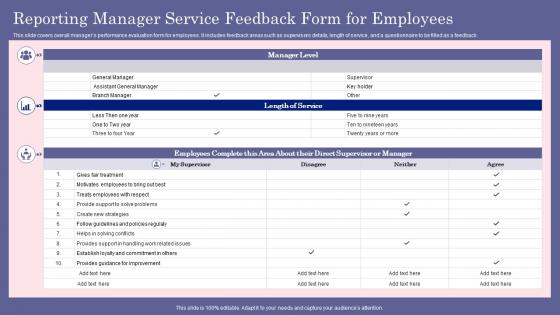
This slide covers overall managers performance evaluation form for employees. It includes feedback areas such as supervisors details, length of service, and a questionnaire to be filled as a feedback.
People who downloaded this PowerPoint presentation also viewed the following :
Reporting Manager Service Feedback Form For Employees with all 6 slides:
Use our Reporting Manager Service Feedback Form For Employees to effectively help you save your valuable time. They are readymade to fit into any presentation structure.





FAQs for Reporting Manager Service Feedback
Honestly, I'd go with pulse surveys and regular one-on-ones - those work really well. Anonymous feedback tools like Officevibe are solid too. Mix up scheduled check-ins with random temperature checks throughout the month. Don't sleep on Slack polls for quick questions! Video calls are huge for deeper stuff since you catch body language that texts miss completely. Multiple touchpoints beat waiting for quarterly reviews every time. Oh, and this is critical - actually do something with the feedback people give you. Otherwise they'll clam up real quick and you're back to square one.
Honestly, just make feedback feel normal instead of this big scary thing. Have your managers give it regularly - good stuff AND constructive stuff - so people get used to it. Train leaders to actually listen when someone speaks up (seriously, the defensive managers kill everything). Set up different ways for people to talk - skip levels, anonymous surveys, random coffee conversations, whatever works. Oh and here's the thing that'll make or break it - you HAVE to follow through. Someone raises an issue and nothing happens? Trust is gone forever. Show people that speaking up gets them heard, not fired.
Honestly, tech just cuts through all that feedback weirdness. Instead of waiting for those soul-crushing annual reviews, you can grab real opinions right when stuff happens - pulse surveys, quick apps, even basic Slack bots work great. Anonymous features are clutch because people will actually tell you what they think. Managers love the dashboards since they catch problems early. But here's the thing - fancy software means nothing if your team won't touch it. I'd honestly start with whatever you've already got before dropping money on something new.
Honestly, ditch the annual review thing and do monthly check-ins instead. Actually listen when people talk - don't just nod along. I've watched so many managers collect feedback then do absolutely nothing with it, which is worse than not asking at all. Ask them about specific stuff: what's blocking them, where they want to grow, what's frustrating about their role. Then here's the crucial part - tell them what you're gonna do about it and follow through. Maybe throw in some quick quarterly surveys too, but always share the results back. People hate feeling like their input disappears into the void.
Honestly, I'd start with surveys to spot the big patterns - people are way more honest when they're anonymous. You'll get tons of feedback fast, but it's pretty surface-level stuff. Then do interviews with a few people to dig into whatever issues popped up most. That's where you actually figure out what's going on since you can ask follow-ups and pick up on their tone. Interviews take forever though, and some people will definitely sugarcoat things face-to-face. But the combo works really well - surveys first to see trends, then interviews to understand the messy details behind them.
Track the numbers but also how people actually feel about it. Start with baseline measurements - productivity, turnover, engagement scores. Then check quarterly to see what's changed. Honestly, skip those awful annual surveys and do quick pulse checks instead. Way better response rates. Internal promotions and how fast you solve performance problems are good indicators too. Oh and don't go crazy with metrics at first - pick like 2 or 3 or you'll drown in spreadsheets. The sentiment stuff is just as important as the hard data.
Honestly, the worst thing you can do is collect feedback and then... nothing happens. People stop caring real quick when their suggestions vanish into thin air. Don't spam everyone with surveys either - I've seen teams get so annoyed they just click random answers. Target the right people with smart questions instead. Bad timing kills response rates too, so maybe skip launching during your crazy season? But here's what really matters: tell people what you heard and your next steps. Even if it's "we can't fix this yet because budget," at least they know you listened.
Ugh, negative feedback is the worst but honestly your reaction in those first few seconds is everything. Don't get defensive - just listen and thank them for being real with you. Ask questions to actually understand what's bugging them. Then figure out solutions together with deadlines you can stick to. Here's the thing though - you HAVE to follow through or they'll never trust you again. Employees remember when you actually change stuff based on what they said. Sometimes you can't fix everything, but at least explain why and acknowledge their frustration. Oh, and definitely follow up later to show progress.
Honestly, skip those big group meetings where everyone just stares at each other awkwardly. Anonymous surveys work way better - or just grab people for quick one-on-ones. Some folks need time to think, so maybe send discussion topics ahead of time? I've noticed smaller groups (like 2-3 people) feel less intimidating too. Digital feedback forms are clutch for the really quiet ones. The main thing is showing you actually care about their thoughts, not just checking a box. Oh, and let them pick whatever format doesn't make them want to hide under their desk.
Honestly, skip the once-a-year survey thing - it's pretty useless by the time you get results. Do quarterly pulse checks instead, maybe throw in a suggestion box or open office hours. Monthly one-on-ones are where the real magic happens though. People actually tell you what's going on when it doesn't feel like some formal HR thing. Just don't go overboard surveying everyone constantly or they'll tune out. Oh, and this part's crucial - always tell people what you heard and what you're doing about it. Otherwise why would they bother next time?
Honestly, collect feedback all year round instead of cramming it into review season. Way less weird for everyone. Mix it up - one-on-ones, anonymous surveys, peer stuff. But here's the thing that drives me crazy: so many managers ask for input then completely ignore it. Don't be that person! Even tiny changes show you're listening. Oh, and write everything down so you actually remember examples later. Try it with your next team member - the constant feedback loop thing really works, even if it feels awkward at first.
Honestly, your employees know way better than leadership what skills they're actually missing. Survey them about their biggest challenges right now - you'll probably be surprised. Maybe they're drowning in that new software while management thinks they need leadership training or whatever. Quick lunch sessions might work better than those marathon seminars nobody wants to sit through. The best part? Your team usually knows who's good at what better than managers do. They'll suggest peer training opportunities you never thought of. Stop guessing what people need and just ask them directly.
Ugh, feedback across cultures is tricky! Some people want it straight up - no sugarcoating. Others need you to be way more subtle or they'll feel embarrassed. Like, team members from certain backgrounds expect hints rather than direct criticism, while others are sitting there confused waiting for you to just say what you mean. Hierarchy plays into it too - in some cultures only the boss gives feedback, period. My advice? Just ask each person individually how they like to receive it. Sounds obvious but most managers skip this step and wonder why everything goes sideways.
Culture Amp, Glint, and 15Five are the big names - solid for feedback and analytics. But honestly? If you're just getting started, Typeform or Google Forms work fine. Don't overthink it. Slack and Teams have pulse survey add-ons too, which is nice since everyone's already logged in anyway. Here's the thing though - the tool doesn't really matter if you're not gonna do anything with the feedback. Pick whatever your team will actually use consistently. Oh, and make sure you can break down responses by department or role later. That part's clutch for spotting patterns.
Yeah, anonymous surveys with third-party platforms work great for this. They strip out identifying info before leadership sees anything. Just be super upfront about your process from the start - tell people exactly how you'll collect and use their feedback. I've watched companies completely blow this by promising anonymity then asking weirdly specific questions that basically out whoever wrote what. Aggregated reporting helps too, where you only share overall themes instead of individual comments. Oh, and actually stick to whatever confidentiality promises you make. People remember when you don't.
-
Awesomely designed templates, Easy to understand.
-
Delighted to see unique and eye-catching PowerPoint designs that are so easy to customize.