


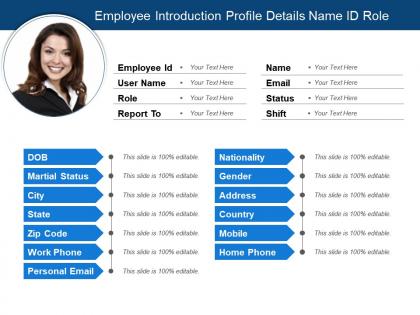
Employee introduction profile details name id role




Try Before you Buy Download Free Sample Product
 Impress Your
 Audience
 100%
100% Editable
 Save Hours
 of Time


Add greater conviction with our Employee Introduction Profile Details Name Id Role. Generate firm belief in the audience.
People who downloaded this PowerPoint presentation also viewed the following :
Employee introduction profile details name id role with all 5 slides:
Our Employee Introduction Profile Details Name Id Role assure fabulous growth. Consistently achieve beyond expectations.
FAQs for Employee introduction profile details
Start with the obvious stuff - name, job title, department, contact details. Professional headshot is a must. Then hit their main responsibilities and key skills. Experience and certifications if they're worth mentioning. Honestly, the reporting structure thing is huge since everyone's always confused about who their boss actually is. Start date matters too. Location if you're doing the hybrid thing. Educational background... eh, only if it's actually relevant to what they do day-to-day. Keep it short but cover everything - basically a cheat sheet so anyone can quickly figure out who this person is and what they're good at.
Employee profiles are honestly a game-changer for getting your team to actually know each other. People can see someone's background, skills, and what they're into outside work - breaks down those awkward barriers. You'll stop wondering "who knows about X?" because everyone's expertise is right there. Think of it like baseball cards but for work skills and personality quirks. The trick is keeping them updated with real professional strengths plus personal stuff that makes people feel human. Otherwise they just sit there collecting digital dust.
Honestly, employee profiles are like having a crystal ball for your team. You'll spot who's crushing it and ready to move up, plus see exactly where your skill gaps are hiding. They're clutch for planning headcount too - way better than just guessing what you'll need next quarter. The data helps you predict stuff like who might bail or which roles need backups lined up. Oh, and make sure you're tracking the stuff that actually matters - skills, performance metrics, what people want to do next. Basic info like age and hire date? Pretty useless for real planning decisions.
Honestly, I'd start by auditing some current profiles first - see what stories aren't getting told. Then restructure how profiles work. Add sections for language skills, volunteer stuff, weird career pivots, whatever makes people interesting beyond just job titles. Your templates probably favor certain experiences without you realizing it (happens all the time). Make space for people to actually share what makes them unique. Oh, and highlight different backgrounds right upfront - don't bury that stuff at the bottom. The goal is letting everyone's story come through while keeping it work-relevant.
Make sure everyone's profile follows the same format - same photo style, layout, all that stuff. Professional headshots work best. Include their role, specific wins they've had, and throw in one personal detail because honestly that's what people actually connect with. Don't use boring corporate language - actual accomplishments hit way harder. Oh, and definitely get people's approval first before putting their face in your deck. That's just common sense. Focus on why each person matters for whatever you're pitching. Keep things current too since roles change constantly.
Ditch the boring bullet points and tell mini-stories instead! Ask people about their career pivots - like how someone went from teaching to UX design. That stuff is gold. What really works is getting them to share a defining work moment during the interview process. Skip listing random facts and focus on the moments that shaped them professionally. Honestly, people eat up origin stories way more than achievements lists. Let their personality come through with actual anecdotes about challenges or unexpected turns. The "why" behind their path is what makes profiles stick.
Honestly, Canva's your best bet - super easy templates you can just drag stuff around on. Adobe Express is solid too if you want options. I'd actually steal some inspiration from LinkedIn profiles since everyone already gets that layout, you know? If your company's already using Notion or Monday.com, they've got profile templates baked in which is convenient. Figma's awesome for custom stuff but kinda tricky to learn at first. Oh, and definitely start with a template rather than going completely from scratch - learned that one the hard way lol.
So for remote folks, you really need communication styles, time zones, and which tools they actually use. Also throw in their home office situation and if they're cool with async stuff. Office people are easier - just note where they sit, when they're free for meetings, and basic habits. Like if Sarah's always at her desk by 6:30am with coffee (seriously, how?). Remote profiles need way more personality details since you can't just pop over to their desk. The whole point is painting a better picture of who they are when you can't see them every day.
Look at engagement first - are people actually viewing and updating their profiles? Cross-team collaboration is another big one to watch. Time-to-fill for internal roles should improve too since managers can find the right people faster. Employee satisfaction around feeling recognized matters more than you'd think. The real win though? When people start connecting with colleagues they never would've found otherwise. I'd also track if managers are using profiles for project assignments - that's where you see the practical impact. Honestly just pick 2-3 metrics that match whatever problem you were trying to solve originally.
Honestly, just build it into your regular routine instead of scrambling once a year. Set up quarterly check-ins where people update their own stuff - contact info, new skills, whatever certifications they got. Your HR system should ping you when profiles haven't been touched in 6+ months (people are surprisingly bad at remembering this). I always tie updates to performance reviews and when projects wrap up - that's when they've actually learned something new anyway. Oh, and definitely audit what's already outdated first. You'll probably be shocked at how much info is sitting there from like 2019.
So basically, employee profiles are like having a cheat sheet for each person - you can see their skills, what they're missing, how they learn best, all that stuff. Instead of boring everyone with the same cookie-cutter onboarding (which honestly just makes people zone out), you can actually tailor things to what they need. Same with training - match people up based on their levels or where they complement each other. Oh, and definitely check the profiles first before you plan anything. Otherwise you're just guessing at what people actually need, which is kinda pointless.
Honestly, employee profiles are like gold for recruiting. Get some real people from different departments to talk about their actual jobs - what they do, how they've grown, why they don't hate Mondays (okay, maybe that's pushing it). Just don't make it sound all corporate and fake. People can smell BS from a mile away. Throw these on your careers page, LinkedIn, wherever candidates are lurking. I'd start with maybe 3-4 people this quarter? The whole point is giving candidates a real look at what it's actually like to work there, not some sanitized HR version of reality.
Ugh, the worst thing is when people get super vague or throw in random stuff that doesn't even relate to the job. Focus on the skills and wins that actually matter - nobody cares about every little thing they've done. And please, avoid those boring buzzwords like "team player" unless you've got real examples to back it up. I swear everyone does this and it makes profiles sound identical. Be specific about results instead. Oh, and highlight what makes them stand out, not just their basic job duties. That's what actually gets attention.
Honestly, just add feedback sections right into their profiles. Real-time comments, goal updates, development notes - whatever comes up. Don't wait for those awkward yearly reviews (seriously, who has time?). Managers and teammates can drop feedback as stuff happens, which is way better than trying to remember everything months later. Make it collaborative too - let people add their own goals and thoughts. Monthly check-ins work great for reviewing what's new and figuring out next moves. Creates this ongoing record that actually shows how someone's growing instead of just a random snapshot once a year.
Honestly, employee profiles are such a game-changer for team vibes. People can actually connect beyond just work stuff - like seeing someone's weekend hiking pics or finding out you both have rescue dogs. New hires especially love this because they can spot common interests right away instead of those awkward small-talk moments. It breaks down the whole formal office thing we're all tired of. When people share more about themselves, teams just feel safer and more open. Oh, and definitely update your own profile first - nobody wants to be the only one putting themselves out there, you know?
-
Nice and innovative design.
-
Qualitative and comprehensive slides.