


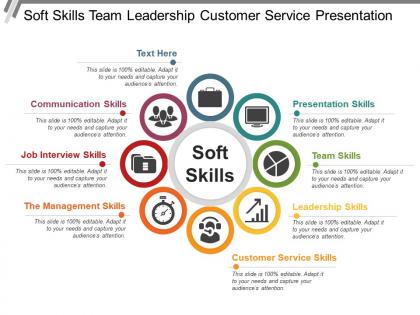
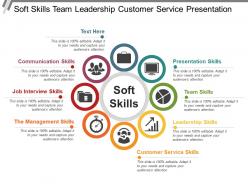
Soft skills team leadership customer service presentation




Try Before you Buy Download Free Sample Product
 Impress Your
 Audience
 100%
100% Editable
 Save Hours
 of Time


Be better equipped with our Soft Skills Team Leadership Customer Service Presentation. Employ the best available in the business.
People who downloaded this PowerPoint presentation also viewed the following :
Soft skills team leadership customer service presentation with all 5 slides:
Get entrenched with our Soft Skills Team Leadership Customer Service Presentation. Dig deep into the foundation of each aspect.


FAQs for Soft skills team leadership
Communication is probably the biggest one - like actually being able to explain stuff without confusing people. Adaptability too, since honestly everything changes constantly at most jobs these days. Emotional intelligence matters way more than people think - you've gotta work with all types. Problem-solving and critical thinking are obvious but super important. Even if you're not going for management, they want to see leadership potential because you might end up training new people or running projects. Oh, and don't just rattle off a list in interviews. Give them actual examples of when you've done this stuff.
Honestly, good communication just cuts through so much BS that normally slows teams down. People aren't constantly wondering what they're supposed to be doing or redoing stuff because they misunderstood. Trust builds way faster when your teammates actually know where you stand - no more guessing games. Quick issues don't turn into massive headaches either since you catch them early. My biggest tip? Just be way more specific in your emails instead of assuming everyone gets it. I learned this the hard way lol.
Honestly, empathy is like a cheat code for management. You get what actually motivates people instead of just guessing. My best boss could tell I was stressed before I even knew it myself - that kind of awareness makes such a difference. People work harder for leaders who actually understand them, not just bark orders. Simple switch: ask "how's this sitting with you?" instead of "is it done?" Sounds cheesy but it works. When you see their perspective, everything from assigning projects to handling drama becomes way easier. Trust builds so much faster too.
Okay so active listening is honestly a game-changer because people can tell when you're actually paying attention vs. just waiting to jump in. When you paraphrase what they said or ask follow-up questions, it shows you care about their thoughts. Works wonders for relationships and work stuff too - prevents those annoying misunderstandings. I swear nobody does this anymore, so you'll literally stand out just by putting your phone down during conversations. Oh and reflecting back what you heard? That builds trust like crazy because people feel genuinely understood for once.
Start by just checking in with yourself throughout the day - like, what am I actually feeling right now and why? When people talk to you, really listen to their tone and watch their body language, not just the words. Mindfulness helps a ton, or honestly even just taking a few deep breaths before you respond (has literally saved me from sending so many cringey emails lol). Ask trusted friends how you come across sometimes. The whole thing is about being genuinely curious about emotions - yours and everyone else's. Pick one thing to work on this week and see what happens!
Honestly, being adaptable is like your cheat code for solving problems fast. When stuff changes unexpectedly (and it always does), you can just switch gears instead of panicking about your original plan. I've noticed adaptable people stay way calmer when things get crazy, which obviously helps you think clearer. You become this problem-solving chameleon who can grab new info quickly and try different approaches without losing steam. My advice? Practice small pivots every day - maybe take a different route home or try a new coffee order. Sounds dumb, but it builds that flexibility muscle for the real curveballs.
Honestly, good conflict resolution changes everything for teams. People stop tiptoeing around problems and actually hash things out. When disagreements come up, instead of everyone getting weird and defensive, they feel like their voice matters. Trust builds up naturally. The trick is keeping it about the issue, not the person - way easier said than done though. Teams that figure this out communicate so much better and make smarter decisions because they're not just agreeing to avoid drama. Different viewpoints actually get discussed instead of swept under the rug.
Dude, self-motivation is basically what separates the people who actually get somewhere from those who just... don't. You know what I mean? Like, when you've got that internal drive, you're not sitting around waiting for your boss to hand you opportunities. You go find them yourself. Push through the crappy days, keep learning new stuff, take ownership when things go sideways. I've watched so many smart people plateau because they expected someone else to manage their career for them. Here's the thing though - figure out what part of your job actually gets you excited first. That's your starting point. Use that energy to fuel everything else.
Speaking up in meetings is honestly a game-changer for your career. I've watched people get promoted just because they weren't afraid to present ideas while everyone else stayed silent. Managers start seeing you as leadership material when you can communicate confidently. You'll become their go-to for client meetings and big presentations. My old company had a Toastmasters group which was actually pretty helpful - or just volunteer for the next team presentation. Even small speaking moments add up. It's weird how much visibility matters, but it really does open doors you didn't even know existed.
Honestly, it just makes everything smoother when you get how different people work. Your German coworker being super direct? That's normal for them. Takes forever to hear back from your teammate in Tokyo? They're probably being thoughtful, not ignoring you. Understanding these differences prevents those awkward moments where projects get derailed over miscommunication. Ask people about their work style instead of assuming everyone operates like you do - I learned this the hard way lol. Once you figure out everyone's communication preferences, virtual meetings actually become useful and you'll build way better relationships with your international team.
Honestly, networking is just about being a decent person who actually helps others out. Don't just collect business cards like some weird hobby. When someone needs an intro or has a question in your wheelhouse, jump in and help. Coffee chats work great, or just stay active on LinkedIn - whatever feels natural. The trick is being consistent instead of only popping up when you need a favor (we all see right through that). Oh, and reconnect with a few people this week. Three's a good number to start with. You'll be surprised where those convos go.
Honestly, preparation is everything - research what they actually need beforehand and know your own goals. Listen way more than you talk during the actual conversation. People basically tell you their priorities without meaning to if you just pay attention. That "flinch" thing when they give their first offer? Sounds cheesy but it genuinely works. Try to figure out what they really want underneath what they're saying. Oh, and always have a backup plan if the whole thing falls apart. Practice on random stuff first - like haggling with contractors or even deciding where to eat with your family. You'll get better at reading people.
Look, critical thinking basically stops you from making dumb business decisions based on gut feelings alone. You start questioning your assumptions and actually weighing the evidence instead of just going with whatever pops into your head first. I've dodged some real bullets this way, honestly. Now I automatically ask stuff like "what data backs this up?" or "how could this backfire?" It's way better than just winging it. Oh, and here's a simple trick - spend 5 minutes listing pros, cons, and potential risks before any major decision. Works every time.
Honestly, having a mentor is like having someone watch you in action and give you feedback you'd never get otherwise. They'll show you how to handle awkward conversations or office drama without making things worse. Plus they catch stuff you totally miss - like when you're being way too blunt in emails (guilty as charged). The trick is finding someone whose people skills you actually respect, not just someone senior. Then ask them for real specific feedback instead of generic "how do I advance my career" stuff. Trust me, it makes a huge difference.
Dude, role-playing scenarios work amazing for this stuff. Have teams brainstorm weird solutions to actual workplace problems instead of just sitting through boring lectures. Improv exercises are surprisingly effective for teaching active listening - way more fun than you'd expect. Design thinking workshops are solid too since people learn collaboration while messing around with sticky notes and prototyping ideas. Honestly, anything experiential beats theoretical training every time. Oh, and try ending with "innovation challenges" where they use their new skills on real problems. Makes everything click better.
-
Innovative and attractive designs.
-
Much better than the original! Thanks for the quick turnaround.