


Employee Recognition Program Powerpoint Ppt Template Bundles





Try Before you Buy Download Free Sample Product
 Impress Your
 Audience
 100%
100% Editable
 Save Hours
 of Time


Our Employee Recognition Program Powerpoint Ppt Template Bundles are topically designed to provide an attractive backdrop to any subject. Use them to look like a presentation pro.
People who downloaded this PowerPoint presentation also viewed the following :
Employee Recognition Program Powerpoint Ppt Template Bundles with all 18 slides:
Use our Employee Recognition Program Powerpoint Ppt Template Bundles to effectively help you save your valuable time. They are readymade to fit into any presentation structure.







FAQs for Employee Recognition Program Powerpoint
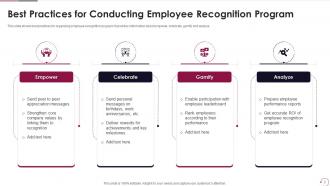
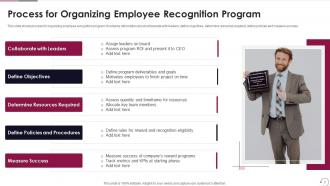
Key components of an effective employee recognition program include clear criteria, timely acknowledgment, personalized rewards, peer-to-peer recognition systems, and leadership involvement. These elements work together by creating transparency, encouraging consistent appreciation, and fostering positive workplace culture, with many organizations finding that strategic recognition programs significantly enhance employee engagement, reduce turnover, and ultimately drive productivity improvements.
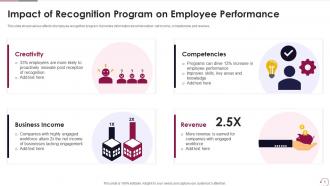
Employee recognition significantly boosts workplace morale and productivity by fostering engagement, reducing turnover, and creating positive reinforcement cycles that motivate continued excellence. Through strategic recognition programs, organizations streamline performance management, enhance team collaboration, and accelerate goal achievement, with many companies finding that consistent acknowledgment delivers increased output, improved retention rates, and ultimately stronger competitive advantage.
Organizations should establish criteria including performance metrics, tenure requirements, peer nominations, goal achievement, and behavioral alignment with company values. These standards help ensure recognition programs remain fair, meaningful, and strategic, with many companies finding that combining quantitative results with qualitative contributions ultimately enhances employee engagement and reinforces desired organizational culture.
Technology enhances employee recognition initiatives by automating nomination processes, enabling real-time peer-to-peer recognition platforms, and providing data analytics for tracking engagement patterns. Through mobile apps and integrated HR systems, organizations streamline award distribution, personalize recognition experiences, and measure program effectiveness, ultimately delivering higher employee satisfaction and improved retention rates.
Leadership sets the foundation for recognition culture by modeling appreciative behaviors, establishing recognition frameworks, communicating the importance of acknowledgment, and consistently celebrating achievements across all organizational levels. When leaders actively participate in recognition initiatives, personally acknowledge contributions, and integrate appreciation into daily operations, they create psychological safety and engagement, ultimately driving higher performance, retention, and organizational commitment throughout their teams.
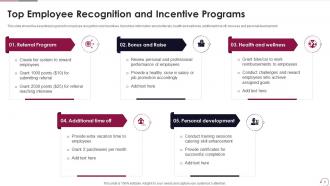
Innovative employee recognition approaches include peer-to-peer nomination platforms, personalized experience rewards, professional development opportunities, flexible work arrangements, and public social media acknowledgments. These methods enhance engagement by offering meaningful, individualized recognition that aligns with diverse employee preferences, with many organizations finding that experiential rewards and growth opportunities deliver stronger retention and motivation than traditional plaques or certificates.
Companies can tailor recognition programs for remote teams by implementing virtual recognition platforms, hosting online celebration events, creating digital badges or certificates, establishing peer-to-peer nomination systems, and scheduling regular video acknowledgments during team meetings. These approaches enhance team cohesion and maintain engagement across distributed workforces, with many organizations finding that personalized digital recognition and flexible timing accommodate different time zones while delivering meaningful appreciation experiences.
Employee recognition program success metrics include employee engagement scores, retention rates, productivity measurements, participation levels, and customer satisfaction ratings. These indicators help organizations assess program effectiveness by tracking improved morale, reduced turnover, enhanced performance outcomes, and overall workplace culture transformation, with many companies finding that comprehensive measurement approaches deliver stronger competitive advantages and operational efficiency.
Peer-to-peer recognition empowers employees to acknowledge each other's contributions directly, creating more frequent, timely feedback compared to traditional top-down approaches that rely solely on managerial oversight. This horizontal recognition model enhances team collaboration, builds stronger workplace relationships, and delivers more authentic appreciation, with many organizations finding that employees value peer validation as much as formal managerial praise.
Common pitfalls include inconsistent recognition criteria, delayed acknowledgments, one-size-fits-all approaches, lack of manager training, and insufficient budget allocation. These oversights undermine program effectiveness by creating perceptions of favoritism, reducing impact through untimely rewards, and failing to address diverse employee preferences, with many organizations finding that strategic program design ultimately delivers enhanced engagement and retention.
Recognition should be given consistently and frequently, with a mix of immediate acknowledgment for daily achievements and formal recognition monthly or quarterly for significant contributions. This balanced approach prevents recognition fatigue while maintaining motivation, with many organizations finding that regular, varied recognition programs enhance employee engagement, reduce turnover, and ultimately drive sustained performance improvements across teams.
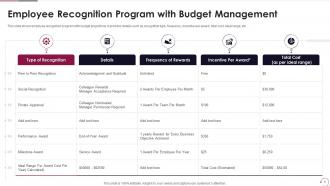
Budget considerations for recognition programs include technology platform costs, reward procurement expenses, administrative overhead, training investments, and ongoing maintenance fees. These expenditures deliver measurable returns through improved retention rates, enhanced productivity levels, and reduced recruitment costs, with many organizations finding that strategic recognition investments ultimately generate significant cost savings while strengthening competitive advantage.
Organizations align recognition programs with company values by integrating core principles into award criteria, celebrating behaviors that demonstrate these values, and connecting recognition to specific business objectives like innovation, teamwork, or customer service excellence. This strategic alignment creates a culture where employees understand expectations while driving measurable outcomes, with many companies finding that value-based recognition increases engagement and reinforces desired behaviors across all departments.
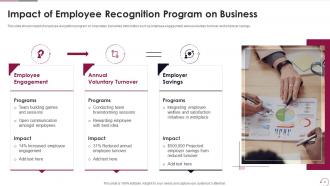
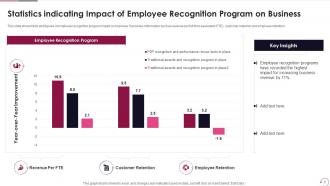
Employee recognition significantly reduces turnover by improving job satisfaction, strengthening emotional connections to the organization, and increasing employee engagement levels. Companies with robust recognition programs typically experience 31% lower voluntary turnover rates, with many finding that consistent appreciation efforts create stronger workplace loyalty, ultimately delivering substantial cost savings on recruitment and training expenses.
Employee feedback shapes recognition strategies by revealing preferred recognition types, timing preferences, and program gaps through surveys, focus groups, and performance reviews. This input enables organizations to customize approaches, whether employees value public acknowledgment, monetary rewards, or professional development opportunities, ultimately delivering more meaningful recognition experiences and stronger employee engagement across diverse teams.
-
I discovered some really original and instructive business slides here. I found that they suited me well.
-
You guys are life-saver when it comes to presentations. Honestly I cannot do much without your services. Thank you!!!