


Engineering and technology powerpoint presentation slides




Try Before you Buy Download Free Sample Product
 Impress Your
 Audience
 100%
100% Editable
 Save Hours
 of Time


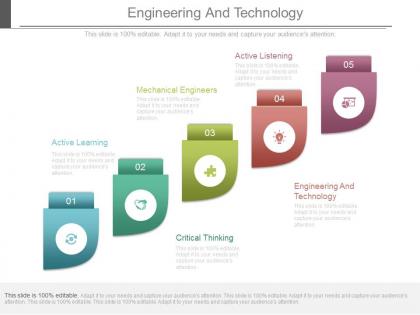
The symbiosis between engineering and technology is the landmark of current business environment and when you have to demonstrate their beneficial interdependence for your organization, our sleek new PowerPoint presentation slide can be the perfect choice. Woo your audience with an engaging perspective for the vision of your business by outlining the technical evolution supported by engineering solutions and business process re-engineering in a lucid ideation with this presentation template. Get together your technical team to design and model the technology roadmap and then rallying management support is assured when you present it in this PPT slide design. This presentation design is equally suitable for depicting technological evolution of your products, the customer spending trends on new products, the market trends in the engineering industry or lay down the strategic plan for system integration. Capture the attention of your audience, bag the clients and clinch the projects you want with this example of PPT. Add that extra dimension with our Engineering And Technology Powerpoint Presentation Slides. You will become the brand above.
People who downloaded this PowerPoint presentation also viewed the following :
Engineering and technology powerpoint presentation slides with all 7 slides:
Evaluate concepts with our Engineering And Technology Powerpoint Presentation Slides. Be able to assess the depth behind it.


FAQs for Engineering and technology
Engineering tech is way more hands-on - you're actually building and fixing stuff instead of just designing it. Traditional engineering goes deep into theory and math (hello calculus III), but engineering tech focuses on making things work in the real world. Engineers design the bridge, you make sure it doesn't fall down lol. Honestly, the lighter math requirements make it way more doable for most people. If you learn better by getting your hands dirty rather than staring at equations all day, this could be perfect for you.
Dude, AI is changing everything in engineering right now. You've got machine learning predicting when equipment's about to fail, which is honestly pretty cool. CAD tools are getting insane at suggesting designs you'd never think of. Digital twins let you test stuff virtually before building anything - saves so much headache. The predictive maintenance thing is probably the biggest game-changer though. If you haven't played around with any AI tools yet, just pick something small. Maybe try an AI design assistant or some basic predictive analytics. Don't overthink it - just see what clicks with your current projects.
Look, you're literally the person making all this green stuff actually work. Engineers draw up the plans, but you're out there installing solar panels and fixing HVAC systems when they inevitably break down. Testing renewable tech, monitoring environmental compliance, collecting data to see if these sustainable solutions are legit or just hype. Honestly, the hands-on work you do is what bridges that gap between theory and reality. Your role is way more crucial than most people realize. Keep track of your sustainability projects - seriously, that experience is gold right now.
So basically you're the person who makes IoT actually function in the real world. Setting up sensors, fixing network issues, dealing with devices that just randomly decide to stop communicating (seriously happens all the time). You'll prototype stuff, test it before it goes big, and manage things like power usage and keeping systems running smoothly. The cool part? You work with both hardware and software sides. It's honestly pretty hands-on work - you're troubleshooting connectivity problems and making sure data flows between devices without breaking. Real-world implementation is messier than theory, but that's where you come in.
Man, the tech world just won't slow down, will it? Every week there's some new AI tool we're supposedly missing out on. Companies want us moving faster with smaller teams but somehow keeping the same quality - makes total sense, right? What really gets me is how they expect everyone to be this weird hybrid now. Like you need hands-on technical skills AND be a data wizard. The skills gap is real. My take? Keep learning stuff that actually interests you, and definitely call out those crazy deadlines when you see them. Someone has to!
Dude, engineering tech and project management go hand in hand - you can't really do one without the other. Technical specs basically determine your project scope, but PM principles keep everything from falling apart. I've watched so many smart engineers completely bomb because they totally ignored the project management stuff. Short version: you need both the technical know-how AND understanding of real-world constraints like budgets and timelines. Oh, and start thinking about project lifecycles way early in your planning phase. Trust me, that integration will either save your butt or completely screw you over.
Get hands-on experience first - internships, co-ops, whatever you can find. CAD software is huge, so get comfortable with that early. Problem-solving skills matter way more than people think. What really separates you from regular engineering grads is actually building and testing stuff, not just theory. Join robotics teams or tech clubs if your school has them. The connections you make are honestly half the value. Oh, and pick a focus area soon - manufacturing, electronics, civil tech, whatever clicks with you. Then dive deep into certifications for that field. Trust me on this one.
Honestly, the biggest changes are hands-on learning with actual industry tools and tons of AI/automation classes now. Schools are partnering directly with companies so you get real workplace experience instead of just theory from textbooks. Remote labs and VR stuff exploded after COVID too. They're throwing cybersecurity modules into pretty much every engineering tech program. Soft skills like project management are way more emphasized now - which actually makes sense since you'll need that stuff. Oh, and check out community colleges first! They're usually ahead of universities when it comes to practical training.
So engineering technology is basically how we take all that fancy research and actually make it work in real factories. Like, you know those AI algorithms everyone talks about? Engineering techs figure out how to turn them into systems that predict when your machines will break down. It's not all robots though (even if robots are pretty awesome). Process optimization, automated quality control, greener manufacturing - that stuff matters too. The whole point is making theory practical instead of just academic. My advice? Pick one thing that's slowing you down right now and see what new tech could fix it.
Yeah, you're basically stuck in the middle all the time - translating fancy designs into stuff that actually works. The worst part? You'll spot safety issues but some manager decides cheaper materials are "good enough." I've seen it happen way too much. Manufacturing teams cut corners and guess who notices first? You do. But here's the thing - you're rarely the one making final calls, so you get that awkward "do I push back or stay quiet" moment. My advice: write down your concerns every time. Know who to escalate to before things go sideways.
Start with multi-layered security - think firewalls, encryption, proper access controls. Regular vulnerability checks are huge too. Honestly, getting into the hacker mindset is weirdly addictive once you try it! Map out your current weak spots first, then tackle the scary ones. You'll want solid authentication systems and some kind of incident response plan ready to go. Oh, and don't skip security audits - I know they're boring but they catch stuff you'd miss. Both hardware and software need attention, but prioritize whatever could hurt you most if it got compromised.
Dude, 3D printing is totally changing the game for engineering projects. Instead of waiting weeks for prototypes, you're literally testing ideas in a few hours. The geometries you can create now? Some of those lattice patterns are just insane - couldn't make that stuff with regular manufacturing if you tried. Aerospace companies are using it for actual production parts, not just prototypes. Medical devices too, especially when they need custom fits. Honestly, if you're not messing around with it for your early design phases, you're missing out. It'll speed up everything.
Automation and data analysis are massive right now. Python's super useful to learn, or even basic PLC stuff since literally everything's getting automated. CAD skills are always in demand too. Troubleshooting and project management will set you apart - companies love when you can fix things AND wrangle people. Communication matters way more than people think because you're constantly explaining technical stuff to production teams who just want things to work. Oh, and definitely get certified in whatever software your industry uses standard. That's usually what gets your resume past the first cut anyway.
So basically, engineering tech makes infrastructure way smarter about handling crazy weather. IoT sensors track structural stress as it happens, self-healing concrete actually fixes its own cracks (which is honestly wild), and AI systems predict floods before they hit. Smart grids are probably the coolest example - they'll automatically reroute power when storms roll through instead of just... failing. It's like giving your infrastructure a brain instead of crossing your fingers every hurricane season. I'd start with monitoring tech on whatever's most likely to break first.
Dude, engineering problems today are way too messy for just one person to figure out. Like, you'll have mechanical engineers teaming up with software people, or materials scientists working with electrical folks. Sometimes they even bring in psychologists for UI stuff - which honestly makes total sense when you think about it. Try building a smartphone with only one type of engineer and see how that goes! Different perspectives mixing together? That's where the cool solutions happen that nobody would've thought of alone. My advice? Just grab coffee with people from other departments sometime and chat about what you're working on.
-
Presentation Design is very nice, good work with the content as well.
-
Unique and attractive product design.