


Technology Development Project Planning Powerpoint Presentation Slides




Try Before you Buy Download Free Sample Product
 Impress Your
 Audience
 100%
100% Editable
 Save Hours
 of Time


Check out our professionally designed presentation on Technology development project planning that helps project managers and developers visualize all the plans for one or more software programs. This PPT presentation covers Software Development Resource Planning, resource requirement timeline, Task allocation according to Resources, and tools required by the project resources. It also includes software requirements types such as functional and non-functional requirements and domain requirements. Here we also cover detailed design specifications such as Software Design Levels Process Activities Comprising Software Detailed Design, Detailed Design Core Components, Detailed Design Implementation Model, and Detailed Design Software Architecture. It also covers data migration stages, including preparation, using developing tools, trial data migration, validation by customer and testing, Data Migration Approaches, and data mitigation process. This PowerPoint presentation covers project documentation, product documentation, system documentation, user documentation, and process documentation structure. In this presentation, we include software development project employees training programs, criteria for training, and training schedule. At last, it describes Successful Production System Implementation strategies and the project closedown process. Get access to this powerful template now.
People who downloaded this PowerPoint presentation also viewed the following :
Content of this Powerpoint Presentation
Slide 1: This slide introduces Technology Development Project Planning. State your company name and begin.
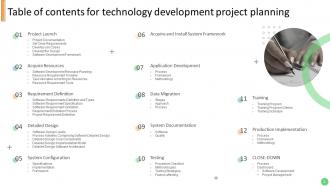
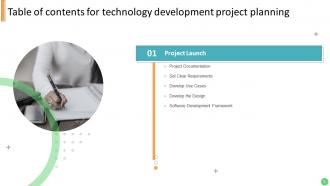
Slide 2: This slide presents Table of Content for the presentation.
Slide 3: This slide highlights title for topics that are to be covered next in the template.
Slide 4: This slide covers software project documentation process.
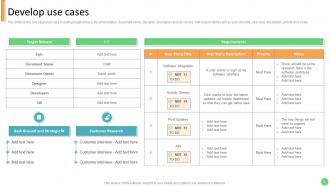
Slide 5: This slide shows requirements for the software development project.
Slide 6: This slide presents one page user case including target release, document status, document owner, etc.
Slide 7: This slide displays software design touch points including phases such as initiate, discovery, delivery, etc.
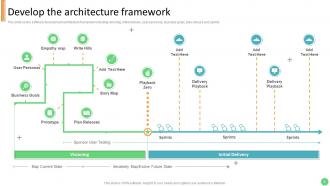
Slide 8: This slide represents software development architecture framework.
Slide 9: This slide highlights title for topics that are to be covered next in the template.
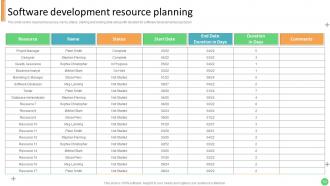
Slide 10: This slide showcases Software Development Resource Planning.
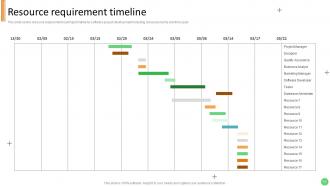
Slide 11: This slide covers resource requirement roadmap timeline for software project development.
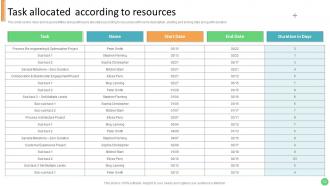
Slide 12: This slide shows roles and responsibilities along with tasks allocated according to resources.
Slide 13: This slide presents resource requirement inputs tools such as project charter, project management plan, project documents, etc.
Slide 14: This slide highlights title for topics that are to be covered next in the template.
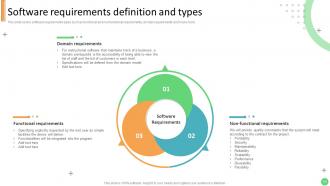
Slide 15: This slide covers software requirements types such as functional and non functional requirements.
Slide 16: This slide covers software requirements specifications including features like client specifications, system customers, managers, etc.
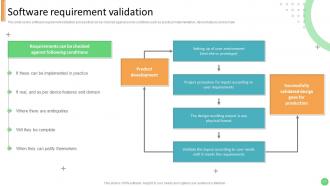
Slide 17: This slide represents software requirement validation process that can be checked against some conditions.
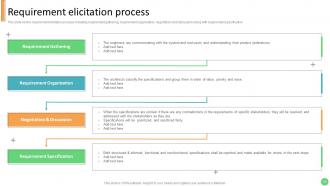
Slide 18: This slide showcases requirement elicitation process.
Slide 19: This slide covers requirements definition including functional and non-functional requirements.
Slide 20: This slide highlights title for topics that are to be covered next in the template.
Slide 21: This slide displays software design levels such as architectural design, high- level design, and detailed design.
Slide 22: This slide shows Process Activities Comprising Software Detailed Design.
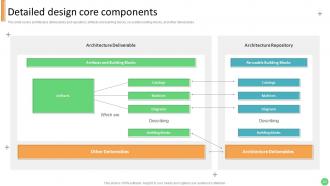
Slide 23: This slide covers architecture deliverables and repository, artifacts and building blocks, re-usable building blocks, etc.
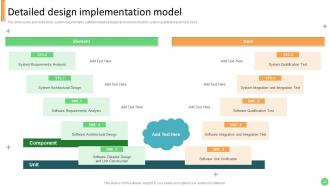
Slide 24: This slide presents elements items, system requirements, software detailed design and unit construction.
Slide 25: This slide covers detailed design software architecture including client devices and client application.
Slide 26: This slide highlights title for topics that are to be covered next in the template.
Slide 27: This slide displays detailed design system configuration including the specification of computer from its hardware components.
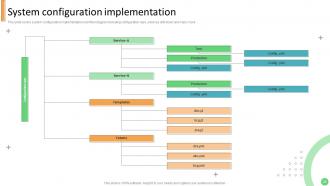
Slide 28: This slide showcases system configuration implementation workflow diagram.
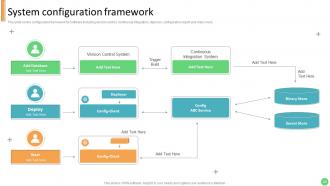
Slide 29: This slide shows configuration framework for software including version control, continuous integration, deployer, etc.
Slide 30: This slide highlights title for topics that are to be covered next in the template.
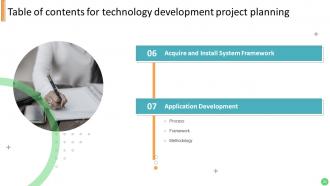
Slide 31: This slide covers software acquisition and installation process.
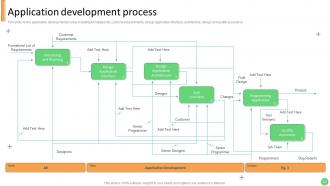
Slide 32: This slide shows application development process including formalized list, customer requirements, design application interface, etc.
Slide 33: This slide displays application development framework including high level full stack framework, code generators aggregators, etc.
Slide 34: This slide represents agile application development methodology including requirements, integrate tests, review, etc.
Slide 35: This slide highlights title for topics that are to be covered next in the template.
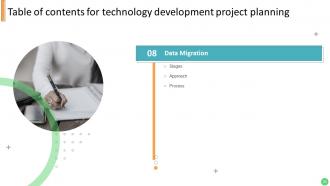
Slide 36: This slide showcases data migration stages including time span such as preparation, using developing tools, trial data migration, etc.
Slide 37: This slide covers data migration analysis and discovery, extract, cleanse, validate, etc.
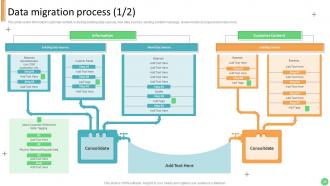
Slide 38: This slide shows information customer content, including existing data sources, new data sources, existing content meta tags, etc.
Slide 39: This is another slide continuing Data Migration Process.
Slide 40: This slide highlights title for topics that are to be covered next in the template.
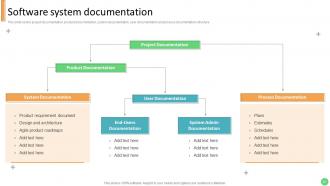
Slide 41: This slide presents project documentation, product documentation, system documentation, etc.
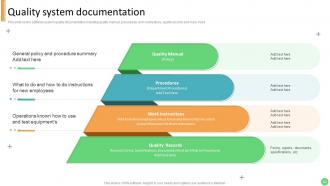
Slide 42: This slide displays software system quality documentation including quality manual, procedures, work instructions, etc.
Slide 43: This slide highlights title for topics that are to be covered next in the template.
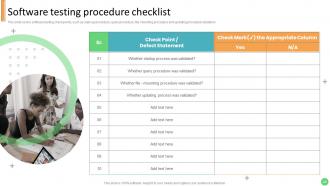
Slide 44: This slide covers software testing checkpoints, such as start-up procedure, query procedure, file mounting procedure, etc.
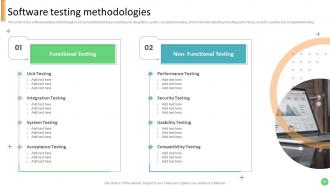
Slide 45: This slide represents software testing methodologies such as functional testing's including unit, integration, system, etc.
Slide 46: This slide showcases strategies for software testing such as time fixing, passing the buck, manual testing exploratory, etc.
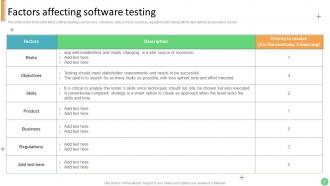
Slide 47: This slide covers factors that effect software testing such as risks, objectives, skills, etc.
Slide 48: This slide highlights title for topics that are to be covered next in the template.
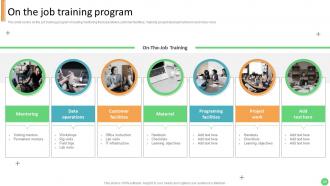
Slide 49: This slide shows on the job training program including mentoring field operations customer facilities, material, project development, etc.
Slide 50: This slide covers software development training criteria such as lagging practices, intermediate improvement and leading practices etc.
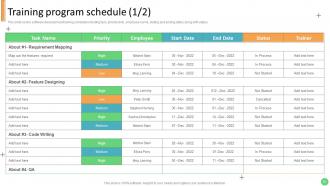
Slide 51: This slide covers software development training schedule including task, priority level, employee name, etc.
Slide 52: This is another slide continuing Training Program Schedule.
Slide 53: This slide displays Successful Production System Implementation.
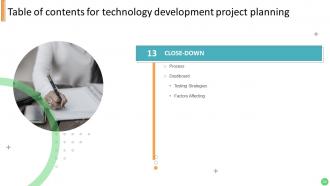
Slide 54: This slide highlights title for topics that are to be covered next in the template.
Slide 55: This slide covers software project close down process starting from handover software to user.
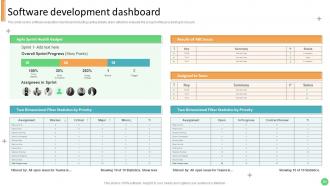
Slide 56: This slide covers software evaluation dashboard including spring details.
Slide 57: This slide covers project evaluation dashboard including planning, design , development and testing.
Slide 58: This slide contains all the icons used in this presentation.
Slide 59: This slide is titled as Additional Slides for moving forward.
Slide 60: This is Our Mission slide with related imagery and text.
Slide 61: This is About Us slide to show company specifications etc.
Slide 62: This slide shows Post It Notes. Post your important notes here.
Slide 63: This slide depicts Venn diagram with text boxes.
Slide 64: This slide contains Puzzle with related icons and text.
Slide 65: This is Our Team slide with names and designation.
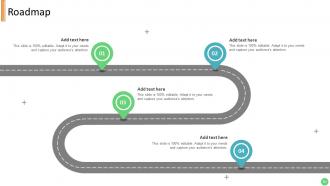
Slide 66: This slide presents Roadmap with additional textboxes.
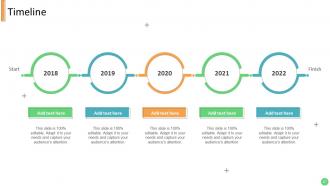
Slide 67: This is a Timeline slide. Show data related to time intervals here.
Slide 68: This is Our Goal slide. State your firm's goals here.
Slide 69: This is a Thank You slide with address, contact numbers and email address.
Technology Development Project Planning Powerpoint Presentation Slides with all 74 slides:
Use our Technology Development Project Planning Powerpoint Presentation Slides to effectively help you save your valuable time. They are readymade to fit into any presentation structure.
































FAQs for Technology Development Project Planning
Key elements include project scope definition, stakeholder identification, resource allocation, timeline establishment, risk assessment, and technology infrastructure requirements. These components work together by ensuring clear objectives, proper team alignment, and realistic expectations, with many organizations finding that thorough upfront planning significantly reduces implementation delays, minimizes cost overruns, and ultimately delivers more successful project outcomes.
Stakeholder analysis significantly influences technology project planning by identifying key decision-makers, end-users, and potential resistors, enabling teams to tailor communication strategies, resource allocation, and implementation timelines accordingly. Through comprehensive stakeholder mapping, organizations streamline project approval processes, enhance user adoption rates, and minimize implementation risks, with many technology initiatives finding that early stakeholder engagement ultimately delivers faster deployment and stronger business outcomes.
Project management platforms like Microsoft Project, Asana, Jira, Smartsheet, and Monday.com are most effective for technology project scheduling and resource management. These tools streamline project workflows by automating task dependencies, tracking resource allocation, and providing real-time progress visibility, with many organizations finding that integrated dashboards ultimately enhance team collaboration and delivery timelines.
Agile methodologies enhance technology project planning by enabling iterative development, continuous feedback loops, and adaptive resource allocation throughout project lifecycles. Through sprint-based planning and regular stakeholder collaboration, organizations streamline delivery timelines, minimize project risks, and respond quickly to changing requirements, ultimately delivering higher-quality solutions with improved team productivity and customer satisfaction.
Technology project risks include scope creep, budget overruns, technical integration challenges, resource availability constraints, and vendor dependency issues. These risks can significantly impact project timelines and deliverables, with many organizations finding that proactive risk assessment during planning enables better resource allocation, stakeholder alignment, and contingency strategies, ultimately delivering more predictable outcomes and reduced project failures.
Setting realistic technology project timelines requires thorough requirement analysis, stakeholder input gathering, resource availability assessment, and buffer time allocation for unexpected challenges. Through structured project management methodologies, teams can break complex deliverables into measurable milestones, account for testing phases and integration cycles, while maintaining flexibility for scope adjustments, ultimately delivering projects on schedule and within budget parameters.
Budgeting serves as the financial backbone of technology project plans, controlling resource allocation, timeline feasibility, and scope boundaries while preventing costly overruns. Effective budget management enables organizations to balance infrastructure investments with operational needs, ensuring projects deliver measurable ROI through strategic cost control, ultimately providing competitive advantage and sustainable growth in increasingly complex technology landscapes.
Effective communication in tech projects requires establishing clear channels, regular check-ins, collaborative tools like Slack or Microsoft Teams, standardized documentation processes, and defined roles and responsibilities. These practices streamline information flow, minimize misunderstandings, and enhance project transparency, with many development teams finding that structured communication protocols ultimately deliver faster problem resolution and improved project outcomes.
**INPUT**: What are the best practices for drafting a technology project scope statement? **OUTPUT**: Best practices for drafting technology project scope statements include defining clear deliverables, establishing measurable success criteria, identifying stakeholder responsibilities, setting realistic timelines, and documenting technical requirements with precision. These elements streamline project execution by minimizing scope creep, enhancing team alignment, and ensuring resource allocation efficiency, with many organizations finding that comprehensive scope statements ultimately deliver faster implementation timelines and significantly improved project success rates. *[Word count: 60 words]*
Software development planning emphasizes iterative sprints, continuous testing, and flexible requirements adaptation, while hardware development requires more rigid upfront specifications, longer lead times, and physical prototyping phases. Manufacturing constraints, supply chain coordination, and regulatory compliance create additional complexity for hardware projects, ultimately requiring different resource allocation strategies and timeline management approaches.
Essential metrics for measuring technology project success include budget adherence, timeline compliance, scope completion, quality benchmarks, user adoption rates, and ROI achievement. These metrics enable organizations to track performance across financial, operational, and strategic dimensions, with many finding that combining quantitative measures like cost-per-deliverable with qualitative assessments ultimately delivers comprehensive project visibility and stakeholder confidence.
Change management strategies integrate into technology project planning through stakeholder engagement mapping, communication timeline development, training program coordination, and resistance mitigation protocols from project initiation. This strategic combination enables organizations to address user adoption challenges proactively, streamline implementation timelines, and minimize operational disruptions, with many companies finding that early change management integration reduces project failure rates and accelerates user acceptance.
Technology project planning must incorporate data privacy regulations like GDPR and CCPA, cybersecurity compliance standards, intellectual property protections, vendor contract terms, and industry-specific requirements. These legal frameworks streamline risk management by establishing clear governance protocols, ensuring regulatory alignment, and protecting organizational assets, with many enterprises finding that proactive compliance planning ultimately delivers faster project approvals and reduced operational vulnerabilities.
User feedback can be incorporated through stakeholder interviews, user journey mapping, prototype testing, requirement validation sessions, and collaborative workshops during initial planning stages. These methods enable project teams to identify pain points, validate assumptions, and prioritize features based on actual user needs, ultimately delivering solutions that enhance user experience and reduce costly revisions later in development.
Critical assumptions requiring validation include technical feasibility, resource availability, timeline estimates, stakeholder requirements, budget constraints, and integration capabilities with existing systems. These validations help project teams identify potential roadblocks early, adjust scope accordingly, and secure necessary buy-in, with many organizations finding that thorough assumption testing significantly reduces project delays and cost overruns.
-
Wonderful ideas and visuals. I'm really pleased with the templates, which are unique and up to date.
-
You guys are life-saver when it comes to presentations. Honestly I cannot do much without your services. Thank you!!!