


Technology driven process powerpoint presentation slides





Try Before you Buy Download Free Sample Product
 Impress Your
 Audience
 100%
100% Editable
 Save Hours
 of Time


Introducing Technology Driven Process PowerPoint Presentation Slides to maximize your business efficiency and improve your business operations. Use this business intelligence PowerPoint presentation to analyze and present actionable data. Being an executive, manager or any other corporate user it is very important to make informed business decisions which is what this technological innovation PPT slideshow can help you with. Taking the assistance of this process technology PowerPoint slideshow you can state your company’s objectives such as boost organizational performance, make the company first in the field, overcome challenges, etc. You can also mention various components, key statistics, reasons and other vital aspects of machine intelligence using this robotic process automation PPT visual. Therefore, without any hesitation download this innovative and extremely useful process technology PowerPoint presentation now so stand ahead of your competitors by tapping the right technology at the right time.
People who downloaded this PowerPoint presentation also viewed the following :
Content of this Powerpoint Presentation
Slide 1: This slide introduces Technology-Driven Process. State Your Company Name and begin.
Slide 2: This is an Agenda slide. State your agendas here.
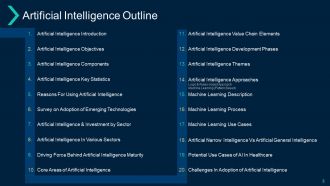
Slide 3: This slide shows Artificial Intelligence Outline.
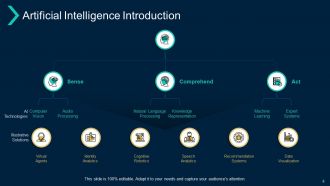
Slide 4: This slide presents Artificial Intelligence Introduction with major categories as- Sense, comprehend, and act.
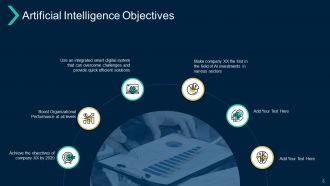
Slide 5: This slide displays Artificial Intelligence Objectives with related icons.
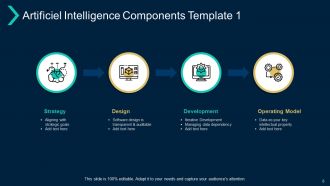
Slide 6: This slide represents Artificiel Intelligence Components Template 1 describing- Strategy, Design, Development, Operating Model.
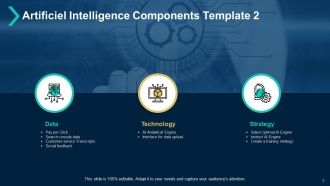
Slide 7: This slide showcases Artificiel Intelligence Components Template 2 describing- Data, Technology, Strategy.
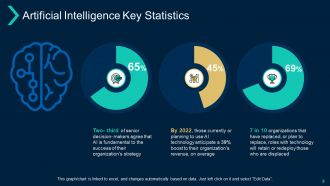
Slide 8: This slide shows Artificial Intelligence Key Statistics.
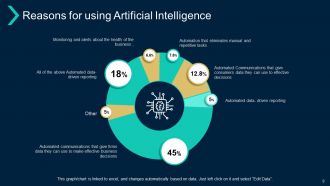
Slide 9: This slide presents Reasons for using Artificial Intelligence.
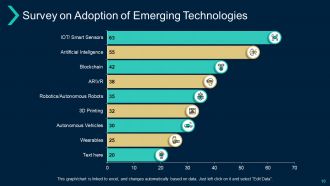
Slide 10: This slide displays Survey on Adoption of Emerging Technologies.
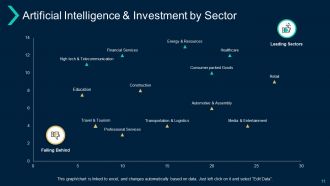
Slide 11: This slide represents Artificial Intelligence & Investment by Sector.
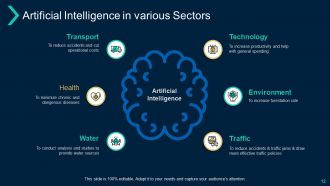
Slide 12: This slide showcases Artificial Intelligence in various Sectors including- Water, Traffic, Health, Environment, Transport, Technology.
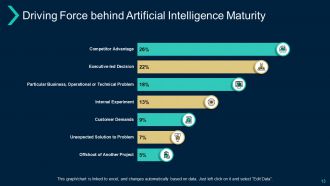
Slide 13: This slide shows Driving Force behind Artificial Intelligence Maturity.
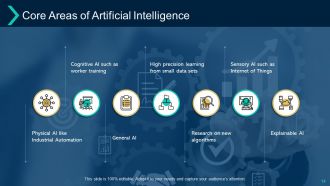
Slide 14: This slide presents Core Areas of Artificial Intelligence.
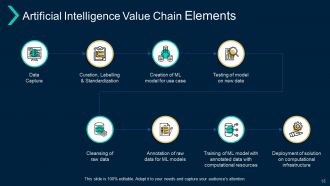
Slide 15: This slide displays Artificial Intelligence Value Chain Elements.
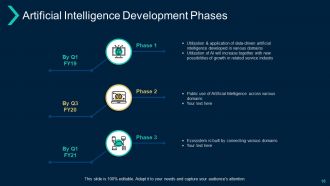
Slide 16: This slide represents Artificial Intelligence Development Phases.
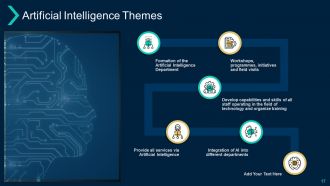
Slide 17: This slide showcases Artificial Intelligence Themes with related diagram.
Slide 18: This slide reminds about a 30 minutes coffee break.
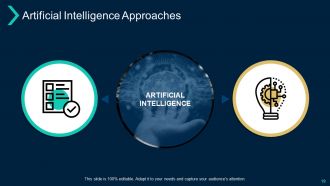
Slide 19: This slide shows Artificial Intelligence Approaches including- Machine Learning (Pattern Based Approach) and Logic & Rules-Based Approach.
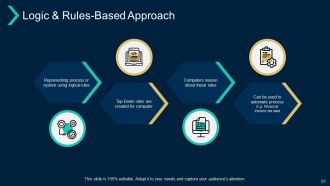
Slide 20: This slide presents Logic & Rules-Based Approach as- Can be used to automate process, Representing process or system using logical rules, Computers reason about these rules, Top-Down rules are created for computer.
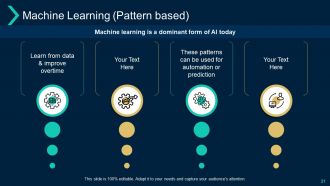
Slide 21: This slide displays Machine Learning (Pattern based) such as- Learn From Data & Improve Overtime, These Patterns Can Be Used for Automation or Prediction, etc.
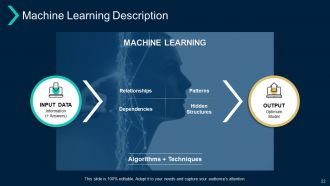
Slide 22: This slide represents Machine Learning Description with related diagram.
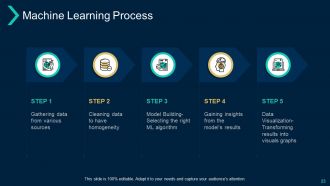
Slide 23: This slide showcases Machine Learning Process with these 5 steps- Cleaning data to have homogeneity, Gathering data from various sources, Model Building- Selecting the right ML algorithm, Gaining insights from the model’s results, Data Visualization- Transforming results into visuals graphs.
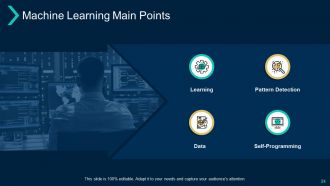
Slide 24: This slide shows Machine Learning Main Points as- Learning, Pattern Detection, Data, Self-Programming.
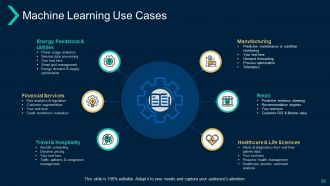
Slide 25: This slide presents Machine Learning Use Cases describing- Manufacturing, Retail, Healthcare & Life Sciences, Travel & Hospitality, Financial Services, Energy, Feedstock & Utilities.
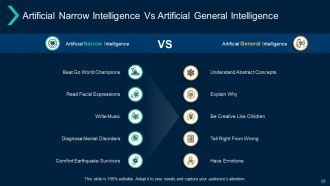
Slide 26: This slide displays Artificial Narrow Intelligence Vs Artificial General Intelligence.
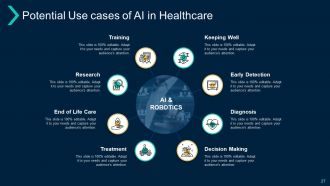
Slide 27: This slide represents Potential Use cases of AI in Healthcare describing- Keeping Well, Early Detection, Diagnosis, Decision Making, Training, Research, End of Life Care, Treatment.
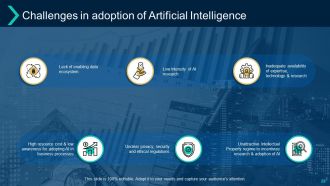
Slide 28: This slide showcases Challenges in adoption of Artificial Intelligence.
Slide 29: This slide displays icons for Technology-Driven Process.
Slide 30: This slide is titled as Additional Slides for moving forward.
Slide 31: This is Our Mission slide with related imagery and text.
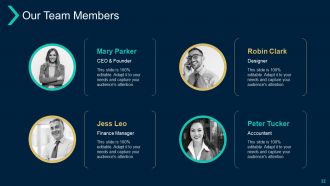
Slide 32: This is Our Team Members slide with names and designation.
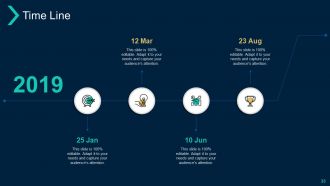
Slide 33: This is a Timeline slide to show information related with time period.
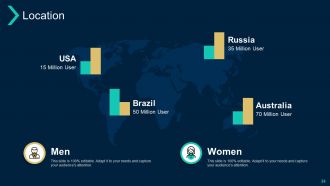
Slide 34: This is a Location slide with map to show data related with different locations.
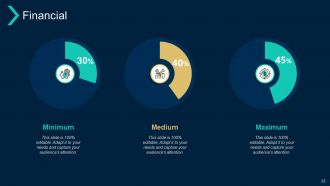
Slide 35: This is a Financial slide. Show your finance related stuff here.
Slide 36: This slide is titled as Important Notes. Post your important notes here.
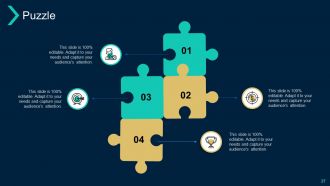
Slide 37: This is a Puzzle slide with text boxes to show information.
Slide 38: This is an Idea Generation slide to state a new idea or highlight information, specifications etc.
Slide 39: This is a Thank You slide with address, contact numbers and email address.
Technology driven process powerpoint presentation slides with all 39 slides:
Use our Technology Driven Process Powerpoint Presentation Slides to effectively help you save your valuable time. They are readymade to fit into any presentation structure.




FAQs for Technology driven process
Honestly, start by mapping what you're doing now - that's where you'll spot the biggest time wasters. Automation tools handle all the boring repetitive stuff, while data dashboards give you real-time insights to actually make decisions with. Cloud infrastructure keeps everything running smoothly, and APIs are what make different platforms talk to each other (super important). Digital workflows replace those paper forms that used to disappear into black holes. The whole thing just clicks when you get workflow automation, analytics, and integrated software working together. Your processes get faster and way more accurate. Plus everything scales better, which is clutch if you're growing.
Honestly, map out what you're doing now before changing anything - sounds boring but you'll thank me later. Look for the stuff that actually wastes time, not just what seems trendy to automate. Don't go crazy with a total system overhaul. Small changes work better. Your team needs to be on board early or they'll just ignore whatever you implement (learned this the hard way). Test new tools with just a few people first. Way too many companies roll out expensive software that sits unused. Track if it's actually helping productivity and tweak from there.
Honestly, data analytics is like having a super smart assistant that never sleeps. It'll catch bottlenecks you didn't even know existed and predict when stuff's about to break down. You can automate decisions instead of babysitting every little thing, which is honestly a lifesaver. Real-time optimization? Yep, it does that too. I always tell people to start small though - pick one messy process that's driving you crazy and just track basic metrics there first. Way less overwhelming than trying to analyze everything at once, and you'll actually see results pretty quickly.
So automation tools just take all that boring, repetitive stuff off your plate - data entry, moving files around, generating reports, whatever. You get to focus on actual thinking instead. The cool part is when you connect different tools together. Like your CRM updates something, then inventory gets checked automatically, then boom - purchase orders get created without you lifting a finger. I've watched teams slash their processing time by like 60-70% once they get their workflows dialed in. Honestly though, don't go crazy at first. Just pick one daily task that annoys you and start there.
Honestly, the worst part is usually people just hating change - they're used to their routine and don't want some new system messing it up. Your current tech probably won't play nice with whatever you're implementing either. Money's always tight too, between buying the actual software and getting everyone trained up. Oh, and migrating data is such a pain. Security gets sketchy during transitions, plus your productivity will tank for a while before things improve. I'd definitely start with a small test group first. Getting people on board early makes everything way smoother.
Start with training your team - seriously, most hacks happen because someone falls for a phishing email or whatever. Multi-factor authentication is a must, plus keep everything updated and monitor your network constantly. Only give people access to stuff they actually need for their job. The trick is weaving security into your daily routine instead of treating it like some once-a-year checklist thing. Set up automated backups too. Oh, and practice your response plan regularly so you're not scrambling around like headless chickens when things go sideways.
So basically, good tech makes everything smoother for your customers. They get instant answers from chatbots that don't suck, plus you can predict what they need before they even ask. Automation handles the boring stuff while people focus on real problems. Your customers can help themselves when they want to, or get personalized recommendations that actually make sense. I've seen too many companies just throw random tech at problems though - you want stuff that removes headaches, not creates them. Cross all your channels so someone doesn't have to repeat their story five times.
Track both your process stuff and actual business results - that's the only way to really know if it's working. Start with basics like how fast things get done now vs before, error rates, throughput. Then look at cost savings, customer satisfaction, whether your team's actually more productive. ROI calculations are a pain early on but you gotta do it. Oh and here's something people always forget - check if anyone's even using the damn thing! Best automation in the world won't help if everyone just ignores it. Set up maybe 4-5 key numbers on a simple dashboard and review monthly. Don't go crazy with data.
Dude, totally! Start with the boring stuff - automate invoicing, chatbots for customer service, maybe inventory tracking. The cool thing is all this cloud tech is actually cheap now compared to like 5 years ago. Being small helps too since you don't need corporate approval for everything. Pick one thing, get it working right, then add more. SaaS tools for CRM and analytics give you the same insights big companies have without breaking the bank. My buddy did this with his shop and honestly it's night and day difference in efficiency.
AI's probably your best bet right now - you'll see returns pretty fast compared to other stuff. Machine learning is handling crazy complex decisions in factories, hospitals, you name it. Edge computing's pretty cool too, brings processing right to where the action is instead of bouncing everything to the cloud. Quantum computing sounds like sci-fi but it's getting real - imagine solving logistics puzzles that would take regular computers forever. Oh, and digital twins are wild - basically copying your whole operation virtually so you can predict when things break. Honestly though? Start with AI integration and worry about the rest later.
Start with good communication tools - Slack channels for each project work great. Everyone needs to see real-time updates through shared dashboards, otherwise you'll get those annoying "what's happening with X?" messages constantly. Regular sync meetings help too, but make them actually useful, not just boring status updates that should've been emails. Define who's doing what upfront so people aren't duplicating work or dropping the ball on important stuff. Oh, and create feedback loops where your tech people can explain constraints to the business folks without everyone getting frustrated. Trust me, this saves so much headache later.
Honestly, start with the basics - get comfortable with whatever software your team actually uses daily. Digital literacy is huge right now. You'll also want to work on critical thinking since tech changes how we approach problems, not just makes them faster. Process mapping is clutch too because you can't automate stuff you don't understand first. Oh, and don't ignore soft skills - communication and being adaptable matter way more when everything's changing constantly. The real game changer though? Developing that mindset where you're cool with always learning new things. It sounds exhausting but it's kind of exciting once you get into it.
Dude, tech processes are game-changers for going green. AI can predict when machines need fixing before they break down completely - saves tons of waste. Smart energy systems automatically adjust power usage too. Going paperless with digital workflows is obvious but actually works. Remote work has been clutch for cutting commissions... I mean commuting emissions, obviously. My brain's fried today lol. Cloud computing's solid because instead of every business running power-hungry servers, everything's centralized. Just make sure you're not digitizing wasteful stuff and calling it "sustainable."
Okay so privacy is huge - people hate when companies are shady about data collection. Bias in AI is actually way worse than most people think, especially if your training data sucks. Automation will definitely mess with jobs, so factor that in early. Also who takes the blame when algorithms screw up? That's still being figured out honestly. Oh and don't try adding ethical reviews as an afterthought - build them in from day one or you'll regret it later. Trust me on that one.
Honestly, the best part about tech-driven stuff is how fast you can test ideas and bail when they're not working. Your team gets to skip the tedious manual work and actually think creatively. Real-time data is like having superpowers - you'll catch trends way before competitors even notice. I'd start with just one process though, maybe A/B testing or some basic automation. Once you see how quickly you can iterate, it's pretty hard to go back to the old slow way of doing things.
-
Awesomely designed templates, Easy to understand.
-
Much better than the original! Thanks for the quick turnaround.