


Guide On Navigating Project Management Basics Powerpoint Presentation Slides PM CD
Project Management Basics provides the essential knowledge, tools, techniques and methodologies for effectively leading and delivering projects. Check out our professionally designed Guide on Navigating Project Management Basics PowerPoint Presentation. This PPT bundle initially covers a project managers life cycle and responsibilities within an organization. Whether youre a novice seeking to grasp the fundamentals or a seasoned professional needing a comprehensive refresher, this presentation offers a step by step guide. Additionally, the Project Management Tools PPT templates explore cutting edge Techniques and help master proven Methodologies. Unlock your potential, streamline your projects and achieve your goals with this all encompassing guide your ultimate companion in project management. Lastly, it delves into a few dashboards designed to help companies track and measure the effectiveness of project management basics. Download our 100percentage editable and customizable PowerPoint, compatible with Google Slides, and streamline your presentation process.




























You must be logged in to download this presentation.


Do you want to remove this product from your favourites?
 Impress your
 audience
 100%
100% Editable
 Save Hours
 of Time
PowerPoint presentation slides
Enthrall your audience with this Guide On Navigating Project Management Basics Powerpoint Presentation Slides PM CD. Increase your presentation threshold by deploying this well-crafted template. It acts as a great communication tool due to its well-researched content. It also contains stylized icons, graphics, visuals etc, which make it an immediate attention-grabber. Comprising fifty four slides, this complete deck is all you need to get noticed. All the slides and their content can be altered to suit your unique business setting. Not only that, other components and graphics can also be modified to add personal touches to this prefabricated set.

People who downloaded this PowerPoint presentation also viewed the following :
Content of this Powerpoint Presentation
Slide 1: This slide introduces Guide on Navigating Project Management Basics. State your company name and begin.
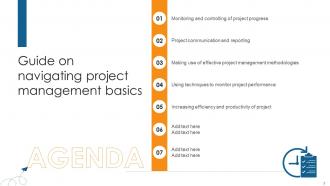
Slide 2: This is an Agenda slide. State your agendas here.
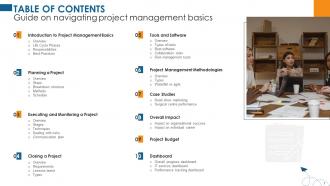
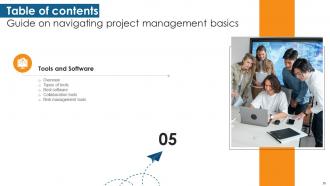
Slide 3: This slide shows Table of Content for the presentation.
Slide 4: This slide shows title for topics that are to be covered next in the template.
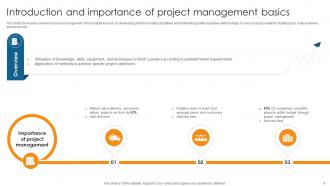
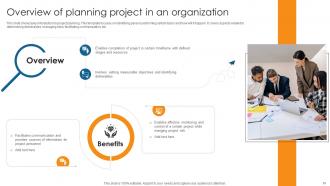
Slide 5: This slide showcases overview of project management. This template focuses on developing plans for meeting deadlines and maintaining quality objectives within budget.
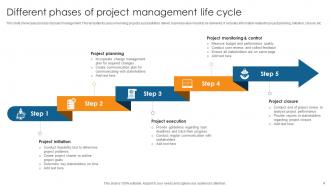
Slide 6: This slide presents the process of project management. This template focuses on running projects successfully to deliver business value meant to be delivered.
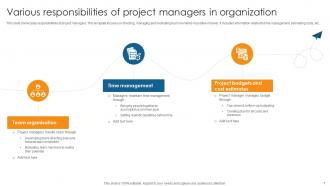
Slide 7: This slide showcases responsibilities of project managers. This template focuses on directing, managing and motivating team members in positive manner.
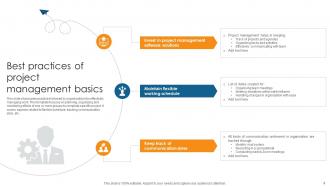
Slide 8: This slide displays practices followed by organisations for effectively managing work. This template focuses on planning, organizing and monitoring efforts.
Slide 9: This slide shows title for topics that are to be covered next in the template.
Slide 10: This slide showcases introduction to project planning. This template focuses on identifying person performing certain tasks and how will it happen.
Slide 11: This slide presents different phases of determining project scope. This template focuses on ensuring that all stakeholders have clear understanding of boundaries of project.
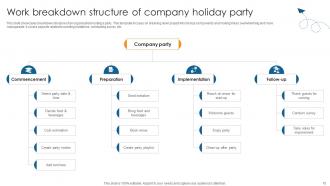
Slide 12: This slide showcases breakdown structure of an organisation hosting a party. This template focuses on breaking down project into bit-size components.
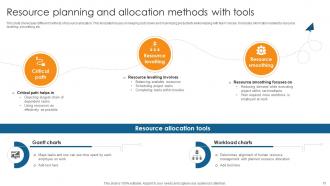
Slide 13: This slide displays different methods of resource allocation. This template focuses on keeping cists down and maximizing productivity while helping with team morale.
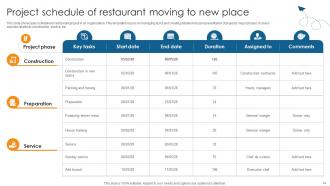
Slide 14: This slide showcases schedule for restaurant project in an organisation. This template focuses on managing tasks and creating detailed visual representation of projects major phases.
Slide 15: This slide shows title for topics that are to be covered next in the template.
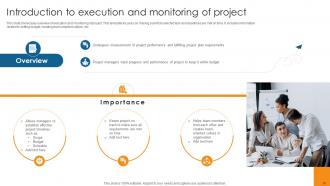
Slide 16: This slide showcases overview of execution and monitoring of project. This template focuses on making sure that selected task and deadlines are met on time.
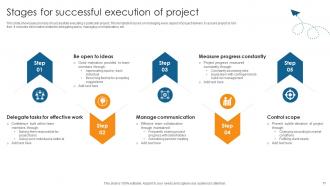
Slide 17: This slide displays the process of successfully executing a particular project. This template focuses on managing every aspect of project delivery to assure project is risk free.
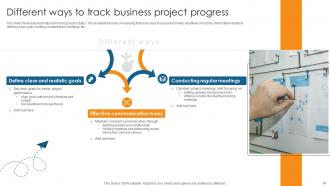
Slide 18: This slide showcases techniques for tracing project status. This template focuses on ensuring that team stays focused and meets deadlines.
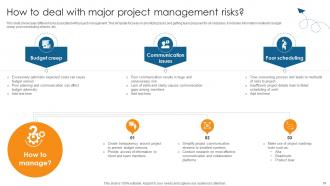
Slide 19: This slide displays different risks associated with project management. This template focuses on prioritizing tasks and getting team prepared for all obstacles.
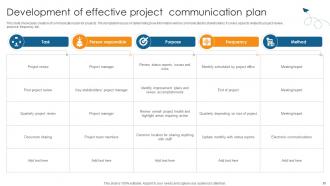
Slide 20: This slide showcases creation of communication plan for projects. This template focuses on determining how information will be communicated to stakeholders.
Slide 21: This slide shows title for topics that are to be covered next in the template.
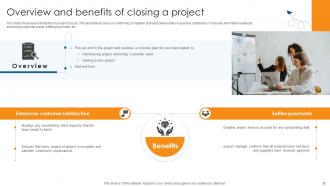
Slide 22: This slide showcases introduction to project closure. This template focuses on confirming completion of project deliverables to sponsor satisfaction.
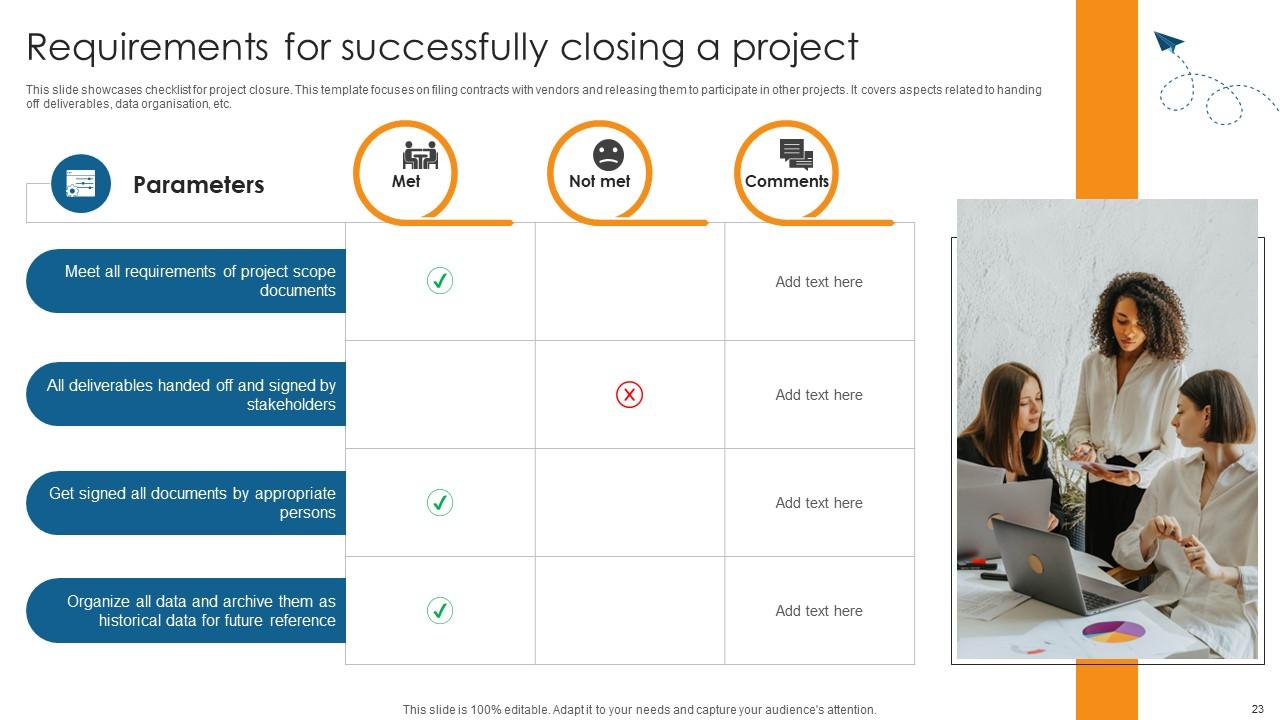
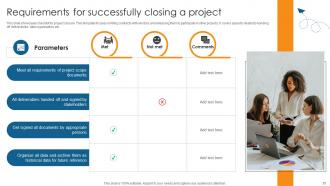
Slide 23: This slide presents checklist for project closure. This template focuses on filing contracts with vendors and releasing them to participate in other projects.
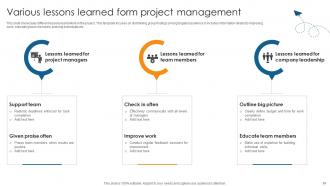
Slide 24: This slide showcases different lessons learnt while in the project. This template focuses on distributing group findings among targeted audience.
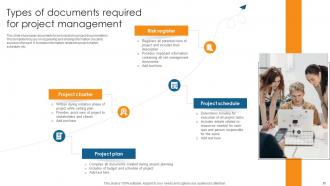
Slide 25: This slide displays documents to be included in project documentation. This template focuses on organising and sharing information crucial to success of project.
Slide 26: This slide shows title for topics that are to be covered next in the template.
Slide 27: This slide showcases introduction to project management software. This template focuses on assisting teams to handle their projects easily.
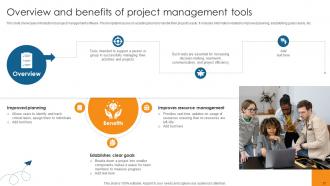
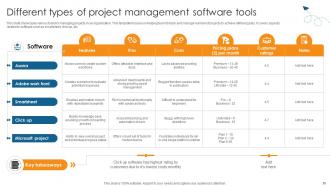
Slide 28: This slide displays various tools for managing projects in an organisation. This template focuses on helping team to track and manage number of projects to achieve defined goals.
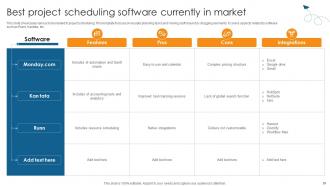
Slide 29: This slide showcases various tools related to project scheduling. This template focuses on visually planning tasks and moving stuff around by dragging elements.
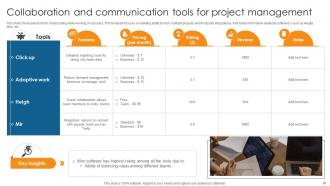
Slide 30: This slide presents tools for collaborating while working on a project. This template focuses on building ability to track multiple projects and third party integrations.
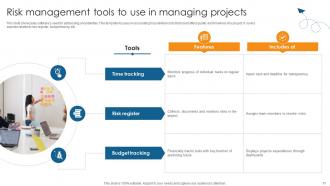
Slide 31: This slide showcases software's used for addressing uncertainties. This template focuses on accounting for potential costs that could affect quality and timelines of a project.
Slide 32: This slide shows title for topics that are to be covered next in the template.
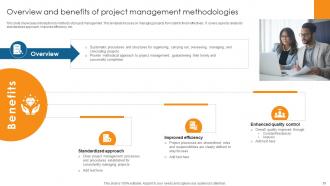
Slide 33: This slide showcases introduction to methods of project management. This template focuses on managing projects from start to finish effectively.
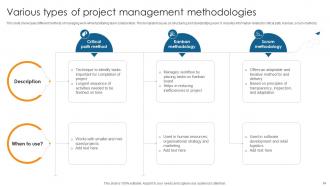
Slide 34: This slide presents different methods of managing work while facilitating team collaboration. This template focuses on structuring and standardizing work.
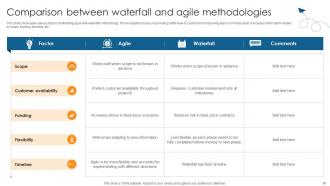
Slide 35: This slide showcases various factors diminishing agile with waterfall methodology. This template focuses on providing better view to customer for improving team communication.
Slide 36: This slide shows title for topics that are to be covered next in the template.
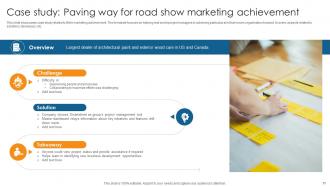
Slide 37: This slide showcases case study related to Behr marketing achievement. This template focuses on helping real world project managers in achieving particular aims.
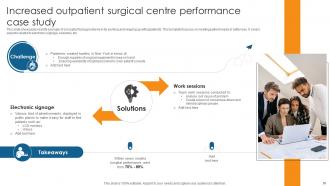
Slide 38: This slide presents real life example of a hospital facing problems in its working and keeping up with p[patients. This template focuses on meeting patient needs in better way.
Slide 39: This slide shows title for topics that are to be covered next in the template.
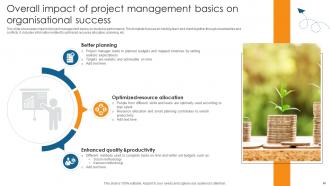
Slide 40: This slide showcases impact of project management basics on business performance. This template focuses on holding team and client together through uncertainties and conflicts.
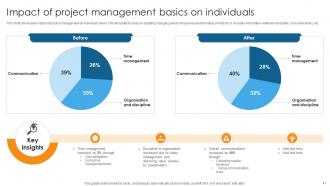
Slide 41: This slide presents impact of project management on individual career. This template focuses on adapting changing needs of business and demands of industry.
Slide 42: This slide shows title for topics that are to be covered next in the template.
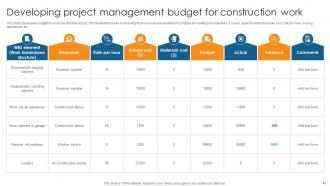
Slide 43: This slide showcases budget for small construction project. This template focuses on ensuring that resources are available in company for meeting set objectives.
Slide 44: This slide shows title for topics that are to be covered next in the template.
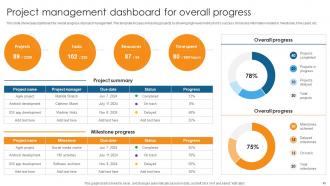
Slide 45: This slide showcases dashboard for overall progress of project management. This template focuses on tracking projects by showing high-level metrics for it’s success.
Slide 46: This slide displays metrics related to information technology services. This template focuses on monitoring success of project and campaigns.
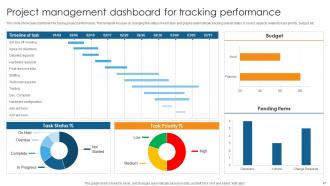
Slide 47: This slide showcases dashboard for tracing project performance. This template focuses on changing the status of each task and graphs automatically tracking overall status.
Slide 48: This slide shows all the icons included in the presentation.
Slide 49: This slide is titled as Additional Slides for moving forward.
Slide 50: This is an Idea Generation slide to state a new idea or highlight information, specifications etc.
Slide 51: This is Our Vision, Mission & Goal slide. Post your Visions, Missions, and Goals here.
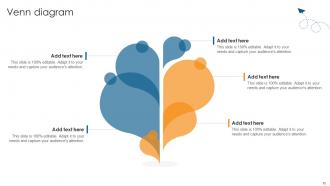
Slide 52: This slide depicts Venn diagram with text boxes.
Slide 53: This is Our Team slide with names and designation.
Slide 54: This is a Thank You slide with address, contact numbers and email address.
Guide On Navigating Project Management Basics Powerpoint Presentation Slides PM CD with all 63 slides:
Use our Guide On Navigating Project Management Basics Powerpoint Presentation Slides PM CD to effectively help you save your valuable time. They are readymade to fit into any presentation structure.
-
Fantastic collection. Loved how we can personalize these templates as per the requirements.
-
“Love it! I was able to grab an exciting proposal because of SlideTeam.”
