

Project Management Software Powerpoint Presentation Slides




Try Before you Buy Download Free Sample Product
 Impress Your
 Audience
 100%
100% Editable
 Save Hours
 of Time


This Project Management Software PPT includes the project management softwares introduction, purpose, benefits, and limitations. It also consists of project management softwares different types, uses, and functionality. Additionally, our On-premises Project Management Software PowerPoint Presentation defines the benefits and challenges and explains in detail the tips for choosing software for project management. Furthermore, this Cloud-based Project Management Software Presentation contains an introduction and benefits of cloud-based software. It also includes the evolution of project management. Moreover, this Open Source project management software PPT explains the introduction, needs, and drawbacks of open-source software along with the phases of project management. Lastly, this Project Management Tools Deck contains a 30-60-90 days plan of project management software, training schedule, training budget, and impact of project management software on business. Download our 100 percent editable and customizable template, also compatible with Google Slides.
People who downloaded this PowerPoint presentation also viewed the following :
Content of this Powerpoint Presentation
Slide 1: This slide introduces Project Management Software. State Your Company Name and begin.
Slide 2: This slide is an Agenda slide. State your agendas here.
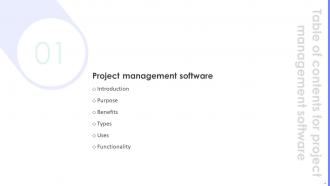
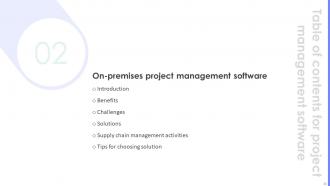
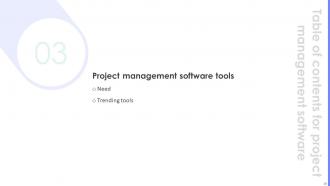
Slide 3: This slide shows a Table of Contents for the presentation.
Slide 4: This slide is an introductory slide.
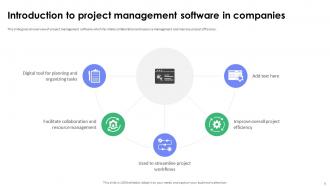
Slide 5: This slide gives an overview of project management software which facilitate collaboration and resource management and improve project efficiency.
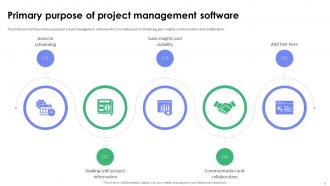
Slide 6: This slide outlines the primary purpose of project management software which include assist in scheduling, gain insights, communication and collaboration.
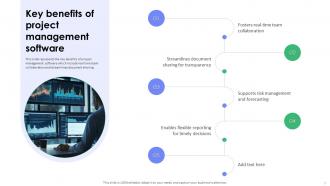
Slide 7: This slide represents the key benefits of project management software which include real time team collaboration and streamlines document sharing.
Slide 8: This slide denotes the major types of project management software which include individual and collaborative project management software.
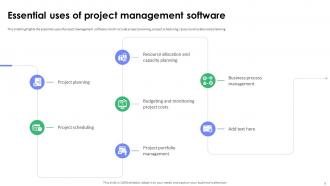
Slide 9: This slide highlights the essential uses of project management software which include project planning, project scheduling, resource allocation and planning.
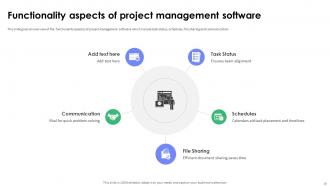
Slide 10: This slide gives an overview of the functionality aspects of project management software which include task status, schedules, file sharing and communication.
Slide 11: This slide is an introductory slide.
Slide 12: This slide gives an overview of on-premises project management software which is installed and operated in-house and ensures control, privacy and customization.
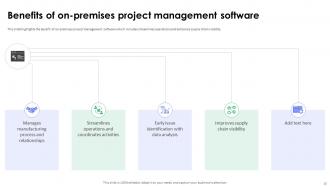
Slide 13: This slide illustrates the benefit of on-premises project management software which includes streamlines operations and enhances supply chain visibility.
Slide 14: This slide represents the challenges of implementing on-premises project management software which includes high costs for maintaining and upgrading.
Slide 15: This slide presents the solutions for implementing on-premises project management software which includes unified onboarding, cost efficient, etc.
Slide 16: This slide depicts the supply chain management activities to manage project management software which include warehouse, customer requirements, etc.
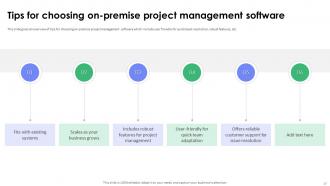
Slide 17: This slide shows tips for choosing on-premise project management software which include user friendly for quick team resolution, robust features, etc.
Slide 18: This slide is an introductory slide.
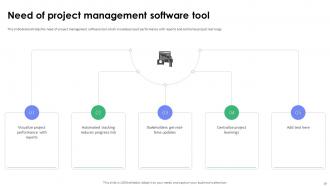
Slide 19: This slide demonstrates the need of project management software tool which visualize project performance with reports and centralize project learnings.
Slide 20: This slide projects the trending project management tools which include MeisterTask, basecamp, nifty, hive, Trello, zira, etc.
Slide 21: This slide is an introductory slide.
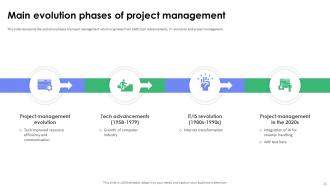
Slide 22: This slide represents the evolution phases of project management which originates from 1900, tech advancements, IT revolution and project management.
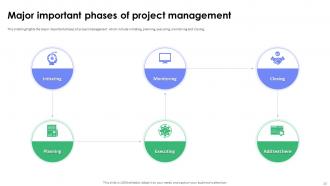
Slide 23: This slide highlights the major important phases of project management which include initiating, planning, executing, monitoring and closing.
Slide 24: This slide is an introductory slide.
Slide 25: This slide gives an overview of cloud based project management software which is hosted and managed by a third party provider and accessed over internet.
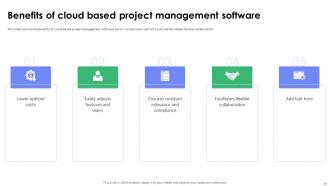
Slide 26: This slide outlines the benefits of cloud based project management software which include lower upfront costs and facilitates flexible collaboration.
Slide 27: This slide is an introductory slide.
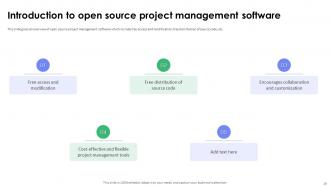
Slide 28: This slide puts open source project management software which include free access and modification, free distribution of source code, etc.
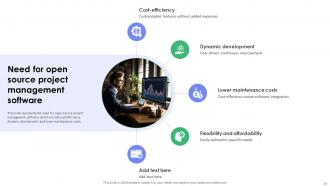
Slide 29: This slide represents the need for open source project management software which include cost efficiency, dynamic development and lower maintenance costs.
Slide 30: This slide is an introductory slide.
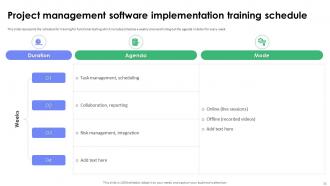
Slide 31: This slide mentions the schedule for training for functional testing which includes schedule a weekly plan and listing out the agenda in detail for every week.
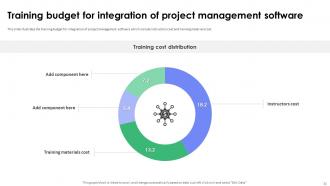
Slide 32: This slide illustrates the training budget for integration of project management software which include instructors cost and training materials cost.
Slide 33: This slide is an introductory slide.
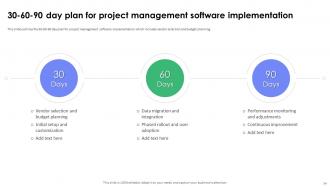
Slide 34: This slide outlines the 30-60-90 day plan for project management software implementation which includes vendor selection and budget planning.
Slide 35: This slide is an introductory slide.
Slide 36: This slide highlights the before vs after impact of project management software based on different aspects like coordination, communication and management.
Slide 37: This slide shows all the icons included in the presentation.
Slide 38: This slide is titled Additional Slides for moving forward.
Slide 39: This slide discusses the limitations of project management software which include high costs, limited ROI, complication of simple projects and execution issues.
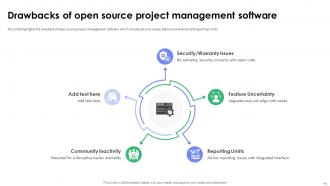
Slide 40: This slide highlights the drawback of open source project management software which include security issues, feature uncertainty and reporting limits.
Slide 41: This slide contains a Puzzle with related icons and text.
Slide 42: This slide is Our Target slide. State your targets here.
Slide 43: This slide is a financial slide. Show your finance-related stuff here.
Slide 44: This slide is in continuation with the previous slide.
Slide 45: This slide is a Timeline slide. Show data related to time intervals here.
Slide 46: This slide depicts a Venn diagram with text boxes.
Slide 47: This slide shows Post-It Notes. Post your important notes here.
Slide 48: This slide is a thank-you slide with address, contact numbers, and email address.
Project Management Software Powerpoint Presentation Slides with all 56 slides:
Use our Project Management Software Powerpoint Presentation Slides to effectively help you save your valuable time. They are readymade to fit into any presentation structure.
























FAQs for Project Management Software
Honestly, start with the basics - task management so you know who's handling what. Real-time collaboration is a lifesaver because nobody wants those never-ending email threads. Simple time tracking and file sharing are must-haves too. Don't go overboard with features though! I've seen teams get so bogged down in complicated tools that they forget about actual work. Trello and Asana are solid picks, Monday.com's pretty good too. Most have free trials - definitely test drive a few before you pick one. Your team's vibe matters more than fancy bells and whistles.
Oh man, project management software is a lifesaver! It's like having one place where everyone can actually see what's happening instead of drowning in email threads. Your team can update their stuff, share files, and ask questions right on the tasks themselves. Really helps you spot problems early before they blow up. When someone gets overwhelmed, you can shuffle things around fast. The trick is finding something your team won't abandon after two weeks (we've all been there). Real-time updates are clutch.
Oh man, you'll love this - automation just handles all the annoying stuff for you. Like status updates, deadline reminders, moving tasks around. No more manually pinging everyone when something changes. The software does it automatically. Honestly? It's kind of addictive once you see how much time you get back. Way more focus on actual strategy instead of busy work. My advice is don't go crazy at first though. Just pick the one or two most irritating tasks and automate those. You can always add more later.
So basically you can track spending in real-time against your budget, which is clutch for catching problems early. I'd connect it to your expense system first - that's the game changer. You'll be able to log costs as they happen and see exactly where money's going vs where you planned. The forecasting stuff is actually pretty good too. Uses your past data to predict future costs. Oh, and set up those budget alerts! Trust me, way less stressful than discovering you're over budget during some random meeting. Most tools let you categorize everything and spit out reports that make sense.
Definitely do hands-on sessions where people can actually click around - way more effective than just showing slides. Set up practice projects so they're not learning on live stuff (learned that one the hard way). Quick reference cards help too, especially for daily tasks. Don't dump everything on them at once though. Roll features out bit by bit and pick a couple tech-savvy people to be your unofficial helpers. Oh, and patience is key - took my team like 3 weeks before anyone stopped complaining about the old system. New habits don't happen overnight, you know?
Look, your methodology totally drives what PM tools you'll need. Agile teams want sprint planning and burndown charts - Jira's solid for that. Waterfall? You're stuck with Gantt charts, so Microsoft Project makes sense. I've watched teams try cramming their process into the wrong software and it's painful to watch. Kanban needs good boards obviously. Scrum masters obsess over velocity tracking (rightfully so). Just map out what your team actually does day-to-day, then pick software that won't fight you on it.
End-to-end encryption and role-based access are must-haves, obviously. MFA should be a given but some platforms still treat it like a premium feature which is ridiculous. Single sign-on makes life easier too. Check for SOC 2 Type II or ISO 27001 - HIPAA if you're dealing with medical stuff. Data residency matters if you're handling anything sensitive. Oh, and definitely look into their incident response history before signing anything. Regular security audits are pretty standard now. Honestly, I'd rather pay more upfront than deal with a breach later.
Yeah, most PM tools connect pretty easily with CRMs and accounting software these days. Check what integrations your current stuff already supports first - might save you from switching everything around. Monday.com and Asana play nice with Salesforce, QuickBooks, that kind of thing. You can also use Zapier if there's no direct connection. Once it's running, client data and project budgets sync automatically. No more entering the same info twice, which honestly was driving me crazy before I figured this out. Takes some setup time but totally worth it.
Honestly, the worst part is just getting people to actually use the damn thing. Everyone's obsessed with their Excel sheets and Post-its. Integration's a nightmare too - half the time your new software won't talk to whatever you're already using. Don't underestimate training either. Takes way longer than you think for people to feel comfortable with new processes. Moving old project data is such a headache. Start small though - pick one team, get them really comfortable with it first. Then they can help convince everyone else it's worth the hassle.
Honestly, mobile apps are a lifesaver for remote work. No more "sorry I wasn't at my computer" excuses when someone needs quick approval. I can't tell you how many times I've saved a project timeline just by updating something from my phone while waiting in line somewhere. Push notifications for urgent stuff are clutch too - you actually know when something needs your attention instead of finding out hours later. Oh, and being able to log expenses right when they happen instead of trying to remember later? Game changer. Just don't be that person who forgets to download the app and still makes everyone wait.
Track your basics first: completion rates, timeline stuff, and budget variance. Resource utilization matters too - like, are people actually using this thing? User adoption is huge because honestly, the fanciest software means nothing if your team just ignores it. Watch how much communication happens in the platform and compare deadline performance to before you implemented it. The goal is faster delivery without everyone being stressed out of their minds. Start there, then add whatever specific metrics match the problems you're trying to fix.
Look, your team can actually tell you what's driving them crazy instead of you just guessing. Weekly check-ins work great - or even quick surveys if people will fill them out (good luck with that though). Analytics show you the real bottlenecks, not where you think they are. Trust me, it's never where managers expect. Short tasks taking forever? Deadlines getting blown constantly? The data doesn't lie. Combining feedback with actual project metrics helps you catch patterns you'd totally miss otherwise. It's way better than flying blind and hoping workflows magically improve.
So it basically comes down to three things: money, control, and what your team can handle tech-wise. Cloud's cheaper to start with and updates itself, but you're screwed if the internet goes down and they control your data. On-premise costs way more upfront but you own everything and it works offline - though someone's gotta maintain it. Most people just go cloud now unless they're super paranoid about security (which honestly isn't always wrong). I'd make a list of what you actually need first, then try some free trials to see what doesn't suck.
Honestly, AI automation is where it's at right now - especially for predicting project risks and handling all the boring repetitive stuff. Real-time collaboration tools are getting crazy good too, which is perfect timing since everyone's doing hybrid work now. Most platforms are integrating with literally everything these days (thank god, because switching between apps was driving me insane). Low-code customization is another game-changer. You can tweak workflows without bugging the dev team constantly. Quick tip though - check what features you're already paying for first. I'd bet money you're missing half the functionality that's already there.
Honestly, customization is huge because you're not stuck forcing your team into some cookie-cutter setup. Build custom fields for whatever you actually need to track. Set up workflows that match how your approval process really works - not some generic template. The dashboards are probably my favorite part since you can show stakeholders exactly what they want to see. Way better than fighting with features that almost work but don't quite fit. I'd start with whatever's bugging you most about the standard setup and fix that first.
-
Wide collection of templates available. SlideTeam has made it easier to create presentations in just a few minutes.
-
“One of the best experiences with SlideTeam for my presentation.Everything on time, communication is efficient and price is reasonable. All good in one place.”