

Engineering service proposal template powerpoint presentation slides





Try Before you Buy Download Free Sample Product
 Impress Your
Audience
 100%
Editable
 Save Hours
of Time


Preparing an industry-standard document is the most important part of acquiring a new engineering consultant project bid contract. Consulting engineers are not the only ones that write a proposal, some engineers have to write it to get approval from the management while others also send them to funding agencies. Convince your client by proposing solutions by documenting superb technical comprehension of the project, with this Engineering Service Proposal Template PowerPoint Presentation Slides. This surveying PPT template will also allow you to think through your research project, refine your focus, and predict challenges. Succinctly communicate the need of your proposal with the client and benefit the end customer. With this PPT design, help your client to understand the provision of complete planning and engineering, site survey, design drafting, and construction document. Sequence the activities and deliverable schedules to impart transparency and attention to detail with this, structure PPT slideshow. Also, gain your patron’s trust by breaking down an investment plan for the activities like budget, construction material, and safety plans. Though engineering associates advocate for the selection based on merits rather than price still, the presentation comprises this factor. The building design PowerPoint presentation will help you to ensure accreditation by elaborating on your company history and achievements. The layout also highlights the key engineering areas illustrating energy modelling, plant engineering, renewable energy systems, energy auditing, and consultancy services. Besides this, you can also showcase an edge over the competitors with information about your major successful projects, team members, client testimonials, and clear terms and conditions. Also, layout a methodology and present how you will complete the project. Help your clients to recall their pain and remember why they began seeking a solution initially. Go ahead and download the architectonics PPT theme and get positive answers to your proposals.
People who downloaded this PowerPoint presentation also viewed the following :
Content of this Powerpoint Presentation
Slide 1: This slide introduces Engineering Service Proposal Template. State User name, Company name, Client name and Address.
Slide 2: This slide displays Cover Letter for Engineering Services Proposal Template
Slide 3: This slide displays Table of Content of the presentation.
Slide 4: This slide showcases Project Context of Engineering Service Proposal Template
Slide 5: This slide depicts Scope of Engineering Service Proposal Template
Slide 6: This slide presents Activity Schedule of Engineering Service Proposal Template.
Slide 7: This slide showcases Activity Schedule of Engineering Service Proposal Template.
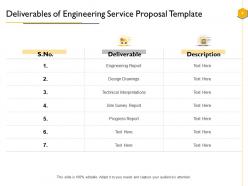
Slide 8: This slide depicts Deliverables of Engineering Service Proposal Template.
Slide 9: This slide showcases Your Investment for Engineering Service Proposal Template.
Slide 10: This is About Us slide to showcase Company specifications.
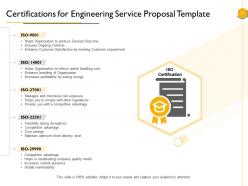
Slide 11: This slide displays Certifications for Engineering Service Proposal Template
Slide 12: This slide displays Our Key Engineering Service Proposal Template
Slide 13: This is Our Team slide with Names and Designations.
Slide 14: This is Our Team slide with Names and Designations.
Slide 15: This is Our Team slide with Names and Designations.
Slide 16: This slide depicts Our Major Projects for Engineering Service Proposal Template.
Slide 17: This slide showcases Client Testimonials for Engineering Service Proposal Template.
Slide 18: This slide represents Terms & Conditions for Engineering Service Proposal Template.
Slide 19: This is Sign-Off slide to showcase Company name, signature etc.
Slide 20: This is Contact Us slide with Address, Email address and Contact number.
Slide 21: This slide showcases Engineering Service Proposal Template Icons Slide.
Slide 22: This slide is titled as Additional Slides for moving forward.
Slide 23: This is Our Mission slide with Vision, Mission and Goal.
Slide 24: This slide depicts Project Timeline for Engineering Service Proposal Template.
Slide 25: This slide showcases Roadmap for Process Flow.
Slide 26: This is 30 60 90 Days Plan slide.
Slide 27: This slide presents Project Management Gantt Chart for Engineering Service Proposal Template
Engineering service proposal template powerpoint presentation slides with all 27 slides:
Use our Engineering Service Proposal Template Powerpoint Presentation Slides to effectively help you save your valuable time. They are readymade to fit into any presentation structure.






FAQs for Engineering service proposal template
So for engineering proposals, you definitely need project scope, timeline with milestones, cost breakdown, and team qualifications. The technical approach section is huge - clients can smell BS from a mile away if you don't actually get their problem. I always throw in risks and assumptions because projects never go exactly as planned, trust me. Payment terms and acceptance criteria are obvious but people forget them. Oh, and start with a solid template covering the basics, then customize the technical stuff for each bid. Way easier than starting from scratch every time.
Honestly, visuals are a game changer for proposals. Clients don't want to wade through endless paragraphs - they want charts, timelines, maybe some before/after shots from your past projects. Makes everything way easier to digest, especially the technical stuff. I've literally watched great proposals get tossed because they looked like a college textbook. Super frustrating when you know the content was solid. Team photos help too since people want to see who they're actually hiring. Aim for 2-3 visuals per section and you'll be golden.
Ugh, don't be vague about what you're actually delivering - that's like the kiss of death. Generic proposals are trash too, you gotta speak to their actual problems. Never lowball your rates just to get the gig (learned that one the hard way lol). Timeline and milestones need to be super clear, plus what happens when they inevitably change their minds halfway through. Throw in some case studies from similar projects. Honestly, customizing each proposal takes forever but it's worth it - way better than copy-pasting the same template everywhere.
Look, you need to show them what makes you different from every other firm they're considering. Maybe it's some specialized technique you've perfected or a killer track record on projects just like theirs. Don't send another boring proposal that could've been copy-pasted by anyone - I see those all the time and they're painful. Instead, throw in specific examples of problems you've solved. Tell them about your team's weird expertise or that innovative process you developed. Honestly, most people just list their services and call it a day. You want to explain why your approach actually gets better results.
Show them hard numbers first - uptime percentages, cost savings, efficiency gains from your past work. That's what really gets their attention. Your team's experience matters too, so mention years and similar project counts. Break down the timeline with milestones and budget with clear deliverables. Quality assurance processes and any certs you have are solid additions. Oh, and definitely include risk mitigation plans - nobody wants surprises mid-project. The key is matching your metrics to whatever's keeping them up at night. Numbers don't lie, and clients know it.
Dude, you've GOT to customize each proposal - learned this the hard way when we lost a huge infrastructure deal because I got lazy with a generic one. Every project has different technical specs, budgets, priorities, all that stuff. Reference their actual challenges and use their industry lingo. Even mentioning their specific concerns shows you actually read their RFP instead of just firing off the same thing to everyone. I mean, templates are fine as a starting point, but you'll want to change up like half the content at minimum. Trust me on this one.
Look, the executive summary is make-or-break time. Decision-makers? They'll probably only read this part thoroughly. Start strong - what problem are you fixing, how you'll fix it, and what's in it for them. Basically your elevator pitch but written down. Keep it under 2 pages and cover your approach, timeline, why your team rocks. I always think of it like... if this doesn't hook them, good luck getting them to care about your technical stuff later. Don't overthink it, just be clear and compelling.
Okay so here's what works: lead with an exec summary that covers the "what" and "why" stuff. After that, get into your detailed methodology. Then stick all the specs and data in appendices at the end. Honestly, I've watched so many proposals crash because they dump technical details right up front - people just check out immediately. Focus your main sections on outcomes and benefits instead. Engineers who want the nitty-gritty details can flip to those appendices later. Oh, and throw in some diagrams or flowcharts. Nobody wants to read walls of text.
Make it visual - risk matrices with colors, not boring text walls. Categories help too: technical, schedule, budget stuff. Then show how you'll handle each problem. Honestly, most people write these sections like scary legal docs that freak clients out. Better approach? "Here's what might happen, here's our plan." Bullet points work great. Add probability ratings and actual steps you'll take. The whole point is proving you've thought this through without making them worry about every possible disaster that could hit the project.
Start by breaking everything into bullet points and short sections with clear headings. Define those crazy technical terms upfront—seriously, nobody wants to stop reading to look up "API integration protocols." Flowcharts and simple diagrams work way better than walls of text for explaining processes. Keep sentences short when you're covering the really complex stuff. I always put the main point at the top of each section, then get into the weeds. Oh, and test it on someone outside engineering first. They'll catch the confusing parts you missed.
Make a clean pricing section with everything broken down by what you're actually delivering - don't hide costs in random paragraphs. Clients eat this stuff up because they can see exactly where their money goes. Use a timeline or Gantt chart for the schedule part. Build in extra time for revisions because clients always want changes (trust me on this one). I always put payment terms right next to the pricing so there's zero confusion. Oh, and tie each price to a specific outcome. Saves you headaches later when they're like "wait, what am I paying for again?"
Pick 2-3 case studies that actually match their industry and problems. Start with the challenge first - that's what grabs attention. Then walk through what you did and the real results with actual numbers. Don't just list random projects, that's super boring. Structure it like: problem they had, how you tackled it, what happened after. Keep each one short, maybe 3-4 sentences tops. Oh, and throw in a quick "what I learned" bit at the end - shows you're thinking about how it applies to their specific situation. Honestly, most people mess this up by being too generic.
So basically, take your template and swap out the jargon for whatever industry you're targeting. Civil engineering? Talk permits, site assessments, construction phases - that regulatory stuff they live and breathe. Software projects are totally different though - they want Agile methodology, testing protocols, deployment plans. The bones stay the same (scope, timeline, budget) but you've gotta speak their language. Like, civil clients will stress about permits for weeks while tech people obsess over whether your solution scales. I'd keep one master version then build out industry-specific ones with the right terminology.
Honestly, you're sitting on a goldmine of data every time someone rejects your proposal. Document everything - specific feedback, changes they want, patterns you keep seeing. Are you always lowballing timelines? Technical stuff falling flat? That's pure gold right there. Short sentences work too. If you know competitors who won, ask them what worked (assuming you're cool with them). The whole point is building this feedback loop where each proposal gets better. Stop guessing what clients want and start using their actual responses instead.
Dude, you've gotta lead with the green stuff right upfront - don't just slap it on at the end like an afterthought. Include energy efficiency analysis, waste reduction plans, and lifecycle impact assessments. Clients expect to see carbon footprint minimization now, it's basically required. Renewable energy integration and sustainable materials too. I've watched so many proposals tank because they completely ignored environmental angles. Quantify everything with real numbers when you can, and mention whatever environmental standards apply. Oh, and resource consumption reduction - that's huge right now. Trust me on this one.
-
Awesomely designed templates, Easy to understand.
-
Unique and attractive product design.
-
Great designs, really helpful.
-
Good research work and creative work done on every template.
-
Great quality slides in rapid time.