


Engineering Work Company Profile Powerpoint Presentation Slides





Try Before you Buy Download Free Sample Product
 Impress Your
 Audience
 100%
100% Editable
 Save Hours
 of Time


Check out our efficiently designed Engineering Work Company Profile PowerPoint presentation. It gives stakeholders the organizations business strategy with fundamental operations data to provide the clients with comprehensive information on company management, work culture, and business purpose. This template offers an executive summary to give an abstract of the contents of the profile. It also highlights the company overview, mission, vision, and business model to convey the purpose and business revenue generation methods. This Engineering Company Overview template also showcases a wide range of services offered by the organization, including product engineering, manufacturing engineering, operations engineering, and engineering consultancy. Furthermore, the profile also lists products provided along with the sales data. Additionally, it displays strategic partners, valuable clients, client testimonials, industry served, project portfolio, and ownership structure. Moreover, it highlights the organizational structure, leadership, and workforce diversity to describe the work culture within the company. It also showcases the company timeline along with international presence, competitor comparison, SWOT analysis, expansion strategies, and CSR activities. Finally, the profile represents company revenue, gross profit, operating profit, net profit, and margin for exhibiting company financials. Download our 100 percent editable and customizable company profile ppt to know more in detail.
People who downloaded this PowerPoint presentation also viewed the following :
Content of this Powerpoint Presentation
Slide 1: This slide introduces Engineering Work Company Profile. State your company name and begin.
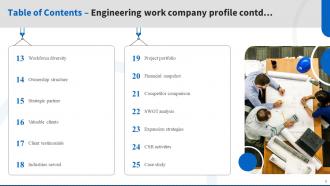
Slide 2: This slide shows Table of Content for the presentation.
Slide 3: This is another slide continuing Table of Content for the presentation.
Slide 4: This slide shows executive summary to present brief details of company.
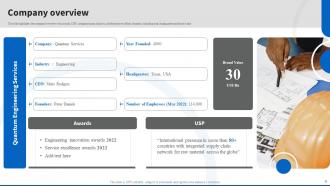
Slide 5: This slide presents company overview with awards, USP, company name, industry, etc.
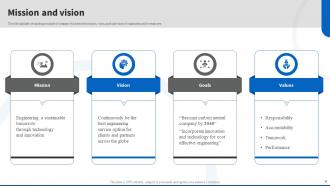
Slide 6: This slide displays guiding principles of company which describes mission, vision, goals, etc.
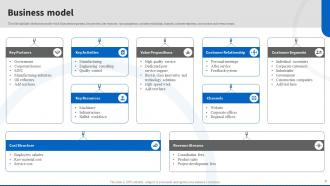
Slide 7: This slide represents business model which illustrates key partners, key activities, key resources, etc.
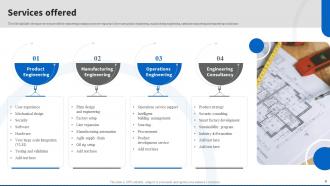
Slide 8: This slide showcases major services provided by engineering company across serving areas.
Slide 9: This slide shows products offered by engineering company illustrating API casing, non API casing, etc.
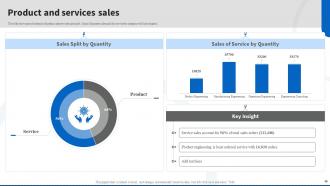
Slide 10: The slide showcases the details of product and services sales split.
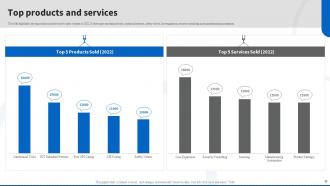
Slide 11: This slide shows top product and services by sales volume in 2022.
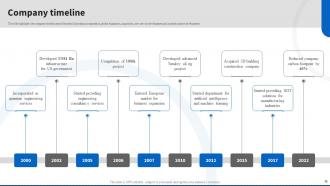
Slide 12: This slide presents company timeline and milestones illustrating incorporation, global expansion, acquisition, etc.
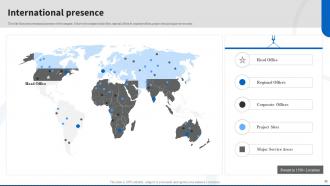
Slide 13: This slide displays international presence of the company.
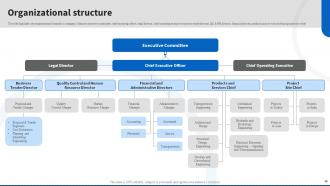
Slide 14: This slide represents organizational hierarchy in company.
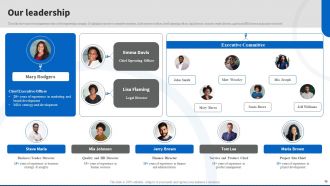
Slide 15: The slide showcases the management team of the engineering company.
Slide 16: This slide shows workforce diversity and total employee count.
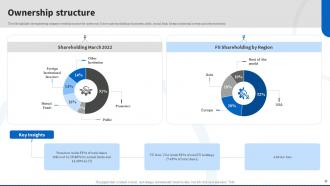
Slide 17: This slide presents engineering company ownership structure for current year.
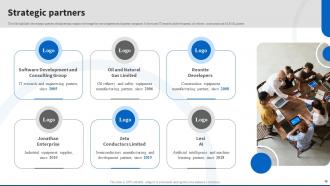
Slide 18: This slide displays strategic partners of engineering company to leverage the core competencies.
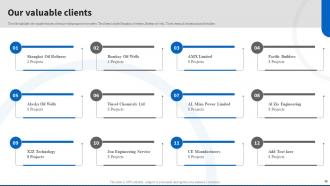
Slide 19: This slide represents valuable business clients providing major service orders.
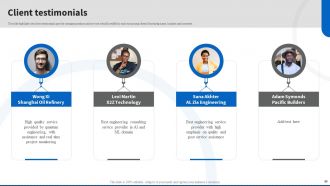
Slide 20: This slide showcases client testimonials post for company products and services to build credibility.
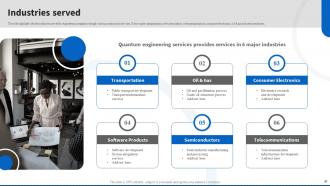
Slide 21: This slide shows key industries served by engineering companies through various products and services.
Slide 22: This slide presents product portfolio of engineering company service with time taken for each project.
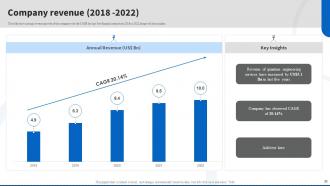
Slide 23: This slide displays annual revenue growth of the company with the CAGR for last five financial years.
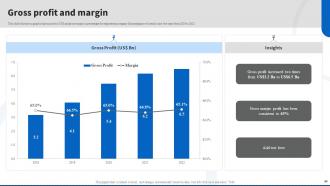
Slide 24: This slide illustrates a graph of gross profit in US$ and gross margin in percentage for engineering company.
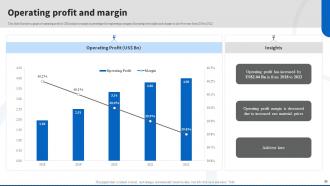
Slide 25: This slide showcases graph of operating profit in US$ and gross margin in percentage.
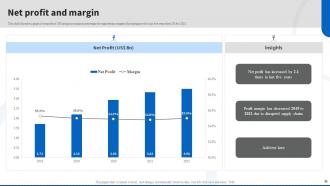
Slide 26: This slide shows graph of net profit in US$ and gross margin in percentage.
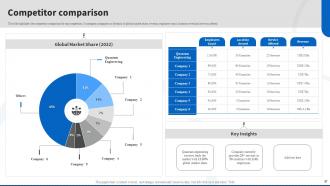
Slide 27: This slide presents competitor comparison for top competitors.
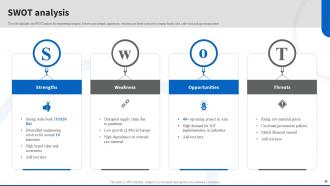
Slide 28: This slide displays SWOT analysis for engineering company.
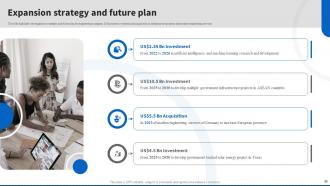
Slide 29: This slide represents expansion strategies and future plan for engineering company.
Slide 30: This slide showcases major corporate social responsibility activities performed by company.
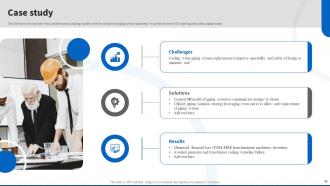
Slide 31: This slide shows case study which includes business challenge faced by client for cooling water piping system replacement.
Slide 32: This slide contains all the icons used in this presentation.
Slide 33: This slide is titled as Additional Slides for moving forward.
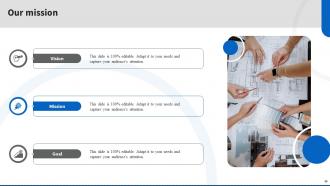
Slide 34: This is Our Mission slide with related imagery and text.
Slide 35: This slide provides 30 60 90 Days Plan with text boxes.
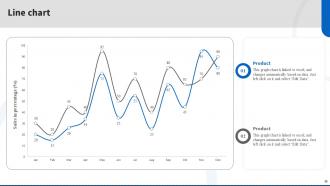
Slide 36: This slide describes Line chart with two products comparison.
Slide 37: This slide shows Post It Notes. Post your important notes here.
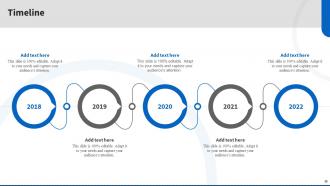
Slide 38: This is a Timeline slide. Show data related to time intervals here.
Slide 39: This is a Thank You slide with address, contact numbers and email address.
Engineering Work Company Profile Powerpoint Presentation Slides with all 44 slides:
Use our Engineering Work Company Profile Powerpoint Presentation Slides to effectively help you save your valuable time. They are readymade to fit into any presentation structure.












FAQs for Engineering Work Company Profile
So we've got three main things we do - structural design/analysis, project management for big infrastructure stuff, and regulatory compliance consulting. Honestly, the structural work pays the bills though, that's our biggest money maker. We also handle feasibility studies and risk assessments. Sometimes environmental impact work too if clients need it, which is kinda outside our wheelhouse but whatever. Basically any civil or mechanical engineering project, we're good for it. For your bridge thing, definitely check out our structural portfolio first - that'll show you what we're actually capable of.
Honestly, we're killing it with this hybrid thing - old school engineering but with all the new tech stuff integrated. Most other firms are still figuring that out. Real-time project visualization and AI design help? That's standard for us, not some crazy expensive extra. Our team setup is way more chill too, none of that stuffy hierarchy BS. Oh and we do 48-hour turnaround on feasibility checks, which clients absolutely love. When you're talking to prospects, definitely mention the tech stack and how fast we move. That combo usually closes them pretty quick.
We focus on manufacturing, energy, and infrastructure mainly. Think car factories, solar projects, city water systems - that stuff. Manufacturing is a mess right now with all the automation changes plus supply chain nightmares (seriously, 2020 broke everything). Energy companies? They're scrambling with the whole renewable transition and grid upgrades. Infrastructure deals with old, crappy systems and compliance headaches. What they all want is cheap, fast solutions. Don't pitch them generic crap though - figure out their actual problems first. Way more effective that way.
Check out the Metro City smart grid thing we did - basically put IoT sensors in 500+ substations to catch equipment before it craps out. Downtime dropped 40% which was huge. Portland's water treatment facility turned out pretty sweet too, the bio-filtration system we came up with was honestly kind of groundbreaking. Oh and we just finished this earthquake bridge that can handle 8.0 quakes without shutting down. Want me to grab our portfolio deck? Has all the technical stuff your team would probably want to see.
So we're big on Agile for most stuff since requirements always change anyway - might as well roll with it. Our setup has automated testing and CI/CD pipelines, plus code reviews that honestly save our butts constantly. Sprint retrospectives help us figure out what's actually working. Bigger projects usually get design thinking workshops first because you really need to understand users before diving in. Oh, and we don't just throw random methodologies at things - it depends on how complex your project is and your timeline. Makes a huge difference in how smoothly everything goes.
So we basically bake sustainability into everything from day one - material choices, energy designs, waste stuff. Your teams are probably already doing bits of this! Renewable materials are our go-to. We optimize systems for the long haul and always think about environmental impact upfront. Honestly, tracking carbon footprint and resource metrics has become second nature now. The trick is making it automatic, not something you tack on later. Oh, and definitely peek at our recent case studies - some really solid wins there that'd work for your projects too.
So our team's pretty solid - they've got degrees from good schools in mechanical, electrical, and software engineering. Most have like 8-15 years under their belts. Yeah, they've got the usual certs too - project management, Six Sigma, AutoCAD, SolidWorks, all that stuff. But honestly? What I like most is they've actually built real things. Aerospace parts, consumer gadgets, you name it. A bunch have patents which is always cool. Oh, and if you've got something specific in mind, I can totally hook you up with whoever's done the most similar work.
Look, we're pretty much camping out in your inbox and Slack channels 24/7. Daily check-ins, shared dashboards, dedicated project threads - the whole nine yards. You'll get constant updates on where we're at with milestones and budget stuff. Some clients actually tell us we message too much (oops), but I'd rather over-communicate than leave you hanging when deadlines hit. Weekly video calls happen with your main people. Plus we use tools where your team can literally mark up designs and leave notes right on the files. Zero surprises is the goal. Just heads up - set your notification settings early or you'll go crazy.
So we've got this QA thing figured out pretty well - starts right when the project kicks off. Design reviews happen at every big milestone, plus we do peer code reviews for all the technical stuff. Client checkpoints are scattered throughout so we catch problems early (way better than finding them later, trust me). Testing gets intense - internal validation plus third-party audits if the project's big enough. Our PM system tracks everything so you can see quality metrics as they happen. Oh, and definitely book those design review sessions upfront when you start something new. Don't be like me and try cramming them in last minute.
So we do post-project surveys and those weird check-in calls that everyone hates but actually work. Document everything in the CRM - trust me on this one. Flag anything that keeps coming up for quarterly reviews. Here's the thing though: you can't just collect feedback and forget about it. When clients suggest stuff, make the changes and then tell them what you did differently. That's how they know you're actually listening. Oh, and start tracking patterns in your current projects now. Bring real examples to the next team meeting.
So R&D is huge for us - drives like 60% of our innovations and keeps us competitive. They work directly on client stuff, testing materials and tweaking designs before production. Plus they're always hunting for new tech that might shake things up in our space. Honestly, those guys get excited about the weirdest challenges. If a client ever asks for something that sounds totally nuts or unconventional, bring R&D in right away. They'll probably figure out how to make it work. That's basically how we stay ahead of everyone else.
Honestly, it's way more collaborative than most places I've been. People actually talk instead of drowning in email threads, which speeds things up a lot. Engineers jump in to help other teams when stuff gets messy. Leadership doesn't get weird if you push back on their ideas - they actually want to hear it. Problems come up early instead of hiding until crunch time, which is huge. We do these weekly cross-team check-ins to stay aligned. Oh, and if you're stuck on something? Just drop a message in the right Slack channel and someone will help out.
So we've gone all-in on AI stuff lately - way faster than I thought we would tbh. Machine learning handles predictive maintenance now on basically everything. Cloud tools completely changed how we work together too. Oh and those IoT sensors? Total game-changer for monitoring structures in real-time. Honestly the whole approach is different now - everything's data-driven instead of just going with your gut like we used to. You should mess around with that digital twin software if you get a chance, it's pretty wild.
Look, safety's gotta be baked in from the start - risk assessments, site inspections, training everyone properly. Yeah, there's tons of paperwork (ISO 45001 and all that compliance stuff), but honestly? Better safe than sorry. Weekly briefings help, and bigger projects need dedicated safety officers. The real trick is making it cultural, not just checking boxes. Oh, and try starting every meeting with a quick safety chat - sounds cheesy but it actually works. My buddy learned that the hard way after a close call last year.
So we basically just read a ton - ASCE, IEEE updates, all that stuff. Our team subscribes to the main industry publications and we've got people whose job is literally watching OSHA and EPA changes. Quarterly training sessions help too, plus we know some regulatory consultants who give us heads up when big stuff's coming. The reading part is honestly pretty boring, but way better than scrambling when you're suddenly non-compliant. Oh, and definitely bookmark those regulatory sites - set up email alerts so you don't miss anything important. Trust me, you'll thank yourself later when everyone else is panicking about some new rule.
-
A library of engaging, customizable and content-ready templates.
-
Innovative and attractive designs.