

Event Planning For New Product Launch Powerpoint Presentation Slides




Try Before you Buy Download Free Sample Product
 Impress Your
 Audience
 100%
100% Editable
 Save Hours
 of Time


Event Planning for new Product launch. Event planning means managing a project and its activities, including venue booking, creating budgets and timelines, obtaining permits, coordinating transportation, choosing speakers and preparing keynotes, arranging event equipment, risk management, live polling, and developing contingency plans. This Event Planning for new Product launch deck presents an overview of the event company, its management team, services offered, and recent project information. It also incorporates tasks performed and strategies for successful Project management exhibiting pre, during, and post-event activities, reserving the event site, poster launch, developing a microsite, etc., for event coordination. Lastly, it covers the cost of services provided by the company, challenges faced in the event, which are equipment failure, audience disengagement, software issues, overall impact, and related dashboards to track and analyze key performance metrics. Get access to our customizable Event Planning Powerpoint Presentation Slides now.
People who downloaded this PowerPoint presentation also viewed the following :
Content of this Powerpoint Presentation
Slide 1: This slide introduces the Event Planning for New Product Launch. Commence by stating Your Company Name.
Slide 2: This slide depicts the Agenda of the Presentation.
Slide 3: This slide includes the Table of Contents.
Slide 4: This is another slide continuing the table of Contents.
Slide 5: This slide elucidates the Event planning and management company overview.
Slide 6: This slide states the Roles and Responsibilities of the Event Management team.
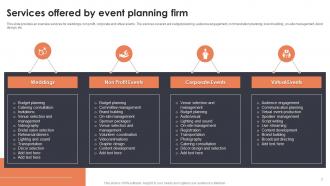
Slide 7: This slide gives a glimpse of the Services offered by the event planning firm.
Slide 8: This slide elucidates the Event planning Company success metrics.
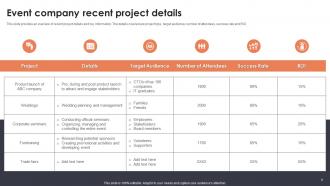
Slide 9: This slide provides an overview of recent project details and key information.
Slide 10: This slide contains the Title for the Topics to be covered in the next template.
Slide 11: This slide displays the Event Planning industry and market overview.
Slide 12: This slide showcases the Event industry major current trends.
Slide 13: This slide depicts the Heading for the Content to be discussed in the forth-coming template.
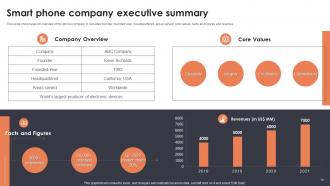
Slide 14: This slide reveals the Smart Phone Company executive summary.
Slide 15: This slide shows the Existing products and service offerings of the firm.
Slide 16: This slide describes the New product summary and specification details.
Slide 17: This slide presents the Company Objectives to be achieved post Product launch.
Slide 18: This slide includes the Heading for the Content to be discussed in the next template.
Slide 19: This slide showcases event tasks and activity management timeline.
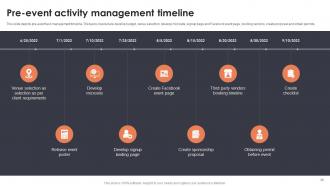
Slide 20: This slide depicts pre-event task management timeline.
Slide 21: This slide elucidates the various factors to be considered for event venue selection.
Slide 22: This slide exhibits the New Product Launch Event Poster.
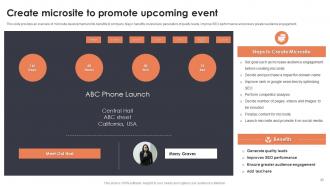
Slide 23: This slide provides an overview of microsite development and its benefits to the company.
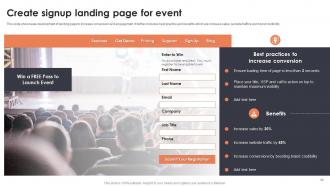
Slide 24: This slide highlights the Creation and Development of landing page to increase conversion and engagement.
Slide 25: This slide depicts the Creation of the Facebook page for an upcoming event.
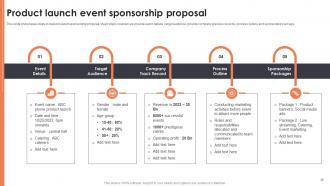
Slide 26: This slide showcases steps included in event sponsorship proposal.
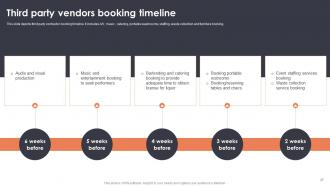
Slide 27: This slide incorporates the Third Party vendors booking timeline.
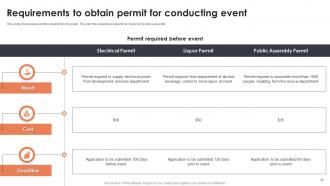
Slide 28: This slide includes the Requirements to obtain permit for conducting events.
Slide 29: This slide covers the Activity management with pre-event checklist.
Slide 30: This slide provides information about the Heading for the Topics to be discussed in the upcoming template.
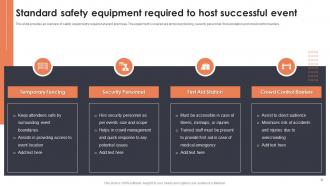
Slide 31: This slide is an overview of safety equipment's required to host successful events.
Slide 32: This slide showcases the Live polling to boost audience engagement.
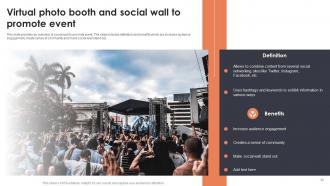
Slide 33: This slide displays the Virtual photo booth and social wall to promote an event.
Slide 34: This slide presents the Event day task management schedule.
Slide 35: This slide states the Title for the Content to be discussed in the following template.
Slide 36: This slide shows the procedure of Sending personalized emails to all attendees.
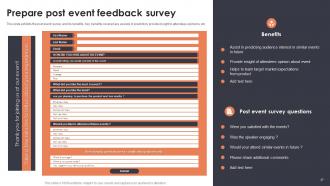
Slide 37: This slide exhibits the Preparation of Post event Feedback survey.
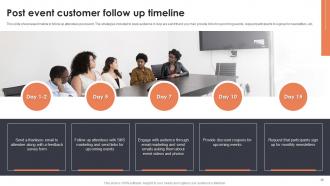
Slide 38: This slide showcases timeline to follow up attendees post event.
Slide 39: This slide depicts the Title for the Topics to be covered in the next template.
Slide 40: This slide incorporates the Cost of services provided to the Smart Phone Company.
Slide 41: This slide provides an overview of fee charged by event planning company.
Slide 42: This slide includes the Heading for the Topics to be covered in the following template.
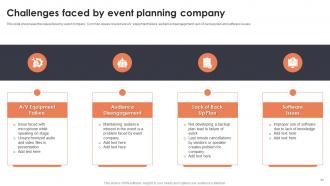
Slide 43: This slide showcases the issues faced by event company.
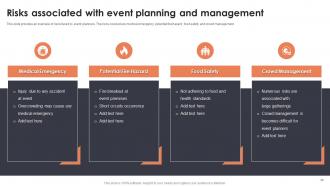
Slide 44: This slide reveals the Risk associated with the event planning and management.
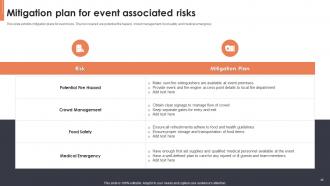
Slide 45: This slide exhibits mitigation plans for event risks.
Slide 46: This slide shows the Heading for the Content to be discussed in the next slide.
Slide 47: This slide provides an overview of the Registrants and attendees KPIs to track event's success.
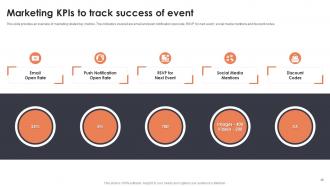
Slide 48: This slide covers the Marketing KPIs to track event's success.
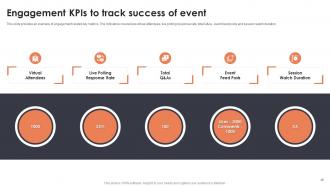
Slide 49: This slide displays the Engagement KPI's to track the success of an event.
Slide 50: This slide states the Title for the Topics to be covered in the next slide.
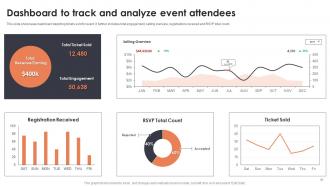
Slide 51: This slide showcases the Dashboard to track and analyze event attendees.
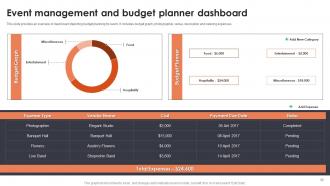
Slide 52: This is the Event management and budget planner Dashboard slide with tables and charts.
Slide 53: This is the Icons slide containing the numerous icons used in the presentation.
Slide 54: This slide is titled as the Additional Slides for giving some additional information.
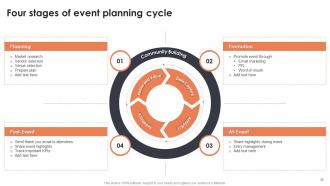
Slide 55: This slide depicts the Four stages of event planning cycle with related imagery.
Slide 56: This slide illustrates the Tasks and activities for successful event planning.
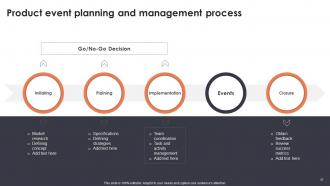
Slide 57: This slide shows the Product event planning and management process.
Slide 58: This is Our Mission slide. State your Company Goals, vision and mission in this one.
Slide 59: This is the About Us slide for providing Company information.
Slide 60: This is our team slide for providing the information related to team members.
Slide 61: This is Our Goal slide for stating Company's long-term goals.
Slide 62: This slide includes the Post it notes for Company deadlines and reminders.
Slide 63: This slide includes the Venn diagram for depicting some Company related information.
Slide 64: This slide reveals the Column chart using vertical Bar-Graphs.
Slide 65: This is the Line Chart with related imagery.
Slide 66: This is the Timeline slide revealing Company information related to time.
Slide 67: This is the Thank You slide for acknowledgement.
Event Planning For New Product Launch Powerpoint Presentation Slides with all 72 slides:
Use our Event Planning For New Product Launch Powerpoint Presentation Slides to effectively help you save your valuable time. They are readymade to fit into any presentation structure.






























FAQs for Event Planning For New Product Launch
Key elements for successful event planning include defining clear objectives, establishing a realistic budget, selecting an appropriate venue, coordinating logistics like catering and audio-visual equipment, and developing a comprehensive timeline. These components work together to streamline execution, minimize last-minute issues, and enhance attendee experiences, with many organizations finding that strategic planning ultimately delivers memorable events and stronger stakeholder engagement.
Creating a realistic event budget involves identifying all cost categories including venue, catering, entertainment, marketing, staffing, technology, and contingency funds, while researching current market rates for each component. Through detailed vendor quotes and historical data analysis, event planners can allocate resources strategically, with many organizations finding that building in 10-15% contingency buffers ultimately delivers cost control and successful execution.
Choosing the perfect venue involves evaluating location accessibility, capacity alignment with expected attendance, available amenities and technology, budget constraints, and ambiance that matches your event's purpose. Event planners typically assess multiple factors simultaneously, including parking availability, catering options, and backup plans for weather, with many corporate organizers finding that venues offering comprehensive packages streamline logistics while delivering memorable experiences.
Technology enhances event planning through digital registration systems, virtual venue tours, automated scheduling tools, real-time communication platforms, and data analytics dashboards. These solutions streamline coordination by reducing manual tasks, improving vendor collaboration, and enabling seamless attendee management, while delivering personalized experiences, faster check-ins, and valuable insights that help organizers optimize future events and increase attendee satisfaction.
Effective event marketing strategies include social media campaigns, email marketing, influencer partnerships, early bird pricing, and content marketing through blogs and videos. These approaches enhance visibility by leveraging multiple touchpoints, creating anticipation through exclusive previews, and building community engagement, with many event organizers finding that strategic combinations of digital and traditional promotion ultimately deliver higher attendance rates and stronger audience engagement.
Having a contingency plan is essential for event success, addressing potential issues like weather disruptions, vendor cancellations, technical failures, and last-minute attendee changes. These strategic preparations enable event planners to maintain professional standards, minimize disruptions, and deliver seamless experiences, with many corporate events, conferences, and wedding planners finding that comprehensive backup plans ultimately enhance client confidence and ensure successful outcomes.
Audience engagement serves as the primary driver of event success, determining attendee satisfaction, knowledge retention, networking effectiveness, and overall return on investment. Through interactive sessions, personalized experiences, and strategic touchpoints, event planners create memorable connections that translate into stronger brand loyalty, increased participation rates, and measurable business outcomes for organizations across industries.
Ensuring diverse attendee satisfaction requires comprehensive audience research, inclusive programming, and flexible accommodation options throughout the planning process. Through pre-event surveys, varied session formats, accessible venues, and diverse speakers, event planners can address different learning styles, cultural backgrounds, and accessibility needs, ultimately delivering personalized experiences that enhance engagement and maximize attendee value across all participant segments.
Event logistics best practices include creating detailed timelines with buffer periods, establishing clear vendor communication protocols, conducting thorough venue walkthroughs, implementing contingency planning for critical elements, and maintaining centralized coordination systems. These approaches streamline operations by reducing miscommunication, preventing scheduling conflicts, and ensuring seamless execution, with many event professionals finding that systematic logistics management ultimately delivers enhanced attendee experiences and significantly reduces day-of-event stress.
Event planners can measure success through attendee feedback surveys, engagement metrics, social media analytics, lead generation numbers, and return on investment calculations. These measurement tools enable organizers to assess participant satisfaction, networking effectiveness, and business outcomes, with many corporate events finding that comprehensive post-event analysis ultimately delivers valuable insights for future strategic planning and enhanced attendee experiences.
Collaborating with vendors and partners during event planning delivers cost efficiencies, enhanced creative solutions, streamlined logistics coordination, improved resource allocation, and reduced operational risks. Through strategic partnerships, event organizers access specialized expertise, negotiate better rates, and ensure seamless execution, while vendors gain deeper project understanding, ultimately creating more successful events and stronger long-term business relationships.
Event planners create memorable themes by aligning the concept with audience interests, incorporating immersive sensory experiences, and ensuring consistent visual storytelling across all touchpoints. Through strategic color palettes, interactive elements, and personalized details, planners transform ordinary gatherings into engaging experiences, with many corporate and social events finding that cohesive thematic execution significantly enhances attendee satisfaction and brand recall.
Current event planning trends include hybrid event formats, sustainability-focused practices, personalized attendee experiences, advanced event technology integration, and wellness-centered programming. These approaches streamline operations by reducing environmental impact, enhancing participant engagement, and leveraging data analytics for better outcomes, with many organizations finding that strategic combinations of virtual and in-person elements deliver broader reach while maintaining meaningful connections.
Sustainability can be incorporated through digital invitations, venue selection prioritizing renewable energy and waste reduction, local sourcing, reusable materials, and comprehensive recycling programs. Many corporate conferences and trade shows find that these eco-friendly approaches reduce costs by 20-30% while enhancing brand reputation, ultimately delivering competitive advantage and attracting environmentally conscious attendees.
Effective post-event feedback methods include digital surveys, mobile apps, social media monitoring, focus groups, and one-on-one interviews with key stakeholders. These approaches enable event planners to assess attendee satisfaction, identify improvement areas, and refine future strategies, with many organizations finding that systematic feedback collection enhances attendee experiences while delivering measurable ROI improvements.
-
The PPT layout is great and it has an effective design that helps in presenting corporate presentations. It's easy to edit and the stunning visuals make it an absolute steal!
-
I've been looking for a good template source for some time. I'm happy that I discovered SlideTeam. Excellent presentations must try!