


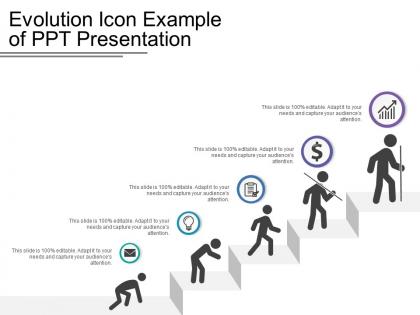
Evolution icon example of ppt presentation




Try Before you Buy Download Free Sample Product
 Impress Your
 Audience
 100%
100% Editable
 Save Hours
 of Time


Explain how entire communities benefit with our Evolution Icon Example Of Ppt Presentation. Give examples of the effect of generosity.
People who downloaded this PowerPoint presentation also viewed the following :
Evolution icon example of ppt presentation with all 5 slides:
Direct them on the course to follow with our Evolution Icon Example Of Ppt Presentation. Establish your authority at the helm.



FAQs for Evolution icon example
So there are four main things driving evolution. Natural selection's the big one you probably know - basically traits that help you survive and make babies stick around. Then there's genetic drift, which is just random changes in genes (hits small populations way harder). Gene flow moves genes between groups when they migrate and mix. Mutation throws in totally new variants - that's where the raw material comes from. Honestly, they usually work together instead of separately, so any real situation probably has multiple things happening at once. Makes it pretty messy to figure out sometimes.
So mutations are like the starter pack for evolution - they give natural selection something to actually work with. DNA copying isn't perfect (honestly happens way more than you'd expect), and when those errors occur, you get beneficial, harmful, or neutral changes. The good mutations help organisms survive better, so they get passed down more often. Without them? Everything would just be genetic copies forever - pretty boring if you ask me. All that crazy variation you see in animals and plants started with these random DNA mess-ups.
So basically it's like nature's quality control system. Beneficial traits stick around while the bad ones get filtered out over time. When stuff changes - new predators, climate shifts, whatever - the animals with helpful mutations survive better and have more babies. Their kids inherit those good traits. The less adapted ones? They don't reproduce as much or just die off earlier. Honestly kinda harsh but that's how it works! Small changes build up over thousands of years. You can see something similar with dog breeds, except that's humans doing the selecting way faster.
So basically, genetic drift hits small populations way harder because random chance gets magnified when there's fewer individuals around. It's like flipping a coin 10 times vs 1000 times - you'll get weird results with just 10 flips. Same deal with genes. Random fluctuations can totally override what natural selection is trying to do. Good mutations disappear by accident, bad ones stick around just because. Honestly, it's kind of frustrating when you think about it. That's why endangered species lose genetic diversity so fast - drift is working against them harder than selection can keep up with.
So basically the environment acts like this brutal filter - only organisms with the right traits survive to reproduce. Climate changes, new predators show up, food gets scarce, whatever. The lucky ones with helpful adaptations make it through and pass those traits down. Short sentences can be effective sometimes. Over tons of generations, those good traits spread through the population while the useless ones disappear. It's honestly kind of fascinating how ruthless nature is about this whole process. When you're looking at any species, just think about what environmental pressures shaped them into what they are today.
So convergent evolution is basically when totally unrelated animals figure out the same tricks independently. Like bats and birds both evolved wings, but they're completely different structures - bats are basically flying mammals with weird stretched fingers. Sharks and dolphins look super similar because water doesn't care if you're a fish or mammal, you still gotta be streamlined. Oh and octopuses have camera eyes just like us, which is honestly pretty wild since we're not related at all. It's like nature keeps having the same brilliant ideas over and over.
So endosymbiotic theory is basically about how complex cells evolved. Mitochondria and chloroplasts? They were originally just independent bacteria that got swallowed up by early cells. Wild, right? Instead of getting digested, they ended up in this perfect partnership situation. You can still see proof of this - these organelles have their own DNA that's completely different from what's in the cell's nucleus. It totally flipped how we think about cellular evolution. Oh, and it challenged that whole "survival of the fittest" thing since cooperation was actually key here.
So fossils are like time capsules showing how life evolved over millions of years. The deeper you go in rock layers, the simpler creatures get. You'll find crazy transitional forms too - early whales with legs blew my mind when I first learned about it. Museums do a great job displaying this stuff in sequence. Compare fossil anatomy to modern animals and the family connections become obvious. Honestly, once you start looking for these patterns, you can't unsee them. It's pretty convincing evidence when you see it all laid out chronologically like that.
So evolution is basically what creates all the crazy diversity we see in nature. Picture a tree branching out - each split makes new species with different traits. Isolated places like islands? They're biodiversity hotspots because there's more evolutionary pressure pushing changes. Over millions of years this gave us everything from bacteria to blue whales, which honestly blows my mind. That's why protecting diverse ecosystems matters so much for conservation - you're keeping those evolutionary processes alive. Different environments just breed more variety.
So basically, our brains are still running on ancient software from when our ancestors had to survive crazy stuff like saber-tooth tigers. That's why you're terrified of spiders even though they can't actually hurt you - the humans who avoided creepy crawlies lived longer and had more kids. Pretty much every behavior we have (fear, cooperation, who we're attracted to) got shaped by what kept people alive back then. It's honestly kind of mind-blowing once you start seeing it everywhere. Next time someone does something that seems weird, just think "what problem would this have solved 10,000 years ago?" Makes everything click.
So epigenetics is like evolution's shortcut. Your genes can get flipped on/off when you're stressed, change your diet, hit toxins - that kind of stuff. No waiting around for mutations. The crazy part? Some of these switches actually get passed down to your kids. Populations can adapt way faster this way while regular genetic evolution does its slow thing. Oh and if you're looking at any population stuff, you'll want to check both genetic AND epigenetic changes. They work together more than people realize.
So basically bacteria are just doing what all living things do - evolving to survive. When you hit them with antibiotics, the ones with lucky mutations stick around while the rest die off. Pretty wild how fast it happens tbh. Those survivors multiply like crazy and suddenly your whole bacterial population is resistant. This is exactly why your doctor gets annoyed if you don't finish the full prescription - stopping early just gives the stronger bacteria a chance to take over. It's literally natural selection happening in real time, which is both fascinating and terrifying.
Dude, genetics is like the smoking gun for evolution - we can literally watch mutations happen in real-time now through DNA sequencing. Darwin was just guessing at this stuff, but we can see the actual molecular changes driving everything. Gene flow between populations, natural selection picking winners and losers, it's all there in the data. Plus it explains weird things like why certain traits always seem linked together (spoiler: they're often on the same chromosome). Honestly, if you're looking at any evolutionary pattern, check out the genetic research behind it. That's where the real action is happening.
Oh dude, we've totally sped up evolution in crazy ways. Bacteria now resist antibiotics in like decades instead of thousands of years. City birds literally changed how they sing to be heard over traffic noise - which is kinda sad but also amazing? Bugs adapt to our pesticides super fast too. Climate change is forcing everything to evolve or move quickly. Even fish are getting smaller because we keep catching all the big ones first. Check out some urban wildlife studies near you - the adaptations are honestly pretty cool to read about.
So basically, viruses mutate constantly because they're evolving to survive whatever we throw at them. That's why flu shots change every year and we keep getting antibiotic-resistant bugs. Scientists track these genetic changes super closely - when you hear about "variant strains," that's literally evolution happening right now. Pretty crazy how fast they adapt, honestly. Understanding this evolutionary pressure helps predict which mutations might take off and guides vaccine development. I used to think evolution was just ancient history stuff, but watching COVID variants emerge really drove home how it's still happening. Pay attention next time there's an outbreak - the mutation talk will click way better.
-
Easily Editable.
-
Awesome use of colors and designs in product templates.