


Entwicklung der drahtlosen Telekommunikation von 1G bis 5G IT-Präsentationsfolien




Try Before you Buy Download Free Sample Product
 Impress Your
 Audience
 100%
100% Editable
 Save Hours
 of Time


Die Evolution der drahtlosen Telekommunikation von 1G bis 5G gibt einen kurzen Überblick über die Geschichte und Erfindung des ersten Mobiltelefons und wie sich die 5G-Technologie von Generation zu Generation weiterentwickelt hat. In dieser Präsentation haben wir die Entwicklung des 5G-Technologiesystems in der drahtlosen Telekommunikation, einschließlich eines Überblicks über seine Hauptmerkmale und Nachteile, behandelt. Darüber hinaus enthält die Präsentation einen Überblick über das Mobilfunksystem der 2. Generation, auch als GSM bekannt, seine Hauptmerkmale, Nachteile sowie einen Überblick über die Systeme 2.5G und 2.75G. Außerdem beinhaltet die Präsentation eine Einführung in das Mobilfunksystem der 3. Generation, gefolgt von seinen Hauptmerkmalen, Nachteilen und den Generationen 3.5G bis 3.75G. Darüber hinaus umfasst die Präsentation einen Überblick über 4G und 5G, einschließlich wichtiger Funktionen, Vorteile, Anwendungsbereiche, Sicherheitsmerkmale und den aktuellen Stand der 5G-Netzwerkeinführung. Darüber hinaus vergleicht diese Vorlage die Telekommunikationstechnologien der 1. bis 5. Generation, eine Zeitleiste und einen Fahrplan für die Entwicklung der drahtlosen Telekommunikation. Laden Sie unsere zu 100 Prozent bearbeitbare und anpassbare Vorlage herunter, die auch mit Google Slides kompatibel ist.
People who downloaded this PowerPoint presentation also viewed the following :
Inhalt dieser Powerpoint-Präsentation
Folie 1: Diese Folie zeigt den Titel Evolution der drahtlosen Telekommunikation von 1G bis 5G.
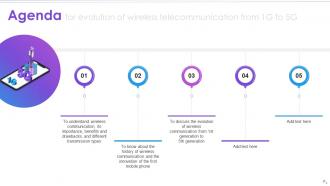
Folie 2: Diese Folie zeigt die Agenda für die Entwicklung der drahtlosen Telekommunikation von 1G bis 5G.
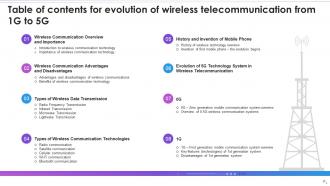
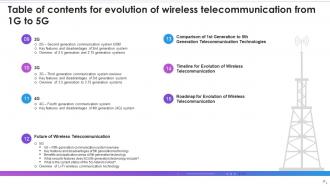
Folie 3: Diese Folie zeigt ein Inhaltsverzeichnis.
Folie 4: Diese Folie zeigt ein Inhaltsverzeichnis.
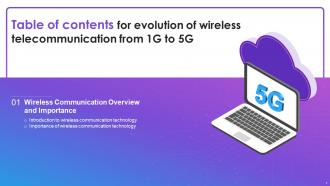
Folie 5: Diese Folie zeigt ein Inhaltsverzeichnis - Drahtlose Kommunikationsübersicht und Bedeutung.
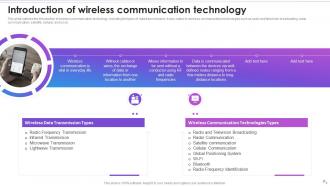
Folie 6: Diese Folie umreißt die Einführung der drahtlosen Kommunikationstechnologie.
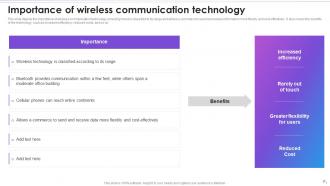
Folie 7: Diese Folie zeigt die Bedeutung der drahtlosen Kommunikationstechnologie.
Folie 8: Diese Folie zeigt ein Inhaltsverzeichnis - Vor- und Nachteile der drahtlosen Kommunikation.
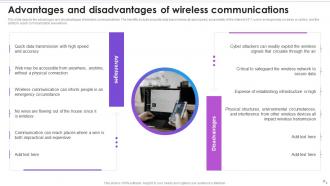
Folie 9: Diese Folie zeigt die Vor- und Nachteile der drahtlosen Kommunikation.
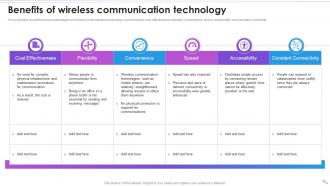
Folie 10: Diese Folie spricht über die Vorteile der drahtlosen Kommunikationstechnologie.
Folie 11: Diese Folie zeigt ein Inhaltsverzeichnis - Arten der drahtlosen Datenübertragung.
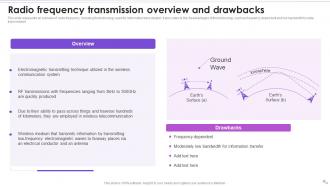
Folie 12: Diese Folie stellt eine Übersicht über Funkfrequenzen dar.
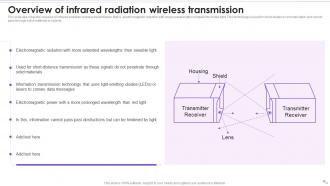
Folie 13: Diese Folie beschreibt die Übersicht über die drahtlose Infrarot-Strahlungsübertragung.
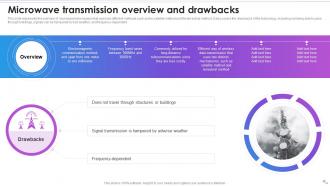
Folie 14: Diese Folie stellt eine Übersicht über die Mikrowellenübertragung und deren Nachteile dar.
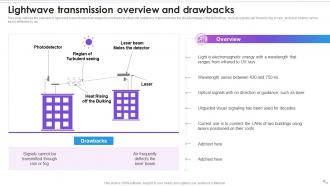
Folie 15: Diese Folie umreißt die Übersicht über die Lichtwellenübertragung, die von Infrarot- bis Ultraviolettstrahlung reicht.
Folie 16: Diese Folie zeigt ein Inhaltsverzeichnis - Arten der drahtlosen Kommunikationstechnologien.
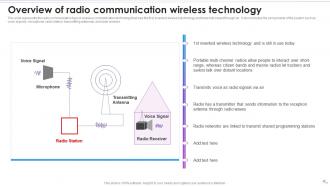
Folie 17: Diese Folie stellt die Funkübertragung als Art der drahtlosen Kommunikationstechnologie dar.
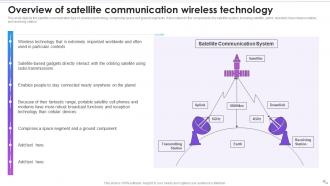
Folie 18: Diese Folie zeigt die Satellitenkommunikation als Art der drahtlosen Technologie.
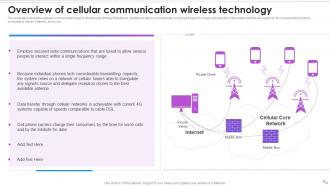
Folie 19: Diese Folie spricht über die Übersicht der zellularen Kommunikation als drahtlose Technologie.
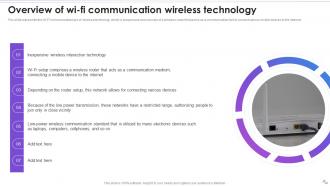
Folie 20: Diese Folie spricht über die Übersicht der WLAN-Kommunikation als drahtlose Technologie.
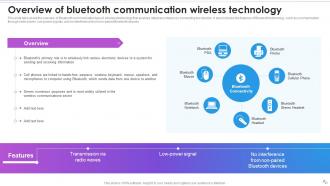
Folie 21: Diese Folie spricht über die Übersicht der Bluetooth-Kommunikation als Art der drahtlosen Technologie.
Folie 22: Diese Folie zeigt ein Inhaltsverzeichnis - Geschichte und Erfindung des Mobiltelefons.
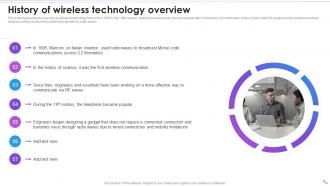
Folie 23: Diese Folie stellt die Geschichte der drahtlosen Technologie dar.
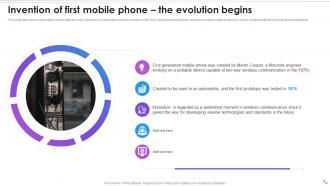
Folie 24: Diese Folie stellt die Erfindung des ersten Mobiltelefons - der Beginn der Evolution - dar.
Folie 25: Diese Folie zeigt ein Inhaltsverzeichnis - Evolution des 5G-Technologiesystems in der drahtlosen Telekommunikation.
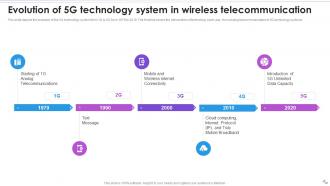
Folie 26: Diese Folie spricht über die Entwicklung des 5G-Technologiesystems in der drahtlosen Telekommunikation.
Folie 27: Diese Folie zeigt ein Inhaltsverzeichnis - 0G.
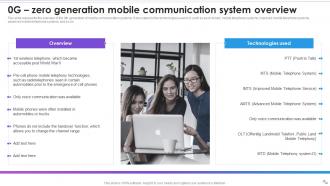
Folie 28: Diese Folie stellt eine Übersicht über die 0. Generation der Mobilfunksysteme dar.
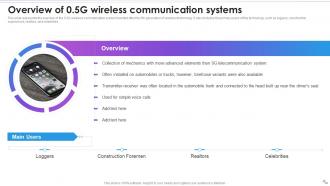
Folie 29: Diese Folie stellt eine Übersicht über das 0,5G-Drahtloskommunikationssystem dar.
Folie 30: Diese Folie zeigt ein Inhaltsverzeichnis - 1G.
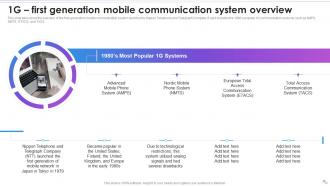
Folie 31: Diese Folie spricht über die Übersicht des Mobilfunksystems der ersten Generation.
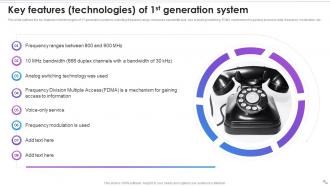
Folie 32: Diese Folie spricht über die wichtigsten Merkmale (Technologien) des Systems der ersten Generation.
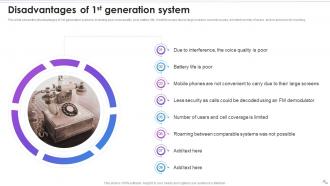
Folie 33: Diese Folie spricht über die Nachteile des Systems der ersten Generation.
Folie 34: Diese Folie zeigt ein Inhaltsverzeichnis - 2G.
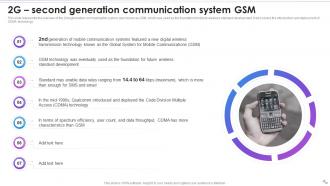
Folie 35: Diese Folie stellt eine Übersicht über das Kommunikationssystem der 2. Generation dar.
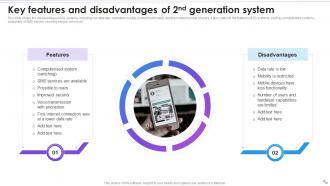
Folie 36: Diese Folie zeigt ein Inhaltsverzeichnis mit den wichtigsten Merkmalen und Nachteilen des Systems der 2. Generation.
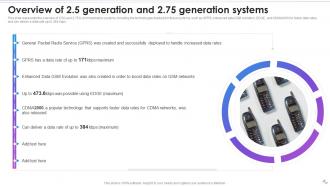
Folie 37: Diese Folie stellt eine Übersicht über die 2,5G- und 2,75G-Kommunikationssysteme dar.
Folie 38: Diese Folie zeigt ein Inhaltsverzeichnis - 3G.
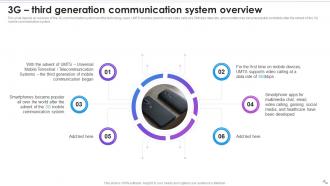
Folie 39: Diese Folie zeigt eine Übersicht über das 3G-Kommunikationssystem und die verwendete Technologie.
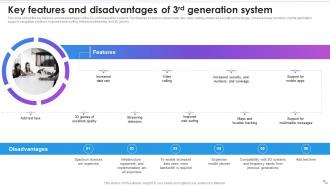
Folie 40: Diese Folie zeigt die wichtigsten Merkmale und Nachteile der 3G-Kommunikationssysteme.
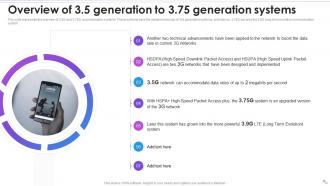
Folie 41: Diese Folie stellt eine Übersicht über die 3,5G- und 3,75G-Kommunikationssysteme dar.
Folie 42: Diese Folie zeigt ein Inhaltsverzeichnis - 4G.
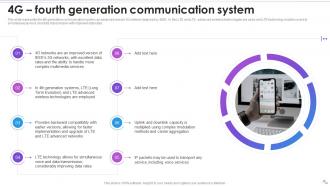
Folie 43: Diese Folie stellt das Kommunikationssystem der 4. Generation dar.
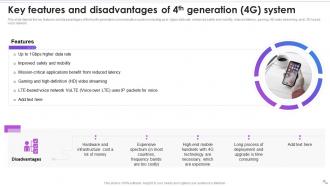
Folie 44: Diese Folie zeigt die wichtigsten Merkmale und Nachteile des Kommunikationssystems der vierten Generation.
Folie 45: Diese Folie zeigt ein Inhaltsverzeichnis - Zukunft der drahtlosen Telekommunikation.
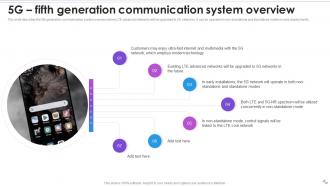
Folie 46: Diese Folie beschreibt die Übersicht über das Kommunikationssystem der 5. Generation, bei dem LTE-Advanced-Netzwerke auf 5G-Netzwerke aufgerüstet werden.
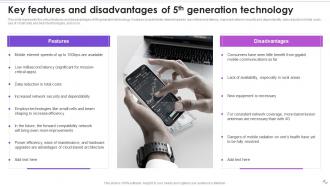
Folie 47: Diese Folie stellt die kritischen Merkmale und Nachteile der Technologie der 5. Generation dar.
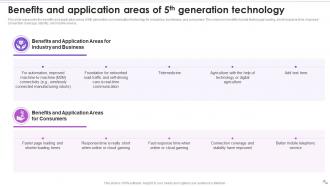
Folie 48: Diese Folie stellt die Vorteile und Anwendungsbereiche der Kommunikationstechnologie der 5. Generation dar.
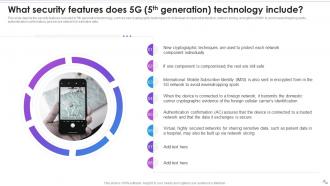
Folie 49: Diese Folie zeigt die in der Technologie der 5. Generation enthaltenen Sicherheitsmerkmale.
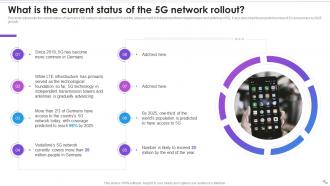
Folie 50: Diese Folie stellt dar, was der aktuelle Status des 5G-Netzwerkausbaus ist.
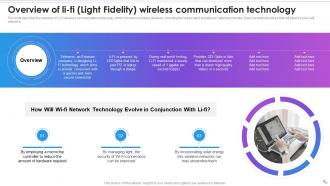
Folie 51: Diese Folie beschreibt die Übersicht über die Li-Fi-Drahtloskommunikationstechnologie.
Folie 52: Diese Folie zeigt ein Inhaltsverzeichnis - Vergleich der Telekommunikationstechnologien der 1. bis 5. Generation.
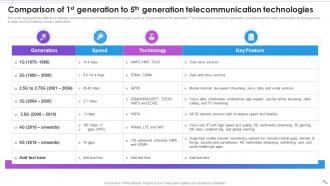
Folie 53: Diese Folie stellt den Unterschied zwischen verschiedenen drahtlosen Kommunikationstechnologien wie der 1. bis 5. Generation dar.
Folie 54: Diese Folie zeigt ein Inhaltsverzeichnis - Zeitplan für die Entwicklung der drahtlosen Telekommunikation.
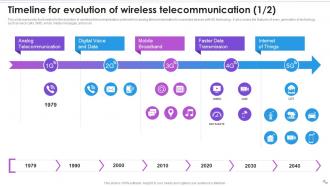
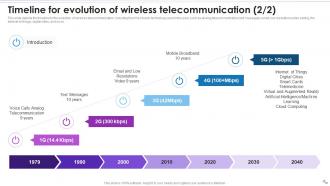
Folie 55: Diese Folie stellt den Zeitplan für die Entwicklung der drahtlosen Telekommunikationssysteme dar.
Folie 56: Diese Folie zeigt den Zeitplan für die Entwicklung der drahtlosen Telekommunikation.
Folie 57: Diese Folie zeigt ein Inhaltsverzeichnis - Fahrplan für die Entwicklung der drahtlosen Telekommunikation.
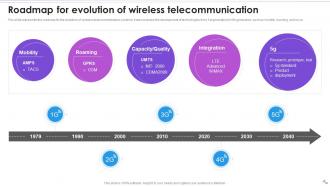
Folie 58: Diese Folie stellt den Fahrplan für die Entwicklung der drahtlosen Telekommunikationssysteme dar.
Folie 59: Dies ist die Folie mit den Symbolen.
Folie 60: Diese Folie präsentiert den Titel für zusätzliche Folien.
Folie 61: Diese Folie präsentiert die Vision, Mission und Ziele Ihres Unternehmens.
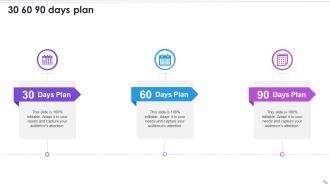
Folie 62: Diese Folie stellt den 30-60-90-Tage-Plan dar.
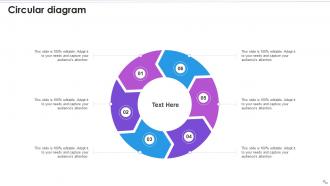
Folie 63: Diese Folie stellt ein Kreisdiagramm dar.
Folie 64: Diese Folie stellt eine Lupe dar.
Folie 65: Diese Folie zeigt eine Zeitachse.
Folie 66: Diese Folie stellt Post-it-Notizen dar.
Folie 67: Diese Folie zeigt die Ideengenerierung.
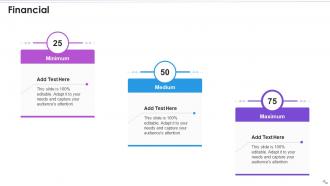
Folie 68: Diese Folie zeigt Finanzen.
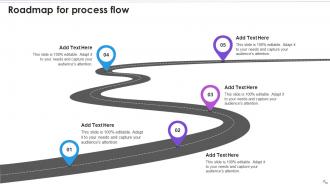
Folie 69: Diese Folie stellt einen Fahrplan für den Prozessablauf dar.
Folie 70: Dies ist die Dankesfolie und enthält Kontaktdaten des Unternehmens wie Adresse, Telefonnummer usw.
1G 2G 3G 4G 5G
Evolution der drahtlosen Telekommunikation von 1G bis 5G





FAQs for Evolution Of Wireless Telecommunication From 1G To 5G IT
So basically each generation was a huge jump forward. 1G in the 80s was just basic calls, then 2G brought us texting and digital networks in the 90s. 3G around 2000 gave us actual internet on phones, but honestly it was pretty slow. 4G changed everything though - suddenly you could actually stream Netflix without wanting to throw your phone. Each gen was like 10-100x faster than the last one. Now 5G is rolling out with crazy low latency. For your project, just think about what speeds you'll need and that'll tell you which generation's infrastructure makes sense.
So 2G basically changed everything by going from analog to digital - way clearer calls and actually secure. That's when texting started too, which feels wild to think about now. Digital signals used less battery power, so your phone wasn't dead by noon anymore. It also made roaming between countries work properly for the first time. Honestly, the whole thing was just the stepping stone that made smartphones possible later on. Oh, and if you're doing anything telecom-related, this digital shift is pretty key to understanding how we got to where we are today.
Think of spectrum allocation like prime real estate - everyone wants the good spots! Each wireless generation (2G through 5G) has needed fresh frequency bands to hit those faster speeds we all expect. Regulators are constantly juggling who gets what frequencies, and honestly? The auctions can get pretty cutthroat. But here's the cool part - when engineers bump up against bandwidth limits, they get creative. Scarcity forces them to invent smarter ways to compress data and squeeze better performance from whatever spectrum they've got. It's basically been the main driver behind wireless tech evolution.
Dude, that shift to digital was massive. Call quality got so much better because they could compress signals and fix errors automatically. More people could use the same spectrum too, which was huge. Your battery stopped dying constantly since phones didn't have to scream at towers anymore - honestly such a relief. But here's the crazy part: digital unlocked texting, data, internet, all of it. Analog literally could only do voice calls! Wild to think about now. If you're dealing with any old system upgrades, this is like the perfect example of how new infrastructure creates possibilities you never even imagined.
Dude, 4G LTE is such a massive upgrade from 3G. You're getting like 10-50 Mbps instead of that painful 1-3 Mbps crawl. HD videos actually stream without buffering, video calls don't look like potato quality anymore, and photos upload right away. The best part? Your connection stays solid when you're walking around or in the car - none of that cutting out nonsense. I was skeptical about upgrading my plan at first, but honestly the reliability difference is huge. If you're still stuck on older speeds, it's definitely worth switching.
Dude, 5G is insane for IoT stuff. You can connect millions of devices per square kilometer instead of just thousands with 4G. The latency drops under 1ms - perfect for autonomous cars or medical equipment that needs instant responses. What's really cool is network slicing. Basically creates separate lanes so your factory sensors don't get slowed down by regular internet traffic. I was reading about this yesterday actually. If you're doing any big IoT project, start thinking about 5G integration now because it'll completely change what's possible.
So basically your phone can now connect to multiple cell towers at once, which is pretty cool. MIMO tech creates these parallel data streams - think of it like having several highway lanes instead of being stuck in single-file traffic. The antennas got way smarter too, they focus signals directionally now rather than just blasting everywhere. You'll notice faster downloads and way better service in crowded spots. Honestly, it's wild how much this stuff has improved - no more dropping calls when you're at concerts or whatever. Next time Netflix loads instantly, that's MIMO doing its thing.
Honestly, the money part is brutal - carriers have to drop insane amounts on new towers and equipment. Spectrum's another nightmare since there's only so much available. People keep freaking out about health stuff too, which slows things down (studies say it's fine but whatever). The tech side gets messy when they're trying to blend 5G with existing networks without everything crashing. Rural areas? Forget about it for now - too expensive so cities get it first. I'd just watch how your carrier's rolling it out in phases instead of expecting it everywhere right away.
Honestly, it's all about what people want. We kept complaining about dropped calls, so carriers had to fix their coverage. Then everyone wanted to stream videos and scroll social media constantly - boom, that pushed the whole 3G to 4G jump. Now we're obsessed with gaming and instant everything, which is why 5G happened so fast. It's kind of wild how our habits directly force these upgrades. Like, the industry literally has to scramble every time millions of us decide we need something better. If you want to predict what's coming next, just look at what's annoying everyone right now.
Dude, wireless tech literally changed everything for remote places. Farmers in Kenya can do mobile banking now, and rural Indian startups just hop on cloud services like it's nothing. Your phone basically created the whole gig economy - crazy when you think about it. Developing countries saw their GDP jump because people could suddenly access mobile payments and stuff. Here's the best part: they didn't need to build all that old landline infrastructure. Just threw up some cell towers and boom, straight to 4G. If you're looking at expanding somewhere, definitely check their wireless coverage first. It's honestly a better economic indicator than most traditional metrics these days.
Think of regulatory policies as traffic control for wireless tech. The FCC decides which spectrum bands companies can actually use for 5G - those C-band auctions were pretty smart moves that sped things up. But then you've got safety regulations and approval processes that can drag on forever. Your phone needs to work everywhere, so international coordination matters too. Honestly, it's wild how much bureaucracy sits between cool new tech and your pocket. Some policies help innovation, others create massive bottlenecks. Watch the upcoming spectrum changes though - they'll determine what wireless features we actually get.
Honestly, it's just what you'd expect - more connected stuff equals more ways to get hacked. Eavesdropping became super easy once cellular took off, then IoT devices made it even worse. Your smart thermostat could literally be a gateway to your whole network, which is kinda insane when you think about it. 5G has better encryption but also connects everything under the sun, so there's that trade-off. The really scary part is when attackers go after the actual network infrastructure - they can mess with entire communication systems. Just keep your wireless devices updated and maybe do an audit of what's actually connected.
So blockchain's actually getting pretty big in wireless stuff - way more than I expected tbh. Device authentication is huge, plus carriers can share data securely without all the usual headaches. 5G network slicing payments happen automatically now through smart contracts, which is wild. The IoT side is where it gets really interesting though - managing millions of device identities without a central authority just makes sense. Oh and apparently spectrum sharing deals are way easier to set up. If you're doing any wireless work, definitely check out how smart contracts could handle your network management. Saves tons of manual work.
Dude, COVID basically fast-forwarded wireless tech by like 5 years. Everyone suddenly *had* to work from home, video call constantly, do everything online. Telecom companies scrambled to roll out 5G faster because the demand was insane - not just people wanting better speeds anymore, they actually needed it. IoT stuff blew up too since businesses couldn't physically check on things. Companies pushed through infrastructure upgrades they'd planned for 2025. Honestly, I think this remote-first thing isn't going anywhere - we're kinda stuck with it now, but in a good way mostly.
So basically companies are using AI to predict when networks will get clogged up and automatically reroute signals before it happens. The whole system can fix itself now without anyone touching it. Traffic patterns, weather, usage spikes - the AI watches all that stuff and moves resources around. You'll notice way better call quality during busy times. It's honestly pretty crazy how far we've gotten from just manually tweaking antennas (my dad used to do that back in the day lol). If you're in network infrastructure, definitely check out those AI predictive maintenance tools.
-
Best
-
Unique design & color.
-
Colors used are bright and distinctive.