

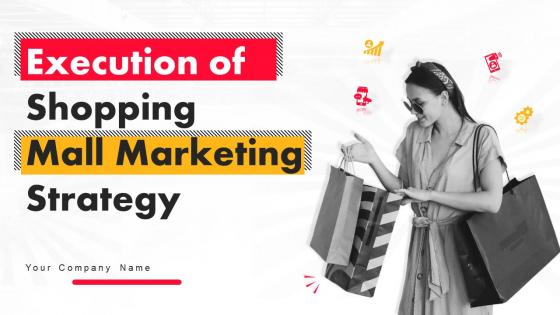
Execution Of Shopping Mall Marketing Strategy Powerpoint Presentation Slides MKT CD




Try Before you Buy Download Free Sample Product
 Impress Your
Audience
 100%
Editable
 Save Hours
of Time


Shopping mall strategy presentation gives owners the tools and strategies they need to succeed in todays competitive retail landscape. This guide helps brands identify target audiences and develop a strong marketing plan along with engaging events and promotions that drive traffic. This PowerPoint presentation covers an overview of the shopping center, product segmentation, marketing trends, brand promotion strategies, challenges, and gap analysis. It showcases shopping mall analysis through footfall evaluation, customer segmentation, average customer spending, and shopper persona. This PPT highlights the marketing program covering online marketing, offline marketing, and holiday and seasonal marketing. It depicts other strategies, such as corporate social responsibility and techniques to improve foot traffic. At last, it represents budget allocation for promotional activities, the impact of mall marketing, and the case study. Download our 100 percentage editable and customizable template, which is also compatible with Google Slides
People who downloaded this PowerPoint presentation also viewed the following :
Content of this Powerpoint Presentation
Slide 1: This slide displays the title Execution of Shopping Mall Marketing Strategy.
Slide 2: This slide displays the title Agenda.
Slide 3: This slide exhibit table of content.
Slide 4: This slide exhibit table of content that is to be discuss further.
Slide 5: This slide represents summary for shopping center with other details such as areas, facilities, available services, mission and vision.
Slide 6: This slide represents product segmentation that helps marketers assessment and build marketing strategy for each segments.
Slide 7: This slide represents major marketing trends for shopping centers that helps marketers in mall promotion.
Slide 8: This slide represents marketing strategies currently used by shopping centers for promotional activities.
Slide 9: This slide represents challenges faced by shopping centers such as decline in foot traffic and customer conversion rate.
Slide 10: This slide represents problems faced by shopping malls during brand advertising.
Slide 11: This slide represents gap assessment for shopping centers showcasing need for marketing strategy.
Slide 12: This slide exhibit table of content that is to be discuss further.
Slide 13: This slide represents footfall analysis for evaluate the performance of shopping mall.
Slide 14: This slide represents customer segmentation for shopping mall customers.
Slide 15: This slide represents average spending by customers in shopping malls on products and services.
Slide 16: This slide represents shopper persona that helps marketers to assess shopping mall customers.
Slide 17: This slide exhibit table of content that is to be discuss further.
Slide 18: This slide represents major marketing strategies used for promotion in shopping malls.
Slide 19: This slide exhibit table of content that is to be discuss further.
Slide 20: This slide represents action plan for marketing shopping center through online promotional strategies.
Slide 21: This slide represents social media marketing campaign for shopping malls that helps marketers in attracting customer attention.
Slide 22: This slide represents action plan for implementing coupons and promotional codes to attract customer attention and improve sales.
Slide 23: This slide represents plan for executing giveaway campaigns with the aim to enhance brand conversion rate.
Slide 24: This slide exhibit table of content that is to be discuss further.
Slide 25: This slide represents various special events that are hosted by shopping malls with the aim to attract crowds and improve sales.
Slide 26: This slide represents action plan for stage shows and events that are organized by malls with the aim to attract customers.
Slide 27: This slide represents action plan to implement loyalty program at malls with the aim to improve shopping experience and increase repeat customers.
Slide 28: This slide exhibit table of content that is to be discuss further.
Slide 29: This slide represents gamification strategies adopted by malls to improve footfall and sales.
Slide 30: This slide exhibit table of content that is to be discuss further.
Slide 31: This slide represents corporate social responsibility (CRS) strategies adopted by malls to build emotional connection with customers.
Slide 32: This slide represents strategies used by shopping malls to improve footfall and customer experience.
Slide 33: This slide exhibit table of content that is to be discuss further.
Slide 34: This slide represents budget allocation for marketing programs of shopping mall.
Slide 35: This slide represents budget allocation for shopping mall promotional activities.
Slide 36: This slide exhibit table of content that is to be discuss further.
Slide 37: This slide represents impact for shopping mall promotional activities on customer conversion rate.
Slide 38: This slide represents marketing impact on shopping mall retailers and businesses.
Slide 39: This slide exhibit table of content that is to be discuss further.
Slide 40: This slide represents case study showcasing gamification of marketing by shopping malls.
Slide 41: This is the icons slide.
Slide 42: This slide presents title for additional slides.
Slide 43: This slide represents statistics associated with in-store experience and events.
Slide 44: This slide shows puzzle for displaying elements of company.
Slide 45: This slide showcase Our goal.
Slide 46: This slide depicts 30-60-90 days plan for projects.
Slide 47: This slide exhibit Timeline.
Slide 48: This slide depicts posts for past experiences of clients.
Slide 49: This slide shows details of team members like name, designation, etc.
Slide 50: This slide display SWOT analysis.
Slide 51: This slide exhibits ideas generated.
Slide 52: This slide display Roadmap.
Slide 53: This is thank you slide & contains contact details of company like office address, phone no., etc.
Execution Of Shopping Mall Marketing Strategy Powerpoint Presentation Slides MKT CD with all 58 slides:
Use our Execution Of Shopping Mall Marketing Strategy Powerpoint Presentation Slides MKT CD to effectively help you save your valuable time. They are readymade to fit into any presentation structure.







FAQs for Execution Of Shopping Mall Marketing Strategy Powerpoint Presentation
Dude, geo-targeted social ads are huge for malls - hit people when they're actually in the area looking for stuff to do. Instagram and TikTok are perfect for showing off events and new stores. Honestly, making your mall look alive instead of like a ghost town is half the battle lol. Local influencer partnerships work really well too. Email campaigns to loyalty members are solid for sales and exclusive events. Oh, and don't waste money targeting people 50 miles out - stick to hyperlocal. Most of your budget should go there.
Honestly, you gotta give people a real reason to show up. Limited-time events work great - flash sales, pop-ups, maybe some cool installation people will want to post about. Dead malls are depressing, so make yours feel alive with constant activity. Partner with your bigger stores for cross-promotion too. Focus on one platform first where your customers actually hang out, then use location targeting for people nearby. I'd track which posts actually get people through the doors using location data - that's the only metric that really matters here. Oh, and make everything feel "Instagram-worthy" because let's be real, if it's not shareable, fewer people will come.
Honestly, customer experience is everything for malls these days. People need a reason to leave their couch and actually drive there, you know? Clean bathrooms are non-negotiable - sounds basic but you'd be surprised. Make sure the layout isn't confusing, throw some family events, maybe add those photo spots everyone loves posting. It's your best weapon against Amazon and other malls. Map out what someone goes through from parking to buying something. Every annoying little thing you fix means they're more likely to come back instead of just ordering online.
Honestly, getting involved with local events is probably your best bet. Host stuff right in the mall - farmers markets in the parking lot work great, or set up art shows in that main corridor. Even basic things like high school band performances bring in families who wouldn't normally stop by. Sports team meet-and-greets are huge too. The whole point is making people see your mall as part of the community, not just another place to buy stuff. Oh, and definitely hit up your city's events coordinator first - they've got calendars of everything happening and can point you toward good partnership opportunities.
Dude, loyalty programs are seriously worth it for mall retailers. Your customers start coming back way more often because they're chasing those points or rewards. That bumps up how much they spend each visit too. But here's the real goldmine - you get crazy good data on their shopping habits. Like when they buy stuff, what they're into, all that. Most places see sales jump 15-20% from loyalty members compared to regular shoppers. Honestly can't believe more stores don't do this. Just start with something basic like a points system and expand from there.
So basically you want to track how people actually behave in your space - pull data from WiFi, apps, purchase history, all that stuff. Morning visitors get coffee deals, weekend families get restaurant promos, you know? The foot traffic patterns show when people visit and how long they stick around. Honestly, the demographic data gets super granular once you start digging. I'd focus on just one or two metrics at first though - don't overwhelm yourself trying to track everything. Start simple with basic tools, then segment your audience based on what you're seeing. It's pretty straightforward once you get the hang of it.
You need experiential stuff and solid social media game to get younger people in there. Pop-up experiences work great, plus Instagram-worthy installations and interactive tech - AR try-ons, gamified shopping, that kind of thing. TikTok partnerships with local influencers are huge. Honestly, getting them to just post about being there is like half the work done for you. Host events that create serious FOMO - sneaker drops, gaming tournaments, live music shows. Oh and definitely figure out which Gen Z influencers your crowd actually follows locally first. Make it feel like a destination for experiences rather than just buying stuff.
Honestly, seasonal campaigns can totally save your sales numbers - we're talking 15-30% bumps during holidays and back-to-school rushes. Black Friday's obviously the big one, but don't ignore smaller seasons like Valentine's Day or summer launch. The sweet spot is starting your campaigns 2-3 weeks early, when people are still planning instead of panic-shopping. Store-wide themes work best when they're paired with solid promotions since shoppers are already in that seasonal buying mood anyway. I mean, it's kinda obvious but timing really is everything here.
Start with your biggest tenants - they're already bought into making your mall work. Co-branded events are where it's at: pop-ups, fashion shows, tech demos, whatever gets people hyped to show up instead of scrolling Amazon. Your anchor brands bring the draw, you provide the space and audience. Win-win for everyone. Cross your loyalty programs too so their customers get mall perks and yours get brand discounts. Honestly, seasonal campaigns work best because there's built-in urgency. Plus you'll get tons of social content from these partnerships, which is honestly half the battle these days.
Honestly, storytelling is what turns your mall from just another shopping center into somewhere people actually want to be. Find what makes your place special - maybe it's been around forever, or it's where everyone brings their kids. Nobody cares about "Retail Complex B," but they'll remember "where my mom took me for my first build-a-bear" or whatever. Use those stories everywhere - social posts, your website, train your staff to mention them. I mean, people connect with stories way more than features and amenities. Start with what's genuinely unique about your spot, then build real narratives around that stuff. It's pretty simple but works.
Dude, malls are getting absolutely wrecked by online shopping - the whole anchor store thing is basically dead. You've gotta pivot to experiences people can't get sitting at home in their pajamas. Think pop-up events, Instagram spots, stuff that gets shared. Mobile apps with location deals help bridge that online-to-store gap too. Some places are killing it with this shift, others... not so much. Really though, it's about making your mall a destination where people want to hang out, not just grab something and leave. I'd start by looking at what cool experiential stuff you could actually pull off.
Banners and digital displays are your best bet - those moving screens seriously work way better than boring posters. Get your anchor stores to help promote stuff through their networks too. Radio sponsorships are clutch since everyone's listening while driving to the mall anyway. Oh, and print flyers! Stick them in nearby coffee shops and restaurants where people actually go. I mean, you could do social media but honestly most people won't see it unless they're already following you. The trick is hitting people during their normal routine instead of hoping they'll randomly find your event.
Skip the charity fashion shows - they're so overdone. Partner with local groups instead and make your mall actually useful to people. Farmers markets work great, or let schools showcase student art. Maybe set up workshop spaces? Like cooking classes with local chefs or DIY stuff with the hardware stores nearby. Community clubs always need meeting spots too. Oh, and a startup incubator section could be cool - gives new businesses cheap rent while bringing foot traffic. Just text three local organizations this week and ask what they'd actually want from you. Way easier than you think.
Start with hashtag campaigns to get people posting their mall visits - then just repost the good stuff. Photo spots work great too, like cool backdrops or art installations that scream "Instagram me!" Run some contests where shoppers submit haul pics for prizes. People already love flexing their purchases anyway, so you're basically just asking them to tag you while they do it. Your tenant stores probably have their own UGC thing going already - might as well team up with them. Oh, and definitely check what folks are already posting about your place organically first. That'll show you what actually gets them excited.
Foot traffic is your main thing - visitor counts, how long people stick around, conversion rates. Sales per square foot tells you a lot too. Keep an eye on your tenants since unhappy ones don't renew leases (learned that one the hard way). Website traffic and social stuff matters more these days than most mall owners realize. Customer satisfaction scores are surprisingly useful - people will literally tell you what's wrong if you ask. Oh, and definitely track your marketing ROI by channel so you're not throwing money at Facebook ads that don't work. These basics will show you what's actually moving the needle.
-
I can say with full confidence that all your business, academic, or professional work requirements will be sufficed with SlideTeam. Their gallery is as rich as 2Million+!!
-
Professional and unique presentations.