


Social Media Marketing Strategy For Business Powerpoint Presentation Slide






Try Before you Buy Download Free Sample Product
 Impress Your
 Audience
 100%
100% Editable
 Save Hours
 of Time


Summarize everything that you plan to do with our professional social media marketing strategy for business PowerPoint presentation slide. This is one of the best guides that help you in achieving your eventual goals. More specified strategy leads to more effective execution. A well planned social media marketing PPT template helps you in setting goals that are attainable. It lets the user stick to original plan and continue taking on new hurdles as you complete old ones. Using this professional business PPT design, a user can avoid complicated methods and achieve the desired within specified time period. With a proper range of the social capabilities, it may be really difficult to determine the real objectives. It leads to higher quality of sales, increased brand awareness, improved ROI, driving in-person sales, better pulse on the industry, loyal fanbase and more. So, there is no point to rescue using social media strategy PPT for effective output. Take a look at our range of Social Media Marketing PPT For Business Powerpoint Presentation Slide. You will be delighted with what you find.
People who downloaded this PowerPoint presentation also viewed the following :
Content of this Powerpoint Presentation
Slide 1: This slide introduces Social Media Marketing Strategy For Business with image. State your company name.
Slide 2: This is an Agenda slide with text boxes. Showcase your agendas here.
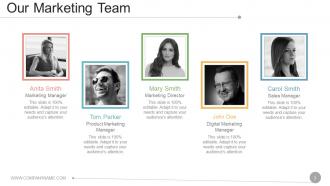
Slide 3: This slide showcases Our Marketing Team with name and designation to fill.
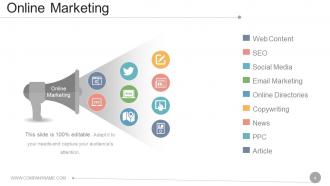
Slide 4: This is an Online Marketing slide with icon imagery and text boxes.
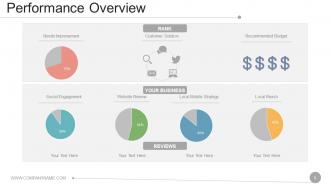
Slide 5: This slide presents Performance Overview in a pie chart/ graph form. Use it to showcase RANK, REVIEWS, YOUR BUSINESS etc.
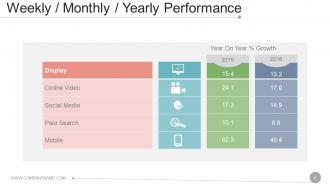
Slide 6: This slide showcases Weekly / Monthly / Yearly Performance.
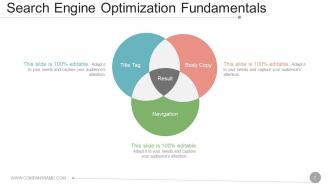
Slide 7: This slide presents Search Engine Optimization Fundamentals in a venn diagram image form. These fundamentals are- Title Tag, Body Copy, Navigation, Result.
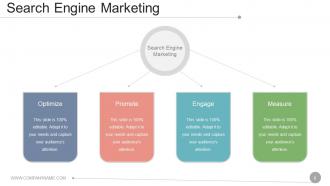
Slide 8: This slide showcases Search Engine Marketing consisting of the following- Optimize, Promote, Engage, Measure.
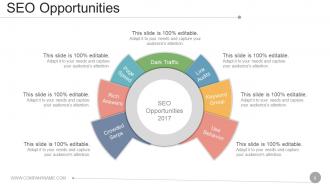
Slide 9: This slide states SEO Opportunities. These are- Dark Traffic, Page Speed, Link Audits, Keyword Group, Rich Answers, Crowded Serps, Use Behavior.
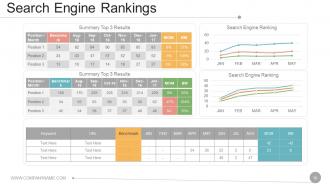
Slide 10: This slide presents Search Engine Rankings in a line chart/ graph form.
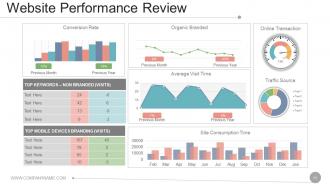
Slide 11: This is Website Performance Review slide in charts and graphs.
Slide 12: This slide also presents Website Performance Review in charts and graphs.
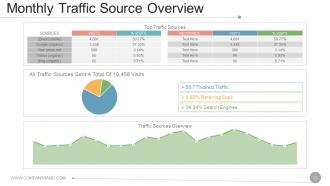
Slide 13: This slide presents Monthly Traffic Source Overview in charts and graphs.
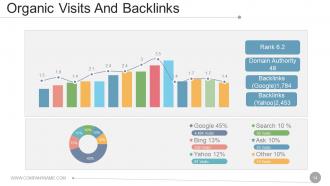
Slide 14: This is Organic Visits And Backlinks slide in charts and graphs.
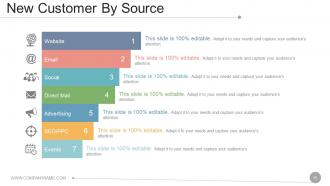
Slide 15: This slide shows New Customer By Source. These sources include- SEO/PPC, Direct Mail, Website, Email, Social, Advertising, Events.
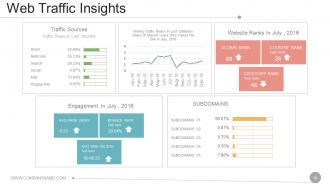
Slide 16: This slide presents Web Traffic Insights in charts and graphs.
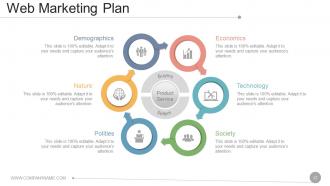
Slide 17: This slide showcases Web Marketing Plan in a circular image form. It consists of- Economics, Demographics, Technology, Nature, Society, Polities, Product Service, Buyers, Sellers.
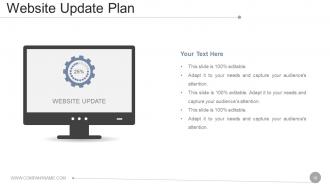
Slide 18: This slide states Website Update Plan with imagery and text boxes.
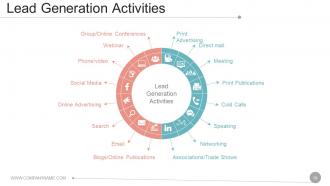
Slide 19: This slide showcases Lead Generation Activities in a circular form. These activities consists of- Networking, Speaking, Meeting, Print Publications, Direct mail, Cold Calls, Print Advertising, Associations/Trade Shows, Webinar, Blogs/Online Publications, Email, Search, Online Advertising, Phone/video, Group/Online Conferences, Social Media, Lead Generation Activities.
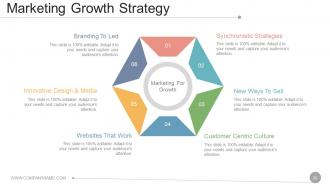
Slide 20: This slide states Marketing Growth Strategy which includes- Synchronistic Strategies, New Ways To Sell, Customer Centric Culture, Branding To Led, Innovative Design & Media, Websites That Work.
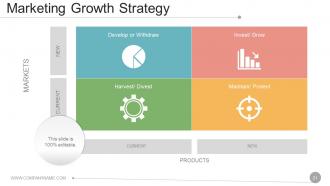
Slide 21: This slide also showcases Marketing Growth Strategy in a matrix form.
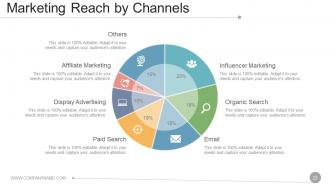
Slide 22: This slide shows Marketing Reach by Channels in a circular form.
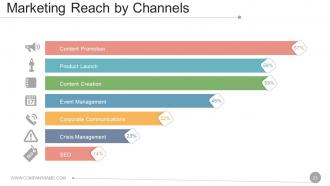
Slide 23: This is another slide showing Marketing Reach by Channels in percentage.
Slide 24: This is Marketing With Social Media slide with their respective icon imagery. Use as per your business requirement.
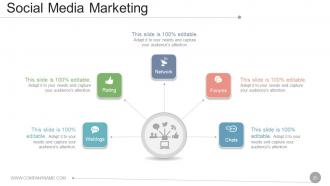
Slide 25: This is Social Media Marketing slide with the follwing- Weblogs, Rating, Network, Forums, Chats.
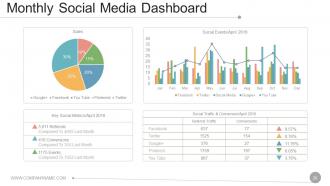
Slide 26: This slide displays Monthly Social Media Dashboard in charts and graphs.
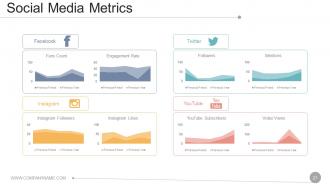
Slide 27: This slide presents Social Media Metrics with respect to the following- Twitter, Facebook, YouTube, Instagram.
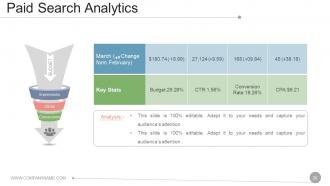
Slide 28: This slide presents Paid Search Analytics in a funnel form.
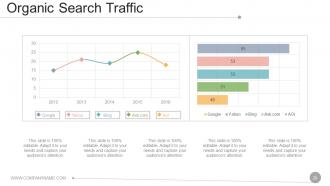
Slide 29: This slide showcases Organic Search Traffic in charts and graphs.
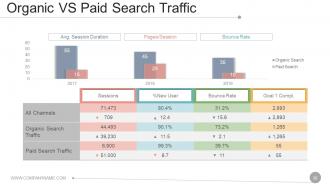
Slide 30: This is Organic VS Paid Search Traffic slide for comparison. Use it to state a comparison between two entities etc.
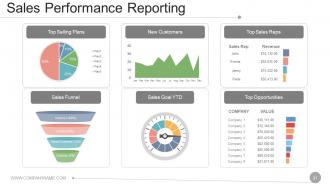
Slide 31: This slide presents Sales Performance Reporting in charts and graphs.
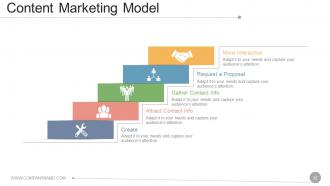
Slide 32: This slide shows Content Marketing Model. Its steps include- Create, Attract Contact Info, Gather Contact Info, Request a Proposal, More Interaction.
Slide 33: This slide presents Content Marketing Performance in a bar graph/ chart form.
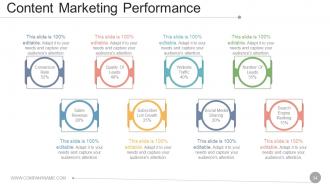
Slide 34: This slide also presents Content Marketing Performance.
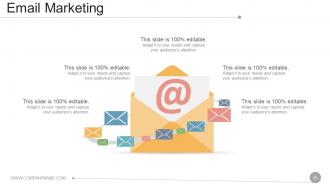
Slide 35: This slide shows Email Marketing with imagery.
Slide 36: This slide showcases Email Marketing Performance in a pie chart/ graph form with icon imagery.
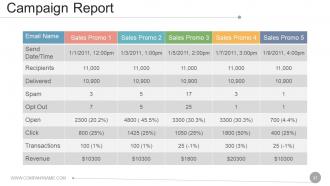
Slide 37: This slide presents Campaign Report. Use it to showcase your own campaign report.
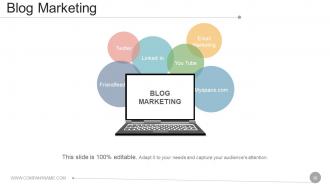
Slide 38: This is Blog Marketing slide with imagery and text boxes.
Slide 39: This is Word of Mouth Marketing (WOM) slide.
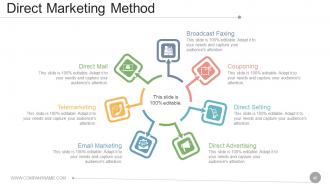
Slide 40: This slide showcases Direct Marketing Method in a circular image form with- Telemarketing, Broadcast Faxing, Email Marketing, Couponing, Direct Selling, Direct Mail, Direct Advertising.
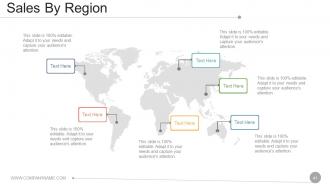
Slide 41: This slide showcases Sales By Region on a world map image.
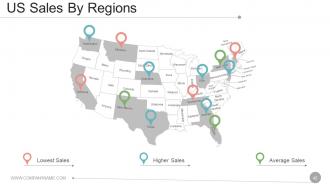
Slide 42: This slide shows US Sales By Regions.
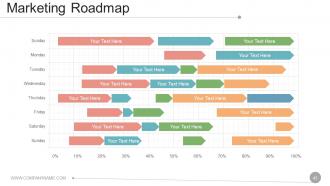
Slide 43: This slide displays Marketing Roadmap image.
Slide 44: This slide is titled Additional Slides to move forward. You can change the slide content as per need.
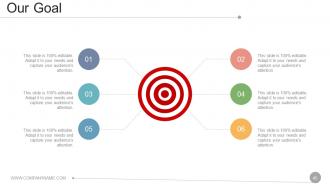
Slide 45: This is Our Goal slide with target imagery. State your goals, targets etc. here.
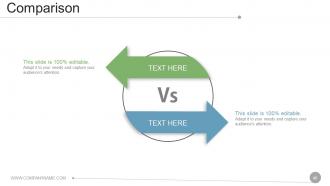
Slide 46: This is a Comparison slide with text boxes to compare product/enitities etc.
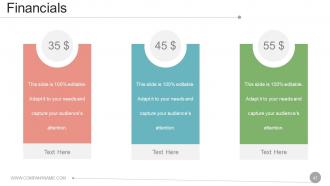
Slide 47: This slide shows Financial Score. State financial aspects here.
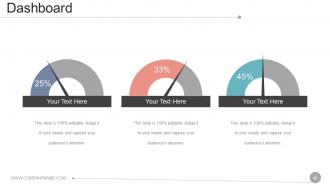
Slide 48: This is a Dashboard slide to state metrics, kpis etc.
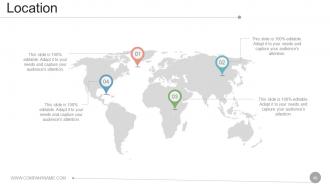
Slide 49: This is a Location slide of world map image to show global presence, growth etc.
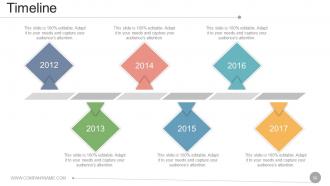
Slide 50: This is a Timeline slide to show evolution, growth, milestones etc.
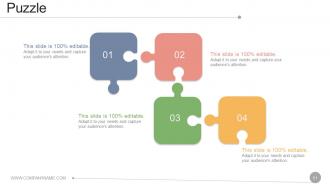
Slide 51: This is a Puzzle image slide to show information, specifications etc.
Slide 52: This is a Target image slide. State targets etc. here.
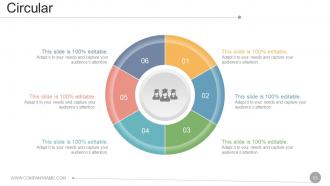
Slide 53: This is a Circular image slide to show information, specifications etc.
Slide 54: This is a Mind map image slide to show information, specifications etc.
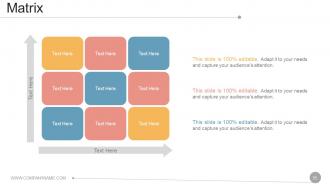
Slide 55: This is a Matrix slide to show information, comparison, specifications etc.
Slide 56: This is a Lego blocks image slide to present information, specifications etc.
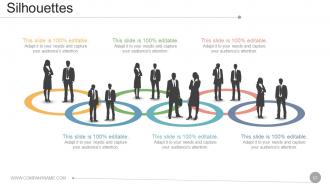
Slide 57: This slide shows Silhouettes with text boxes. State people related information, specifications etc. here.
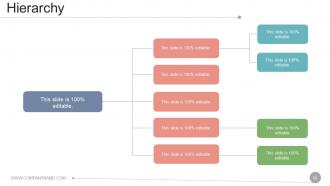
Slide 58: This is a Hierarchy slide. State team/department, organization information, specifications etc. here.
Slide 59: This is a Bulb For Idea image slide to state a new idea or highlight specifications/information etc.
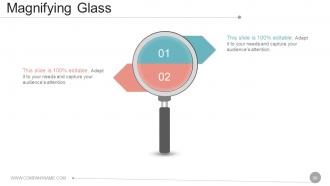
Slide 60: This is a Magnifying glass image slide to show information, scoping aspects etc.
Slide 61: This is a Bar Graph image slide to show product comparison, growth etc.
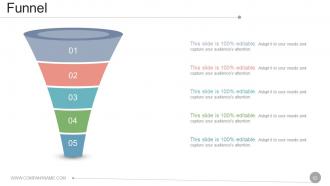
Slide 62: This is Funnel image slide to showcase funneling aspects etc.
Slide 63: This is a Thank You slide with Address# street number, city, state, Contact Number, Email Address.
Social Media Marketing Strategy For Business Powerpoint Presentation Slide with all 63 slides:
Exercise effective command and control with our Social Media Marketing Strategy For Business Powerpoint Presentation Slide. Firmly establish your authority.










FAQs for Social Media Marketing Strategy For Business
Key components of an effective social media marketing strategy include clear audience targeting, consistent brand messaging, content calendar planning, platform-specific optimization, and performance analytics tracking. These elements work together by aligning messaging with audience preferences, maintaining regular engagement, and leveraging data insights, with many organizations finding that strategic integration ultimately delivers enhanced brand visibility, improved customer relationships, and measurable ROI across multiple platforms.
Businesses measure social media marketing success through engagement metrics, reach and impressions, conversion rates, click-through rates, and return on investment analysis. Companies across retail, hospitality, and financial services increasingly use analytics tools to track lead generation, customer acquisition costs, and brand awareness, ultimately delivering data-driven insights that enhance campaign effectiveness and competitive positioning.
LinkedIn excels for B2B companies, professional services, and technology firms, while Instagram and TikTok serve retail, fashion, and lifestyle brands effectively. Facebook remains versatile across industries, with Twitter benefiting news organizations and thought leaders, and YouTube supporting educational content creators and product demonstrations, ultimately enabling businesses to reach targeted audiences and drive engagement through platform-specific content strategies.
Content creation serves as the foundation of social media marketing, encompassing visual posts, videos, stories, infographics, and interactive content that drives audience engagement and brand awareness. Through strategic content development, businesses streamline customer interactions, enhance brand visibility, and ultimately deliver stronger market positioning, with many organizations finding that consistent, quality content significantly increases conversion rates and customer loyalty.
Businesses utilize data analytics to refine social media strategies by analyzing engagement metrics, audience demographics, content performance, and conversion rates across platforms. Through advanced analytics tools, companies can identify optimal posting times, high-performing content types, and audience preferences, enabling more targeted campaigns, improved ROI, and enhanced customer engagement that drives measurable business growth.
Video content in social media marketing delivers enhanced engagement rates, improved brand storytelling capabilities, higher conversion potential, increased organic reach, and stronger emotional connections with audiences. These visual assets streamline complex messaging while building trust, with many retail and service businesses finding that video posts generate significantly more shares, comments, and ultimately drive measurable sales growth.
Customer demographics influence social media marketing strategy by determining platform selection, content tone, messaging approaches, and optimal posting schedules based on age, location, interests, and behavioral patterns. Through demographic analysis, businesses tailor campaigns across platforms like Instagram for younger audiences or LinkedIn for professionals, ultimately delivering more targeted engagement, higher conversion rates, and improved ROI with brands finding that demographic-driven strategies significantly enhance customer acquisition and retention.
Brands can increase social media engagement through interactive content like polls and Q&As, user-generated content campaigns, strategic hashtag usage, consistent posting schedules, and authentic storytelling that resonates with their target audience. These strategies work by fostering community participation, encouraging shares and comments, and building genuine connections, with many retail and hospitality brands finding that authentic engagement ultimately delivers stronger customer loyalty and increased conversion rates.
Consistency in branding across social media platforms is crucial for building recognition, trust, and professional credibility with audiences who engage across multiple channels. When brands maintain uniform visual elements, messaging tone, and posting schedules, they create cohesive customer experiences that strengthen brand recall and loyalty, ultimately delivering stronger engagement rates and competitive market positioning.
Ethical considerations in social media marketing include transparency in sponsored content, protecting user data privacy, avoiding misleading claims, respecting intellectual property, and ensuring authentic engagement practices. These guidelines help businesses build genuine customer relationships while maintaining regulatory compliance, with many organizations finding that ethical approaches ultimately deliver stronger brand trust, reduced legal risks, and sustained competitive advantage in increasingly scrutinized digital environments.
Businesses can effectively manage their online reputation through proactive monitoring, rapid response protocols, authentic engagement, consistent brand messaging, and strategic crisis management. Through dedicated social listening tools, companies in retail, hospitality, and financial services streamline customer feedback management, resolve issues quickly, and build trust, ultimately delivering enhanced brand credibility and competitive advantage.
Common social media marketing pitfalls include inconsistent posting schedules, ignoring audience engagement, over-promoting products, neglecting platform-specific content optimization, and failing to track meaningful metrics. These missteps often result in decreased reach and engagement, with many brands finding that strategic consistency, authentic interaction, and data-driven adjustments ultimately deliver stronger community building and measurable ROI.
Influencers can be integrated through authentic partnerships, sponsored content collaborations, product launches, brand ambassadorships, and user-generated content campaigns. These strategic collaborations enhance brand credibility and reach by leveraging established audiences, creating authentic engagement, and delivering measurable ROI, with many brands finding that micro-influencers often generate higher conversion rates than celebrity partnerships.
User-generated content significantly enhances brand visibility by creating authentic customer testimonials, expanding organic reach through social sharing, building community engagement, and providing cost-effective marketing materials. This strategic approach enables brands to leverage customer advocacy while reducing content creation costs, with many retail and hospitality companies finding that UGC delivers higher engagement rates and stronger brand trust than traditional advertising.
Businesses should adapt social media strategies for seasonal campaigns by aligning content calendars with key holidays, leveraging seasonal hashtags and visuals, and adjusting posting schedules for peak engagement times. Retail brands often increase promotional content during Black Friday while hospitality companies emphasize vacation themes in summer, ultimately delivering timely relevance and enhanced customer connection.
-
Graphics are very appealing to eyes.
-
Graphics are very appealing to eyes.