


Execution Of Successful House Flipping Plan Powerpoint Presentation Slides





Try Before you Buy Download Free Sample Product
 Impress Your
 Audience
 100%
100% Editable
 Save Hours
 of Time


House flipping refers to buyers buying distressed properties, renovating them, and then selling them for a profit in the market. They find these properties through foreclosures, short bank sales, or property auctions. This PowerPoint Execution of Successful House Flipping Plan represents an overview of the house flipping market, such as an overview of statistics for investors and the real estate property market. It also covers primary classes for flippers, strategies, challenges, mistakes, financial risks, processes, and timelines for house flipping projects. This PPT highlights research on the real estate market through rental market analysis, neighbor analysis, property assessment, and comparative market analysis. It showcases fund allocation, budgeting expenditures, estimated costs, and the online listing for a real estate property, professionals, and marketing platforms. It also covers costing, steps for fix and flip, key members, types of loans and significant lenders, hiring contractors, and a checklist for contractor activities. Lastly, this PowerPoint PPT depicts steps for selling properties, key documents required, a checklist for house flipping, section highlights for home flipping business plan, and real estate flipping impact on the local community and personal growth. Download it now.
People who downloaded this PowerPoint presentation also viewed the following :
Content of this Powerpoint Presentation
Slide 1: This slide displays the title Execution of Successful House Flipping Plan.
Slide 2: This slide displays the title AGENDA.
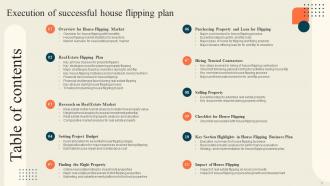
Slide 3: This slide exhibit table of content.
Slide 4: This slide exhibit table of content- Overview for House Flipping Market
Slide 5: This slide represents house flipping summary along with benefits and risk factors associated with it.
Slide 6: This slide represents key statistics associated with house flipping that helps investors in analyzing real estate market.
Slide 7: This slide represents real estate market summary that helps investors in decision making.
Slide 8: This slide represents real estate market summary that helps investors in decision making.
Slide 9: This slide exhibit table of content- Real Estate Flipping Plan.
Slide 10: This slide represents major types of flippers that serve a valuable function in real estate investing.
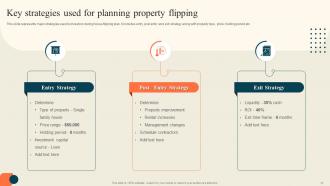
Slide 11: This slide represents major strategies used by investors during house flipping plan.
Slide 12: This slide represents challenges faced by investors during house flipping along with mitigation strategies for them.
Slide 13: This slide represents key mistake made by house flippers during fix and flip process along with remedies.
Slide 14: This slide represents major financial risk faced by real estate investor during fix and flip project.
Slide 15: This slide represents financial challenges faced by investors during property flipping.
Slide 16: This slide represents major stages involved during property fixing and flipping process.
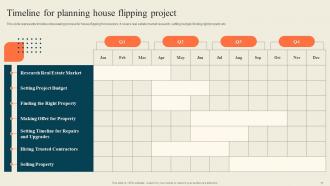
Slide 17: This slide represents timeline showcasing process for house flipping for investors.
Slide 18: This slide exhibit table of content- Research on Real Estate Market.
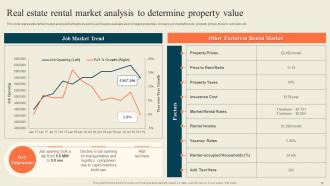
Slide 19: This slide represents rental market analysis that helps investors and buyers evaluate and compare properties.
Slide 20: This slide represents neighborhood assessment that helps investors to calculate investment potential for a property.
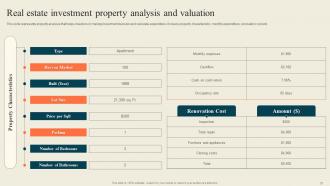
Slide 21: This slide represents property analysis that helps investors in making investment decision and calculate expenditure.
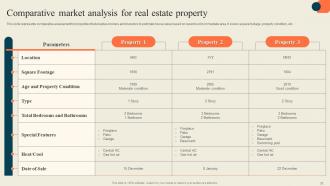
Slide 22: This slide represents comparative assessment for properties that enables brokers and investors to estimate house value based on recent sod in the immediate area.
Slide 23: This slide exhibit table of content- Setting Project Budget
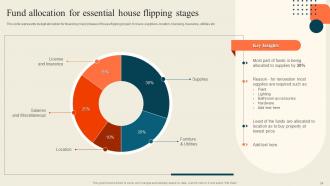
Slide 24: This slide represents budget allocation for financing major phases of house flipping project.
Slide 25: This slide represents budget allocation for the key cost that are involved in house flipping process faced by investor.
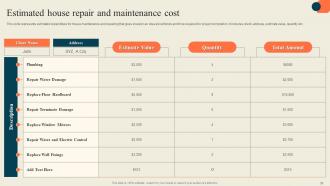
Slide 26: This slide represents estimated expenditure for house maintenance and repairing that gives investor an idea about funds and time required for project completion.
Slide 27: This slide exhibit table of content- Finding the Right Property
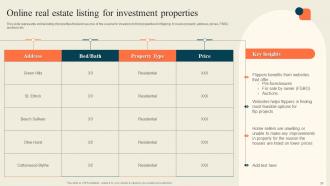
Slide 28: This slide represents online listing of properties that work as one of the source for investors to find properties for flipping.
Slide 29: This slide represents real estate professionals that helps investors in finding investment properties and provide firsthand insight on real estate market.
Slide 30: This slide represents major marketing platforms used by buyers to connect and find homeowners willing to sell properties.
Slide 31: This slide exhibit table of content- Purchasing Property and Loan for Flipping.
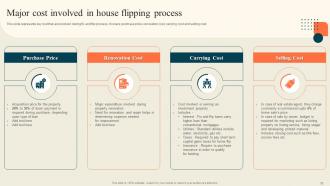
Slide 32: This slide represents key cost that are involved during fix and flip process.
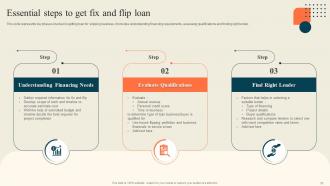
Slide 33: This slide represents key phases involved in getting loan for slipping business.
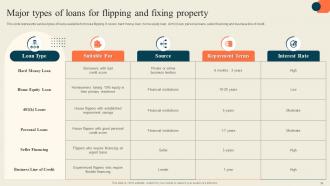
Slide 34: This slide represents various types of loans available for house flipping.
Slide 35: This slide represents key types of lenders who offer loan to investors for house flipping.
Slide 36: This slide exhibit table of content- Hiring Trusted Contractors.
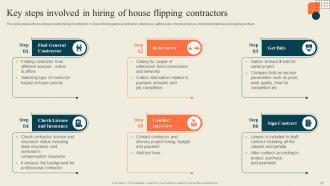
Slide 37: This slide represents key phases during hiring of contractor.
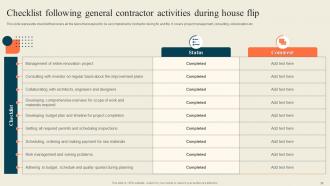
Slide 38: This slide represents checklist that covers all the tasks that required to be accomplished by contractor during fix and flip.
Slide 39: This slide represents team members involved and responsible for flipping process with key roles.
Slide 40: This slide represents key experts involved in house flipping process who help in property renovation and selling.
Slide 41: This slide exhibit table of content- Selling Property
Slide 42: This slide represents key steps to market house and reach out to potential buyers.
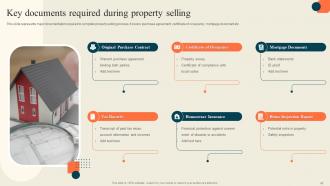
Slide 43: This slide represents major documentation required to complete property selling process.
Slide 44: This slide exhibit table of content- Checklist for House Flipping
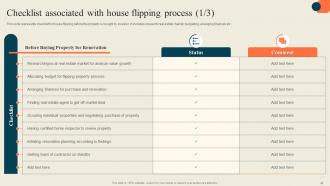
Slide 45: This slide represents checklist for house flipping before the property is bought by investor.
Slide 46: This slide represents checklist for house flipping during the property renovation process.
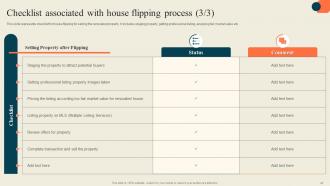
Slide 47: This slide represents checklist for house flipping for selling the renovated property.
Slide 48: This slide exhibit table of content- Key Section Highlights in House Flipping Business Plan.
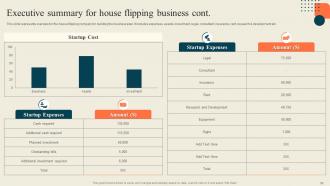
Slide 49: This slide represents overview for the house flipping company for building the business plan.
Slide 50: This slide represents overview for the house flipping company for building the business plan.
Slide 51: This slide represents industry analysis and performance assessment for real estate market to build business plan.
Slide 52: This slide represents key strategies for property flipping business plan developed by flippers.
Slide 53: This slide exhibit table of content- Impact of House Flipping.
Slide 54: This slide represents impact of house flipping on local community.
Slide 55: This slide represents impact of property flipping on individual growth and development.
Slide 56: This is the icons slide.
Slide 57: This slide presents title for additional slides.
Slide 58: This slide shows about your company, target audience and its client's values.
Slide 59: This slide presents your company's vision, mission and goals.
Slide 60: This slide shows details of team members like name, designation, etc.
Slide 61: This slide display Our target.
Slide 62: This slide display Venn.
Slide 63: This slide depicts posts for past experiences of clients.
Slide 64: This slide depicts 30-60-90 days plan for projects.
Slide 65: This is thank you slide & contains contact details of company like office address, phone no., etc.
Execution Of Successful House Flipping Plan Powerpoint Presentation Slides with all 70 slides:
Use our Execution Of Successful House Flipping Plan Powerpoint Presentation Slides to effectively help you save your valuable time. They are readymade to fit into any presentation structure.














































FAQs for Execution Of Successful House Flipping Plan
Focus on cosmetic fixer-uppers - outdated kitchens, awful paint jobs, crappy flooring. Structural issues will eat your budget alive. Location matters way more than people think, so find neighborhoods where comps are selling well above what you'll put in total. Foundation, roof, and major systems need to be solid though. I learned that the hard way on my second flip. Hunt for places priced 20-30% under market because the sellers are motivated or it just looks terrible. Walk through some recent sales in the area first so you know your numbers are realistic.
Dude, market trends will absolutely destroy your flip profits if you're not paying attention. Hot seller's market? Go crazy with the nice finishes and price high - buyers are literally fighting each other. But when things cool off, you've gotta play it safe with your reno budget. I totally screwed this up on my second flip, spent way too much thinking the market would stay hot. Oh and rising rates kill your buyer pool since people can't qualify for loans anymore. Always check those recent comps first - seriously, don't skip this step. Days on market tells you everything about how aggressive you can be.
Dude, costs and timelines will absolutely destroy you if you're not careful - I'm talking like 50% over what you planned. Don't go crazy with fancy upgrades that don't match the neighborhood either. Marble counters in a basic area? Total waste. Get a solid inspection before you buy anything. Budget an extra 20% minimum for the weird stuff that'll pop up (trust me, it always does). Research what houses actually sell for in that area first. Lock down your financing before you even start looking - that's like step zero. Focus on stuff that buyers care about, not just what looks cool to you. Short sentences work. So do longer ones that flow naturally when you're explaining something important.
Honestly, paint is your secret weapon here - can't believe how much difference it makes for like $200. Swap out cabinet handles, light fixtures, and faucets since they're dirt cheap but instantly modernize everything. Clean the hell out of every surface and get rid of clutter (I know it's painful but trust me). You don't need to renovate unless something's legitimately broken. Keep colors neutral so buyers can picture their own stuff there. Oh, and staging helps too if you can swing it. The whole point is making it feel move-in ready without breaking the bank.
Kitchens and bathrooms are where you'll make your money back - like 60-80% ROI if you do it right. Just update cabinets, countertops, and fixtures though. Don't go moving walls around because that stuff gets pricey quick. Paint is honestly your best friend here - costs almost nothing and you'll get over 100% return. New flooring works great too, especially that luxury vinyl or if you can refinish existing hardwood. Oh and skip pools or crazy expensive appliances. Most buyers just want something clean and ready to go, not some HGTV fantasy. Stick with neutral colors and modern-ish finishes to appeal to more people.
Dude, definitely set aside 20-30% for surprises - and I mean on top of everything you've already planned. Old houses are sneaky as hell. You'll open up a wall thinking it's just drywall work and boom - the electrical is from like 1960 or there's a pipe leaking somewhere weird. Happens every single time, I swear. Newbie flippers get wrecked by this stuff because they blow their whole budget on the pretty renovations. Go with 30% if it's your first flip or the house is really old. Just put that cash in a separate account and pretend it doesn't exist unless things go sideways.
Dude, definitely stage it. I know it feels like extra money you don't want to spend, but unstaged flips just sit there forever - I've watched it happen so many times. Buyers need to picture themselves actually living there, you know? Keep everything neutral and bright. Make the rooms feel bigger with good lighting. Even basic rental furniture usually pays for itself because you'll get higher offers and sell way faster. My buddy skipped staging once and regretted it big time. Budget like 1-2% of what you think it'll sell for.
Look for neighborhoods trending up but not peaked yet - recent infrastructure upgrades, new businesses, young families moving in. Also check if the "nice" areas nearby are getting pricey because that pushes buyers to adjacent spots. Walk around at different times to get the actual vibe (this part's huge honestly). Research school ratings and crime stats too. Days on market tells you a lot about demand. I'd pick 3-4 target areas and track their activity for a few months first. Don't rush it - you'll spot patterns once you're watching regularly.
Dude, call your city's planning department first - they'll tell you exactly what permits you need. Structural stuff, electrical, plumbing all require permits before you touch anything. Even windows sometimes (I know, seems dumb). The whole process takes forever though, like weeks minimum, so don't wait until the last minute. Also double-check you're actually zoned for this and peek at any HOA rules. Some places have these anti-flipping laws that are a total pain. My neighbor got burned by that last year. Start with planning department and they'll walk you through everything.
Honestly, hard money lenders are gonna be your go-to here. They're pricier than regular mortgages but they're built for flipping. Private lenders work too if you know people with cash sitting around. Obviously using your own money is best case scenario. Some folks tap their home equity or find investor partners - you do the legwork, they bring the capital. Oh, and don't sleep on smaller community banks. They sometimes have renovation loan programs that the big banks don't. I'd start by getting pre-qualified with 2-3 hard money lenders first so you know what you're working with.
Dude, yes - get a good agent. Trust me on this one. Find someone who knows your neighborhoods inside out and has worked with flippers before. They'll have connections with other agents and can spot deals fast. I've watched too many people try doing this alone and they always miss the best properties. You want someone who gets that you need to move quick - like same-day showings quick. Also make sure they won't get weird about tight renovation schedules or your budget constraints. Interview a couple agents first though, and definitely ask for references from other investors they've helped.
Price it under market value - I know it hurts but you'll get multiple offers fast. Stage with neutral stuff, finish ALL repairs (seriously, don't cut corners here), and get decent photos taken. Post everywhere: MLS, Facebook, investor groups, even those cheesy "we buy houses" people if you're really stuck. Weekend open houses help too. Be flexible with showings even though it's annoying. Better to price aggressively and move it quick than sit on the market forever chasing that extra 10k. Make it move-in ready and watch it fly.
Dude, VR and AR are game-changers for renovations. Instead of buyers squinting at empty rooms trying to picture your vision, throw on a VR headset and boom - they're walking through that gorgeous finished kitchen. AR apps are pretty slick too - just point your phone camera around and overlay new paint, fixtures, whatever. I'm still blown away by how futuristic it feels, honestly. The real money-saver though? Catching design mistakes before you start demo. Oh, and properties sell way faster when people can actually see the potential. IKEA Place is free if you want to mess around with it first.
Okay so first things first - get professional photos done. I know it seems expensive but trust me, everyone shops online now so those pics better be good. Stage it too, even though you'll probably hate spending the money at first. Neutral stuff works best so people can picture their own junk in there. Price it right based on what's selling nearby - don't get greedy. Post everywhere: Zillow, Realtor.com, Facebook, Instagram. Oh and make sure everything looks super clean and move-in ready. Staged homes honestly just sell faster, it's weird but it works.
Definitely look into zoning laws first - seriously, this stuff will kill your whole project if you mess it up. Check the city website or just call them directly. Some areas are crazy strict about what you can change on the outside. Paint colors, additions, all of it. I got burned by this once, not fun. Also get your permits sorted before you start anything. Doing work without them? Yeah, you're looking at major fines and delays. Budget extra time for approvals too - they always take longer than you think.
-
Kudos to SlideTeam for achieving the high success rate in delivering the top-notch slides.
-
SlideTeam provides PPTs on every single topic. Their templates suit my job very well. I am very grateful!