


Exhibition and events forwarder powerpoint presentation slides




Try Before you Buy Download Free Sample Product
 Impress Your
 Audience
 100%
100% Editable
 Save Hours
 of Time


Exhibition And Events Forwarder PowerPoint Presentation Slides is a virtual tool for entertainment organization specialists. Our comprehensive PPT theme helps you cover all the fundamentals of logistics in event management. The gripping graphics are not just eye-catching but audience-friendly. Our PPT templates are easy-to-understand and specially-designed to consolidate core aspects of real-life event logistics management. These include selection criteria for vendors, and venue, equipment portfolio, delivery management, and asset tracking. Our exhibition logistics planning PowerPoint deck helps you to demonstrate your service spectrum, key partners, and successful projects. Elucidating event traffic management plan through the impactful visuals of our exhibition forwarding PPT templates. Concise tabular formats of this event organization logistics PowerPoint deck assist you in portraying your pricing packages. Showcase a sound event contingency plan and emergency course of action through this exhibition logistics PPT slideshow. Download our visually-engaging event logistics PowerPoint theme and depict key activities to carry out before, after, and on the day of the event.
People who downloaded this PowerPoint presentation also viewed the following :
Content of this Powerpoint Presentation
Slide 1: This slide introduces Exhibition and Events Forwarder. State your Company name and begin.
Slide 2: This slide displays Agenda for Entertainment.
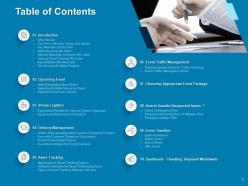
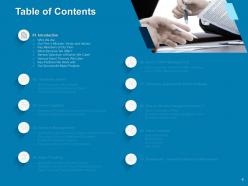
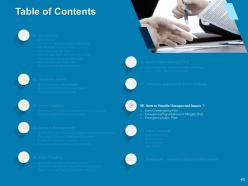
Slide 3: This slide displays Table of Contents of the presentation.
Slide 4: This slide displays Table of Contents.
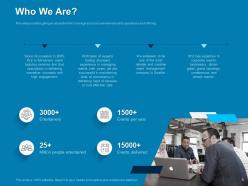
Slide 5: This slide provides glimpse about the firm’s background and overview about its operations and offering.
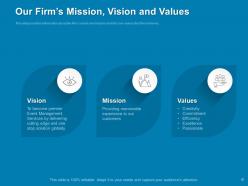
Slide 6: This slide provides information about the firm’s vision and mission and the core values that firm believes.
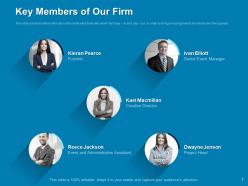
Slide 7: This slide presents information about the dedicated team who work hard day – in and day - out in order to bring amazing events for clients and their guests.
Slide 8: This slide presents the different types of services we provide being an event logistics firm.
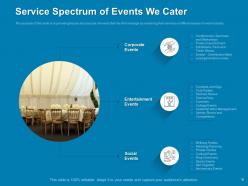
Slide 9: The purpose of this slide is to provide glimpse about scope of events that the firm manage by rendering their services in different areas of event industry.
Slide 10: The purpose of the slide is to provide information regarding various corporate event themes provided by our firm.
Slide 11: The purpose of this slide is to give glimpse about the major partners that firm collaborated with whether they can be in catering, decoration, etc.
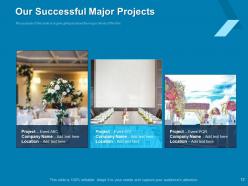
Slide 12: The purpose of this slide is to give glimpse about the major clients of the firm.
Slide 13: This slide displays Table of Contents.
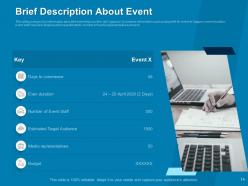
Slide 14: This slide portrays key information about the event that our firm will organize. It contains information such as days left for event to happen, event duration, event staff required, target audience(estimated), number of media representatives present.
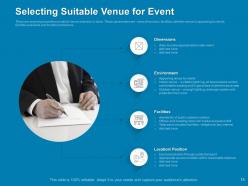
Slide 15: This slide showcases several parameters on which venue selection is done. These parameters are - area dimension, facilities, whether venue is appealing to clients, facilities available and location preference.
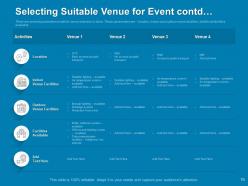
Slide 16: This slide showcases several parameters on which venue selection is done.
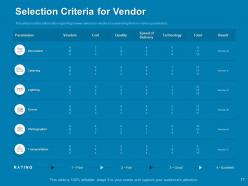
Slide 17: This slide provides information regarding how we select our vendors by assessing them on various parameters.
Slide 18: This slide displays Table of Contents.
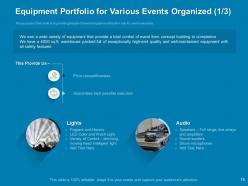
Slide 19: The purpose of this slide is to provide glimpse of several equipment that firm use for event execution.
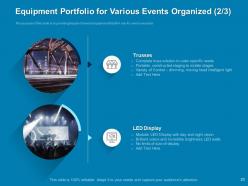
Slide 20: The purpose of this slide is to provide glimpse of several equipment that firm use for event execution.
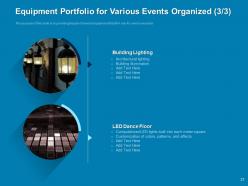
Slide 21: The purpose of this slide is to provide glimpse of several equipment that firm use for event execution.
Slide 22: In this slide we provide information about equipment maintenance with its service frequency, service status, etc.
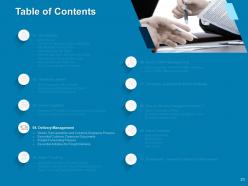
Slide 23: This slide displays Table of Contents.
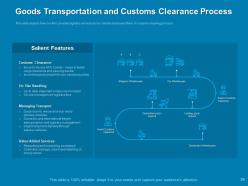
Slide 24: This slide depicts how our firm provide logistics services to our clients and assist them in customs clearing process.
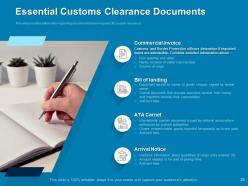
Slide 25: This slide provides information regarding documents that are required for custom clearance.
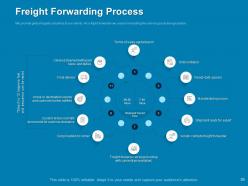
Slide 26: This slide shows Freight Forwarding Process.
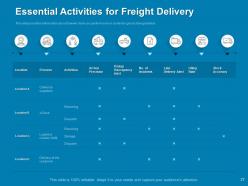
Slide 27: This slide provides information about how we track our performance in context to goods transportation.
Slide 28: This slide displays Table of Contents.
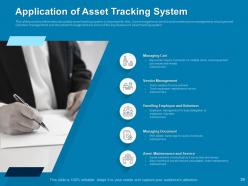
Slide 29: This slide provides information about why asset tracking system is important for firm. Cart management, service and maintenance management, employee and volunteer management, and document management are some of the key features of asset tracking system.
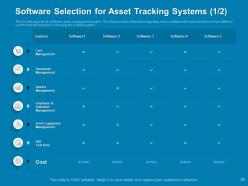
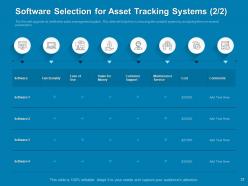
Slide 30: This slide shows Software Selection for Asset Tracking Systems.
Slide 31: This slide shows Software Selection for Asset Tracking Systems.
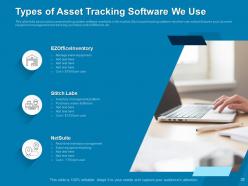
Slide 32: This slide tells about various asset tracking system software available in the market. Each asset tracking software has their own salient features such as event equipment management and tracking, purchase order fulfillment, etc.
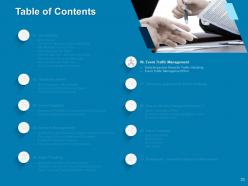
Slide 33: This slide displays Table of Contents of the presentation.
Slide 34: This slide includes inspection sheet which will be dully filled by our event team on daily basis in order to handle traffic during event duration.
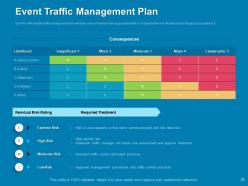
Slide 35: This slide shows Event Traffic Management Plan.
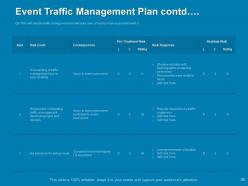
Slide 36: This slide is continued with Event Traffic Management Plan.
Slide 37: This slide displays Table of Contents.
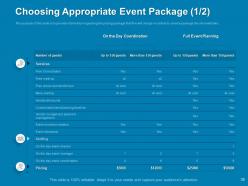
Slide 38: The purpose of this slide is to provide information regarding the pricing package that firm will charge in context to service package the client will take.
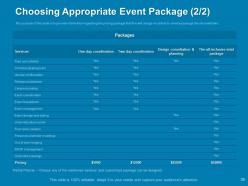
Slide 39: The purpose of this slide is to provide information regarding the pricing package that firm will charge in context to service package the client will take.
Slide 40: This slide displays Table of Contents.
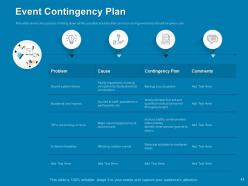
Slide 41: This slide serves the purpose of listing down all the possible troubles that can occur during event and should be taken care.
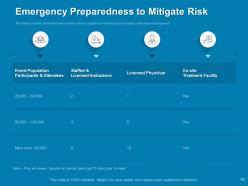
Slide 42: This slide provides information about how our firm is capable in handling any emergency that arises during event.
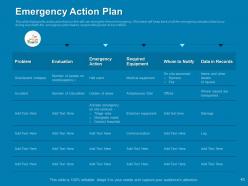
Slide 43: This slide displays the action plan that our firm will use during the time of emergency. This sheet will keep track of all the emergency situations that occur during event with the emergency action taken, responsible person to be notified.
Slide 44: This slide displays Table of Contents.
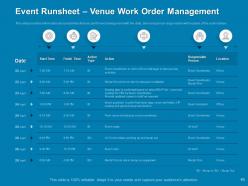
Slide 45: This slide provides information about activities that are performed during event with the date, time and person responsible with location of the action taken.
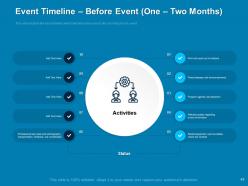
Slide 47: This slide depicts the key activities which will take place one to two months prior to event.
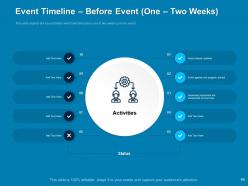
Slide 48: This slide depicts the key activities which will take place one to two weeks prior to event.
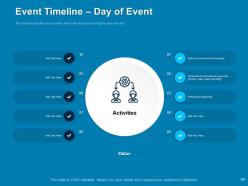
Slide 49: This slide depicts the key activities which will take place during the day of event.
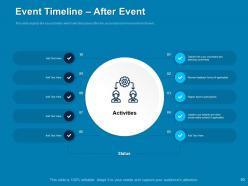
Slide 50: This slide depicts the key activities which will take place after the successful commencement of event.
Slide 51: This slide displays Table of Contents.
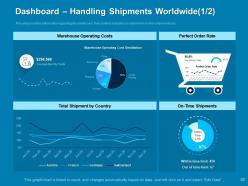
Slide 52: This slide provides information regarding the dashboard that contains indicators to determine on time shipments, etc.
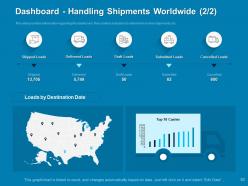
Slide 53: This slide provides information regarding the dashboard that contains indicators to determine on time shipments, etc.
Slide 54: This is Icons Slide for Exhibition and Events Forwarder.
Slide 55: This slide is titled as Additional Slides for moving forward.
Slide 56: This is About Us slide to showcase Company specifications.
Slide 57: This slide displays Our Mission, Vision and Goal.
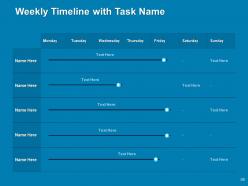
Slide 58: This slide displays Weekly Timeline with Task Name
Slide 59: This is 30,60,90 Days Plan slide.
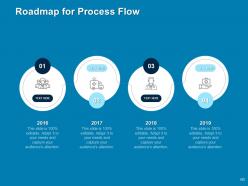
Slide 60: This slide displays Roadmap For Process Flow.
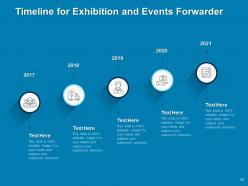
Slide 61: This slide shows Timeline for Entertainment Logistics Specialist.
Slide 62: This is Thank You slide with Contact details.
Exhibition and events forwarder powerpoint presentation slides with all 62 slides:
Give your audience a fulfilling experience. They will find our Exhibition And Events Forwarder Powerpoint Presentation Slides elevating.




FAQs for Exhibition and events forwarder
Honestly, start planning like 3-4 months out or you'll hate yourself later. Map out all your shipping schedules and booth setup times first. Coordinate with freight companies early - they're always booked solid during trade show season. Insurance and customs paperwork is mind-numbingly boring but you absolutely need it (trust me on this one). Make sure your venue requirements match your storage needs and staffing plans. Oh, and backup plans for literally everything because Murphy's law is real at these events. Build in extra time wherever you can. Something always goes sideways, whether it's delayed shipments or missing booth materials.
Honestly, tech is your best friend for this stuff. QR codes beat those nightmare spreadsheets every time - you can track everything in real-time. Digital inventory systems are clutch, plus automated shipping alerts so you're not constantly refreshing tracking pages like a maniac. IoT sensors are amazing for monitoring sensitive pieces during transport (learned that one the hard way). Monday or Asana keep all your vendor timelines straight without the back-and-forth email chains. Don't go crazy though - just pick your biggest headache first and fix that. Maybe start with inventory tracking? You'll see results pretty quick.
Honestly, space management makes or breaks your whole exhibition. Map out booth spots, traffic flow, and loading zones before anyone arrives with trucks. Without proper planning? Total chaos - I've seen it happen. Your floor plan affects where exhibitors park, how people move around, storage spots, even emergency exits. Oh and always work backwards from your move-out schedule when you're planning. Start with a detailed layout early. Trust me on this one - you'll thank yourself later when everything actually runs smoothly instead of turning into a nightmare.
Definitely get custom crates or padded cases for anything fragile - and take photos of everything before you pack it up. Professional art handlers are honestly so much better than regular movers, even though they cost more. Your insurance needs to cover full replacement value during shipping (learned this the hard way once). Temperature-controlled trucks are a must for paintings or electronics. Build in extra time because stuff always gets delayed. Oh, and keep detailed lists with tracking numbers so you can obsess over where everything is like I do.
Honestly, start with a solid floor plan and map out your zones - setup, storage, where people will walk. Trust me on this one. Get your team walkie-talkies or at least a group chat because communication saves your butt. We had our whole display fall over once and couldn't find maintenance anywhere! Give everyone specific jobs so nobody's standing around confused. Oh, and definitely have a central spot where someone can handle problems. Keep tools and backup supplies close by. Do a final check maybe 30 minutes before opening - you'll always find something weird that needs fixing.
Reach out to your venue person 2-3 weeks early - trust me, they're chaos mode the week of. Get their cell number right away because email chains during setup are the worst. Send them your timeline, equipment list, all that stuff upfront. Ask about their loading dock rules and electrical setup because every venue has weird quirks that'll bite you. Oh, and find out their cleanup expectations too. Honestly, bringing coffee or donuts for the crew is clutch - sounds cheesy but it actually works when you need help later.
Oh man, customs is your biggest nightmare - paperwork has to be flawless or your stuff sits there for days. Shipping damage happens way more with international freight, and don't even get me started on coordinating across time zones. You'll be refreshing tracking at 2am trying to figure out where your displays are. Currency swings can mess up your budget too. Local regulations are always different than home, which is super fun to discover last minute. Honestly, start planning like 6 months out and find backup vendors locally just in case.
Track three main things: on-time delivery, how much you went over budget, and what exhibitors actually thought afterward. The delivery timing is huge - seriously, one delayed shipment can mess up everything. Budget variance should stay under 5% if possible, though logistics costs love to sneak up on you. After the event, survey exhibitors about their setup experience and any headaches they dealt with. Aim for 95%+ on-time delivery. Once you start tracking this stuff consistently, you'll catch problems way earlier instead of scrambling at the last minute.
Honestly, EventPro and Ungerboeck are your best bets - they're built for exactly this stuff and handle floor plans, vendor coordination, all that. Cvent works too if you want more general event features. But here's the thing - I've literally seen people crush it with just Airtable or even fancy spreadsheets if you're not dealing with massive shows. ExpoLogic's pretty decent too, way more user-friendly than some of the clunky options out there. I'd probably start with EventPro's trial since it scales well. Oh, and Tableau works surprisingly well for tracking shipments if you're into data visualization.
Think retail store flow - you're basically guiding people on a journey through your space. Put your biggest crowd-pleasers deeper inside so visitors have to walk past other stuff to reach them. This naturally spreads people out instead of everyone bunching up at the entrance. Make sure there are multiple walking routes because nobody wants to get trapped behind that one family who reads every single word on every display (we've all been there). Your entry point should grab attention immediately, then create natural pathways that don't dead-end. Walk through it yourself first - you'll spot the obvious bottlenecks way easier than you'd think.
Start planning like 6-8 months ahead, seriously. I've watched too many people panic because they waited. Book your venue first, then work backwards from there. Shipping deadlines are brutal - especially international stuff. Oh and customs? That's a nightmare that can eat up weeks. Insurance needs to happen early too. Honestly, just assume everything will take longer than expected because it always does. Make a timeline with weekly check-ins and add buffer time everywhere. Installation day isn't when you want to discover problems. Trust me on this one.
Oh man, you absolutely need backup plans for everything. I learned this when our main display truck literally broke down - what a nightmare! Keep extra vendors on speed dial and set aside emergency budget upfront. Communication is huge too - your team and exhibitors need constant updates when stuff hits the fan. Honestly, sometimes the simplified booth setup works better anyway. Don't be scared to completely ditch your original plan if needed. Overnight shipping and local rentals have saved my butt more times than I can count. Just stay calm and write down what went wrong afterward so you're not scrambling next time.
Honestly, the green stuff that actually saves you money is the way to go. Ditch single-use displays for reusable booth materials - you'll use them again anyway. Digital signage is a game changer since you can update it on the fly (and let's face it, something always needs changing last minute). Local suppliers cut your shipping emissions and costs. For the actual event, partner with venues that already have sustainability programs figured out. QR codes for lead capture beat business cards every time - way less hassle. Oh, and consolidate your freight shipments with recyclable packaging. Going paperless for registration is probably the easiest win here.
Dude, logistics is everything at these events. Bad planning means people spend half their time lost and frustrated instead of actually networking or learning stuff. I've walked around so many conferences looking for basic things like bathrooms - it's ridiculous. You want clear signs everywhere, smooth check-in, smart booth layouts, and enough food spots so people aren't cranky. The really good events feel seamless because someone mapped out the whole experience beforehand. Start there - think through every step from parking to leaving and fix the annoying parts.
Small exhibitions? You can basically wing it with a couple people and maybe 2-3 months prep time. Handle your own vendor stuff, shipping, setup - no big deal. But large shows are a whole different beast. We're talking 6-12 months minimum, multiple logistics people, freight companies, the works. Union requirements alone will make you want to pull your hair out. Budget-wise, small shows eat maybe 10-15% for logistics. Large ones? Try 30-40% of everything you've got. Oh, and definitely start schmoozing vendors early for the big stuff - trust me on that one.
No Reviews