Extended Reality IT Powerpoint Presentation Slides

Rating:
80%
Extended Reality IT Powerpoint Presentation Slides
Slide 1 of 23
Favourites Favourites

Try Before you Buy Download Free Sample Product

Audience Impress Your
Audience
Editable 100%
Editable
Time Save Hours
of Time
The Biggest Sale is ending soon in
0
0
:
0
0
:
0
0
Rating:
80%
If you require a professional template with great design, then this Extended Reality IT Powerpoint Presentation Slides is an ideal fit for you. Deploy it to enthrall your audience and increase your presentation threshold with the right graphics, images, and structure. Portray your ideas and vision using eighteen slides included in this complete deck. This template is suitable for expert discussion meetings presenting your views on the topic. With a variety of slides having the same thematic representation, this template can be regarded as a complete package. It employs some of the best design practices, so everything is well-structured. Not only this, it responds to all your needs and requirements by quickly adapting itself to the changes you make. This PPT slideshow is available for immediate download in PNG, JPG, and PDF formats, further enhancing its usability. Grab it by clicking the download button.
Content of this Powerpoint Presentation

Slide 1: This slide introduces Extended Reality (IT). State your company name and begin.
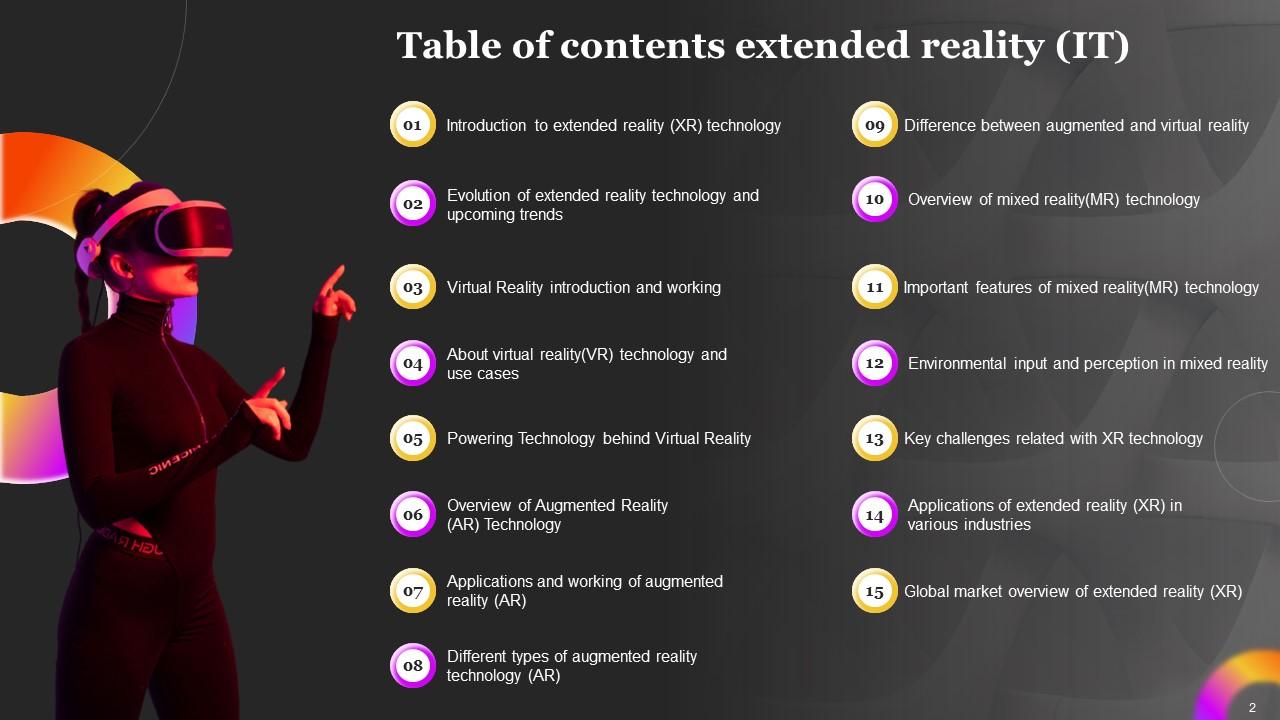
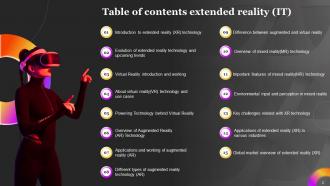
Slide 2: This slide shows Table of Content for the presentation.
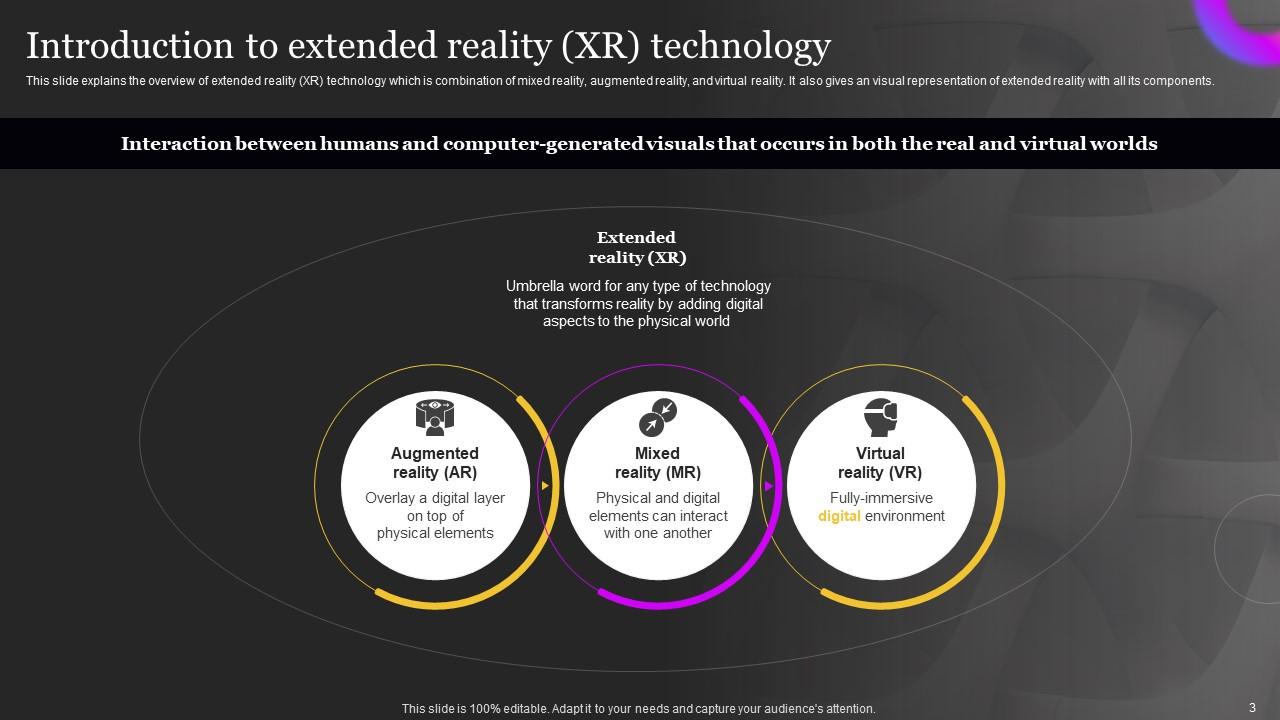
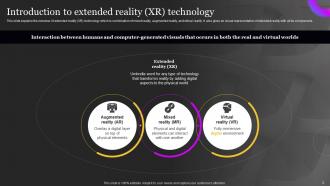
Slide 3: This slide presents Introduction to extended reality (XR) technology.
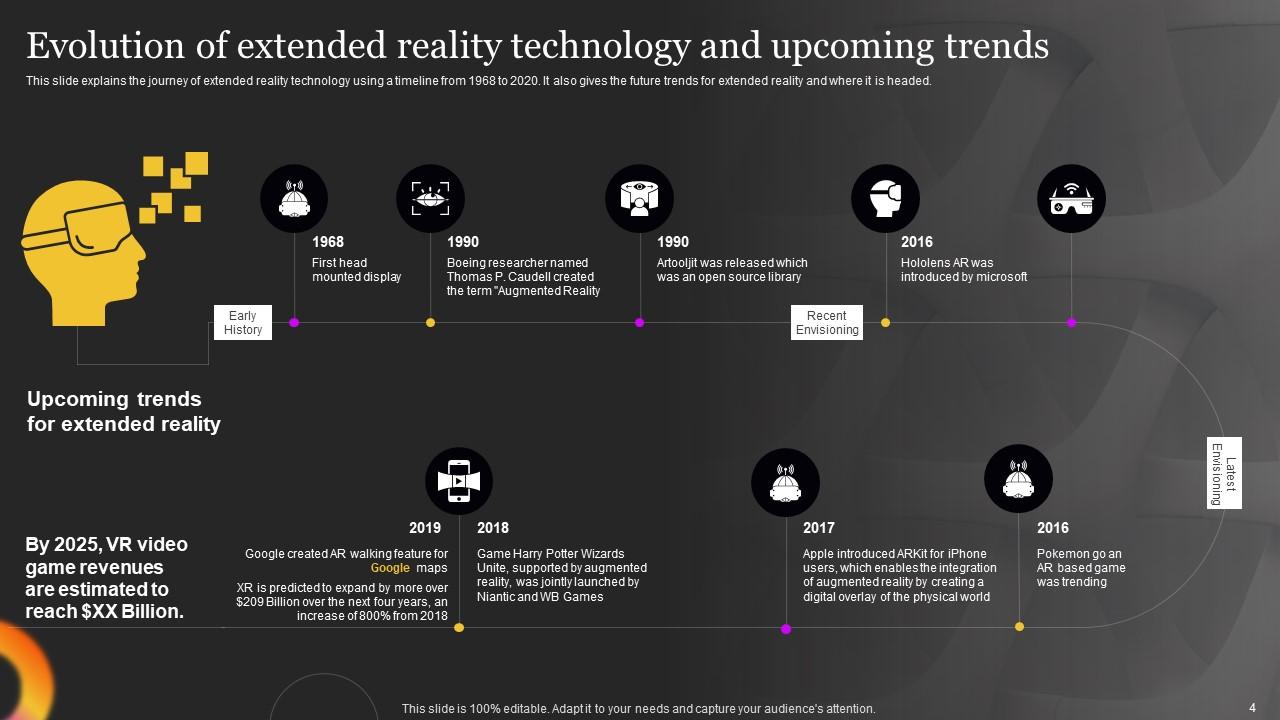
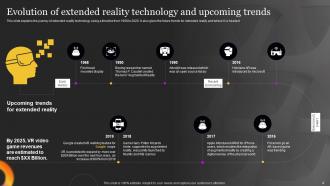
Slide 4: This slide displays Evolution of extended reality technology and upcoming trends.
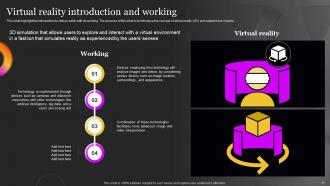
Slide 5: This slide represents Virtual reality introduction and working.
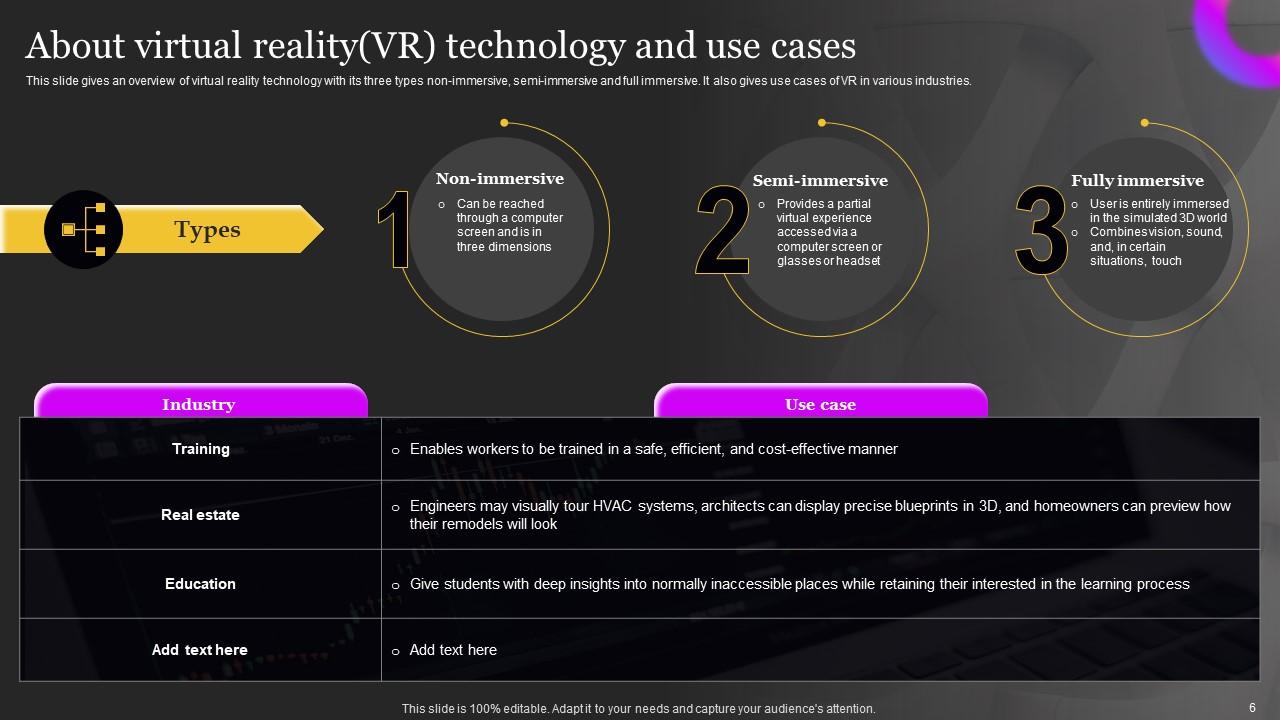
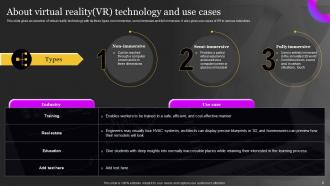
Slide 6: This slide showcases About virtual reality(VR) technology and use cases.
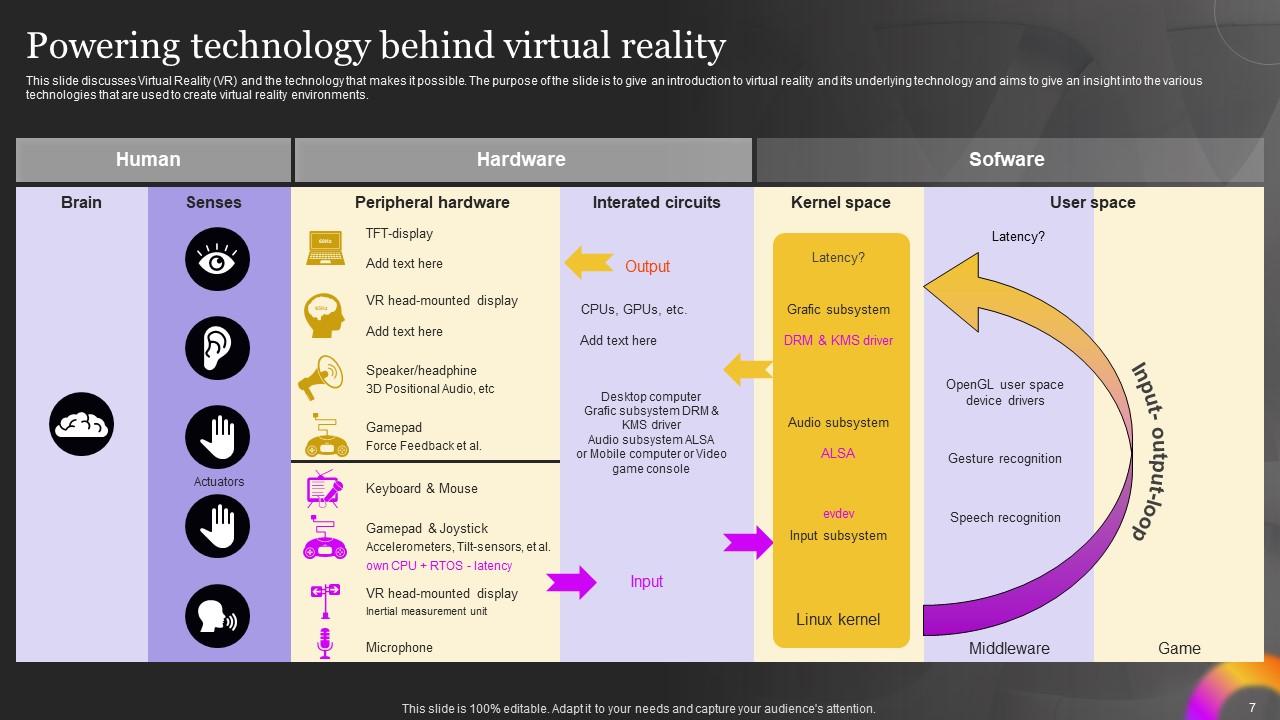
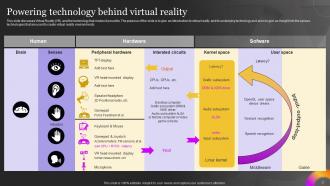
Slide 7: This slide shows Powering technology behind virtual reality.
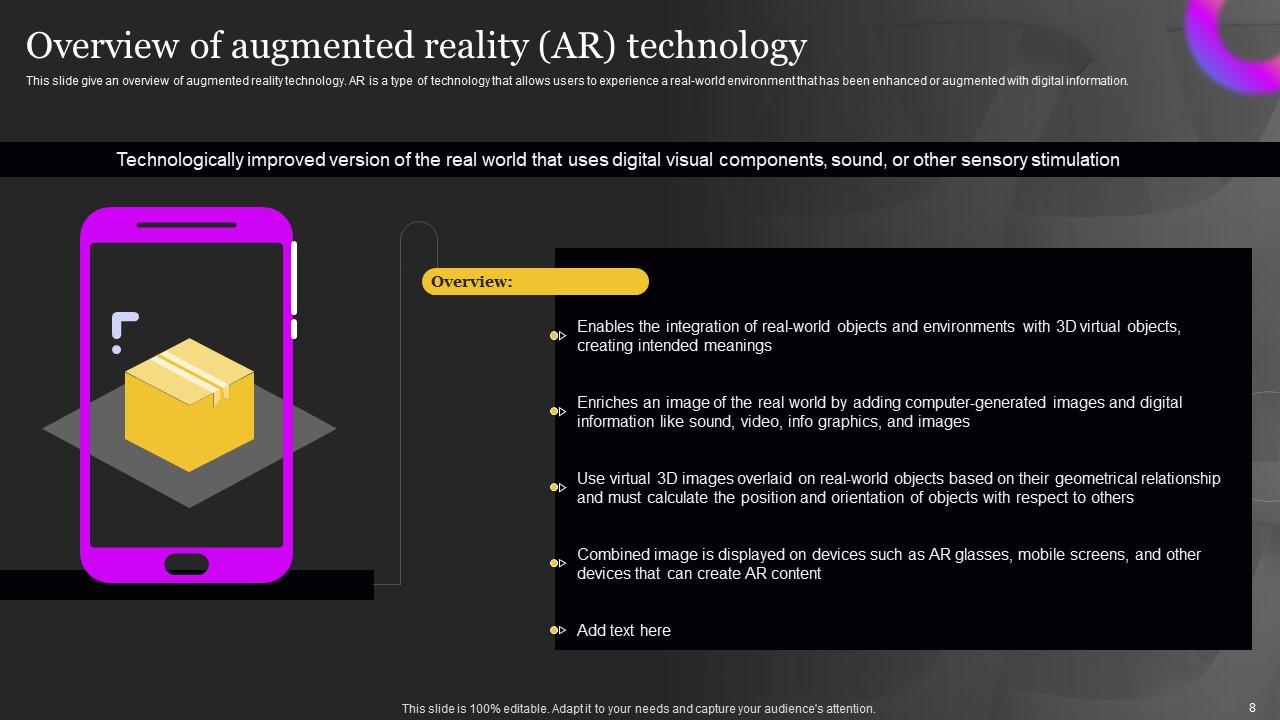
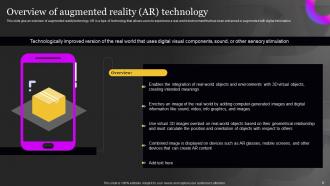
Slide 8: This slide presents Overview of augmented reality (AR) technology.
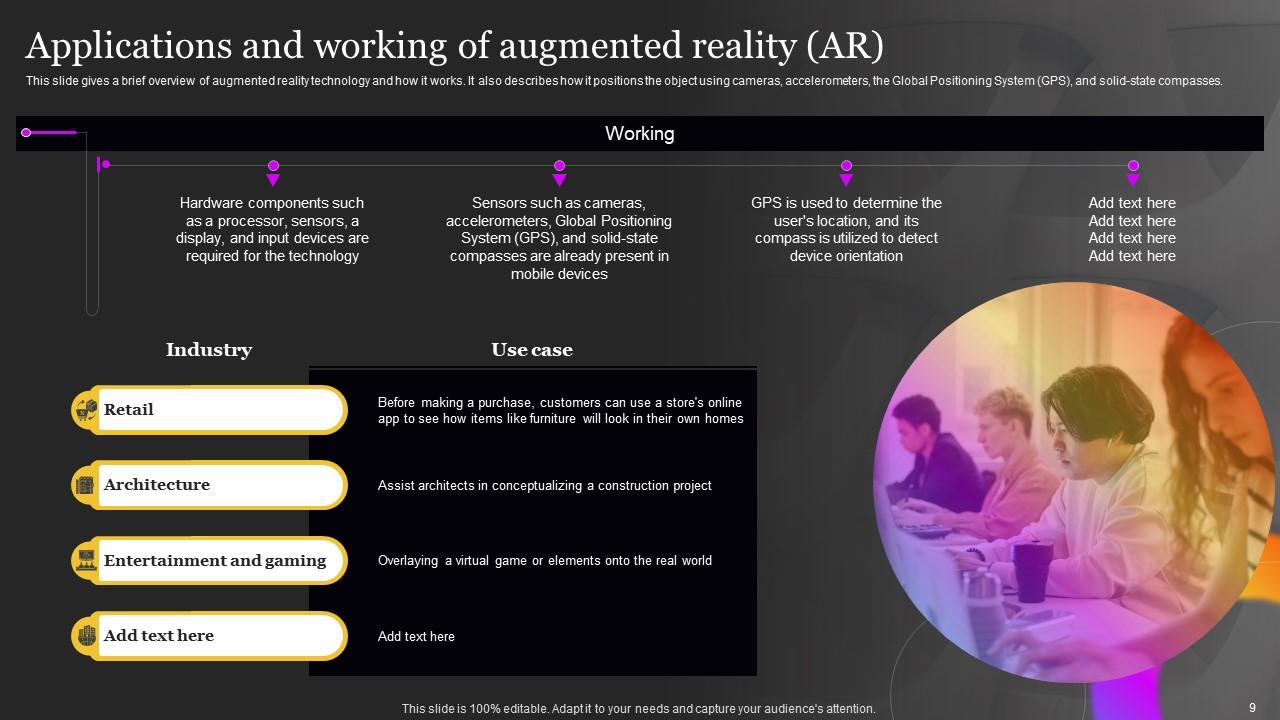
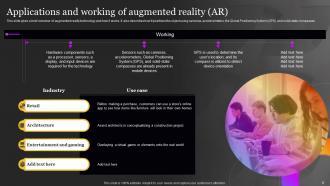
Slide 9: This slide displays Applications and working of augmented reality (AR).
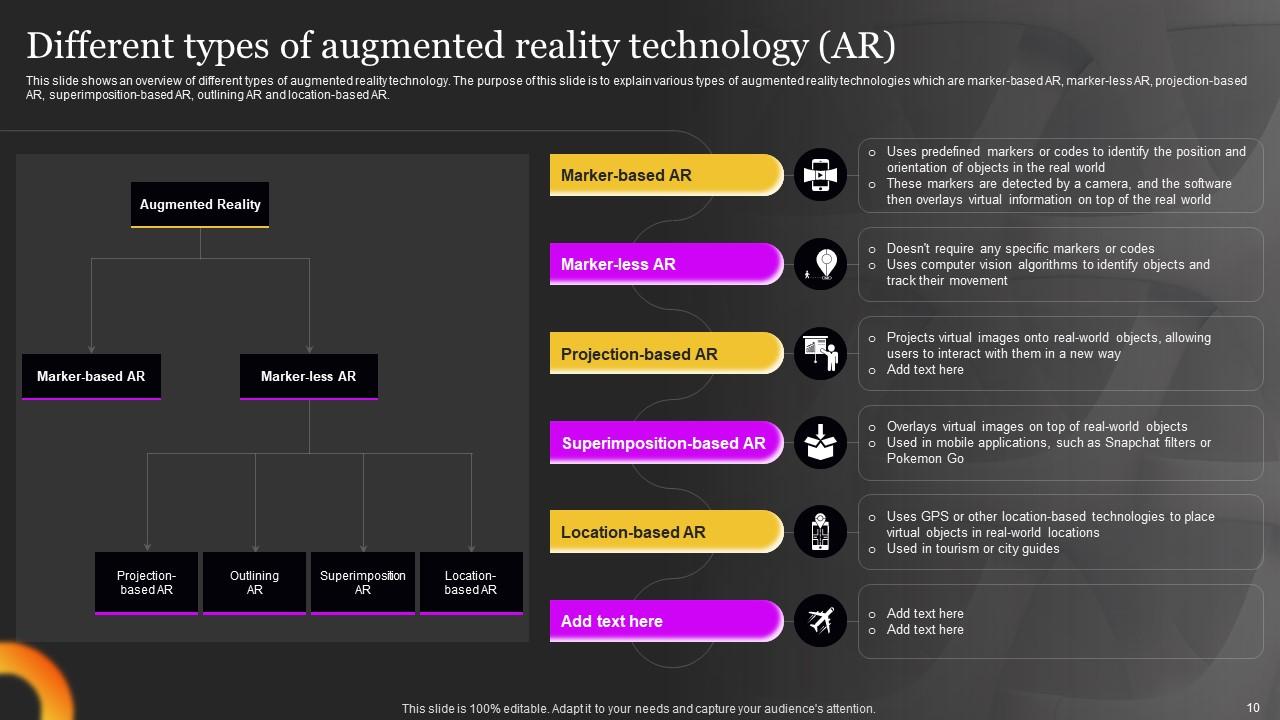
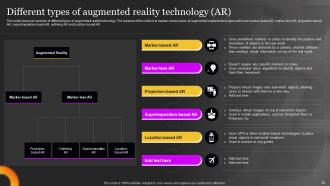
Slide 10: This slide represents Different types of augmented reality technology (AR).
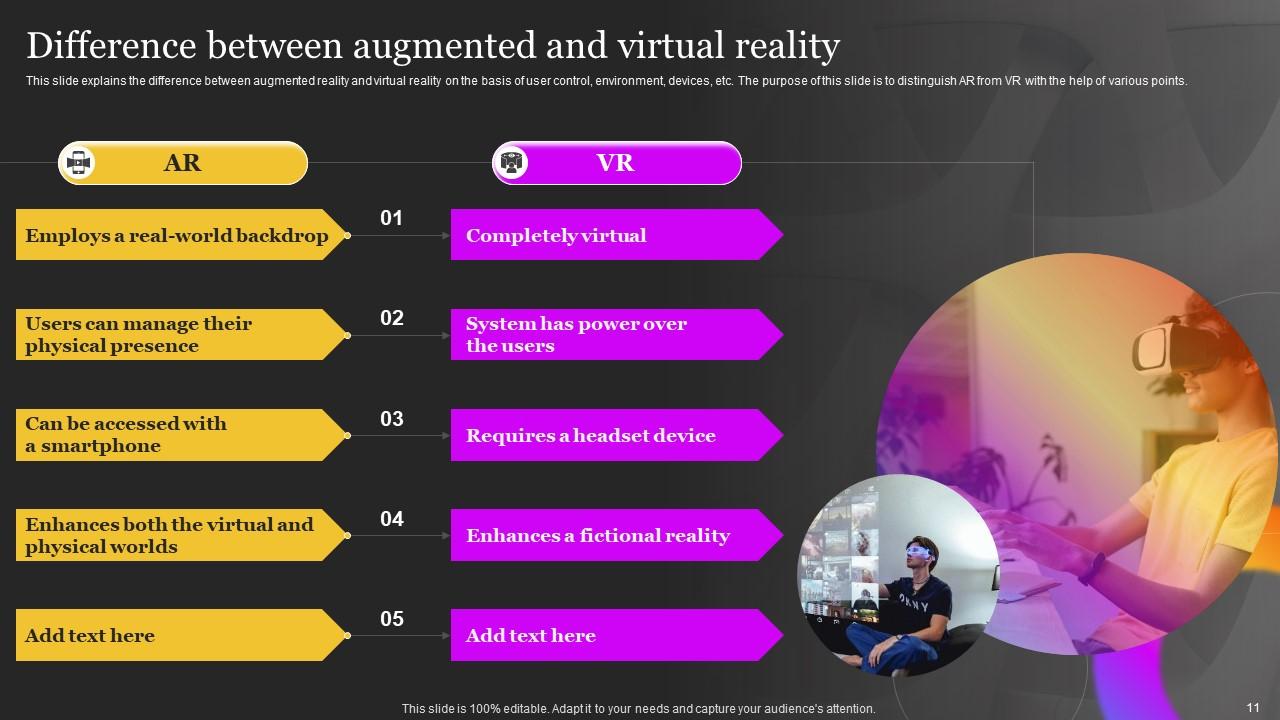
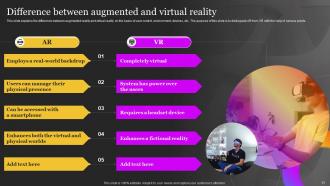
Slide 11: This slide showcases Difference between augmented and virtual reality.
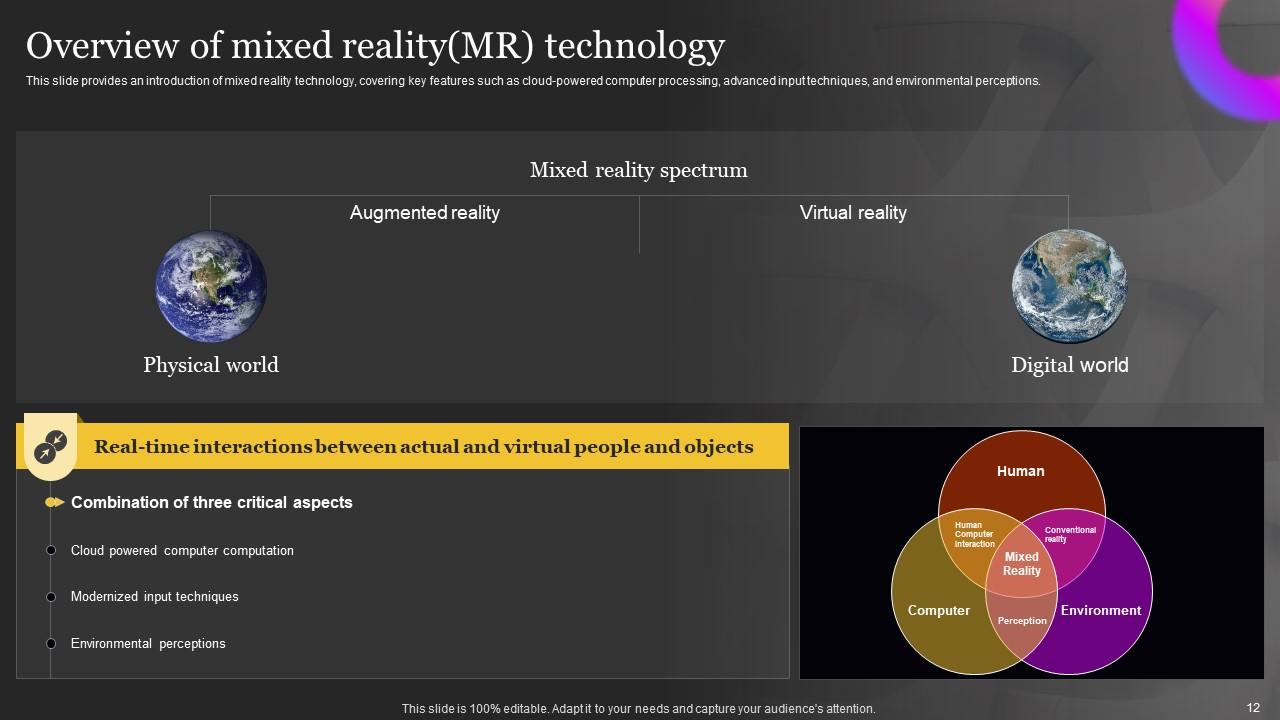
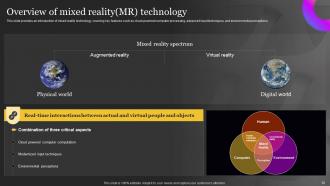
Slide 12: This slide shows Overview of mixed reality (MR) technology.
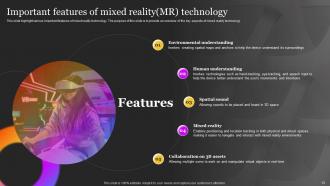
Slide 13: This slide presents Important features of mixed reality(MR) technology.
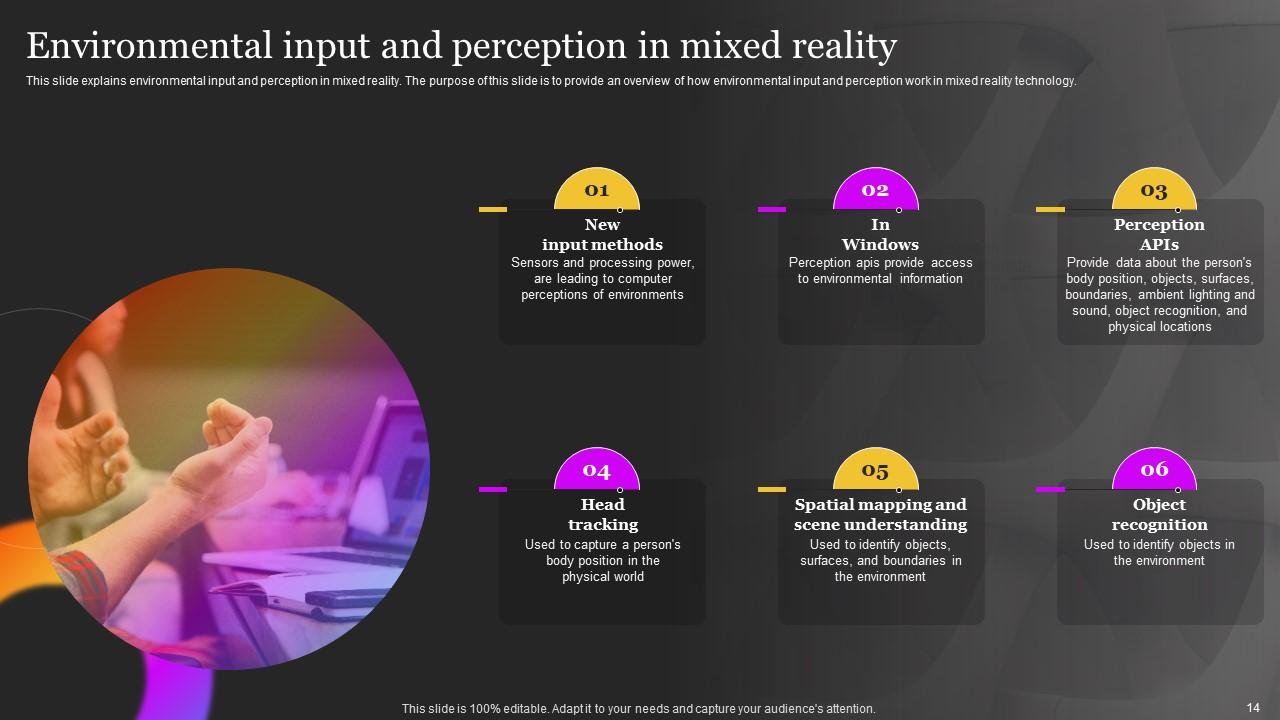
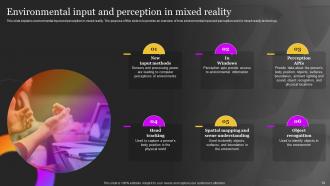
Slide 14: This slide displays Environmental input and perception in mixed reality.
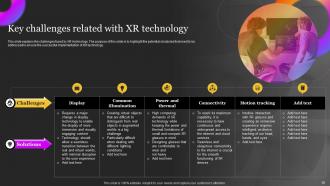
Slide 15: This slide represents Key challenges related with XR technology.
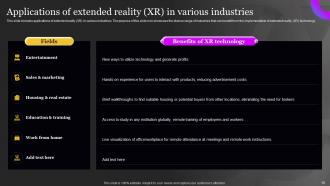
Slide 16: This slide showcases Applications of extended reality (XR) in various industries.
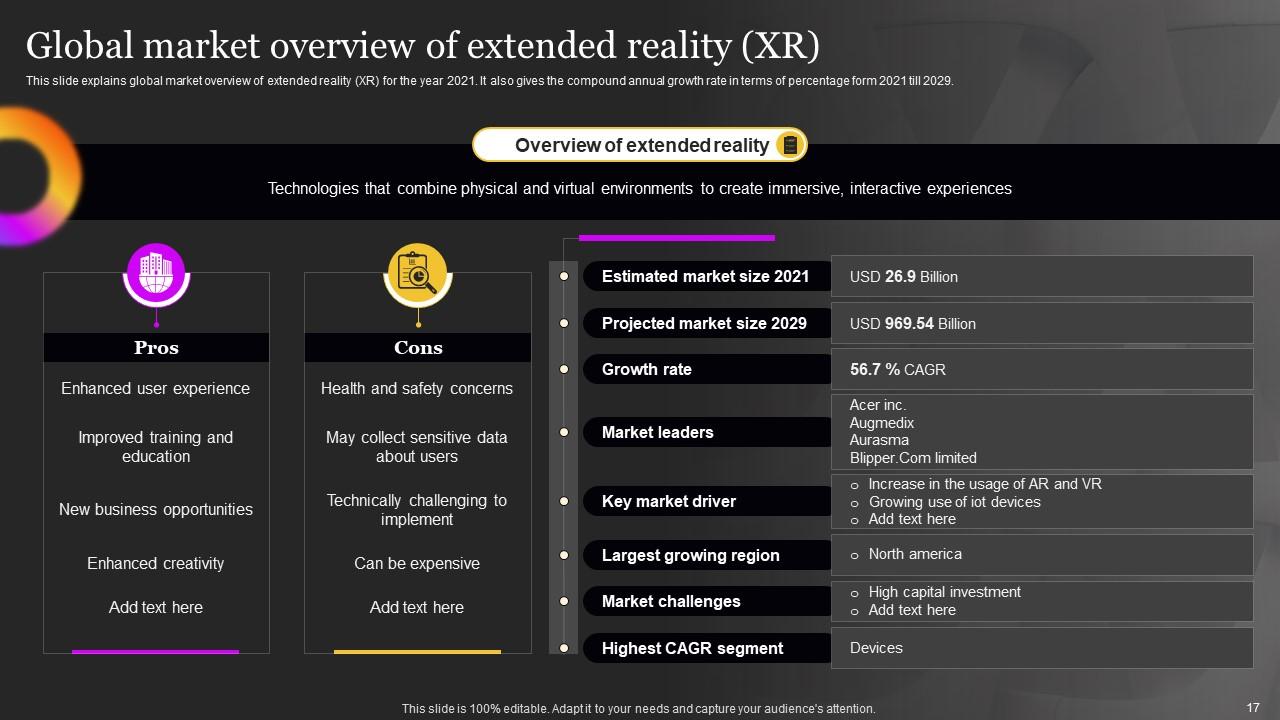
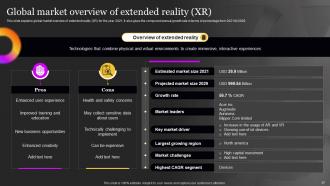
Slide 17: This slide shows Global market overview of extended reality (XR).
Slide 18: This is a Thank You slide with address, contact numbers and email address.

FAQs for Extended Reality IT

So VR totally blocks out the real world - you're stuck in this digital bubble with a headset on. AR is way different though, it just adds digital stuff to what you're already seeing. Like when you play Pokémon GO or use those apps to see if furniture fits your room. Mixed reality gets weird because the digital and real stuff actually interact with each other somehow. The whole thing can be confusing tbh! I'd probably just mess around with AR first since you've got your phone already. Way easier than dropping cash on some fancy VR setup.

Most companies are jumping into XR for training stuff - basically letting employees practice risky or pricey scenarios without the actual consequences. Medical students can do virtual surgeries, pilots train in VR simulators, warehouse folks learn equipment safely. The retention rates are way better than boring classroom training, honestly. Plus you can track everything and make people redo sections if they mess up. My cousin's company started using it for customer service training and she says it's weirdly effective. If you're thinking about it, I'd start with whatever training currently costs you the most or has the highest stakes.

Dude, XR is actually changing retail in a crazy way. Customers can try stuff virtually before buying - like those AR makeup filters or seeing how furniture looks in their actual room. Pretty wild when it actually works. You can do virtual showrooms and way more engaging product demos instead of boring static photos. People feel more confident buying, so fewer returns. Plus you get those "whoa" moments that stick with customers. Honestly, I'd start small though - maybe AR try-on for whatever gets returned most. That's where you'll actually see results fast.

So XR is changing healthcare in some pretty crazy ways. Doctors are using VR for PTSD therapy and pain management, while surgeons get AR overlays during operations to see anatomy better. The training stuff is where it gets really interesting though - med students can botch virtual surgeries without killing anyone, and nurses run through emergency drills. You can mess up and just restart, which honestly beats learning on actual patients. If your company's thinking about this, figure out where you're having the biggest headaches first. Maybe it's training new staff or helping patients through tough procedures. Start there and see what happens.

Dude, XR is actually pretty cool for remote work - instead of another boring video call, your team can hang out in virtual spaces together. You'll be able to mess around with 3D models at the same time and whiteboard stuff like you're actually there. The spatial thing is weirdly helpful too; you can tell where people are looking and pointing, which makes brainstorming way less awkward. Honestly beats staring at a grid of muted cameras all day. Start with something basic like Horizon Workrooms first though - see if your team's even into it before spending real money.

Honestly, the biggest game-changer is how much lighter these headsets are getting - no more neck strain after 20 minutes. Eye tracking is pretty sick too, makes everything feel way more natural. Processing power has jumped like crazy, so you don't need all those annoying cables anymore. Oh and the haptic stuff? I tried some demo last week where I could actually feel textures and it blew my mind. Still can't get over how real it felt! AI is making virtual worlds react better to what you're doing too. Definitely watch what Apple's doing with Vision Pro and Meta's Quest updates - they're basically leading the pack right now.

Dude, XR is seriously changing the social media game. People aren't just scrolling anymore - they're actually hanging out in virtual spaces together and trying on stuff before they buy it. Wild, right? Once you get past the initial weirdness, it feels super natural. Users are staying engaged way longer because being "there" hits different than just looking at posts. The whole virtual meetup thing is honestly kind of addictive. I'd mess around with some basic AR filters first to see how your audience reacts, then maybe test out virtual hangout spots.

Dude, the technical stuff is brutal - you need people who actually know 3D modeling and spatial design, which good luck finding those folks right now. Performance is make-or-break because users will literally get sick if your frame rates suck or the tracking goes wonky. Plus designing for different devices is a nightmare since VR headsets work totally different from AR glasses or phones. Honestly? Pick one platform and nail it first. I've seen too many startups try to build for everything at once and just burn through cash while going nowhere fast.

Dude, XR is seriously changing how kids learn. Instead of just reading about ancient Rome, they can literally walk through it in VR. AR lets you point your phone at stuff and boom - extra info pops up right there. What really gets me is how much better students remember things when they're actually doing something, not just sitting there listening. My cousin's teacher used this AR app last month and the kids were obsessed. You can practice tricky stuff like speeches without the real-world pressure too. Honestly, just grab any basic AR app and try it out - you'll see what I mean.

Dude, safety first - always ask before grabbing biometric data or tracking how people move around. Be upfront about what you're doing with their info. VR hits different than regular apps because it's so immersive, so privacy stuff feels way more invasive. Make sure it works for people with disabilities too. Here's the thing - VR can actually mess with people's heads more than you'd think, so build in easy exits and break reminders. Oh, and test with all kinds of users from the start. You'll catch problems you never saw coming.

XR privacy is a total shitshow right now, not gonna lie. Apps are hoovering up your biometric data, eye tracking, hand movements - even how you react emotionally to stuff. Wild, right? Problem is there's no real rules yet for this tech. Some apps are upfront about what they're grabbing, others are sketchy as hell. You'll want to actually read those privacy policies (ugh, I hate doing it too) and mess with your permission settings. Look for apps that let you control the data collection from the start. Trust me on this one.

Healthcare's where you'll see the biggest wins - surgeons practicing with VR, docs using AR during actual procedures. It's wild stuff. Manufacturing companies are obsessed with AR for assembly lines and helping workers remotely. Retail's doing virtual try-ons everywhere now, plus those crazy immersive showrooms. Schools are finally ditching boring textbooks for interactive VR lessons that actually engage kids. Honestly, if you're in any of these areas, just start with a small pilot program first. Don't blow your whole budget on something you haven't tested yet.

So you'll want to learn some programming - C

Ratings and Reviews

80% of 100
Review Form
Write a review
Most Relevant Reviews
  1. 80%

    by Domenic Spencer

    SlideTeam’s readymade presentations have landed my unique images with my bosses in the past and it continues to reward me.
  2. 80%

    by Earle Willis

    Definitely recommend SlideTeam to all who need help with PowerPoint presentations. Their design team can create anything you need.

2 Item(s)

per page: