


Emerging Technologies Powerpoint Presentation Slides




Try Before you Buy Download Free Sample Product
 Impress Your
 Audience
 100%
100% Editable
 Save Hours
 of Time


Discover the future of technology with our professionally designed Emerging Technologies IT template. This cutting-edge deck provides a succinct overview of Artificial Intelligence AI and Machine Learning, highlighting their superiority to humans in various aspects. Explore the realm of Extended Reality in our presentation, encompassing Virtual Reality, Augmented Reality, Mixed Reality, and more. Witness the impact of 3D printing on prototyping, revolutionizing biomedical and industrial fields. Dive into the Emerging Technologies PPT, where Robotic Process Automation RPA takes center stage with a comprehensive market study and growth analysis. Our New Technology PPT encompasses a wide array of topics, including Blockchain Technology, Internet of Things IoT, 5G, Hyperautomation, Cognitive Computing, Cybersecurity, Everything as a Service XaaS, and Edge Computing. Stay informed about the latest trends shaping the technological landscape. Download our 100 percent editable and customizable template, compatible with Google Slides, to stay ahead in the ever-evolving world of IT and emerging technologies. Embrace the future with this dynamic presentation.
People who downloaded this PowerPoint presentation also viewed the following :
Content of this Powerpoint Presentation
Slide 1: This slide introduces Emerging Technologies. Commence by stating Your Company Name.
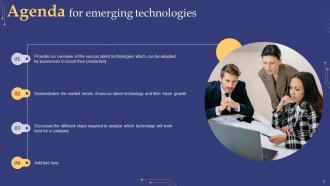
Slide 2: This slide depicts the Agenda of the presentation.
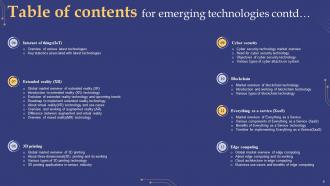
Slide 3: This slide incorporates the Table of contents.
Slide 4: This is yet another slide continuing the Table of contents.
Slide 5: This slide highlights the Title for the Topics to be covered further.
Slide 6: This slide explains overview of various latest technologies with its description and use case.
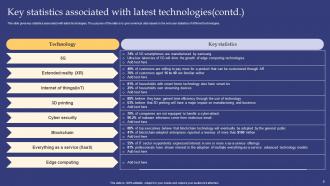
Slide 7: This slide states the Key statistics associated with latest technologies.
Slide 8: This slide continues the key statistics associated with latest technologies.
Slide 9: This slide presents the Heading for the Contents to be discussed next.
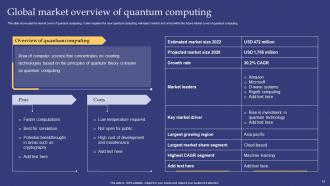
Slide 10: This slide showcases the Global market overview of quantum computing.
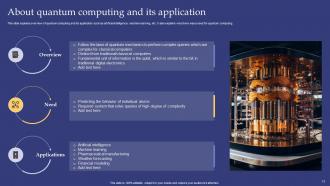
Slide 11: This slide explains overview of quantum computing and its application such as artificial intelligence, machine learning, etc.
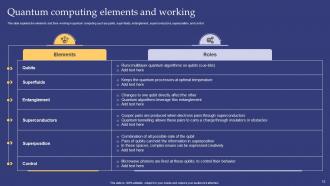
Slide 12: This slide depicts the Quantum computing elements and working.
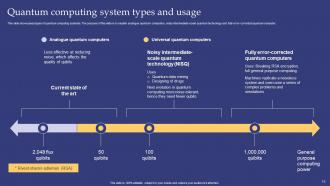
Slide 13: This slide showcases types of quantum computing systems.
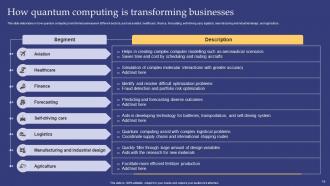
Slide 14: This slide elaborates on how quantum computing transforms businesses in different sectors.
Slide 15: This slide displays the implementation checklist for quantum computing in the workplace.
Slide 16: This slide portrays the Title for the Ideas to be covered in the following template.
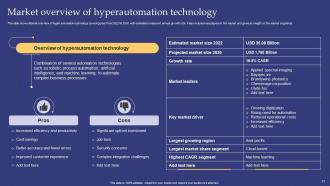
Slide 17: This slide shows Market overview of hyper automation technology covering year from 2022 till 2030 with estimated compound annual growth rate.
Slide 18: This slide gives an overview of hyperautomation technology which covers various technology.
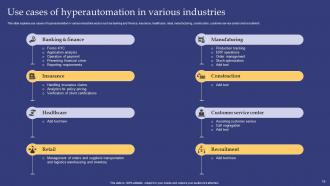
Slide 19: This slide explains use cases of hyperautomation in various industries sector.
Slide 20: This slide shows predicted market growth of artificial intelligence by providing insights on customer satisfaction.
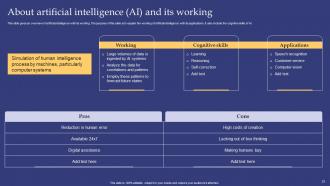
Slide 21: This slide gives an overview of artificial intelligence with its working.
Slide 22: This slide explains two major types of artificial intelligence (AI) which are strong and weak artificial intelligence.
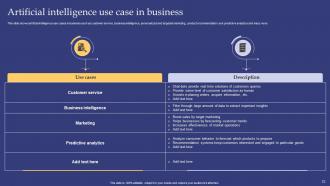
Slide 23: This slide presents the Artificial intelligence use case in business.
Slide 24: This slide outlines the global market overview of machine learning.
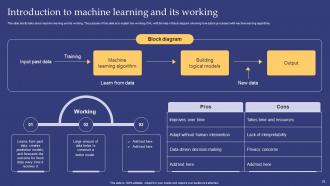
Slide 25: This slide briefly talks about machine learning and its working.
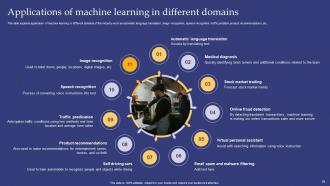
Slide 26: This slide talks about the Applications of machine learning in different domains.
Slide 27: This slide showcases the Role of machine learning in business transformation.
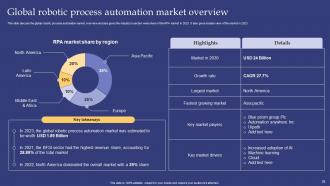
Slide 28: This slide discusses the Global robotic process automation market overview.
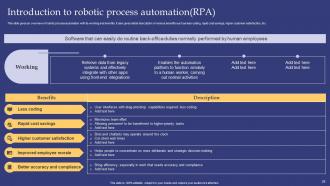
Slide 29: This slide gives a glimpse of robotic process automation with its working and benefits.
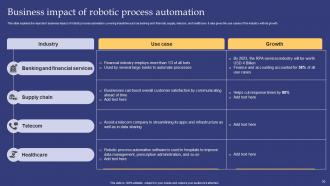
Slide 30: This slide explains the important business impact of robotic process automation.
Slide 31: This slide includes the Heading for the Ideas to be discussed in the upcoming template.
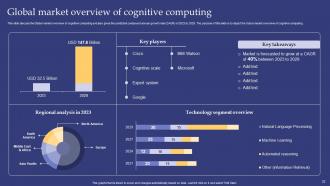
Slide 32: This slide discusses the Global market overview of cognitive computing.
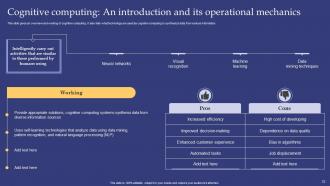
Slide 33: This slide gives an overview and working of cognitive computing.
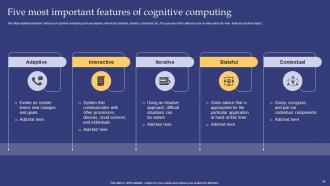
Slide 34: This slide explains important features of cognitive computing.
Slide 35: This slide indicates the Title for the Contents to be covered further.
Slide 36: This slide explains the Global market overview of 5G networks from 2022 to 2030.
Slide 37: This slide showcases 5 Generation network in telecommunication.
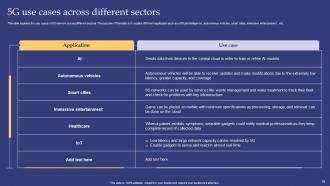
Slide 38: This slide explains the use cases of 5G network across different sectors.
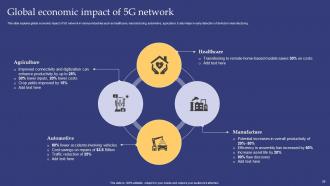
Slide 39: This slide explains global economic impact of 5G network in various industries.
Slide 40: This slide contains the Heading for the Topics to be discussed next.
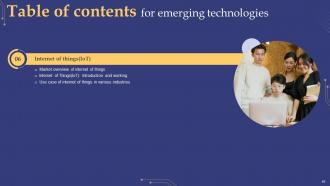
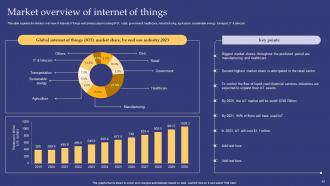
Slide 41: This slide explains the Market overview of internet of things.
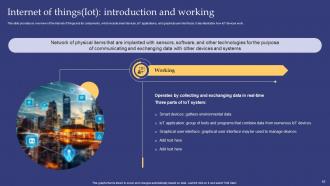
Slide 42: This slide provides an overview of the internet of things and its components.
Slide 43: This slide explains the Use case of internet of things in various industries in various industries.
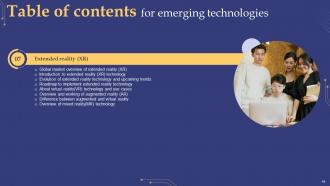
Slide 44: This slide presents the Title for the Contents to be covered next.
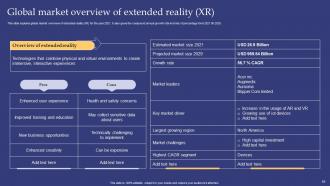
Slide 45: This slide explains global market overview of extended reality (XR) for the year 2021.
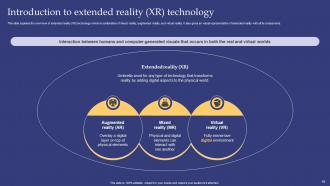
Slide 46: This slide reveals the Introduction to extended reality (XR) technology.
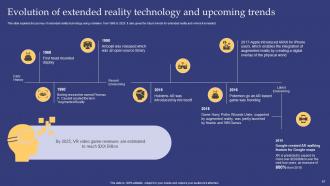
Slide 47: This slide explains the journey of extended reality technology using a timeline from 1968 to 2020.
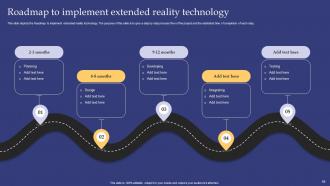
Slide 48: This slide depicts the Roadmap to implement extended reality technology.
Slide 49: This slide gives an overview of virtual reality technology with its three types non-immersive, semi-immersive and full immersive.
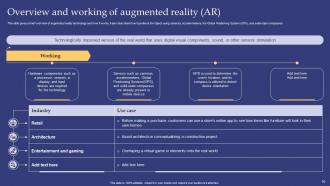
Slide 50: This slide gives a brief overview of augmented reality technology and how it works.
Slide 51: This slide explains the difference between augmented reality and virtual reality.
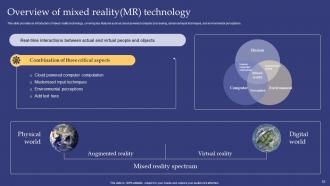
Slide 52: This slide displays the Overview of mixed reality(MR) technology.
Slide 53: This slide incorporates the Heading for the Topics to be discussed further.
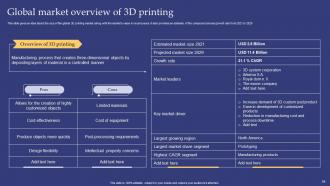
Slide 54: This slide gives an idea about the size of the global 3D printing market along with the market's value in recent years.
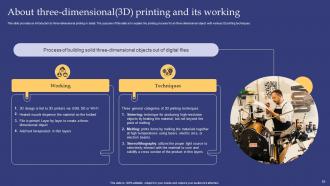
Slide 55: This slide provides an introduction to three-dimensional printing in detail.
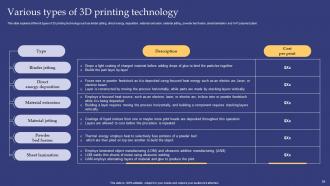
Slide 56: This slide states the Various types of 3D printing technology.
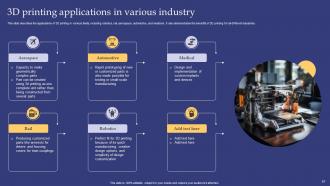
Slide 57: This slide talks about the 3D printing applications in various industry.
Slide 58: This slide displays the Title for the Contents to be covered next.
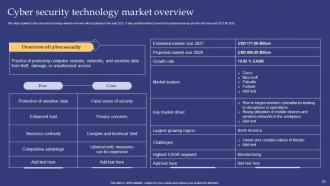
Slide 59: This slide explains Cyber security technology market overview with top players in the year 2021.
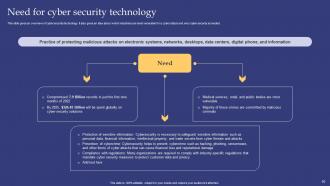
Slide 60: This slide gives an overview of cyber security technology.
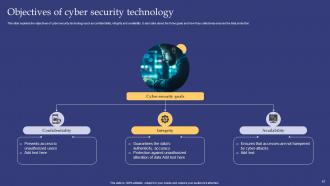
Slide 61: This slide explains the objectives of cyber security technology such as confidentiality, integrity and availability.
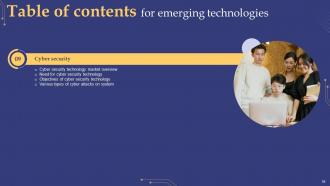
Slide 62: This slide states the Various types of cyber attacks on system.
Slide 63: This slide includes the Heading for the Contents to be discussed further.
Slide 64: This slide showcase market overview of blockchain from year 2022 till 2030 with compound annual growth rate.
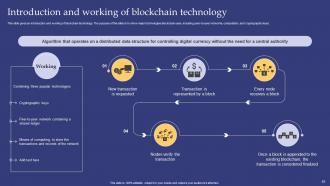
Slide 65: This slide gives an introduction and working of blockchain technology.
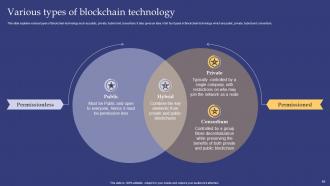
Slide 66: This slide explains various types of blockchain technology such as public, private, hybrid and consortium.
Slide 67: This slide displays the Title for the Ideas to be covered in the following template.
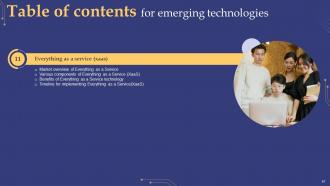
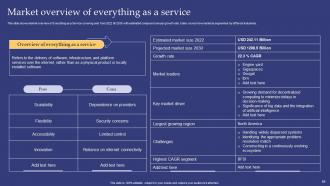
Slide 68: This slide shows market overview of Everything as a Service covering year from 2022 till 2030 with estimated compound annual growth rate.
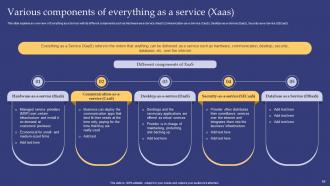
Slide 69: This slide states the Various components of everything as a service (xaas).
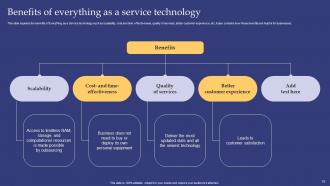
Slide 70: This slide exhibits the Benefits of everything as a service technology.
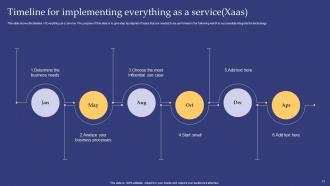
Slide 71: This slide shows the timeline of Everything as a Service.
Slide 72: This slide portrays the Heading for the Ideas to be discussed in the next template.
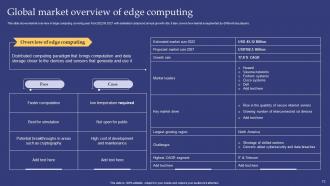
Slide 73: This slide shows market overview of edge computing covering year from 2022 till 2027 with estimated compound annual growth rate.
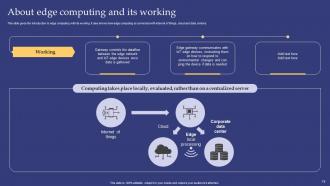
Slide 74: This slide gives the introduction to edge computing with its working.
Slide 75: This slide describes the cloud architecture in edge computing, including its three layers: cloud, fog, and edge.
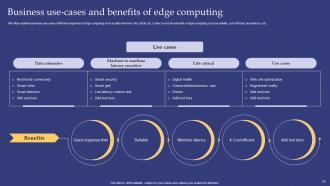
Slide 76: This slide explains business use-case of different segments of edge computing.
Slide 77: This is the Icons slide containing all the Icons used in the plan.
Slide 78: This slide is used for depicting some Additional information.
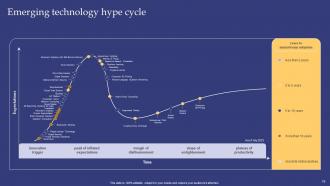
Slide 79: This slide illustrates the Emerging technology hype cycle.
Slide 80: This slide exhibits the company's Timeline.
Slide 81: This slide represents the SWOT analysis.
Slide 82: This is Our team slide. State your team-related information here.
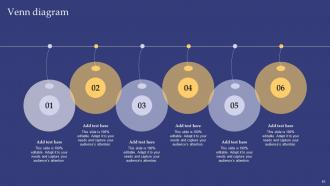
Slide 83: This is the Venn diagram slide.
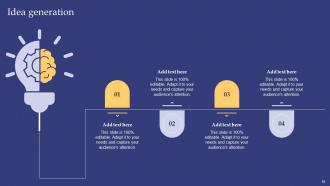
Slide 84: This is the Idea generation slide for encouraging fresh ideas.
Slide 85: This is the Target slide. State your organziation's targets here.
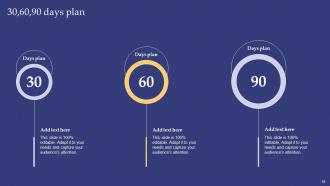
Slide 86: This is the 30,60,90 days plan slide for effective planning.
Slide 87: This slide contains the Post notes for reminders and deadlines.
Slide 88: This is the Magnifying glass with minute details.
Slide 89: This is the Thank You slide for acknowledgement.
Emerging Technologies Powerpoint Presentation Slides with all 97 slides:
Use our Emerging Technologies Powerpoint Presentation Slides to effectively help you save your valuable time. They are readymade to fit into any presentation structure.
-
Emerging Technologies Powerpoint Presentation Slides
-
Emerging Technologies Powerpoint Presentation Slides
-

Emerging Technologies Powerpoint Presentation Slides
-
Emerging Technologies Powerpoint Presentation Slides
-
Emerging Technologies Powerpoint Presentation Slides
-

Emerging Technologies Powerpoint Presentation Slides
-

Emerging Technologies Powerpoint Presentation Slides
-
Emerging Technologies Powerpoint Presentation Slides
-
Emerging Technologies Powerpoint Presentation Slides
-
Emerging Technologies Powerpoint Presentation Slides
-
Emerging Technologies Powerpoint Presentation Slides
-
Emerging Technologies Powerpoint Presentation Slides
-
Emerging Technologies Powerpoint Presentation Slides
-
Emerging Technologies Powerpoint Presentation Slides
-

Emerging Technologies Powerpoint Presentation Slides
-
Emerging Technologies Powerpoint Presentation Slides
-
Emerging Technologies Powerpoint Presentation Slides
-

Emerging Technologies Powerpoint Presentation Slides
-
Emerging Technologies Powerpoint Presentation Slides
-

Emerging Technologies Powerpoint Presentation Slides
-
Emerging Technologies Powerpoint Presentation Slides
-

Emerging Technologies Powerpoint Presentation Slides
-
Emerging Technologies Powerpoint Presentation Slides
-

Emerging Technologies Powerpoint Presentation Slides
-
Emerging Technologies Powerpoint Presentation Slides
-
Emerging Technologies Powerpoint Presentation Slides
-

Emerging Technologies Powerpoint Presentation Slides
-
Emerging Technologies Powerpoint Presentation Slides
-
Emerging Technologies Powerpoint Presentation Slides
-
Emerging Technologies Powerpoint Presentation Slides
-
Emerging Technologies Powerpoint Presentation Slides
-
Emerging Technologies Powerpoint Presentation Slides
-
Emerging Technologies Powerpoint Presentation Slides
-
Emerging Technologies Powerpoint Presentation Slides
-

Emerging Technologies Powerpoint Presentation Slides
-

Emerging Technologies Powerpoint Presentation Slides
-

Emerging Technologies Powerpoint Presentation Slides
-
Emerging Technologies Powerpoint Presentation Slides
-
Emerging Technologies Powerpoint Presentation Slides
-
Emerging Technologies Powerpoint Presentation Slides
-
Emerging Technologies Powerpoint Presentation Slides
-
Emerging Technologies Powerpoint Presentation Slides
-

Emerging Technologies Powerpoint Presentation Slides
-
Emerging Technologies Powerpoint Presentation Slides
-
Emerging Technologies Powerpoint Presentation Slides
-
Emerging Technologies Powerpoint Presentation Slides
-
Emerging Technologies Powerpoint Presentation Slides
-
Emerging Technologies Powerpoint Presentation Slides
-

Emerging Technologies Powerpoint Presentation Slides
-
Emerging Technologies Powerpoint Presentation Slides
-

Emerging Technologies Powerpoint Presentation Slides
-
Emerging Technologies Powerpoint Presentation Slides
-
Emerging Technologies Powerpoint Presentation Slides
-
Emerging Technologies Powerpoint Presentation Slides
-
Emerging Technologies Powerpoint Presentation Slides
-
Emerging Technologies Powerpoint Presentation Slides
-
Emerging Technologies Powerpoint Presentation Slides
-
Emerging Technologies Powerpoint Presentation Slides
-
Emerging Technologies Powerpoint Presentation Slides
-
Emerging Technologies Powerpoint Presentation Slides
-
Emerging Technologies Powerpoint Presentation Slides
-

Emerging Technologies Powerpoint Presentation Slides
-
Emerging Technologies Powerpoint Presentation Slides
-

Emerging Technologies Powerpoint Presentation Slides
-
Emerging Technologies Powerpoint Presentation Slides
-
Emerging Technologies Powerpoint Presentation Slides
-
Emerging Technologies Powerpoint Presentation Slides
-
Emerging Technologies Powerpoint Presentation Slides
-
Emerging Technologies Powerpoint Presentation Slides
-
Emerging Technologies Powerpoint Presentation Slides
-
Emerging Technologies Powerpoint Presentation Slides
-

Emerging Technologies Powerpoint Presentation Slides
-
Emerging Technologies Powerpoint Presentation Slides
-
Emerging Technologies Powerpoint Presentation Slides
-

Emerging Technologies Powerpoint Presentation Slides
-
Emerging Technologies Powerpoint Presentation Slides
-

Emerging Technologies Powerpoint Presentation Slides
-

Emerging Technologies Powerpoint Presentation Slides
-
Emerging Technologies Powerpoint Presentation Slides
-

Emerging Technologies Powerpoint Presentation Slides
-
Emerging Technologies Powerpoint Presentation Slides
-
Emerging Technologies Powerpoint Presentation Slides
-
Emerging Technologies Powerpoint Presentation Slides
-
Emerging Technologies Powerpoint Presentation Slides
-

Emerging Technologies Powerpoint Presentation Slides
-
Emerging Technologies Powerpoint Presentation Slides
-
Emerging Technologies Powerpoint Presentation Slides
-

Emerging Technologies Powerpoint Presentation Slides
-

Emerging Technologies Powerpoint Presentation Slides
-

Emerging Technologies Powerpoint Presentation Slides
-

Emerging Technologies Powerpoint Presentation Slides
-

Emerging Technologies Powerpoint Presentation Slides
-

Emerging Technologies Powerpoint Presentation Slides
-

Emerging Technologies Powerpoint Presentation Slides
-

Emerging Technologies Powerpoint Presentation Slides
-

Emerging Technologies Powerpoint Presentation Slides
-

Emerging Technologies Powerpoint Presentation Slides
FAQs for Emerging Technologies
Honestly, AI and machine learning are huge right now - totally changing how doctors diagnose stuff and discover new drugs. Telemedicine blew up during COVID and it's sticking around for sure. Surgical robots are getting crazy precise too. Then you've got all these wearables and IoT gadgets letting doctors track your heart rate and whatever from miles away. CRISPR gene editing is fascinating but that's more futuristic. Oh, and VR/AR for training med students is pretty cool. If I were you though, I'd dive into AI integration first - that's where the money and jobs are right now.
Dude, AI is literally taking over every industry right now. Healthcare's using it to catch diseases way faster than human doctors can. Manufacturing companies are predicting when machines will break before it happens - saves them tons of money. Retail's getting crazy personalized with recommendations and smart inventory stuff. Even farmers are using it now, which honestly surprised me at first. Finance uses it for catching fraud, cars are driving themselves, and energy grids are getting smarter. The wild thing? It's not just tech startups anymore - old-school companies are building this into everything they do. Look for boring, repetitive tasks at your job that could probably be automated.
So blockchain basically makes it super hard for hackers to mess with your data. Instead of everything living on one server they can attack, it's spread across tons of computers. Any changes get flagged immediately since everyone can see the ledger - honestly it's pretty genius when you think about it. Companies use it for identity stuff and protecting IoT devices too. The whole decentralized thing means bad actors can't just waltz in and change records like they want. Definitely worth looking into if you need bulletproof data integrity, though it's not magic for everything obviously.
So 5G is basically a huge deal for smart cities - it lets IoT devices actually work properly instead of being sluggish. Traffic systems and emergency response get way faster because you can connect thousands more devices in the same area. The latency drops to milliseconds which is crazy good for critical stuff. Real-time air quality monitoring becomes possible, plus predictive maintenance for infrastructure. Honestly the amount of data these cities will pump out is going to be insane. Oh and if you're planning any IoT stuff, definitely think about 5G from the start - it'll save you headaches later.
Dude, the renewable stuff is actually insane right now. Solar's gotten like 85% cheaper in just ten years - I still can't wrap my head around that. Offshore wind is everywhere now, and they've basically cracked the battery storage thing so you don't need constant sun or wind. Countries can finally dump fossil fuels without destroying their economies, which was always the main problem. The crazy part? Once renewables hit that sweet spot where they're cheapest everywhere, adoption just explodes. Worth watching those cost trends if you're curious where this is all headed.
Honestly, it's all about who takes the blame when things go sideways. Your self-driving car hits someone? Good luck figuring out if it's the manufacturer, programmer, or you. These systems also pick up weird biases from their data - like AI hiring tools that mysteriously favor certain demographics. Then there's the bigger question of whether we even want machines making life-changing decisions in hospitals or courtrooms. I mean, that's pretty terrifying if you think about it. My take? Always ask who's actually responsible when shit hits the fan, and game out the worst-case scenarios before implementing anything.
Dude, VR in training is getting crazy good. Students can walk through ancient Rome or do surgery practice without, you know, accidentally killing anyone. Medical schools and flight training are all over this stuff. The cool part? You can mess up as many times as you want and just restart the scenario. I've seen companies using it for awkward situations too - like firing someone or giving presentations. Honestly didn't think soft skills training would work in VR but apparently it does. If you're thinking about it for work, maybe try a small test run first to see if people actually learn better or just think it's neat.
Honestly, start with AI/ML - it's crushing fraud detection right now and the personalization stuff is getting scary good. Blockchain's solid for secure transactions if you can get past all the crypto hype. Cloud computing is a no-brainer for scaling up. APIs are everywhere now, connecting all your systems. Quantum computing sounds cool but it's still years out - though when it hits, encryption and risk models will be totally different. RegTech's helping with compliance headaches, and embedded finance makes everything smoother for customers. But here's the thing - don't just chase what's trendy. Figure out what's actually broken in your processes first, then find the tech that fixes it.
Look, ML is basically like having a really smart pattern-finder that can spot stuff in your data you'd never catch yourself. Traditional forecasting just looks at what happened before, but this tech digs into huge datasets and finds these weird connections between things that actually matter for your business. Customer churn, inventory planning, demand forecasting - you'll get way better predictions than the old methods. Plus it keeps learning as you throw more data at it, which is pretty neat. Honestly, just pick one problem area first and test it out there.
Dude, quantum computing is wild - it's gonna flip everything upside down. For certain problems like optimization, we're talking crazy speedups. Like, calculations that take years could happen in minutes. But here's where it gets messy: all our current encryption becomes totally worthless. RSA, ECC, whatever you're using now? A powerful quantum computer laughs at that stuff. Honestly, it's kind of terrifying if you think about it too much. The silver lining is quantum-resistant encryption is already in development. You should probably start looking into post-quantum standards sooner rather than later.
Dude, the biotech stuff happening with food right now is crazy. CRISPR gene editing lets scientists create crops that fight off diseases and survive droughts. Golden rice has extra vitamin A now - pretty cool, right? Companies are using AI and sensors to monitor soil health in real-time too. Honestly, I think the vertical farming tech is the most interesting part though. Lab-grown meat is getting big investment money. If you're looking at agtech stocks or just worried about food shortages down the road, it's definitely worth paying attention to. The whole precision breeding thing is moving fast.
Honestly, wearables are pretty cool - they turn your body into this constant data stream. You'll catch health issues way earlier since you're monitoring heart rate, sleep, stress levels all day. The gamification thing is super addictive (I'm totally guilty of chasing step goals). Your doctor visits get way better because you actually have real data instead of just guessing. Most people end up with a drawer full of dead fitness trackers though, so pick one you'll actually wear. The feedback loop really does help build better habits over time.
Okay so AR is basically the ultimate "try before you buy" thing. You can see how furniture actually looks in your space, or test makeup without making a mess of your face. Way less buyer's remorse when you know what you're getting. It creates those fun moments people want to share too, which keeps them engaged. Though honestly, I've seen some brands just throw AR at everything thinking it's automatically cool. The trick is actually solving real problems for people, not just adding flashy tech because you can.
Ugh, the worst part is regulations move at like 5% the speed of tech development. Europe will ban your AI while the US gives it a thumbs up - super fun dealing with that mess. GDPR alone can destroy you if you're handling personal data. Most regulators honestly have no clue how the tech actually works, which makes everything more confusing. Oh, and don't even think about adding compliance later - that's a nightmare. Build it in from the start or you'll hate your life.
Dude, drones are totally changing how delivery works. Amazon and UPS are already using them for remote deliveries where trucks can't easily reach. Warehouses love them too - way faster than some guy walking around with a scanner checking inventory (which honestly sounds mind-numbing). They're also great for inspecting stuff like cell towers or pipelines that would be dangerous to check manually. Oh, and the cost savings are pretty solid once you get past the initial setup. If you're thinking about it for your company, maybe start with something simple like warehouse inventory before diving into actual deliveries to customers.
-
“As you have innovative ideas and they are all customizable, this saves a huge chunk of your time to prepare well-read presentations.”
-
Easily Editable.