

Implementation Of Smart Manufacturing Technologies Powerpoint Presentation Slides





Try Before you Buy Download Free Sample Product
 Impress Your
 Audience
 100%
100% Editable
 Save Hours
 of Time


Smart manufacturing is a technology-driven technique using IoT-enabled equipment for production process monitoring. It enables manufacturers to automate operations and use data analytics to enhance production performance. This PowerPoint presentation Implementation of Smart Manufacturing Technologies showcases a smart manufacturing market overview, trends, smart manufacturing ecosystem and capabilities, implementation framework, and gap analysis. This PPT includes smart manufacturing technologies such as cloud computing, augmented reality, sustainable manufacturing, artificial intelligence, digital twins, blockchain, industrial edge computing, and drone. It covers IoT enabled smart manufacturing showcasing IoT applications, IoT technologies, and equipment sensors for manufacturing process automation. Lastly, it includes a smart manufacturing team structure, roles and responsibilities, training plan, budget plan, the impact of smart manufacturing implementation and metrics dashboard. Download our 100 percent editable and customizable template.
People who downloaded this PowerPoint presentation also viewed the following :
Content of this Powerpoint Presentation
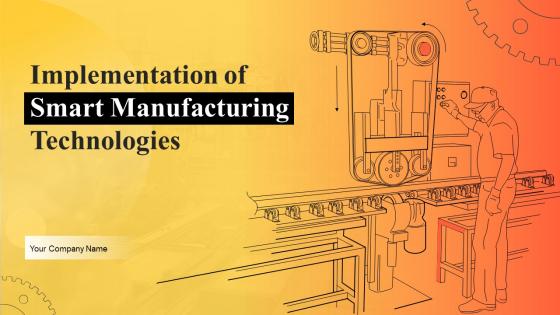
Slide 1: This slide displays the title Implementation of Smart Manufacturing Technologies.
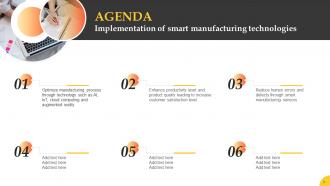
Slide 2: This slide displays the title AGENDA for the topic.
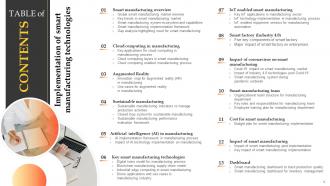
Slide 3: This slide exhibit table of content.
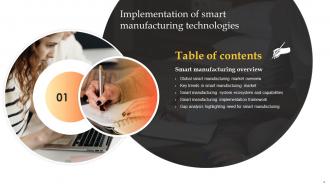
Slide 4: This slide exhibit table of content- Smart manufacturing overview.
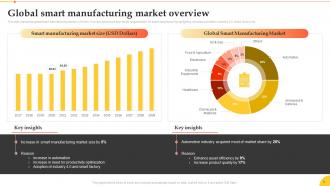
Slide 5: This slide represents global smart manufacturing market overview.
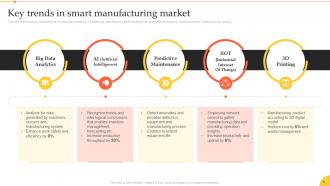
Slide 6: This slide represents key market trends for smart manufacturing.
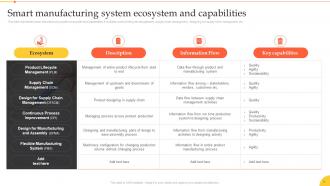
Slide 7: This slide represents smart manufacturing system ecosystem and capabilities.
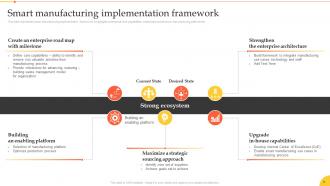
Slide 8: This slide represents smart manufacturing implementation framework.
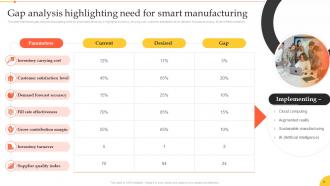
Slide 9: This slide represents gap analysis showcasing need for smart manufacturing.
Slide 10: This slide exhibit table of content- Cloud computing in manufacturing.
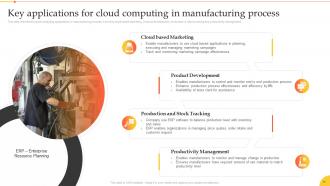
Slide 11: This slide represents cloud computing applications in manufacturing process.
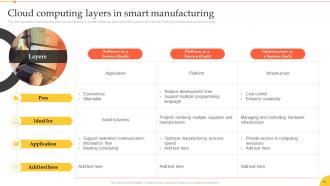
Slide 12: This slide represents cloud computing layers in manufacturing.
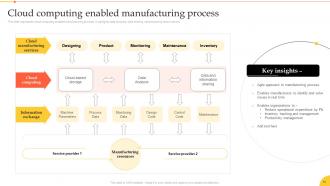
Slide 13: This slide represents cloud computing enabled manufacturing process.
Slide 14: This slide exhibit table of content- Augmented Reality.
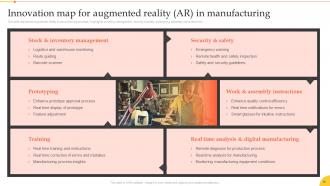
Slide 15: This slide represents augmented reality in manufacturing process.
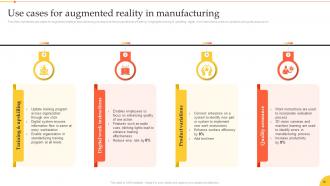
Slide 16: This slide represents use cases for augmented reality in manufacturing process to enhance operational efficiency.
Slide 17: This slide exhibit table of content- Sustainable manufacturing.
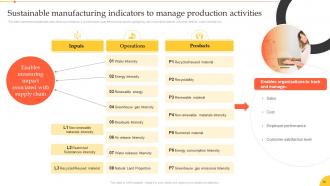
Slide 18: This slide represents sustainable manufacturing indicators.
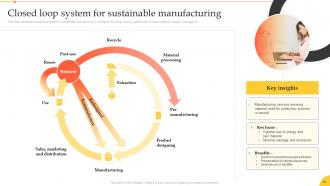
Slide 19: This slide represents closed loop system in sustainable manufacturing.
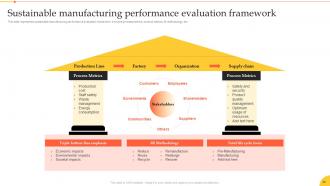
Slide 20: This slide represents sustainable manufacturing performance evaluation framework.
Slide 21: This slide exhibit table of content- Artificial intelligence (AI) in manufacturing.
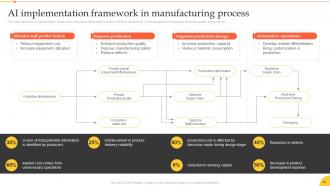
Slide 22: This slide represents AI implementation framework in the manufacturing process.
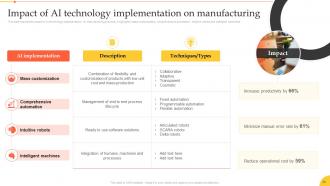
Slide 23: This slide represents impact of AI technology implementation on manufacturing process.
Slide 24: This slide exhibit table of content- Key smart manufacturing technologies.
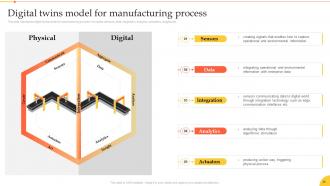
Slide 25: This slide represents digital twins model for manufacturing process.
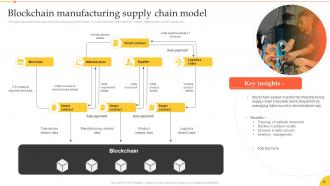
Slide 26: This slide represents blockchain manufacturing supply chain model.
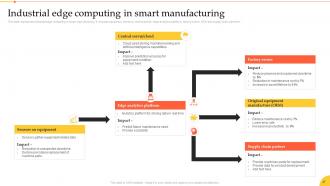
Slide 27: This slide represents industrial edge computing in smart manufacturing.
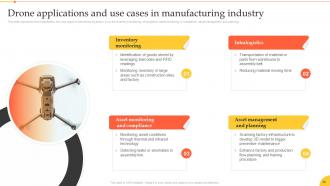
Slide 28: This slide represents drone application and use cases in manufacturing sector.
Slide 29: This slide exhibit table of content- IoT enabled smart manufacturing.
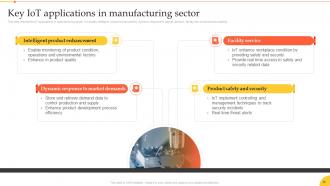
Slide 30: This slide represents IoT applications in manufacturing sector.
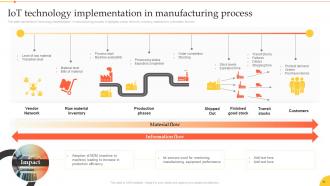
Slide 31: This slide represents IoT technology implementation in manufacturing process.
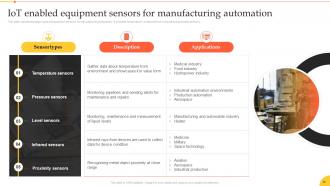
Slide 32: This slide represents major types of equipment sensors for manufacturing automation.
Slide 33: This slide exhibit table of content- Smart factory (Industry 4.0).
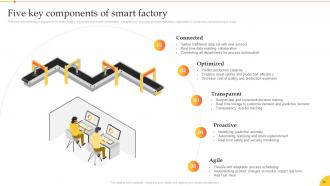
Slide 34: This slide represents key components for smart factory.
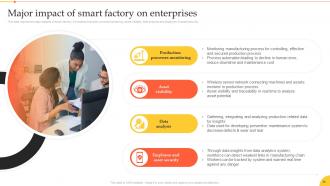
Slide 35: This slide represents major impacts of smart factory.
Slide 36: This slide exhibit table of content- Impact of coronavirus on smart manufacturing.
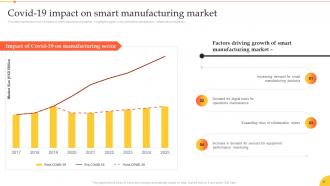
Slide 37: This slide represents covid-19 impact on smart manufacturing market.
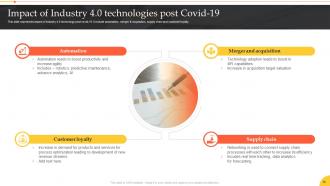
Slide 38: This slide represents impact of industry 4.0 technology post covid-19.
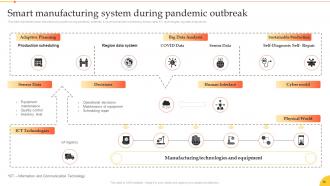
Slide 39: This slide represents smart manufacturing system during pandemic outbreak.
Slide 40: This slide exhibit table of content- Smart manufacturing team.
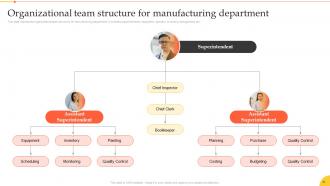
Slide 41: This slide represents organizational team structure for manufacturing department.
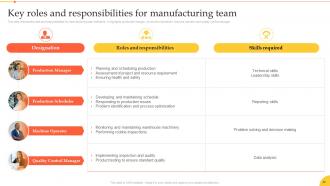
Slide 42: This slide represents roles and responsibilities for manufacturing team members.
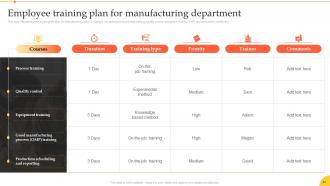
Slide 43: This slide represents training program plan for manufacturing team.
Slide 44: This slide exhibit table of content- Cost for smart manufacturing.
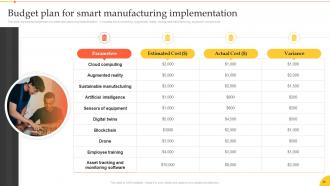
Slide 45: This slide represents budget plan for smart manufacturing implementation.
Slide 46: This slide exhibit table of content- Impact of smart manufacturing.
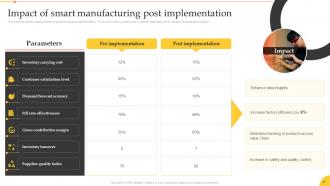
Slide 47: This slide represents impact of smart manufacturing post implementation.
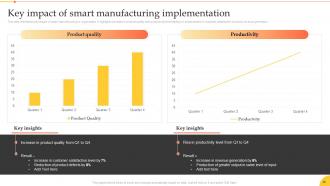
Slide 48: This slide represents key impact of smart manufacturing on organization.
Slide 49: This slide exhibit table of content- Dashboard.
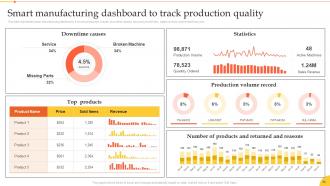
Slide 50: This slide represents smart manufacturing dashboard.
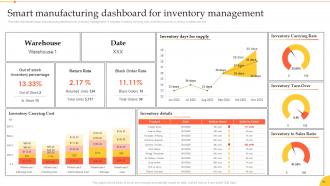
Slide 51: This slide represents smart manufacturing dashboard for inventory management.
Slide 52: This is the icons slide.
Slide 53: This slide presents title for additional slides.
Slide 54: This slide presents Magnifying glass.
Slide 55: This slide presents About us
Slide 56: This slide display Venn.
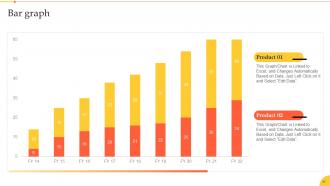
Slide 57: This slide display Bar graph.
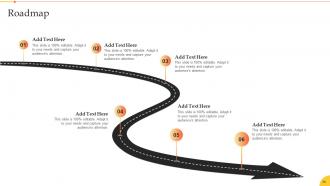
Slide 58: This slide display Roadmap.
Slide 59: This slide showcase 30 60 90 days plan.
Slide 60: This slide exhibit Timeline.
Slide 61: This slide display Our target.
Slide 62: This is thank you slide & contains contact details of company like office address, phone no., etc.
Implementation Of Smart Manufacturing Technologies Powerpoint Presentation Slides with all 67 slides:
Use our Implementation Of Smart Manufacturing Technologies Powerpoint Presentation Slides to effectively help you save your valuable time. They are readymade to fit into any presentation structure.









FAQs for Implementation Of Smart Manufacturing Technologies
IoT sensors are everywhere now - they grab real-time data from your equipment. Then you've got AI and machine learning handling predictive maintenance, which honestly saves tons of headaches down the road. Digital twins are cool too, basically virtual copies of your production setup. Robotics keep getting better, though some of the collaborative ones still freak me out a little. Cloud computing stores everything and edge computing processes stuff instantly on-site. Oh, and the edge thing is pretty crucial since you can't wait for cloud lag. I'd figure out your biggest problem first, then pick whichever tech fixes that.
So IoT connects your machines so they can actually talk to each other and share data in real time. Pretty cool stuff. You'll see everything happening on your floor - performance, energy use, quality issues. Honestly, the predictive maintenance feature is probably the biggest win since you can catch problems before stuff breaks down completely. Bottlenecks become way easier to spot and fix automatically. Your downtime drops, quality goes up, and decisions happen faster. I'd say start small though - just hook up a couple critical machines first and see what happens.
Dude, data analytics is like having x-ray vision for your supply chain. You can actually predict when demand's gonna spike and catch bottlenecks before they screw you over. The cool part? Real-time tracking shows you exactly where stuff gets stuck, so you can reroute shipments or tweak production schedules instantly. Way better than the old "pray everything works out" method we used to rely on. My buddy's company started by just linking their inventory to production data - honestly saved them so much stress with running out of stock or ordering way too much. Game changer.
Dude, AI is totally changing quality control right now. Computer vision can catch tiny defects that we'd never spot with our eyes. These systems inspect every single product - not just random samples - without slowing anything down. What's crazy is they get better over time since they learn from each defect they find. Plus there's predictive stuff that flags potential issues before they even happen. Honestly, the accuracy is getting insane. I'd say start with just one production line first though - see how it goes before going all in. Way less risk that way.
So robots are basically what makes smart manufacturing actually smart, you know? They handle all the precise stuff while automated systems do quality control. The AI part is crazy - machines can now predict when they'll break down before it even happens. Your operations run way smoother and more consistent than if people did everything manually. But here's the thing - it's not really about replacing workers anymore. More like robots take care of the boring repetitive tasks so your team can focus on the actual problem-solving and making things better. Pretty cool setup honestly.
Okay so basically smart manufacturing gives you live data on everything happening in your production line. You can catch problems instantly instead of finding out later when it's expensive to fix. The machines actually communicate with each other to optimize material use and energy - which honestly blows my mind every time I think about it. This cuts way down on overproduction and defects since the system predicts demand better. Raw material waste drops too. My advice? Figure out where you're bleeding money first, then add sensors and analytics to target those specific problem areas. Way more effective than trying to fix everything at once.
Honestly, integration is where most companies get burned - your old systems just weren't meant to play nice with smart tech. Costs blow up fast too. Then you've got the cybersecurity angle, which frankly scares the hell out of executives these days. Don't forget about retraining people since everything changes with automation. Oh, and good luck getting the C-suite to drop serious cash when they can't see immediate returns. I'd say try some small pilot projects first. Way easier to get approval, and you can actually show results before asking for the big budget.
Don't go crazy trying to automate everything right away - that's a recipe for disaster. Pick like one or two things that are really killing your time/budget and start there. IoT sensors are way cheaper than they used to be, and cloud stuff won't break the bank upfront. Actually, check if there are any local universities around - they love helping small businesses with this kind of project. My cousin's company did something similar last year. Focus on proving it actually saves you money before you expand. Those small wins add up fast.
Dude, smart manufacturing is gonna totally flip your workforce needs. You'll need way more tech people - folks who get IoT, can read data, fix automated stuff. Manual jobs? Those are shrinking fast. Programming and troubleshooting roles are exploding though. Honestly, the speed of this change is kinda nuts. Your current workers need constant reskilling or they're toast. Competition for these combo tech-manufacturing skills is fierce too. Here's my advice - start cross-training your team right now instead of panicking later trying to hire outsiders. Way cheaper, plus people actually appreciate when you invest in them instead of just replacing them.
So cyber-physical systems are pretty cool - they just slap sensors and smart controllers onto whatever machines you already have. No need to gut your whole setup. The sensors grab real-time data and feed it to software that can monitor everything and even auto-adjust stuff when needed. Honestly, I'd start small with just a few machines to see if it's worth the investment. Find your biggest pain points first - like where things always seem to break down or slow you up. That's where the real-time monitoring will actually move the needle.
Start with network segmentation - keep your OT stuff separate from IT networks so if something gets hit, it doesn't spread everywhere. Multi-factor authentication on everything, no exceptions. I get that nobody wants downtime for patches, but trust me, it's way better than dealing with ransomware later. Encrypt your data when it's moving around and when it's stored. Get some real-time monitoring set up to catch weird stuff early. Oh, and do a security audit first - sounds boring but it'll show you exactly where to spend your money instead of just guessing.
So basically, cloud computing lets you scale manufacturing up or down without dropping cash on expensive hardware upfront. Your teams can access real-time data from anywhere - super helpful when you're coordinating across different facilities. You'll be able to spin up production lines and run simulations on demand. The pay-as-you-go thing is nice too since you won't get stuck with huge infrastructure costs when demand tanks. Honestly, I'd start small - maybe move one process that isn't mission-critical to test it out first. See how it meshes with your current setup before going all-in.
Start by tracking what you've got now - production costs, downtime, quality rates, all that stuff. After you implement, measure the same things to see your actual ROI. Here's the annoying part though: the indirect benefits like faster decisions or happier customers are real but super hard to put numbers on. I'd go with a 3-5 year timeline since these benefits build on each other. Honestly, pilot projects are your best bet - way easier to prove it works on a small scale first. Then you can make the case for rolling it out everywhere without looking like an idiot if it flops.
Dude, smart manufacturing is crazy flexible now. Companies can literally make whatever customers want on demand - custom sneakers, personalized skincare, you name it. IoT sensors and AI let them switch up production lines super fast instead of making millions of identical products. Honestly, it's kind of amazing how they can chase micro-trends without going broke on customization costs. The whole "batch-of-one" thing is becoming huge. If you're designing stuff, maybe think about making it modular? That's where everything's headed anyway.
Dude, factories are gonna be insane in like 10 years. AI will handle production decisions in real-time, and predictive maintenance means machines fix themselves before breaking down. Mass customization becomes normal instead of this crazy expensive thing. Digital twins let you test entire production lines virtually - honestly blew my mind when I first saw it. Past all the Industry 4.0 hype, we're looking at sustainable manufacturing and humans working alongside AI more strategically. My advice? Don't go crazy trying to automate everything at once. Just pick one process and digitize that first.
-
SlideTeam was so customer-centric and quick service-provider that I doubted the amount I was paying and literally re-checked the transaction.
-
It saves your time and decrease your efforts in half.