


IoT In Manufacturing IT Powerpoint Presentation Slides




Try Before you Buy Download Free Sample Product
 Impress Your
 Audience
 100%
100% Editable
 Save Hours
 of Time


Discover information technologys IT vital role in the manufacturing industry through our comprehensive IoT in Manufacturing template. Our presentation highlights the transformative technologies employed in this sector to overcome production challenges. Explore the power of Automation Robotics, Artificial Intelligence AI, Explainable AI, and other cutting edge solutions driving innovation in manufacturing. Our AI in manufacturing deck covers a wide range of topics, including an introduction to the manufacturing industry and its key features. Additionally, it delves into the global market size, share, and expenditure in intelligent manufacturing. Our Smart manufacturing PPT also encompasses detailed information about the various applications, types, impacts, operational mechanisms, and safety measures of each technology utilized. Furthermore, it emphasizes cybersecuritys crucial role in intelligent manufacturing and includes a comprehensive 30 60 90 days plan and a training program to raise cybersecurity awareness among employees. Moreover, our IoT in Manufacturing module addresses training budgets and pricing considerations for implementing technologies and provides a timeline and roadmap for integrating IT in the manufacturing sector. Lastly, it also features an IoT powered predictive analytics dashboard to monitor and optimize manufacturing operations effectively. Get instant access.
People who downloaded this PowerPoint presentation also viewed the following :
Content of this Powerpoint Presentation
Slide 1: This slide introduces IoT in MANUFACTURING (IT). Commence by stating Your Company Name.
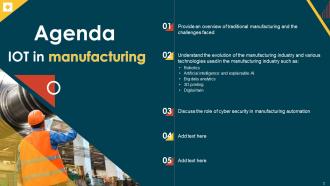
Slide 2: This slide depicts the Agenda of the presentation.
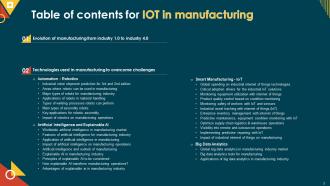
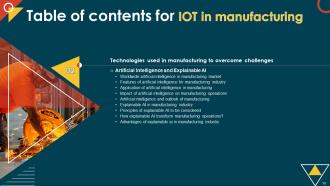
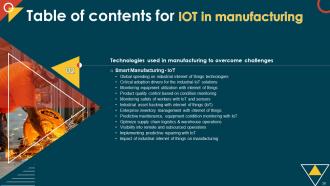
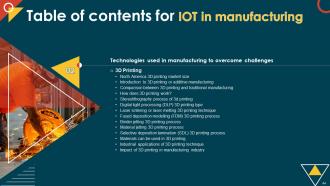
Slide 3: This slide includes the Table of contents.
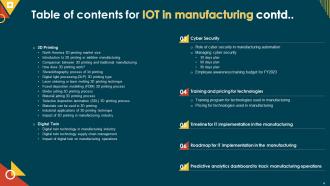
Slide 4: This slide continues the Table of contents.
Slide 5: This slide highlights the Title for the Topics to be covered further.
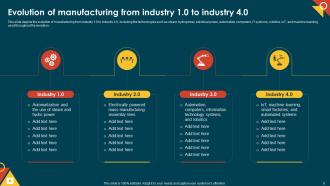
Slide 6: This slide depicts the evolution of manufacturing from industry 1.0 to industry 4.0.
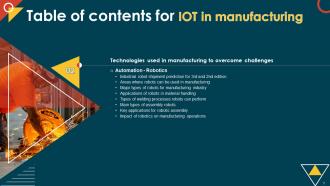
Slide 7: This slide includes the Heading for the Contents to be discussed next.
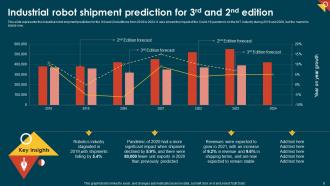
Slide 8: This slide represents the industrial robot shipment prediction for the 3rd and 2nd editions from 2018 to 2024.
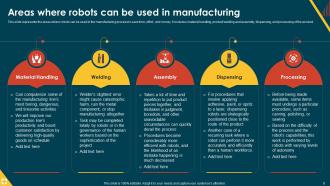
Slide 9: This slide reveals the Areas where robots can be used in manufacturing.
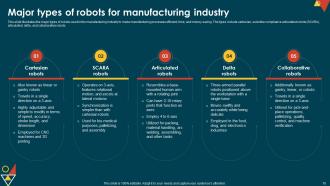
Slide 10: This slide illustrates the major types of robots used in the manufacturing industry.
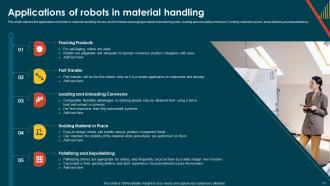
Slide 11: This slide outlines the applications of robots in material handling chores.
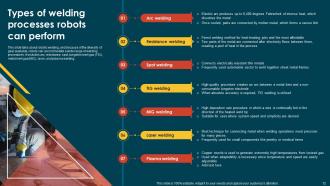
Slide 12: This slide states the Types of welding processes robots can perform.
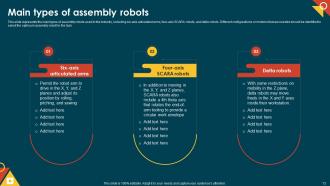
Slide 13: This slide exhibits the Main types of assembly robots.
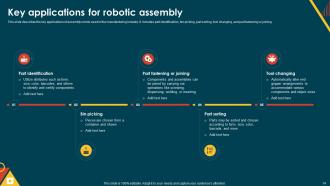
Slide 14: This slide describes the key applications of assembly robots used in the manufacturing industry.
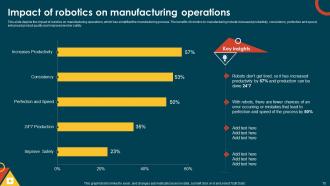
Slide 15: This slide highlights the Impact of robotics on manufacturing operations.
Slide 16: This slide includes the Title for the Ideas to be discussed further.
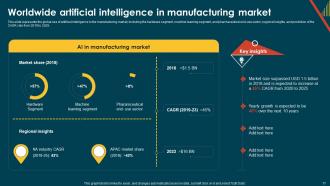
Slide 17: This slide represents the global use of artificial intelligence in the manufacturing market.
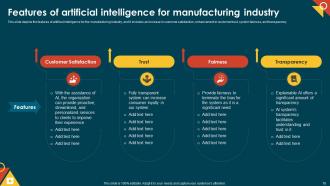
Slide 18: This slide depicts the features of artificial intelligence for the manufacturing industry.
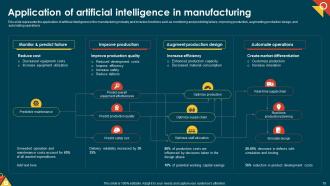
Slide 19: This slide displays the Application of artificial intelligence in manufacturing.
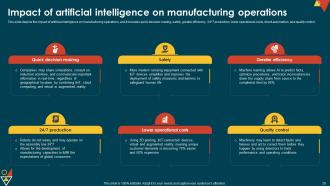
Slide 20: This slide depicts the impact of artificial intelligence on manufacturing operations.
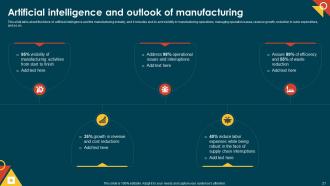
Slide 21: This slide talks about the future of artificial intelligence and the manufacturing industr.
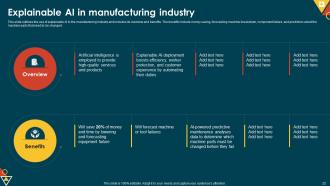
Slide 22: This slide outlines the use of explainable AI in the manufacturing industry and includes its overview and benefits.
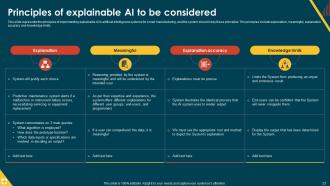
Slide 23: This slide represents the principles of implementing explainable AI in artificial intelligence systems.
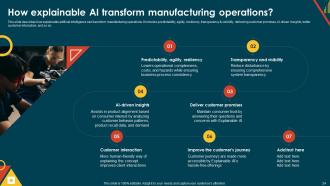
Slide 24: This slide describes how explainable artificial intelligence can transform manufacturing operations.
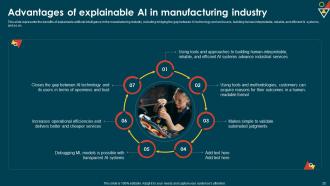
Slide 25: This slide represents the benefits of explainable artificial intelligence in the manufacturing industry.
Slide 26: This slide depicts the Heading for the Idaes to be covered further.
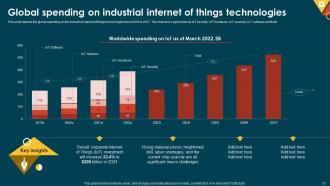
Slide 27: This slide shows the global spending on the industrial internet of things technologies from 2019 to 2027.
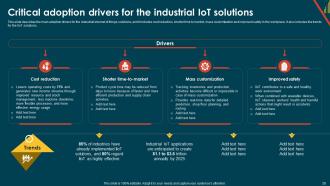
Slide 28: This slide describes the main adoption drivers for the industrial internet of things solutions.
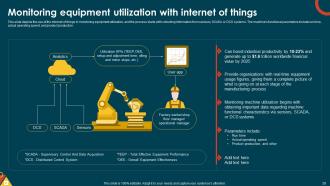
Slide 29: This slide depicts the use of the internet of things in monitoring equipment utilization.
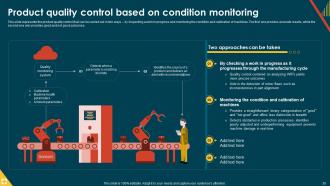
Slide 30: This slide represents the product quality control.
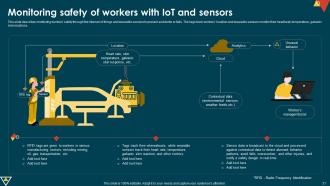
Slide 31: This slide describes monitoring workers’ safety through the internet of things and wearable sensors.
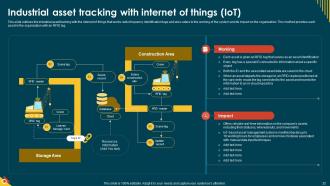
Slide 32: This slide outlines the industrial asset tracking with the internet of things.
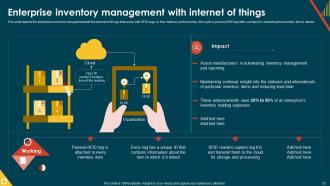
Slide 33: This slide portrays the enterprise inventory management with the internet of things that works with RFID tags.
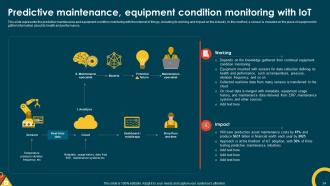
Slide 34: This slide represents the predictive maintenance and equipment condition monitoring with the internet of things.
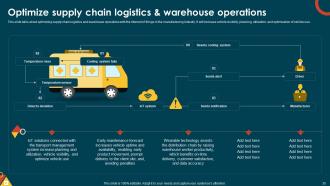
Slide 35: This slide talks about optimizing supply chain logistics and warehouse operations with the internet of things in the manufacturing industry.
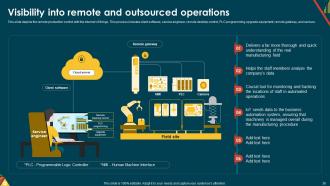
Slide 36: This slide depicts the remote production control with the internet of things.
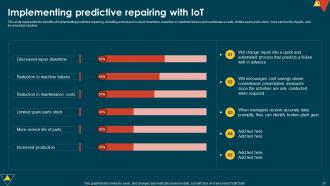
Slide 37: This slide focuses on Implementing predictive repairing with IoT.
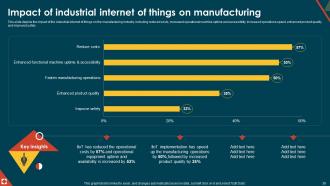
Slide 38: This slide depicts the impact of the industrial internet of things on the manufacturing industry.
Slide 39: This slide exhibits the Title for the Contents to be discussed in the upcoming template.
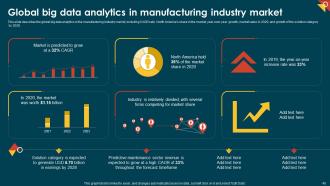
Slide 40: This slide describes the global big data analytics in the manufacturing industry market.
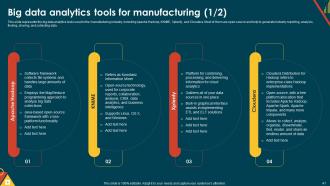
Slide 41: This slide represents the big data analytics tools used in the manufacturing industry.
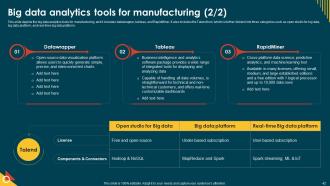
Slide 42: This slide continues the Big data analytics tools for manufacturing.
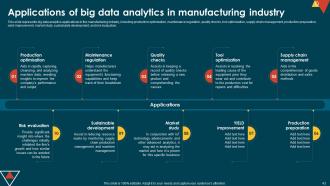
Slide 43: This slide reveals big data analytics applications in the manufacturing industry.
Slide 44: This slide highlights the Heading for the Topics to be covered in the next tempalte.
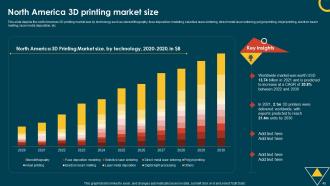
Slide 45: This slide depicts the north American 3D printing market size by technology.
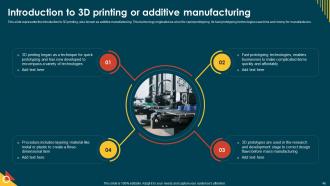
Slide 46: This slide represents the introduction to 3D printing, also known as additive manufacturing.
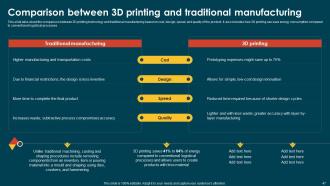
Slide 47: This slide talks about the comparison between 3D printing technology and traditional manufacturing.
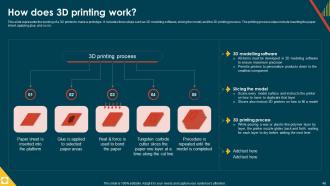
Slide 48: This slide shows the working of a 3D printer to make a prototype.
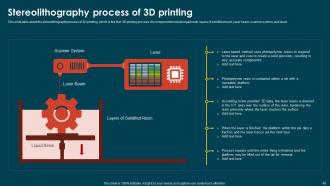
Slide 49: This slide talks about the stereolithography process of 3D printing, which is the first 3D printing process.
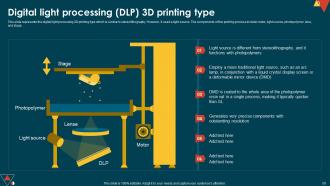
Slide 50: This slide presents the digital light processing 3D printing type which is similar to stereolithography.
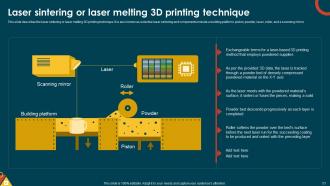
Slide 51: This slide describes the laser sintering or laser melting 3D printing technique.
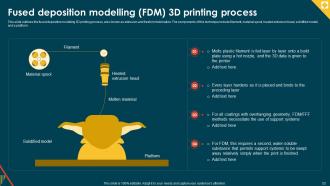
Slide 52: This slide outlines the fused deposition modeling 3D printing process, also known as extrusion and freeform fabrication.
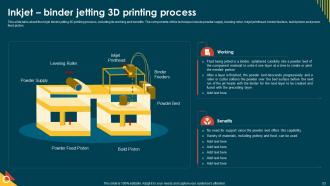
Slide 53: This slide talks about the inkjet binder jetting 3D printing process
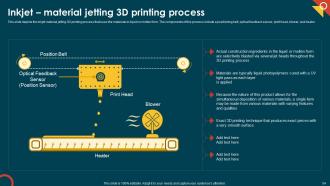
Slide 54: This slide depicts the inkjet material jetting 3D printing process that uses the materials in liquid or molten form.
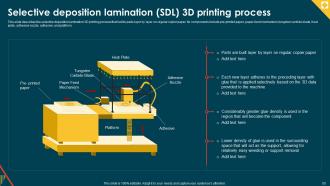
Slide 55: This slide describes the selective deposition lamination 3D printing process that builds parts layer by layer on regular copier paper.
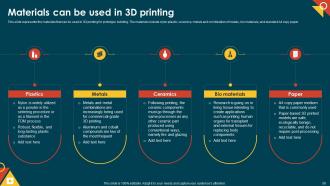
Slide 56: This slide highlights the materials that can be used in 3D printing for prototype building.
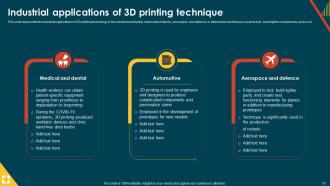
Slide 57: This slide represents the industrial applications of 3D printing technology.
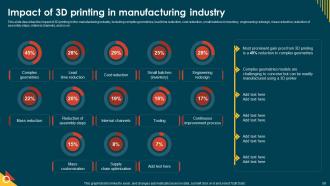
Slide 58: This slide describes the impact of 3D printing in the manufacturing industry.
Slide 59: This slide displays the Title for the Topics to be covered further.
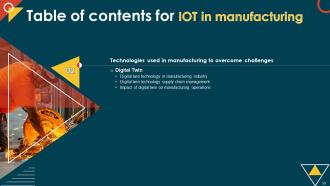
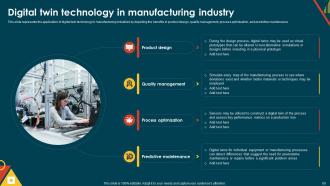
Slide 60: This slide represents the application of digital twin technology in manufacturing industries.
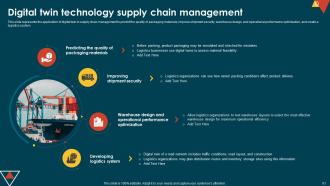
Slide 61: This slide portrays the application of digital twin in supply chain management.
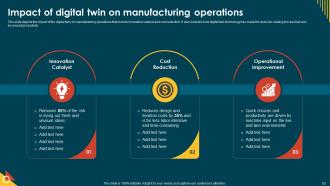
Slide 62: This slide depicts the impact of the digital twin on manufacturing operations that include innovation catalyst and cost reduction.
Slide 63: This slide includes the Heading for the Contents to be discussed in the upcoming template.
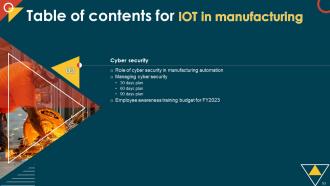
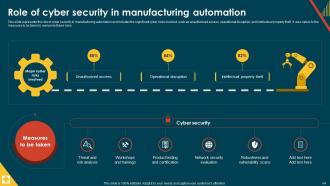
Slide 64: This slide represents the role of cyber security in manufacturing automation.
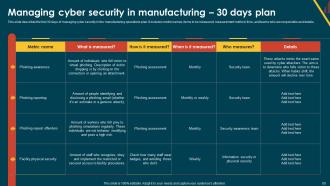
Slide 65: This slide describes the first 30 days of managing cyber security in the manufacturing operations plan.
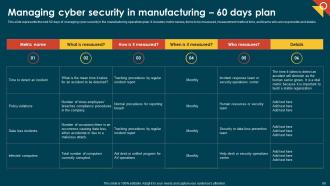
Slide 66: This slide delas with Managing cyber security in manufacturing – 60 days plan.
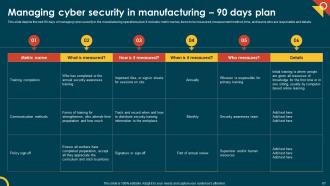
Slide 67: This slide depicts the next 90 days of managing cyber security in the manufacturing operations plan.
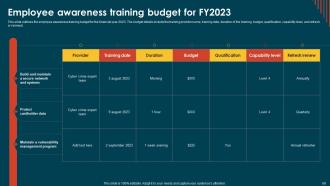
Slide 68: This slide outlines the employee awareness training budget for the financial year 2023.
Slide 69: This slide displays the Title for the Ideas to be covered in the next template.
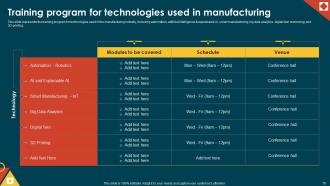
Slide 70: This slide represents the training program for technologies used in the manufacturing industry.
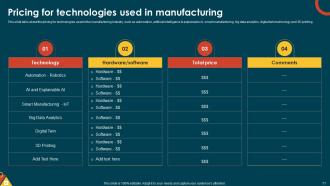
Slide 71: This slide talks about the pricing for technologies used in the manufacturing industry.
Slide 72: This slide contains the Heading for the Ideas to be discussed further.
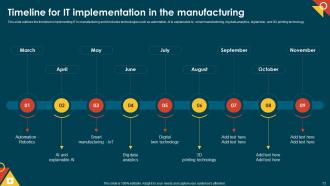
Slide 73: This slide outlines the timeline to implementing IT in manufacturing.
Slide 74: This slide exhibits the Title for the Contents to be covered next.
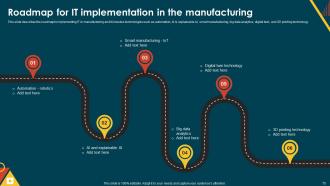
Slide 75: This slide describes the roadmap to implementing IT in manufacturing.
Slide 76: This slide displays the Heading for the Topics to be discussed further.
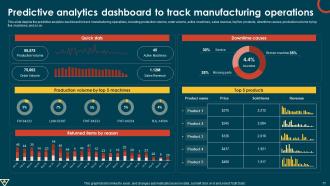
Slide 77: This slide depicts the predictive analytics dashboard to track manufacturing operations.
Slide 78: This is the Icons slide containing all the Icons used in the plan.
Slide 79: This slide depicts some Additional information.
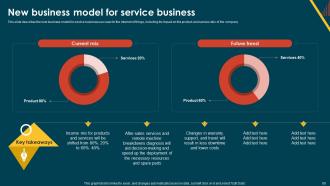
Slide 80: This slide describes the new business model for service business use case for the internet of things.
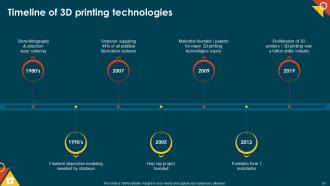
Slide 81: This slide presents the Timeline of 3D printing technologies.
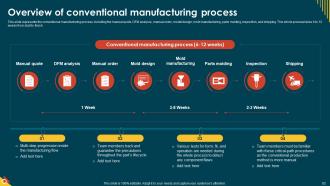
Slide 82: This slide states the conventional manufacturing process.
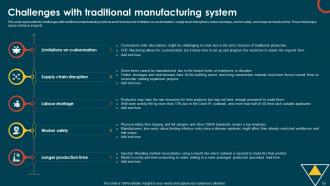
Slide 83: This slide exhibits the Challenges with traditional manufacturing system.
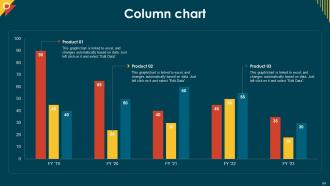
Slide 84: This is the Column chart slide.
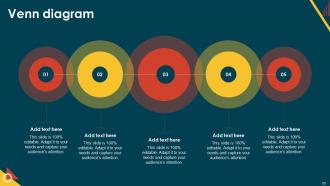
Slide 85: This slide elucidates the Venn diagram.
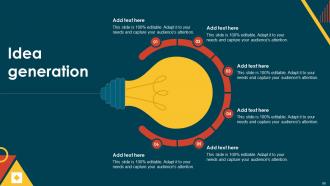
Slide 86: This is the Idea generation slide for encouraging fresh ideas.
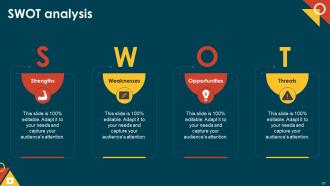
Slide 87: This slide displays the SWOT analysis.
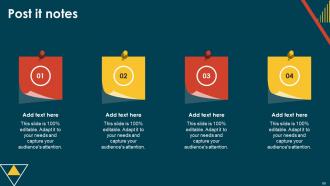
Slide 88: This slide contains the Post it notes for reminders and deadlines.
Slide 89: This is the 30 60 90 days plan slide for effective planning.
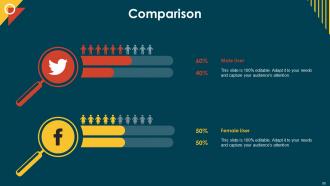
Slide 90: This slide is used for the purpose of Comparison.
Slide 91: This is the Quotes sldie for motivation.
Slide 92: This slide showcases the company's targets.
Slide 93: This is the Thank You slide for acknowledgement.
IoT In Manufacturing IT Powerpoint Presentation Slides with all 98 slides:
Use our IoT In Manufacturing IT Powerpoint Presentation Slides to effectively help you save your valuable time. They are readymade to fit into any presentation structure.







FAQs for IoT In Manufacturing IT
You can monitor everything in real-time, which is huge. Predictive maintenance will save you so much money by catching problems early - way before they turn into disasters. Quality control gets crazy good with all that continuous data flowing in. Honestly, the supply chain optimization alone makes it worth it. Production becomes way more efficient since you'll spot bottlenecks right away and fix them fast. Safety monitoring improves too, though that's kinda obvious. My advice? Test it on just one line first. Prove it works, then expand from there.
Honestly, IoT is pretty amazing for supply chains. You get real-time tracking of everything - where your stuff is, what condition it's in (temp, humidity, whatever matters). No more calling around hoping someone actually knows where your shipment is, which used to drive me crazy. Bottlenecks get spotted early so you can reroute automatically. The data helps predict delays and optimize routes too. My advice? Start with your priciest or most critical components first - that's where you'll actually see the money come back fast.
So predictive maintenance is where you stick sensors on your equipment to catch problems before they actually break down. Way better than waiting for stuff to fail or doing maintenance you don't really need yet. The sensors pick up vibrations, temps, oil conditions - whatever's relevant for that machine. Pretty wild how spot-on the predictions get honestly. Most places see 30-50% less downtime and cut maintenance costs big time. My advice? Don't try to do everything at once. Just grab your most important machine first and prove it works - then you'll have the data to justify rolling it out everywhere else.
Smart sensors throughout your plant will show you exactly where energy gets wasted - and trust me, there's always more waste than you think. Real-time monitoring catches machines running idle, HVAC systems working overtime, stuff like that. The data's pretty detailed so you can spot inefficiencies fast. Set up automated shutoffs for equipment that doesn't need to be on 24/7. Focus on your biggest energy hogs first since that's where you'll see the most savings. It's basically like having eyes on everything that uses power in your facility.
Ugh, IoT security is such a mess honestly. Most of these industrial devices ship with terrible default passwords that nobody bothers changing. Half of them don't even encrypt data when sending it around your network. Firmware updates? Good luck - manufacturers basically abandon these things after launch. The real problem is you're connecting equipment that was never built with hackers in mind. Authentication is usually garbage too, so attackers can waltz right in and mess with your operations. First thing - change those default logins and stick all IoT stuff on its own network, separate from anything critical.
Honestly, just work with whatever ERP or MES you've already got. Most of them play nice with AWS IoT or Azure through APIs anyway. Here's what I'd do - start with one production line, not the whole factory. Map your IoT streams into workflows you're already using instead of creating some separate system (I've watched that disaster unfold before). You'll definitely want middleware to clean up the data first. Otherwise your main systems get hammered with random sensor garbage. Focus on whatever's costing you the most money right now, prove it works, then expand from there.
Honestly, most places jump into predictive maintenance first - sensors on equipment to catch failures before they wreck your day. Pretty solid ROI there. Asset tracking's huge too, you can see where everything is in real-time. Quality monitoring's another big one. Then there's supply chain stuff where you track materials moving through your whole operation. Energy management systems are cool for cutting power costs. Oh, and safety apps - like environmental sensors or wearables for workers. Start with predictive maintenance though. Way easier to prove it's worth the money, and your boss will actually see results fast.
So basically you put these sensors all over your production line and they're constantly feeding data back - machine temps, vibration levels, quality metrics, all that stuff. Real-time dashboards show you everything happening right now instead of finding out about problems way too late. Honestly, the visibility is night and day compared to walking around checking things manually. When sensors pick up something weird, the system can automatically adjust machine speeds or send maintenance alerts. My advice? Don't go crazy trying to sensor everything at once - just start with whatever's giving you the biggest headaches right now.
Honestly, IoT sensors catch defects right away instead of you finding them later during final inspection - which is such a pain. Real-time monitoring of temperatures, timing, all that critical stuff means instant alerts when things go sideways. Plus the data shows you patterns in quality issues, so you're actually fixing what's causing problems rather than just dealing with symptoms over and over. Oh, and definitely start with whatever your most important quality metrics are first. Don't try to monitor everything at once or you'll just overwhelm yourself with data.
So edge computing moves your data processing right onto the factory floor instead of shipping everything to the cloud. Response times are crazy fast - milliseconds vs seconds, which matters big time for quality control stuff. Your systems won't crash if the internet goes down either (and yeah, that definitely still happens). Downside? You'll need beefier hardware at each spot, but honestly the speed boost makes it worth it. I'd start with whatever processes need the fastest reactions - those are your obvious wins for edge setup.
Honestly, IoT is pretty sweet for this stuff. You get real-time data on everything - inventory, machines, the whole deal. So when demand suddenly shifts (which it always does, right?), you can actually react quickly instead of scrambling. Connected sensors help you catch problems before they blow up. Plus you can automate production changes and even predict customer trends from all that data flowing in. My advice? Don't go crazy at first. Just pick one line, throw some basic sensors on it, and see what happens. Build it up slowly from there.
Honestly, AI and machine learning are game-changers - they actually make sense of all that sensor data instead of leaving you drowning in spreadsheets. Edge computing is where it's at because you're processing everything right there on the factory floor. No waiting around for responses. Digital twins are pretty sweet too - basically virtual copies of your equipment so you can test stuff without potentially breaking expensive machinery. Cloud platforms handle the storage and number-crunching side of things, plus 5G gives you that speed boost for real-time operations. My advice? Pick one area where you're already gathering data and just add some basic analytics to start.
Here's the thing - once your IoT devices start talking to each other, you cut out so many delays. Real-time data flows between machines about production status, quality issues, maintenance needs. Your conveyor belt slows down automatically when packaging gets backed up. Sensors trigger maintenance before stuff breaks. Honestly, it's pretty satisfying to watch everything just... work together? You'll catch problems early instead of always scrambling to fix disasters. The workflow optimization happens by itself, which is huge. I'd say start small though - connect maybe 2-3 systems first so you can actually see the difference.
Honestly, you don't need to be some coding genius for IoT stuff in manufacturing. Basic data analysis is key though - plus knowing how sensor networks work and cloud platforms. Problem-solving matters way more than people think since you're constantly figuring out weird data patterns. Communication skills are huge too because you'll be explaining techy insights to different teams who probably don't care about the details. I'd start with Tableau or Power BI courses - those visualization tools are everywhere in IoT dashboards. Critical thinking beats technical wizardry most days.
Dude, it's like having a crystal ball for your factory. All your machines are pumping out data constantly - performance stuff, quality checks, when something's about to break down. Honestly gets a bit crazy at first with all the info coming at you. But you can actually see problems coming weeks ahead instead of just reacting when stuff hits the fan. Production bottlenecks become obvious. You'll schedule things based on real demand, not just whatever worked last year. My advice? Pick one line to test it on first, then expand once you've figured out what actually matters.
-
“Thank you to the SlideTeam. Your presentations look really skillful and have made my life so much easier.”
-
Eye-catching PPT designs, outstanding team, and best customer service. I’m a super satisfied customer here!