


IoT In Manufacturing Industry Powerpoint Presentation Slides IoT CD V




Try Before you Buy Download Free Sample Product
 Impress Your
 Audience
 100%
100% Editable
 Save Hours
 of Time


Introducing our comprehensive IoT in Manufacturing Industry template, expertly curated to cater to the manufacturing industrys IoT needs. It enables companies to harness the power of the Internet of Things IoT to automate processes, optimize production, and reduce labour costs. Our Industrial Internet of Things IIoT deck covers a wide range of crucial topics, including an overview of IoT in manufacturing, industrial IoT market insights, emerging manufacturing trends, etc. Moreover, it explores the concept of Industry 4.0 within manufacturing, highlighting current trends and presenting the benefits and challenges associated with implementing IoT solutions. Additionally, our IoT manufacturing components PPT offers valuable insights into the integration of IoT within manufacturing processes. It explores the role of IoT in intelligent factories, showcases various IoT applications, and provides compelling use cases specifically tailored for machine builders. Furthermore, our IoT manufacturing applications module delves into the exponential value creation opportunities that IoT presents and the key challenges that can hinder its widespread adoption. Lastly, it highlights prominent IoT chip manufacturing companies and features real world case studies that demonstrate successful IoT implementation in the manufacturing sector. Get instant access.
People who downloaded this PowerPoint presentation also viewed the following :
Content of this Powerpoint Presentation
Slide 1: This slide introduces IoT in Manufacturing Industry. Commence by stating Your Company Name.
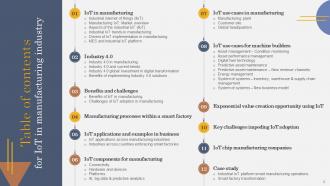
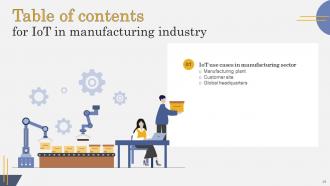
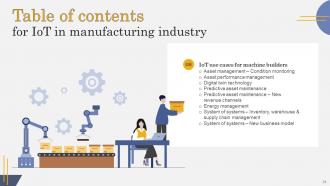
Slide 2: This slide includes the Table of contents.
Slide 3: This slide highlights the Title for the Topics to be covered further.
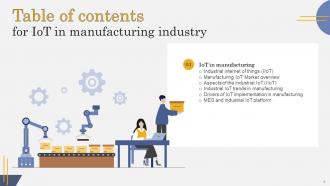
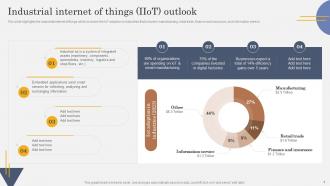
Slide 4: This slide reevals the Industrial internet of things (IIoT) outlook.
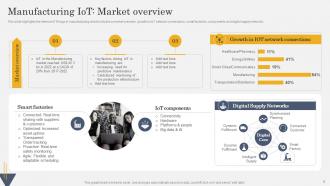
Slide 5: This slide showcases the Internet of Things in manufacturing.
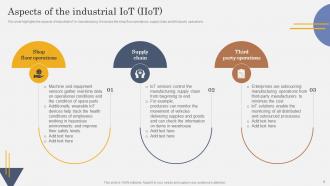
Slide 6: This slide portrays the aspects of industrial IoT in manufacturing.
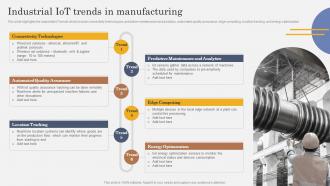
Slide 7: This slide highlights the industrial IoT trends.
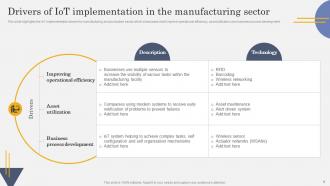
Slide 8: This slide reveals the IoT implementation drivers for manufacturing and production sector.
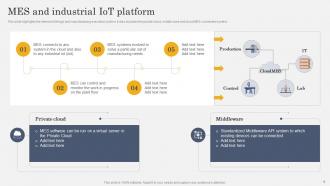
Slide 9: This slide depicts the MES and industrial IoT platform.
Slide 10: This slide shows the Heading for the Contents to be discussed next.
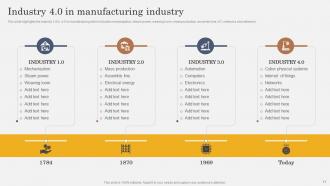
Slide 11: This slide highlights the industry 1.0 to 4.0 in manufacturing.
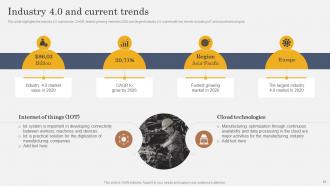
Slide 12: This slide presents the Industry 4.0 and current trends.
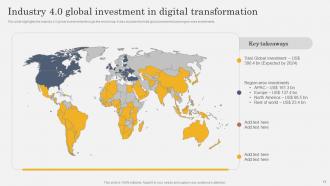
Slide 13: This slide shows the industry 4.0 global investments through the world map.
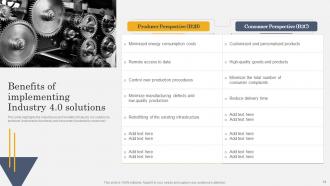
Slide 14: This slide exhibits the Benefits of implementing Industry 4.0 solutions.
Slide 15: This slide includes the Title for the Ideas to be covered in the upcoming template.
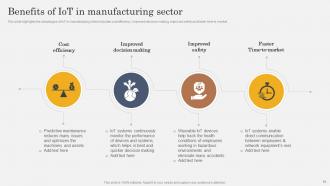
Slide 16: This slide states the Benefits of IoT in manufacturing sector.
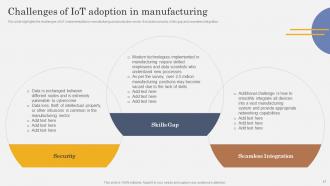
Slide 17: This slide showcases the Challenges of IoT adoption in manufacturing.
Slide 18: This slide portrays the Heading for the Ideas to be discussed next.
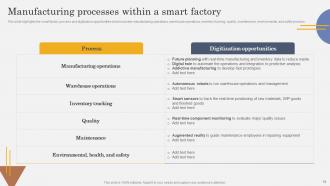
Slide 19: This slide talks about the Manufacturing processes within a smart factory.
Slide 20: This slide contains the Title for the Contents to be covered in the upcoming template.
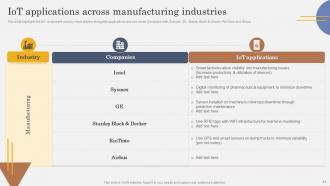
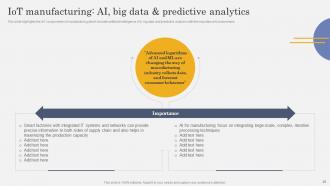
Slide 21: This slide highlights the IoT component used by major players along with applications and use cases.
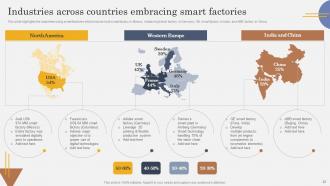
Slide 22: This slide shows the Industries across countries embracing smart factories.
Slide 23: This slide exhibits the Heading for the Topics to be further discussed.
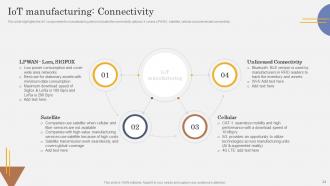
Slide 24: This slide highlights the IoT components for manufacturing which includes the connectivity options.
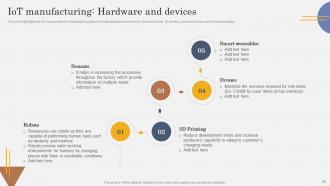
Slide 25: This slide reveals the IoT components for manufacturing which includes hardware and devices.
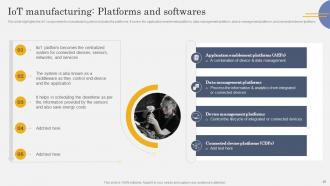
Slide 26: This slide shows the IoT components for manufacturing which includes the platforms.
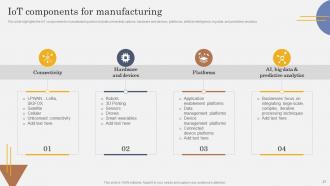
Slide 27: This slide portrays the IoT components for manufacturing.
Slide 28: This slide highlights the IoT components of manufacturing.
Slide 29: This slide displays the Title for the Topics to be covered next.
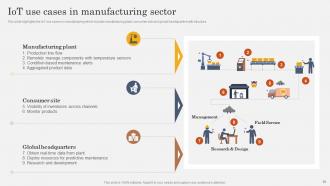
Slide 30: This slide talks about the IoT use cases in manufacturing sector.
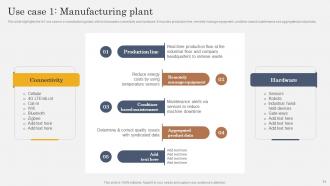
Slide 31: This slide reveals the IoT use case in a manufacturing plant, which showcases connectivity and hardware.
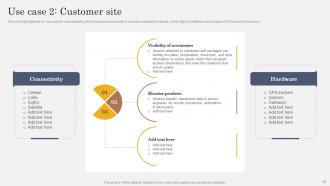
Slide 32: This slide highlights the IoT use case for manufacturing which includes customer site.
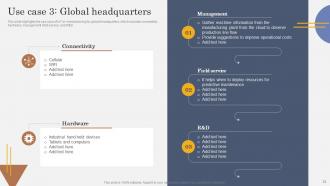
Slide 33: This slide shows the use case of IoT in manufacturing for global headquarters.
Slide 34: This slide includes the Heading for the Contents to be discussed further.
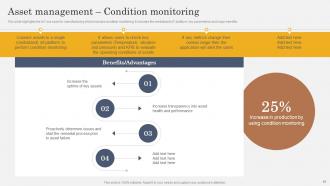
Slide 35: This slide states the IoT use case for manufacturing which includes condition monitoring.
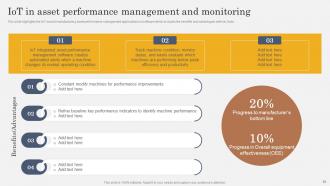
Slide 36: This slide highlights the IoT-based manufacturing asset performance management applications or software.
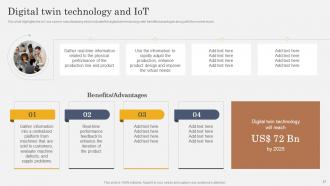
Slide 37: This slide talks about Digital twin technology and IoT.
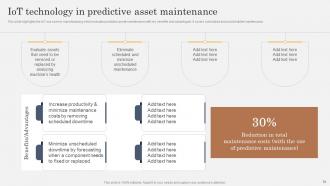
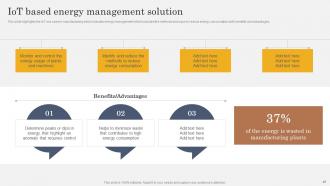
Slide 38: This slide highlights the IoT use case in manufacturing which includes predictive asset maintenance with key benefits and advantages.
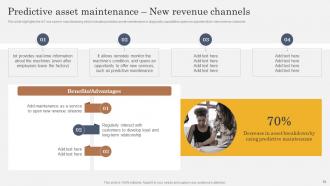
Slide 39: This slide shows the IoT use case in manufacturing .
Slide 40: This slide portrays the IoT use case in manufacturing.
Slide 41: This slide outlines the IoT use case in manufacturing.
Slide 42: This slide highlights the IoT use case in manufacturing.
Slide 43: This slide includes the Title for the Ideas to be covered next.
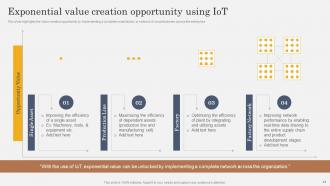
Slide 44: This slide states the Exponential value creation opportunity using IoT.
Slide 45: This slide indicates the Heading for the Ideas to be discussed in the upcoming template.
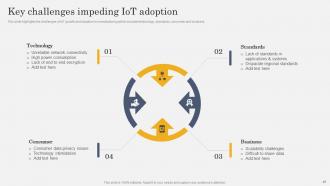
Slide 46: This slide depicts the Key challenges impeding IoT adoption.
Slide 47: This slide contains the Title for the Contents to be discussed further.
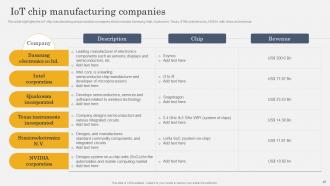
Slide 48: This slide highlights the IoT chip manufacturing and production companies.
Slide 49: This slide shows the Heading for the Topics to be covered in the next template.
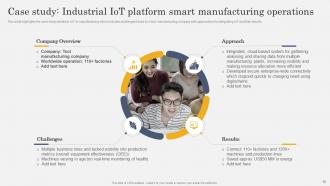
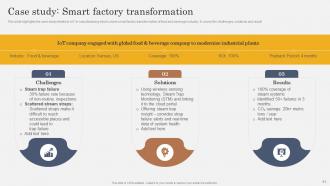
Slide 50: This slide reveals the case study related to IoT in manufacturing. Add text here
Slide 51: This slide highlights the case study related to IoT in manufacturing.
Slide 52: This is the Icons slide containing all teh Icons used in the plan.
Slide 53: This slide is used for depicting some Additional information.
Slide 54: This is the About us slide. State your company-related ifnormation here.
Slide 55: This slide incorporates the organization's mission, vision, and goals.
Slide 56: This is Meet our team slide. State your team-related ifnromation here.
Slide 57: This is the 30 60 90 Days plan slide for effective planning.
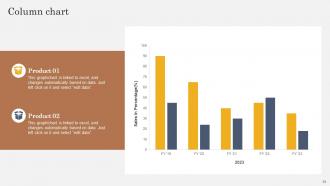
Slide 58: This is the Column chart slide.
Slide 59: This slide exhibits the firm's Timeline.
Slide 60: This is the Venn diagram slide.
Slide 61: This is the Thank You slide for acknowledgement.
IoT In Manufacturing Industry Powerpoint Presentation Slides IoT CD V with all 66 slides:
Use our IoT In Manufacturing Industry Powerpoint Presentation Slides IoT CD V to effectively help you save your valuable time. They are readymade to fit into any presentation structure.









FAQs for IoT In Manufacturing Industry Powerpoint Presentation Slides
Dude, the monitoring alone is worth it - you'll catch issues before they blow up your whole operation. Predictive maintenance saves serious money. Better visibility into production lines, energy optimization, way less downtime. The analytics will show you inefficiencies you had no clue about, which honestly blew my mind when I first saw it happen. Quality control gets better too since sensors spot defects way faster than people can. Oh, and definitely start with just one line first - prove it works before you go crazy with it. Much smarter approach.
Dude, IoT is a game changer - you get real-time visibility into your whole factory floor. Machines actually tell you when they're gonna break down, so no more surprise downtime eating your budget. Quality issues? Bottlenecks? You'll know instantly instead of finding out way too late. Honestly, it's wild having that much insight into everything happening at once. All that data helps you cut waste and optimize workflows too. Just don't go crazy trying to connect every single machine right away - start with your most critical equipment first.
So you're drowning in all that sensor data from your machines, right? Analytics basically helps you make sense of it all - temperature readings, vibration patterns, production rates, the whole mess. Without it, you'd never spot when equipment's about to fail or find those hidden bottlenecks slowing everything down. Honestly, predictive maintenance alone saves most companies a fortune. My advice? Don't try analyzing everything at once or you'll go crazy. Pick one thing first, like tracking downtime, then build from there. Raw data means nothing until you turn it into something you can actually act on.
Basically you stick IoT sensors on your machines to track vibration, temp, pressure - all that stuff. The cool part is setting up models that crunch this data and actually predict when something's gonna break. Honestly, once you get enough data flowing, the accuracy is nuts. No more waiting for catastrophic failures or doing maintenance "just because." You're fixing things right when they need it. Way less downtime, and you'll save a ton on unnecessary repairs. Oh, and definitely start with whatever equipment would screw you over most if it died.
Ugh, IoT security in manufacturing is such a mess honestly. All these connected devices weren't designed with security as priority one - especially older equipment that's now getting sensors slapped on. Weak passwords, no encryption, and good luck getting regular updates on half this stuff. Every new connected machine becomes another way for hackers to wiggle into your whole network. The attack surface gets massive fast. Oh and legacy systems are the absolute worst for this. Start with segmenting your network and actually knowing what devices you have before adding more chaos.
Honestly, IoT is pretty sweet for supply chain stuff. You get live tracking on everything - raw materials, finished products, the works. Temperature and humidity monitoring for anything fragile, plus instant alerts when things go sideways. Way better than playing phone tag with suppliers all day (though I still end up doing that sometimes anyway). The sensors basically create this connected web between all your warehouses and logistics partners. My advice? Don't go crazy right away. Pick one important route first and prove it works before you blow your budget on sensors everywhere.
Temperature, vibration, and pressure sensors are huge right now - they're on basically every piece of equipment tracking health issues. Smart cameras handle quality control and spot defects. RFID tags track your inventory as it moves around. The sensor thing has gotten pretty crazy honestly. Everything's connected now and reporting back data. You've got machines telling you their own performance stats, plus environmental monitors checking air quality and humidity levels. If you're just starting out, go with equipment monitoring first. That's where you'll see the biggest payback since it prevents those surprise breakdowns that kill your schedule.
Start super small - just throw some basic sensors on your most critical machines to track temps and uptime. Don't go crazy with a whole factory makeover or anything. Honestly, the best bang for your buck is just predicting when stuff's gonna break before it actually does. Target whatever's driving you nuts first - maybe it's random downtime or your energy bills are insane. Cloud platforms are pretty sweet since you only pay as you grow, so no massive upfront costs. Most pilot programs run under a grand these days. Pick one production line, show it works, then roll it out. That's what I'd do anyway.
Dude, IoT is a game-changer for cutting energy waste in manufacturing. You get real-time data showing exactly where you're bleeding power - machines, HVAC, everything. Smart sensors automatically dial things back during peak hours and kill idle equipment. Honestly, you won't believe how much stuff runs for no reason until you see the numbers. Schedule production around cheaper utility rates, catch energy hogs before they wreck your budget. My advice? Start monitoring your biggest power drains first - that's where you'll actually see results fast.
So basically, IoT sensors let you watch everything happening in real-time. When temps or pressure go wonky, you get alerts right away instead of finding out later when products are already messed up. Way less waste that way. I'd start with just monitoring a few key spots - don't go crazy trying to sensor everything at once. The data builds up over time and you can actually use it to make your whole process better. It's honestly pretty cool having that kind of visibility, like you've got a bird's eye view of the entire operation.
Edge computing's about to blow up - factories are cramming processing power right onto the floor so decisions happen instantly without waiting for the cloud. Predictive maintenance is getting weirdly good at catching failures before they hit. Digital twins are finally doing real work instead of just being buzzwords. Once 5G really takes off, you can ditch those nightmare cable runs and go full wireless sensors. Honestly, the craziest part will be when your whole supply chain talks to itself - production shifts automatically based on what suppliers and customers are doing. Figure out where you'd want predictive analytics first.
So most companies bake the compliance stuff right into their IoT design from the start - way easier than retrofitting later. You'll want solid encryption, access controls, and automated audit trails since regulators love their paper trails. Different industries have their own headaches though - FDA for pharma, OSHA for safety, etc. Smart manufacturers set up real-time monitoring so the devices actually catch violations as they happen instead of finding out during some stressful audit. Honestly, I'd start by figuring out exactly which regs hit your situation first, then build your whole IoT setup around those requirements.
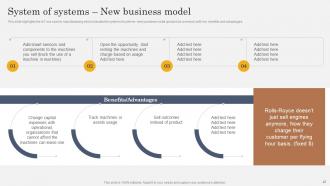
So a bunch of big companies are crushing it with IoT stuff. GE put sensors on jet engines and cut downtime by 20% - pretty solid. BMW tracks everything in real-time on their production lines, dropped defects by 30%. Siemens saved crazy money just optimizing energy at their factories. Oh and Rolls-Royce does this insane thing now where they don't even sell engines anymore - airlines just pay per flight hour instead. Wild business model honestly. If you're just starting out though, I'd go with predictive maintenance first. Easiest way to show it actually works.
Your team goes from fixing stuff after it breaks to actually preventing problems - way better honestly. Data analysts become super important while you need fewer regular maintenance people. The learning curve's real though, won't sugarcoat that. Most jobs just change instead of vanishing completely. Your floor workers who've been there forever? They're gold because they get what the numbers mean in practice. I'd start training your current people on this stuff now rather than scrambling to hire later. Way easier that route.
So you'll want to get comfortable with reading dashboards and spotting trends in data - that's like half the job right there. Programming helps but isn't always mandatory. The real trick is learning to separate the important signals from all the noise IoT systems throw at you. Problem-solving becomes huge because there's just so much information coming at you constantly. Honestly? The learning curve feels intense initially, but people pick it up way quicker than they think they will. I'd focus on analytical thinking and getting used to digital interfaces first - those two things alone will set you up pretty well.
-
Eye-catching PPT designs, outstanding team, and best customer service. I’m a super satisfied customer here!
-
Editable templates with innovative design and color combination.