

Internet of things iot powerpoint presentation slides complete deck




Try Before you Buy Download Free Sample Product
 Impress Your
 Audience
 100%
100% Editable
 Save Hours
 of Time


SlideTeam's internet of things templates can help you get started with your own IoT presentations. With our easy-to-use tools, you can create slides that showcase the potential of this rapidly growing technology. Plus, our professionally designed templates will save you time and ensure that your presentation looks great. So download our IoT templates today and start creating powerful IoT presentations that will inspire your audience.
People who downloaded this PowerPoint presentation also viewed the following :
Content of this Powerpoint Presentation
Slide 1: This is the cover slide of Internet of Things IOT Overview PowerPoint Presentation
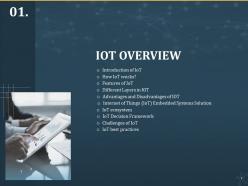
Slide 2: This is the Table of Content slide that lists out all the essential elements covered in the deck.
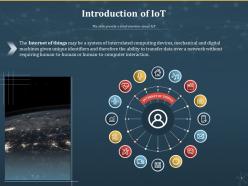
Slide 3: The slide provide a brief overview about IoT
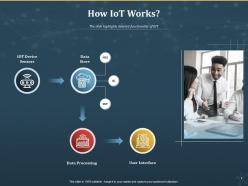
Slide 4: The slide highlights detailed functionality of IOT
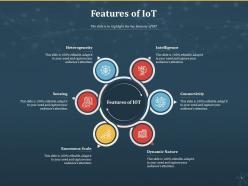
Slide 5: The slide is to highlight the key features of IOT
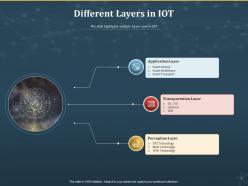
Slide 6: The slide highlights multiple layers used in IOT
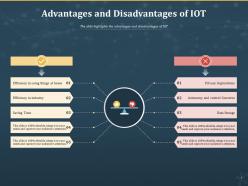
Slide 7: The slide highlights the advantages and disadvantages of IOT
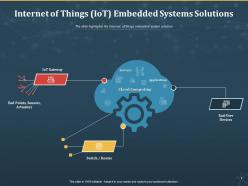
Slide 8: The slide highlights the Internet of things embedded system solution
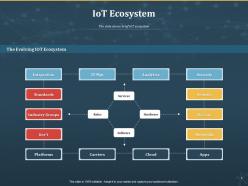
Slide 9: The slide shows brief IoT ecosystem
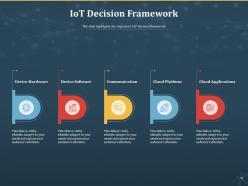
Slide 10: The slide highlights the important IoT decision framework
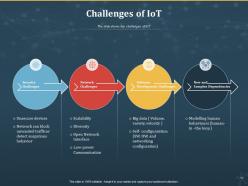
Slide 11: The slide shows key challenges of IoT
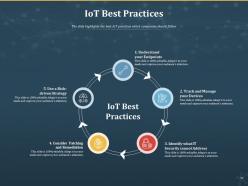
Slide 12: The slide highlights the best IoT practices which companies should follow.
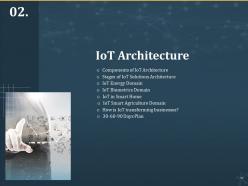
Slide 13: This slide presents IoT Architecture.
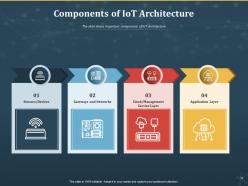
Slide 14: The slide shows important components of IoT Architecture
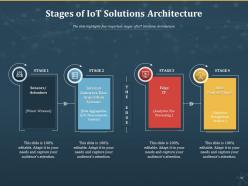
Slide 15: The slide highlights four important stages of IoT Solutions Architecture
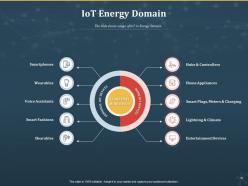
Slide 16: The slide shows usage of IoT in Energy Domain
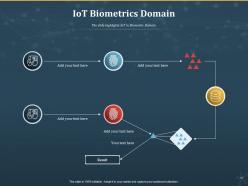
Slide 17: The slide highlights IoT in Biometric Domain
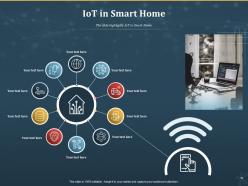
Slide 18: The slide highlights IoT in Smart Home
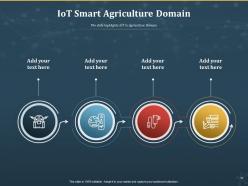
Slide 19: The slide highlights IoT in Agriculture Domain
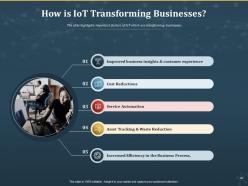
Slide 20: The slide highlights important factors of IoT which are transforming businesses
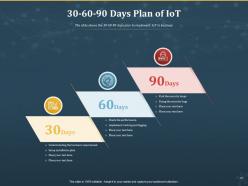
Slide 21: The slide shows the 30-60-90 days plan to implement IoT in business
Slide 22: This slide presents IoT Devices.
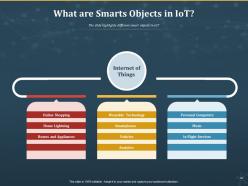
Slide 23: The slide highlights different smart objects in IoT
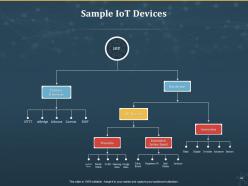
Slide 24: This slide showcases sample IoT Devices in the form of a chart.
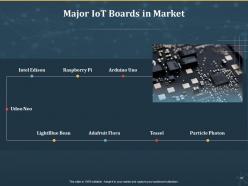
Slide 25: This slide presents Major IoT Boards in the market.
Slide 26: This slide presents IoT Platforms.
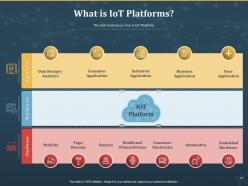
Slide 27: The slide brief about what is IoT Platforms
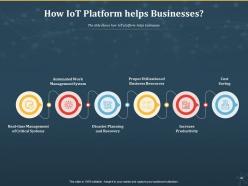
Slide 28: The slide highlights important factors of IoT which are transforming businesses
Slide 29: This slide presents communication in IoT
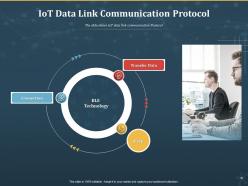
Slide 30: The slide shows IoT data link communication Protocol
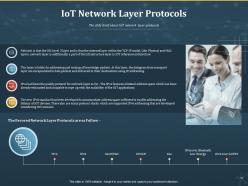
Slide 31: The slide brief about IoT network layer protocols
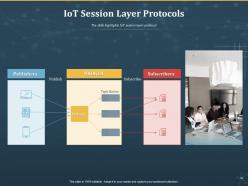
Slide 32: The slide highlights IoT session layer protocol
Slide 33: This slide presents security in IoT.
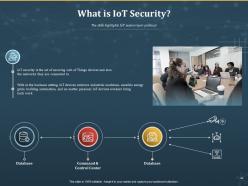
Slide 34: The slide highlights brief introduction about IoT security
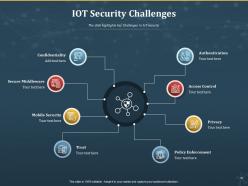
Slide 35: The slide highlights key Challenges in IoT security
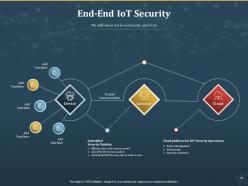
Slide 36: The slide shows end to end security plan in Iot
Slide 37: This is an Icon slide. Use it as per your needs.
Slide 38: This is an Additional Slide
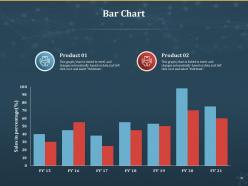
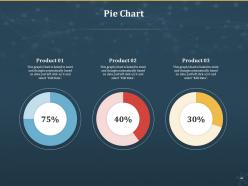
Slide 39: This is a Bar Chart slide that can be used to compare different elements.
Slide 40: This is Our Mission slide to state your mission and vision.
Slide 41: This is About Us slide that can be used to give a brief overivew of your company.
Slide 42: This is GOALS slide. State your goals, aspirations etc. here.
Slide 43: This is a Blub Or Idea image slide to present innovative/ creative aspects.
Slide 44: This is a Timeline slide that can be used to present chronological sequence of events.
Slide 45: This is Target image slide to present product/ entity, information etc.
Slide 46: This is a Quotes slide that can be used to present quotes.
Slide 47: This is a Thank You slide for acknowledgment. You can share your contact details here.
Internet of things iot powerpoint presentation slides complete deck with all 48 slides:
Use our Internet Of Things IOT Powerpoint Presentation Slides Complete Deck to effectively help you save your valuable time. They are readymade to fit into any presentation structure.






FAQs for Internet of things iot powerpoint presentation
So IoT basically has four pieces you gotta think about. Your devices and sensors grab the data - like those smart thermostats everyone's obsessed with. WiFi, Bluetooth, cellular networks move everything around. Cloud platforms crunch all the numbers and make sense of it. Then you've got your apps where people actually see what's happening. Security's the thing that ties it all together, but honestly most people don't think about it until they get hacked. My advice? Sketch out these four parts before you start picking specific gadgets or whatever.
Honestly, IoT is a game changer for manufacturing. Real-time data from your factory floor means you'll catch machine issues before they become expensive breakdowns. Production bottlenecks become obvious immediately instead of being this mysterious thing you discover later. Quality monitoring happens continuously too. The amount of waste you can cut just from having all that sensor data flowing in is wild - like, your equipment literally tells you when something's running weird. Oh, and definitely start with just one production line first. Don't go crazy and try to do everything at once.
Honestly, IoT security is pretty sketchy right now. Most devices ship with terrible default passwords that nobody bothers changing. Updates? Good luck with that - half these companies abandon support after like a year. Plus the data usually isn't even encrypted, so anyone can snoop on it. Here's what actually works: change those default passwords immediately, set up network segmentation so your smart toaster can't access your laptop, and encrypt everything you can. Oh, and try to buy from companies that don't suck at security updates. Those massive botnets you hear about? Yeah, they're mostly just hijacked cameras and routers with default credentials.
So basically IoT turns cities into these massive data collection systems, but like, actually useful ones. Sensors get embedded everywhere - traffic lights, parking spots, air quality stuff, even trash cans. All that info flows back to city planners in real time. Traffic gets optimized, energy waste drops, problems get caught early. What's really cool is cities can now predict when things'll break instead of just reacting. Honestly, smart parking seems like the easiest starting point if you're doing urban work - way better than trying to revolutionize everything at once.
Dude, IoT is basically taking over healthcare in the best way. You've got remote monitors tracking vitals from home, smart insulin pumps adjusting doses automatically, even fitness trackers catching weird heartbeats. Hospitals are using sensors for equipment monitoring too. There's this smart pill bottle thing that bugs patients about meds and tattles to doctors - honestly pretty genius. The real magic happens when all that data gets crunched to catch problems early. Oh, and if your org is thinking about jumping in? Remote monitoring's usually the easiest place to start.
So your IoT devices basically talk through different protocols depending on what you're building. WiFi and cellular handle the internet stuff, while Bluetooth, Zigbee, or LoRaWAN work for device-to-device chatter. Most send data to cloud platforms using REST APIs or MQTT messaging - honestly MQTT's amazing for battery-powered sensors since it's so lightweight. You can also set up local mesh networks before data goes upstream. The trick is picking the right combo for your range and power requirements. Oh, and figure out early if you need real-time updates or if occasional data batches work fine.
So edge computing moves processing closer to your IoT devices rather than sending everything to far-off cloud servers. Latency drops massively - milliseconds vs seconds for critical stuff. Factory sensors can instantly react to equipment problems, autonomous cars make split-second safety decisions without waiting for cloud responses. Bandwidth costs go down too since you're not constantly streaming raw data everywhere. Honestly, it just makes your whole IoT setup way more reliable and snappy. I'd say look at which use cases need real-time processing first - those are your best bets for edge deployment.
So basically you'd set up IoT sensors everywhere - equipment, customer areas, whatever. Feed all that data into ML models to spot patterns ahead of time. Like temperature sensors catching HVAC issues before they break, or tracking foot traffic to predict what you'll need in stock. But honestly, the data quality matters way more than people think - crappy sensors give you crappy predictions. These things catch stuff we'd totally miss otherwise. I'd start with something simple like maintenance alerts for one type of machine, then scale up once you can show it's actually saving money.
Honestly, the biggest problem is that nobody reads those privacy policies (guilty as charged). Your smart thermostat is probably collecting way more than just temperature data. Companies bury the real details in terms of service that are like 50 pages long. You can't actually control what they're doing with your info, and good luck trying to delete it later. The scary part? All these devices basically create this huge surveillance network without people even realizing. I'd say check what's connected to your network every few months. Also try to find devices that let you opt in instead of automatically sharing everything.
B2B IoT is all about making businesses run better - factory sensors tracking machine health, supply chain stuff, that kind of thing. Way more expensive and complex though. Consumer IoT? That's your Fitbit or smart home gadgets. Here's what matters: businesses obsess over ROI and whether it'll mesh with their current systems. Regular people just want it to work out of the box without reading a manual. B2B sales take forever too - like months of meetings and demos. Plus they're paranoid about security, which honestly makes sense when you're protecting industrial equipment. Bottom line: are you fixing a business headache or making daily life smoother?
So IoT's kinda all over the place environmentally. Smart thermostats can cut your energy use by like 15-20%, which is awesome. But then you've got billions of these little sensors everywhere with super short lifespans - they break or become obsolete fast and just pile up in landfills. Manufacturing all this stuff creates a massive footprint too. Honestly, the energy consumption from keeping everything connected adds up quick. My take? Focus on IoT stuff that actually saves resources long-term and try to buy devices that'll last more than two years.
Dude, IoT is like giving your supply chain x-ray vision. Smart sensors track everything in real-time - your inventory, shipments, equipment, all of it. GPS monitors keep food at the right temp, RFID tags update stock automatically so you don't have to count by hand (thank god). All that data hits your system instantly, so you catch delays early and fix equipment before it breaks. Honestly, the route optimization alone is pretty sick. Companies are saving 10-20% because they actually know what's happening. I'd start with just your most important shipments first though.
Dude, 5G is going to completely flip IoT on its head. Response times drop to milliseconds - no more lag driving you crazy. The crazy part? It handles like a million devices per square kilometer, so those massive sensor networks you've been dreaming about actually become doable. Data speeds obviously get way faster too. Edge computing finally makes real sense since you can process stuff right where your devices are instead of sending everything to the cloud. Honestly feels like we've been waiting forever for this. You should probably start thinking about how to build 5G into your architecture now.
Honestly, IoT stuff can really help your business run smoother and save money. Remote equipment monitoring is a game changer - plus you get real-time inventory tracking and can automate basic things like lights or AC. The data you'll collect is incredibly useful for spotting trends you'd miss otherwise. Yeah, the initial investment feels steep, but simple sensors pay for themselves fast through energy savings alone. Oh, and preventing equipment breakdowns before they happen. I'd start with something basic like smart thermostats or security cams, then build from there once you see results.
So basically edge computing is pushing more stuff directly onto devices, which is pretty cool. 5G's making connections way faster obviously. AI is getting built right into IoT hardware now instead of being separate. Security is finally getting attention - took long enough honestly, since you can't just slap it on later. Industrial IoT is exploding and cities are putting sensors literally everywhere. Oh and platforms are getting more standardized which makes our lives easier as developers. My take? Start messing around with edge AI now because that's where the money's gonna be.
-
It saves your time and decrease your efforts in half.
-
Great quality product.
-
Nice and innovative design.
-
Very unique, user-friendly presentation interface.