


Iot in smart home internet of things iot ppt powerpoint presentation deck




Try Before you Buy Download Free Sample Product
 Impress Your
 Audience
 100%
100% Editable
 Save Hours
 of Time


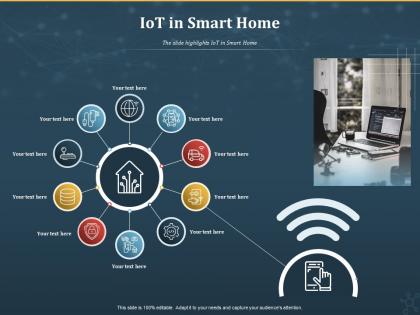
The slide highlights IoT in Smart Home.
People who downloaded this PowerPoint presentation also viewed the following :
Iot in smart home internet of things iot ppt powerpoint presentation deck with all 2 slides:
Use our IoT In Smart Home Internet Of Things IOT Ppt Powerpoint Presentation Deck to effectively help you save your valuable time. They are readymade to fit into any presentation structure.
FAQs for Iot in smart home internet of things iot ppt
So you need a few main things - smart devices obviously, some kind of central hub, and solid wifi. I'd start with basics like a smart thermostat, lights, maybe door locks and cameras. Sensors are honestly where it gets really cool though, they're what make everything actually respond to you. Something like SmartThings or Alexa acts as your brain that connects everything. Then you set up automations - like lights turning on when you walk in, or AC adjusting when you leave. Oh and stick with one brand ecosystem at first, mixing gets messy fast.
Honestly, these smart home gadgets can really help with your electric bill. My neighbor got a smart thermostat last year and it learns when you're home vs away, so it's not cranking the AC for nobody. Smart plugs are clutch too - they'll shut off your TV and random stuff that just sits there draining power. The real game-changer though? You can actually see which appliances are eating up electricity instead of just guessing. Smart lights will dim themselves or turn off in empty rooms. I'd start with the thermostat first since heating/cooling is usually your biggest expense anyway.
Honestly, smart home security is kind of a mess right now. Most IoT devices come with terrible default passwords that nobody bothers changing - hackers love this stuff. Your data's often sent without encryption, plus these gadgets barely ever get security updates. Each connected device is basically another way for someone to break in. Oh, and they're collecting tons of info about when you're home, what you do, all that personal stuff. First thing I'd do? Change those default passwords and maybe set up a separate wifi network just for your smart devices. It's annoying but worth it.
So most smart home stuff talks through WiFi, Bluetooth, or these protocols called Zigbee and Z-Wave. They connect to a hub or straight to your router. Zigbee's actually pretty solid - uses less power and doesn't drop connections as much. But man, there are way too many different standards out there. You'll want to check if your devices can actually talk to each other before you buy them. I learned that the hard way when my smart switches couldn't connect to my thermostat. Such a pain when nothing works together.
So basically AI is what makes your smart home actually learn your habits instead of just being fancy light switches you control from your phone. It figures out when you get home, what temperature you like, usual routines - then just does it automatically. Takes a while to get good though, maybe a few weeks? The energy savings are honestly pretty nice on your electric bill. Plus it can spot weird activity for security stuff. I'd say give it at least a month to really dial in your patterns before judging if it's worth it.
Honestly, first thing I'd do is set up a separate network just for your smart stuff - keeps it away from your laptop and phone. Change those awful default passwords right away, they're usually something ridiculous like "admin123." Turn on two-factor auth if you can. I hate doing firmware updates but you really should stay on top of them. Oh, and definitely dig into those app settings to see what data they're hoarding. Before buying anything new though, do some quick research on the company - some brands are way worse than others about selling your info.
Alexa and Google Home are basically everywhere now, plus Nest thermostats are huge. Ring doorbells pretty much own that whole market. Smart lights and locks are super common too - oh and robot vacuums, though honestly I think they're kinda overrated? Smart plugs are great to start with since they're cheap and work with anything. Security cameras are big business right now. If you're just getting into this stuff, I'd grab a smart speaker first and maybe some basic plugs to see how you like it before dropping serious cash on the expensive gear.
Honestly, IoT stuff has gotten pretty solid for home security. Smart cameras, doorbells, and motion sensors all sync up and ping your phone instantly when something's happening. The AI is actually decent now too - it won't spam you every time your cat walks by like the old systems used to. You can set up automatic responses, like lights flicking on when someone approaches or doors locking themselves at night. My neighbor started with just a video doorbell and ended up adding more sensors after seeing how useful it was. That's probably your best bet to start - doorbell cameras are super easy to install and you'll get hooked on the convenience pretty quick.
Honestly, smart home stuff can cut your bills by like 10-25%. Smart thermostats are the real MVP - they'll save you around 15% on heating and cooling just by learning your schedule. My insurance company actually gives me a discount for having leak sensors and security stuff, which is cool I guess. Speaking of leaks, those sensors are clutch. My coworker's basement flooded last year and cost him 8 grand to fix. Smart lights help too since they don't waste power when you're not home. Most people break even in 2-3 years, so it's worth starting with a thermostat.
Yeah, smart homes are definitely boosting property values - like 3-5% more than regular houses. Buyers under 40 basically expect automated lighting and security systems now. It's wild how fast things changed. Properties with tech features sell quicker too since they look good in photos and attract younger buyers with money. My neighbor just added some basic smart stuff before listing and got multiple offers. Short sales, better prices - the whole deal. If you're selling anytime soon, throwing in some IoT features could really pay off.
Ugh, the protocol mess is the worst part. Your Zigbee stuff won't talk to Z-Wave devices, and WiFi things just do their own thing. Manufacturers are super annoying about this - like Philips Hue being weird with Samsung hubs unless you mess around with settings. When cloud services crash, everything breaks. I learned that the hard way last month. Firmware updates randomly kill things that worked perfectly before too. Honestly? Get Matter-certified devices if you can, or buy a decent hub that handles multiple protocols. Saves so much frustration.
Honestly, the interface makes or breaks whether you'll actually use your smart home stuff. I've seen so many people buy fancy gadgets that just sit there because the app is terrible. You don't want to juggle like five different apps just to turn on your lights - that's ridiculous. Look for systems that put everything in one place and actually make sense when you're using them. Voice control is great, but the mobile app better be solid too. My biggest tip? Play around with whatever system you're considering first. Some of these interfaces are shockingly bad, even from big companies.
Honestly, the AI stuff is getting crazy good - your house will just learn what you do without any setup. Voice control won't be just "turn on lights" anymore, you'll actually have conversations with your home. Everything's moving to edge computing so no more waiting around for responses from the cloud. Different brands are finally starting to play nice together (thank god). Your Samsung stuff can actually work with Google devices now. Oh, and homes will automatically handle energy usage to save you money. If you're upgrading soon, definitely look into Matter-compatible devices. Trust me on that one.
Honestly, IoT stuff has been a game-changer for cutting down on waste at home. My smart thermostat figured out my weird schedule and stopped heating an empty house - that alone saved me like 20% on my electric bill. Those smart water sensors are clutch too, they'll catch leaks way before you'd notice. Real-time energy tracking through connected appliances is wild - you don't realize how much power your old fridge is sucking down until you see the actual numbers. Motion-sensor lights and smart plugs handle all that phantom energy drain from stuff on standby. Start with maybe a thermostat and one other thing, then add more as you see what works.
So basically your smart home stuff relies on cloud computing to do all the hard work - like your thermostat collecting data, then the cloud figures out your schedule patterns and sends back the optimal settings. It's what lets your devices actually communicate with each other too, which is pretty cool when you think about it. You can control everything remotely because of this setup. But here's the catch - if your wifi craps out, half your "smart" features become useless. Honestly, I'd keep some manual backups for important stuff just in case. Reliable internet is key.
-
Great designs, really helpful.