


Internet of things trends




Try Before you Buy Download Free Sample Product
 Impress Your
 Audience
 100%
100% Editable
 Save Hours
 of Time


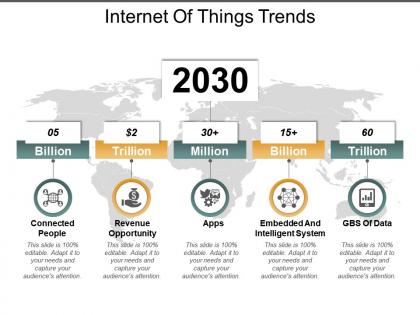
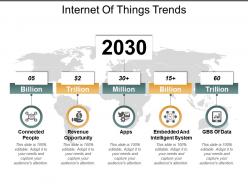
Introducing the Internet Of Things Trends PowerPoint presentation. Using our big data PPT slide you can illustrate the course of the Internet of Things in recent years. This IoT cloud PowerPoint layout can help you to demonstrate the various sectors where IoT is impacting our lives globally and also our businesses. The five areas where IoT trends can be identified can be showcased using this statistically equipped digital technology PPT theme. The edge of the things technology is reflected in fields like application development, connecting people, generating revenue opportunities and embedding interrelated computing devices which can be discussed efficiently with your clients using our automation IoT PowerPoint slide. This cloud computing PPT presentation can help you in evaluating and forecasting the sections where IoT can be applied to boost the institution’s performance. Hence download our automation PPT layout to keep your company updated with the technological advancement of the internet in numerous areas.
People who downloaded this PowerPoint presentation also viewed the following :
Content of this Powerpoint Presentation
Description:
The image displays a PowerPoint slide titled "Internet Of Things Trends," projecting significant projected statistics for the year 2030. Each statistic is associated with an icon that represents a different aspect of the Internet of Things (IoT):
1. Connected People (05 Billion):
Represented by an icon of interconnected human figures, indicating that 5 billion people will be connected through IoT devices.
2. Revenue Opportunity ($2 Trillion):
Shown with a dollar sign symbol, suggesting a massive revenue opportunity amounting to $2 trillion from IoT.
3. Apps (30+ Million):
Depicted by a mobile app icon, indicating the development of over 30 million IoT-related applications.
4. Embedded And Intelligent System (15+ Billion):
Illustrated with a cog and network icon, pointing to more than 15 billion embedded and intelligent systems in use.
5. GBS Of Data (60 Trillion):
Accompanied by a bar chart icon, highlighting the immense volume of data, measured in gigabytes, expected to be generated by IoT.
Use Cases:
Given the overarching impact of IoT, here are seven industries where insights from this slide would be particularly relevant:
1. Telecommunications:
Use: Planning for network expansion to support IoT devices.
Presenter: Network Strategy Director.
Audience: Telecom Engineers, Executives.
2. Consumer Electronics:
Use: Forecasting product development for IoT-connected devices.
Presenter: Product Development Manager.
Audience: R&D Teams, Marketing Specialists.
3. Automotive:
Use: Integrating IoT for connected vehicles and smart transportation.
Presenter: Automotive Technology Officer.
Audience: Vehicle Designers, Tech Partners.
4. Healthcare:
Use: Expanding IoT use in remote patient monitoring and health devices.
Presenter: Healthcare Innovation Lead.
Audience: Medical Device Manufacturers, Healthcare Providers.
5. Smart Home Technology:
Use: Designing IoT applications for home automation.
Presenter: Smart Home Solutions Architect.
Audience: Home Builders, Electronic Retailers.
6. Industrial Automation:
Use: Leveraging IoT for efficient factory operations and machinery.
Presenter: Industrial Systems Engineer.
Audience: Plant Managers, Automation Technicians.
7. Urban Planning and Smart Cities:
Use: Implementing IoT in the development of smart city infrastructures.
Presenter: Urban Technology Planner.
Audience: City Officials, Infrastructure Developers.
Internet of things trends with all 5 slides:
Make comprehension a certainty with our Internet Of Things Trends. Nothing will go over people's heads.
FAQs for Internet
So the main stuff to keep an eye on - edge computing is huge because you're processing data right on the device instead of sending it all to the cloud. Way faster. 5G is obviously changing everything for real-time apps. AI integration is getting pretty wild too, like predictive maintenance that actually works. Digital twins are everywhere now (basically virtual copies of physical systems). Security mesh is becoming a must-have since old-school perimeter security is kinda useless at this point. Honestly, I'd dig into whichever ones might mess with your current projects first.
Dude, IoT devices are getting crazy smart now. Instead of just collecting data, they're actually analyzing it right on the device. Your thermostat learns your schedule and adjusts itself. Security cameras can tell the difference between your Amazon guy and some sketchy person - all without sending footage to the cloud first. Edge computing is the big thing here. Devices make instant decisions instead of waiting around for servers to respond. Honestly, the processing power packed into these tiny things is kind of insane. Next time you're picking IoT stuff, go for the AI-enabled ones. You'll definitely notice the difference.
Honestly, security is what's holding back IoT from really taking off. Companies won't roll out connected devices because they're terrified of breaches - and rightfully so. Each new device is basically another door for hackers to walk through. Healthcare and industrial places are especially paranoid about this stuff, which makes sense since a hack there could be devastating. My cousin works in tech and says they literally spend more on security than the actual IoT features now. Kinda backwards but that's where we're at. If you're thinking about IoT, plan your security budget first.
So basically, cities are going nuts with IoT sensors everywhere now. Traffic lights adjust automatically when there's congestion, waste bins tell workers when they're full, and air quality monitors help you figure out if it's safe to run outside. Water leaks get caught instantly, parking apps show open spots, streetlights dim when nobody's around - honestly the whole thing is pretty wild. The biggest win? Problems get fixed before they turn into disasters. Oh and you should see how fast those smart parking systems work, way better than driving around aimlessly for 20 minutes like we used to.
Ugh, the protocol mess is brutal - everyone's got their own thing going. Zigbee here, WiFi there, some random proprietary stuff that locks you in completely. Data formats are all over the place too, so good luck getting things to actually talk to each other. Security's another headache since every device handles auth differently. Honestly? I'd go with vendors pushing Matter early on (way less pain later). Also maybe pad your timeline because integration always takes like 3x longer than you think it will. Trust me on that one.
So basically you collect real-time data on how people actually use your stuff - like smart displays that change based on who's looking at them, or appliances that text you helpful tips. The data gets super detailed, which is cool but also kinda nuts tbh. Your products can automatically reorder parts or remind customers about maintenance before stuff breaks. I'd honestly start with just one touchpoint though - don't try to do everything at once. The whole point is solving real problems, not just hoarding data because you can.
Dude, 5G is a game changer for IoT stuff. Way faster speeds and almost zero lag - we're talking milliseconds here. Plus you can connect a crazy amount of devices without everything crashing. Remote surgery becomes actually feasible when there's no delay, and cars can finally chat with each other in real time. Coverage is still kinda hit or miss depending where you live, but it's getting better. Honestly, if you're doing any IoT projects, build in 5G compatibility now. Trust me, you don't want to be that guy retrofitting everything later.
So basically IoT lets you see everything happening in your supply chain as it happens. Sensors go on trucks, warehouse equipment, factory machines - whatever you need tracked. The data you get is actually pretty insane. Your costs drop because fewer things catch you off guard, and customers get way better delivery updates plus less damaged stuff. Maintenance becomes predictable too since you know when machines are about to fail. Oh, and don't try to do everything at once - just start with your most important shipments and build from there. Trust me on that one.
Okay so the big things you gotta worry about are consent and being transparent - like actually telling people what you're collecting instead of hiding it in fine print. Most IoT companies are shady as hell about this tbh. Give users real control over their data and only grab what you actually need. Security's another massive issue because when these things get hacked, it's not just email addresses - it's people's daily routines and habits. I'd start by auditing what data you're currently collecting. You'll probably find you can cut out a lot of unnecessary stuff.
So basically your healthcare clients are probably missing out on IoT stuff - smartwatches, glucose monitors, those automatic blood pressure things. Patients wear them at home and doctors get real-time data instead of just seeing people every few months. Way better for catching problems early. The cool part is everything syncs automatically, so doctors can tweak medications without scheduling appointments. Less hospital stays too, which saves everyone money. I mean, my mom's been using one of those heart monitors and her doctor caught an issue she didn't even notice. Definitely worth looking into if you're trying to help them improve outcomes.
Dude, precision farming is where it's at right now. Farmers are throwing sensors everywhere - soil, crops, you name it - to track moisture and nutrients in real time. Saves them like 10-20% on costs while bumping up yields. Livestock monitoring is wild too. These smart collars track cow locations and health better than my Fitbit tracks my steps, I swear. Automated irrigation systems are blowing up as well since water's getting more expensive. Oh, and drones for mapping fields and spotting pests - that's huge. If you're looking into this space, just figure out what'll save the most money first. That's your entry point.
Dude, IoT is completely changing how factories work. Smart sensors everywhere track equipment before it breaks down - saves so much money on repairs. You get instant alerts about production issues and can see your whole operation in real-time. Honestly the supply chain visibility alone is worth it. Equipment lasts longer, quality goes up, and you're not wasting resources like before. The data insights help optimize everything too. My advice? Don't go crazy at first. Pick something simple like monitoring one machine and see how it goes before expanding.
Yeah, regulation is a total mess right now - they can't keep pace with how fast IoT moves. Europe went all-in with GDPR for privacy stuff. Meanwhile the US is doing this weird piecemeal thing where FDA handles medical devices, FTC does consumer products, etc. Super annoying if you're working internationally because nothing lines up. My advice? Just bake privacy and security into everything from day one. Way easier than trying to retrofit it later when some new rule drops. Plus honestly, users are getting pickier about this stuff anyway.
So edge computing is basically processing data right where your IoT devices are instead of shipping everything off to the cloud. Way faster responses that way. It's like having someone local handle stuff instead of waiting for some distant server to get back to you. Your bandwidth costs drop since you're not constantly uploading data, and honestly the reliability is just better - devices can keep working even if your internet craps out. Privacy wins too because sensitive stuff stays put. If you're doing anything with IoT that needs quick reactions, definitely worth looking into.
Honestly, people just want their smart stuff to work without jumping through hoops. No one's got patience for complicated setup anymore. Privacy's become a huge thing too - everyone's freaked out about their data, so companies are doing more processing locally instead of shipping everything to the cloud. The app situation is ridiculous though. Like, why do I need separate apps for my thermostat, doorbell, AND lights? That's why anything that works with Alexa or Google sells way better. If you're building IoT stuff, make it stupid simple to connect and be upfront about privacy. People will pay more for that.
-
Much better than the original! Thanks for the quick turnaround.
-
Out of the box and creative design.