


5 Stage Evolution Of IOT Technology




Try Before you Buy Download Free Sample Product
 Impress Your
 Audience
 100%
100% Editable
 Save Hours
 of Time


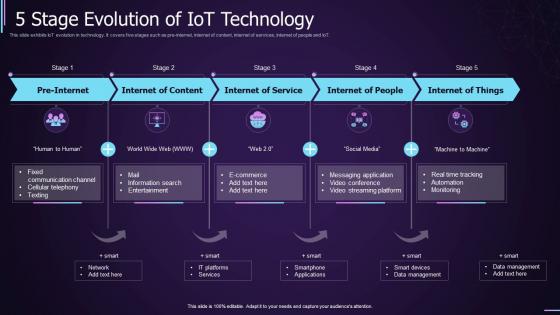
This slide exhibits IoT evolution in technology. It covers five stages such as pre internet, internet of content, internet of services, internet of people and IoT.
People who downloaded this PowerPoint presentation also viewed the following :
5 Stage Evolution Of IOT Technology with all 6 slides:
Use our 5 Stage Evolution Of IOT Technology to effectively help you save your valuable time. They are readymade to fit into any presentation structure.





FAQs for 5 Stage Evolution
So IoT started with RFID back in the 70s, then Kevin Ashton coined the actual term in 1999. IPv6 was a game-changer in the 2000s - finally enough addresses for everything. iPhones in 2007 basically became our smart home remote controls. Cloud computing exploded in the 2010s, which was pretty predictable honestly. Now we've got 5G and edge computing taking off. The whole timeline's been crazy accelerated lately! Oh, and if you're doing any IoT stuff, definitely look into edge computing - way better for speed and keeping hackers out.
So 5G basically fixed the three main problems that made IoT kinda suck - speed, lag, and how many devices you could actually connect. Now you can have tons of devices running without everything grinding to a halt. The latency dropped to milliseconds, which honestly is pretty wild when you think about it. Real-time stuff actually works in real time now! That's why we're suddenly seeing autonomous cars, remote surgery, and smart cities that don't take forever to respond. Before this, any IoT project needing instant decisions would just get wrecked by network delays.
So basically, edge computing handles the stuff that needs to happen RIGHT NOW - your sensors processing data instantly without waiting for the cloud. The cloud does all the heavy-duty work though: storing tons of data, running analytics, machine learning across everything. I always think of it like... edge is your snap decisions, cloud is where you actually think things through. They work really well together honestly - edge keeps everything fast while cloud gives you the smart insights. Just figure out early on what data needs instant responses vs what can wait for deeper analysis.
Honestly, IoT security is a total mess right now. We're adding billions of devices way faster than anyone can figure out how to protect them. Smart doorbells, medical gadgets, industrial stuff - none of it was designed with security first. Attackers love this because they can slip through one crappy device and own your whole network. My neighbor's smart thermostat got hacked last month, which is wild. Start building security in from the beginning instead of trying to patch things later. And yeah, actually update your firmware when those notifications pop up.
So AI basically turned IoT devices from glorified data collectors into actually smart systems. Your thermostat learns when you're home, manufacturing equipment predicts its own breakdowns - pretty wild stuff. The real breakthrough though? Edge AI processing everything locally instead of sending data to some distant server. Way faster responses and your info stays private. Oh, and if you're building anything IoT-related, definitely look into edge computing. The latency difference is huge - honestly makes or breaks user experience in most cases. It's like having a tiny computer brain right in each device.
So basically IoT connects everything in a city - traffic lights that actually respond to congestion, air quality sensors, even trash cans that ping when they're full. Pretty crazy how much data flows around us! Buildings optimize their energy use automatically, water systems get smarter. I swear once you start noticing all the sensors everywhere, you can't unsee them. Your whole city just runs more efficiently. Makes living there way better too - less sitting in traffic, cleaner air, that kind of thing. It's like your city develops a nervous system or something.
Dude, IoT is everywhere now and it's actually pretty crazy. Healthcare's using it for remote patient monitoring - catches problems before they get serious. Manufacturing plants have sensors that predict when machines might break down, which saves them tons of money. Then there's precision farming where sensors check soil conditions automatically. My cousin works at a factory and says their downtime dropped like 80% since they installed smart sensors. Look for stuff in your field that involves repetitive monitoring - that's usually where you'll see the biggest impact. Pretty much any industry can benefit somehow.
Dude, those new IoT standards like Matter and Zigbee are actually game-changers. Your Samsung stuff can finally talk to Apple hubs without wanting to throw everything out the window - we've all been there with incompatible smart home nonsense. They're basically creating universal "languages" for devices. Thread's pretty solid too for mesh networking. Security and battery life are way better now. Honestly, I'd stick with devices supporting these standards if you're buying anything new. Vendor lock-in is such a pain and you'll thank yourself later.
IoT is kinda weird environmentally - like yeah, you're churning out billions of sensors that'll die in a few years (e-waste nightmare), plus the manufacturing alone is insane. But then smart buildings and grids actually slash energy use by 10-20%, which is pretty solid. Transportation systems get way more efficient too. So it usually works out positive overall? My advice though - definitely go with companies that build stuff to last longer and actually recycle properly. Makes a real difference when you're buying this stuff.
Dude, IoT has totally changed how people think about their stuff. Everyone expects to control literally everything from their phone now - lights, thermostats, even coffee makers (which honestly is pretty amazing). Your customers don't really care about individual features anymore. They're thinking bigger picture - like, will this work with my existing setup? The real shift is people want everything connected and talking to each other. Real-time data about their house, instant control, the whole deal. If you're building something consumer-facing, compatibility with major smart home platforms isn't optional anymore. It's basically the difference between success and sitting on shelves.
Honestly, it's mostly about not being shady with people's data. You've gotta tell them upfront what you're collecting and why - none of that buried-in-fine-print nonsense. Let users actually turn stuff off without breaking the whole device (which is harder than it sounds). Only grab data you actually need, not just whatever seems cool to have. People should know what sensors are running and how long you're keeping their info. Oh, and who else might see it - that's huge. Really comes down to respecting that it's their data, not yours.
So basically, IoT analytics takes all that messy sensor data and turns it into stuff you can actually act on. You get real-time visibility instead of just guessing what's going wrong. Honestly, it's pretty amazing - you can spot patterns, predict when equipment's about to crap out, and automate a ton of processes. The whole point is making decisions based on what's really happening, not your gut feeling. My advice? Don't try to boil the ocean right away. Pick one specific problem and start there, then expand once you've got that figured out.
Honestly, IoT's about to get crazy smart with AI processing happening right on the devices instead of everything going to the cloud. 5G (and 6G down the line) will make response times insane. The real game-changer? Autonomous everything. Smart cities managing themselves, machines fixing themselves before they break, health monitors catching issues you don't even feel yet. Security's finally getting serious attention too - zero-trust is becoming the norm, which frankly should've happened years ago. My advice? Focus on interoperability standards and nail your data strategy now. That's where you'll crush the competition.
Dude, IoT is basically revolutionizing healthcare right now. Wearables monitor your vitals constantly, smart insulin pumps adjust doses automatically, and sensors can alert doctors before you even know something's wrong. Hospitals track everything - equipment, meds, patient flow. It's pretty crazy how connected it all is. The real game-changer? Catching problems early instead of waiting for emergencies. My cousin works at a hospital and says the predictive stuff is honestly mind-blowing. If you're getting into this space though, focus hard on security and making sure different systems actually talk to each other. That's where most implementations succeed or totally crash and burn.
Honestly, regulations are kind of a mixed bag for IoT stuff. Some help by setting security standards that make people trust the tech more. Others just slow everything down with red tape. GDPR was a huge pain initially but actually ended up boosting confidence in data handling. Privacy rules, cybersecurity requirements, spectrum allocation - they all shape what devices can actually do. The tricky part is figuring out which regulations are coming down the pipeline in your space. Smart companies get ahead of compliance early instead of scrambling later. It's way better than playing catch-up when new rules drop.
-
It is my first time working with them and that too on a friend's recommendation. I would say, I am not expecting such a worldly service at this low price.
-
I was confident and well prepared for my presentation for the first time ever. With SlideTeam’s templates, I could deliver one of my best presentations. Will be coming back for more!