


Evolution And Growth Of Internet Of Things Introduction To Internet Of Things IoT SS




Try Before you Buy Download Free Sample Product
 Impress Your
 Audience
 100%
100% Editable
 Save Hours
 of Time


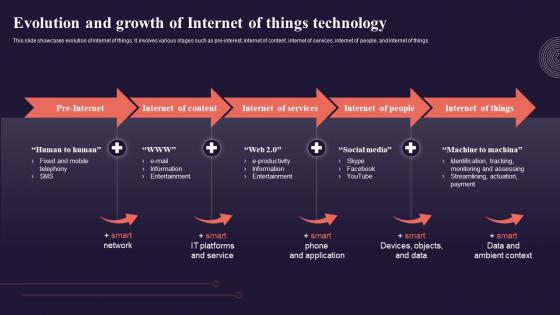
This slide showcases evolution of internet of things. It involves various stages such as pre interest, internet of content, internet of services, internet of people, and internet of things.
People who downloaded this PowerPoint presentation also viewed the following :
Evolution And Growth Of Internet Of Things Introduction To Internet Of Things IoT SS with all 9 slides:
Use our Evolution And Growth Of Internet Of Things Introduction To Internet Of Things IoT SS to effectively help you save your valuable time. They are readymade to fit into any presentation structure.








FAQs for Evolution And Growth Of Internet Of Things Introduction To Internet Of
So basically there are four main parts to any IoT setup. You've got your devices and sensors grabbing data from the real world. WiFi, Bluetooth, cellular - that's how everything connects and sends info around. Then there's the processing bit, usually cloud or edge computing that actually makes sense of all that data flowing in. And finally the user interface where you can see what's happening and control stuff. Think of it like a nervous system but digital, you know? Each piece has to communicate well with the others or things get messy. I'd figure out which part might slow you down first - that's usually where problems pop up.
Yeah, IoT privacy is kind of a disaster tbh. Most devices use encryption and limit data collection, plus the decent manufacturers do secure boot processes and regular updates. You can usually find privacy settings to control what gets shared too. But honestly? So many cheap devices have garbage security - I learned this the hard way with a random smart plug that never got updates. Always check if companies actually have clear privacy policies and patch their stuff regularly. Makes a huge difference between brands that care vs ones just trying to make a quick buck.
So edge computing moves your data processing right next to your IoT devices instead of sending everything to some distant cloud server. Way faster response times that way. Plus you're not burning through bandwidth shipping raw data everywhere - honestly, those costs add up quick. It's like having someone local handle the basic stuff before bothering the main office. Your devices can actually make decisions on the spot. They'll keep working even when your network's being weird. Security's better too since sensitive info doesn't travel as far. I'd start by figuring out what needs instant responses.
Honestly, IoT is like turning everything into a smart device that actually saves you money. Real-time energy monitoring, water tracking for farms, equipment that tells you when it's about to break - the works. Manufacturing plants cut tons of waste by making stuff based on actual demand instead of guessing. Plus logistics companies are crushing it with route optimization that saves serious fuel costs. My advice? Start super simple with just tracking energy usage first (way less overwhelming), then build from there. The efficiency gains are actually pretty wild once you get going.
Oh man, security vulnerabilities are gonna be your worst enemy. Plus you'll constantly deal with devices just randomly going offline - so annoying. Firmware updates across thousands of devices? Good luck with that mess. The data storage requirements get insane pretty quick, and don't even get me started on trying to make different protocols play nice together. Hardware tracking becomes a nightmare when stuff's scattered everywhere. My advice? Pick fewer device types from the start and go hard on security protocols. Trust me, future you will thank present you for not having to debug compatibility issues at 2am.
So basically ML takes all that messy IoT data and finds patterns you'd never spot yourself - we're talking millions of data points here. You can run the algorithms right on your devices for instant decisions, or push everything to the cloud for heavy-duty analysis. The cool part? These systems actually learn how your equipment behaves. They'll predict when something's about to break or automatically tweak energy settings. I swear, watching them get smarter is honestly kind of addictive. My advice? Start with predictive maintenance on just one type of device, then expand once you see it working.
So IoT basically lets you see what's happening with your stuff in real time. GPS sensors track shipments, temperature monitors keep sensitive products safe - you know, the usual suspects. Smart warehouses are honestly pretty wild - they automatically count inventory and figure out the best routes for workers. Manual tracking becomes way less of a headache. You'll also get heads up about demand shifts or potential problems before they actually screw you over. My advice? Start simple with just shipment tracking first. Once you see how much time it saves, you can branch out to other areas.
So definitely get TLS/SSL encryption set up first - that's your main defense for data moving around. Certificate-based authentication is way better than passwords (seriously, hackers love default passwords). WPA3 for your WiFi obviously. Network segmentation helps too since you don't want your smart lightbulb giving someone access to your whole system lol. Secure boot and firmware updates are crucial but honestly everyone skips those. Start with TLS and certificates though - they'll stop most of the basic stuff people try.
Dude, picking the wrong protocol will absolutely wreck your IoT project - I've watched it happen too many times. WiFi's fast but kills batteries super quick. LoRaWAN? Complete opposite - devices last years but data crawls. Bluetooth's solid for close-range stuff, cellular's reliable but pricey as hell. Here's what I'd do: write down what matters most first. Battery life? Speed? How far apart are your devices? That weird little exercise actually saves you from picking something totally wrong for your setup. Trust me on this one.
Dude, without interoperability your IoT setup is basically useless. All your devices just sit there like awkward strangers at a party - they can't communicate with each other. Your smart thermostat won't know when your security system arms, sensors can't share data between platforms. It's frustrating as hell honestly. You need everything speaking the same language so they actually work together. Otherwise you're just buying expensive paperweights. Start with devices that use common standards like MQTT or REST APIs - trust me, it'll save you so many headaches later when you want to expand.
So IoT turns cities into these massive connected networks where everything communicates. Traffic lights adjust automatically based on congestion, sensors track air quality, waste bins ping crews when they're full - honestly it's pretty wild when you stop to think about it. City services get way more efficient since they're responding to real data instead of just winging it. Better resource management, happier residents. Singapore's doing some crazy stuff with this if you want examples. Barcelona too, though I can't remember exactly what off the top of my head.
Look, IoT stuff is getting sketchy with privacy. Your thermostat tracks when you're home, fitness bands monitor everything about your health - companies build crazy detailed profiles without you realizing. The consent thing is buried in those terms nobody reads anyway. Plus it's creating this divide where only people who can afford fancy tech get the benefits. I honestly think it's getting out of hand how much data we're just giving away. You should check what devices you actually have connected and mess with their privacy settings. I keep forgetting to do this myself but really should.
Healthcare IoT is where I'd put my money honestly - remote monitoring is about to blow up. Manufacturing's crushing it too with predictive maintenance and energy optimization in smart factories. Agriculture is getting wild with all these soil and weather sensors boosting crop yields. Self-driving cars might actually happen this decade (fingers crossed), so transportation's looking solid. Oh, and utilities are going crazy for smart grids. If you're thinking career moves, healthcare's got the most funding and government backing right now. That's probably your safest bet.
Honestly, measuring IoT ROI is kinda tricky but doable. Calculate your obvious savings first - energy costs, maintenance, manual labor stuff - then compare that to what you spent implementing everything. The harder part? Quantifying things like better uptime and faster decisions. Those benefits are usually way more valuable but good luck putting exact numbers on them lol. Track everything for at least a year since some metrics fluctuate seasonally. I'd set up a basic dashboard to check monthly - otherwise you'll forget to monitor and won't know if it's actually working.
Dude, IoT is about to get way better. Edge computing means your devices won't need to ping the cloud for everything - they'll just handle stuff locally. Way faster. 5G is actually rolling out now (finally!), so you can connect like a million more devices without lag. Your smart stuff will start learning your habits too with built-in AI. Security's getting an overhaul, which honestly can't happen soon enough - current IoT security is a joke. You should definitely look into edge processing for whatever you're working on. Game changer.
-
I am extremely pleased with these PPT slides that we used for our event. They were easy to modify and came out great in all aspects!
-
Incredibly beautiful designs that will help you get noticed! These eye-catching templates are perfect for corporate presentations that can be altered to fit any occasion or taste.