


Internet of things business models




Try Before you Buy Download Free Sample Product
 Impress Your
 Audience
 100%
100% Editable
 Save Hours
 of Time


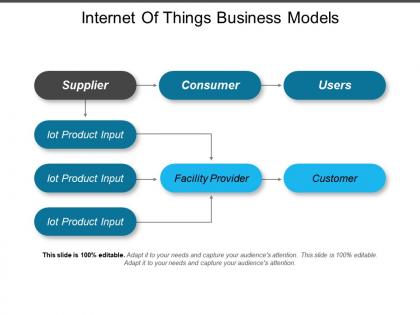
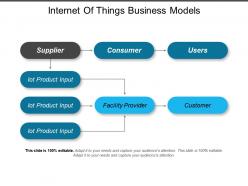
Demonstrate the various models of IoT with this Internet Of Things Business Models PPT template. This IoT gateway PowerPoint presentation comprises three basic models of business such as supplier, consumer, and users. Employ this IoT hub PowerPoint layout to showcase the provision of technical facilities by input providers to the ultimate consumers or users. Take the advantage of this technological web PPT infographic to bring together hardware, service provider and vertical applications and provide industry-specific solutions. Take the assistance of this interconnected framework PowerPoint layout and partner with platform providers so that they’re not left out of the IoT ecosystem. Utilize this automation PPT background image to present various contemporary IoT approaches viz. compliance monitoring, preventive maintenance, asset tracking, etc. Chart out various advantages of emerging technology such as communication, automation, control, information, etc. and identify ways to monitor all aspects with this connected technology PowerPoint slideshow. Thus, download this eye-catching IoT approaches PPT graphic to present it to your stakeholders and succeed in modernizing your operations.
People who downloaded this PowerPoint presentation also viewed the following :
Internet of things business models with all 5 slides:
Get everyone crackling with our Internet Of Things Business Models. They will be fully alert and on the edge.
FAQs for Internet of
So there's basically three main ways to make money with IoT stuff. Subscription models are super popular - monthly or yearly fees for connected devices and apps. Hardware companies also do this thing where they sell cheap devices but make their real money on services afterward. Like those $200 smart thermostats that keep charging you for energy optimization features. Data's where it gets interesting though - companies collect how people actually use their products, then either sell those insights or use them to build better stuff. Honestly, I'd probably start with a mix of hardware sales plus some subscription element. Gives you multiple ways to make money instead of putting all your eggs in one basket.
Honestly, the magic happens when you stop thinking about data and start thinking about problems. Your customers have headaches - maybe their equipment breaks at the worst times, or they're wasting energy without realizing it. That's where IoT gets interesting. Take that smart thermostat example - it's not just collecting temperature data, it's actually learning when you're home and cutting your bills without you lifting a finger. Pretty cool, right? Look at your data streams and ask: what's keeping my customers up at night? Then build solutions that either save them money, prevent disasters, or just make their day easier.
Look, subscription models work so well for IoT because the real value isn't the device itself - it's all the ongoing stuff. Data insights, software updates, cloud storage, analytics. Take Peloton or those Ring cameras - honestly, without the subscription service, they're pretty basic. Plus recurring revenue makes investors way happier than one-time sales (shocking, I know). The trick is making sure people don't feel like they're paying monthly rent for hardware they already own. Your subscription has to add genuine value continuously, not just exist because you can.
So basically IoT saves money through predictive maintenance and automation. Sensors can cut downtime by like 50% because they catch equipment issues before stuff breaks - which honestly blows my mind every time I see it work. You'll slash operational costs too since it optimizes energy use and automates all those tedious manual tasks. Real-time data helps with smarter inventory decisions. Oh, and supply chains run way smoother. My advice? Start with just one machine or process first to prove it works, then expand from there.
Honestly, data security's gonna be your biggest headache - people freak out about their info getting leaked, and for good reason. Getting all your devices to actually connect and work together is another nightmare. Integration costs can spiral out of control super quick, especially if your current systems are ancient. Oh and all that data you're collecting? Completely worthless if you can't figure out what it means. I've seen companies drown in their own analytics. Start with something small first - do a pilot run before you blow your whole budget.
Dude, it's mostly about consent and being upfront with people. IoT devices hoover up crazy amounts of personal data - sleep habits, when you're home, all that stuff. Problem is, users don't really get what they're signing up for. Who owns that info? Are you selling it? (Spoiler: most companies totally are.) You need clear privacy policies and actual opt-in consent, not some buried legalese nobody reads. Oh, and decent security obviously. I'd start by figuring out exactly what your devices track. Would you want that level of creeping in your own place?
Honestly, you've gotta find those weird little corners the big guys ignore. Agriculture tech for small farms, local retailers who need something super specific - that's your sweet spot. Don't build everything yourself though, seriously. Partner with existing platforms and save yourself the headache. Your superpower is being fast and flexible. Amazon can't pivot on a dime like you can. Pick one problem and nail it completely before trying to expand. The personal touch matters way more than you'd think - big companies suck at that stuff. Small manufacturing, specialty services... there's tons of gaps if you look hard enough.
Dude, healthcare is absolutely crushing it right now - remote monitoring, smart devices, all that stuff hospitals desperately need. Manufacturing's where the money is though, those production line sensors are paying for themselves like crazy. Agriculture's kind of having a moment too? Precision farming with soil sensors is wild, didn't expect that one to blow up. Retail and logistics aren't far behind with inventory tracking. I'd honestly just pick whichever one you already know people in, makes everything way easier when you're getting started.
Honestly, partnerships are your best bet for scaling IoT fast. You don't have to build everything yourself - just find companies that already have what you need. Telecom providers? They've got the network coverage locked down. System integrators know industries way better than you probably do. Hardware manufacturers can bake your solution right into their devices. It's all about figuring out what you're missing first, then hunting down who already nailed that piece. Everyone wins when the partnership actually makes sense - you get reach, they get your tech. Way smarter than trying to do it all solo.
Check out Tesla - they're making bank on software updates that add new features after you buy the car. John Deere's doing something similar with farm sensors, selling the data insights back to farmers. Rolls-Royce has this wild "Power by the Hour" thing where airlines only pay for actual engine time instead of buying upfront (honestly pretty brilliant). Amazon's whole Alexa setup just gets you buying more stuff through voice commands. The pattern here? Everyone's ditching the one-and-done sales model. They want that ongoing relationship through data, services, or pay-as-you-go pricing instead.
Dude, regulatory stuff will mess with your IoT economics from the start - you can't just add compliance as an afterthought. GDPR means crazy privacy controls in Europe, while healthcare IoT? Good luck with FDA timelines, that's like adding two years minimum. Pick your first markets based on which regulations won't kill you, then build for the strictest rules you'll hit eventually. Otherwise you're rebuilding the whole thing later (been there). It sucks but way better than ignoring it completely. Design once, deploy everywhere - that's the only way this works without going broke.
Dude, seriously - price security in from the start, not as an afterthought. I've watched companies try to add it later and it's absolute chaos. You'll need encryption, secure boot, regular updates, all that stuff. Device authentication and network segmentation too. Oh and some way to monitor threats. Regulations are getting crazy strict these days so budget for compliance costs early. My buddy's startup learned this the hard way. Do a threat assessment first - it'll show you where to spend your money. Trust me on this one.
So here's the thing about predictive analytics - it's like having a crystal ball for your customers. All that data your IoT devices collect? You can spot patterns that show when stuff's about to break or when someone might want an upgrade. It's honestly pretty wild how accurate it gets. Instead of waiting for angry support calls, you're hitting people up before problems happen. Netflix does this with shows, but imagine doing it for actual hardware. Quick tip though - start small. Pick your biggest customer headaches and see what your device data reveals about them first.
So edge computing moves your IoT processing way closer to where you're actually collecting data. Game changer for making money off these services. Why send everything to the cloud when you can process locally? Makes way more sense for anything real-time. You'll unlock new revenue from low-latency services, cut those annoying cloud costs, and sell premium features that need instant responses. Hardware + software subscription bundles are huge now too. Honestly, just figure out which services need real-time processing and jack up the pricing accordingly. Your customers will pay for speed.
B2B IoT is all about making operations run smoother - predictive maintenance, supply chain stuff, energy management. Companies will pay big money upfront because they can calculate the ROI. Consumer IoT? Totally different game. People want smart thermostats and fitness trackers that just work without thinking about it. You can't charge consumers enterprise prices though, so most companies do subscriptions or sell the data instead. Honestly, the B2B space feels more stable to me since businesses actually budget for this stuff, while consumers can be pretty fickle about new gadgets.
-
Excellent design and quick turnaround.
-
Excellent products for quick understanding.