


Internet of things iot overview powerpoint slides complete deck





Try Before you Buy Download Free Sample Product
 Impress Your
 Audience
 100%
100% Editable
 Save Hours
 of Time


The SlideTeam team has put together a complete deck of IoT overview powerpoint slides to help you understand everything about this technology. You can download these slides and use them in your own presentations. We’ve also included a number of helpful resources below that will give you more information about the Internet of Things. Don’t miss out on this exciting opportunity to be at the forefront of the next big thing in technology – download Iot ppt slides and start learning today.
People who downloaded this PowerPoint presentation also viewed the following :
Content of this Powerpoint Presentation
Slide 1: This is the cover slide of Internet of Things IOT Overview PowerPoint Presentation
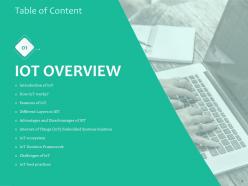
Slide 2: This is the Table of Content slide that lists out all the essential elements covered in the deck.
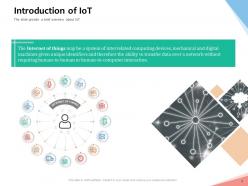
Slide 3: The slide provide a brief overview about IoT
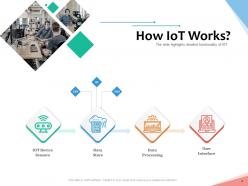
Slide 4: The slide highlights detailed functionality of IOT
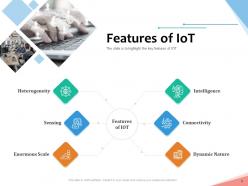
Slide 5: The slide is to highlight the key features of IOT
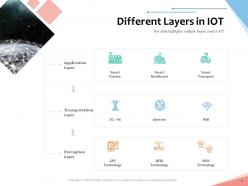
Slide 6: The slide highlights multiple layers used in IOT
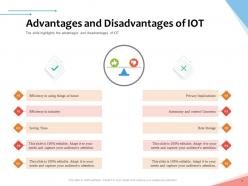
Slide 7: The slide highlights the advantages and disadvantages of IOT
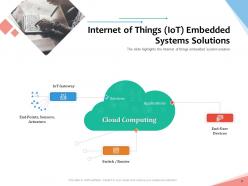
Slide 8: The slide highlights the Internet of things embedded system solution
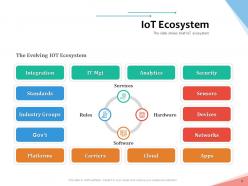
Slide 9: The slide shows brief IoT ecosystem
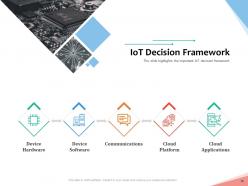
Slide 10: The slide highlights the important IoT decision framework
Slide 11: The slide shows key challenges of IoT
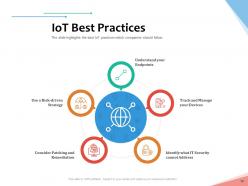
Slide 12: The slide highlights the best IoT practices which companies should follow.
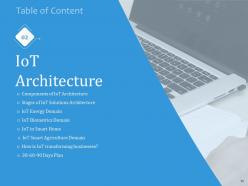
Slide 13: This slide presents IoT Architecture.
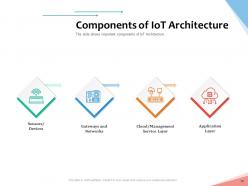
Slide 14: The slide shows important components of IoT Architecture
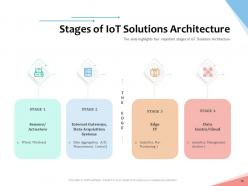
Slide 15: The slide highlights four important stages of IoT Solutions Architecture
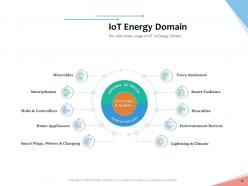
Slide 16: The slide shows usage of IoT in Energy Domain
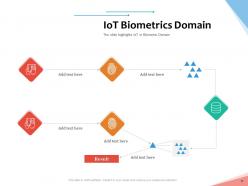
Slide 17: The slide highlights IoT in Biometric Domain
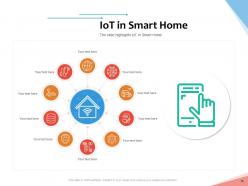
Slide 18: The slide highlights IoT in Smart Home
Slide 19: The slide highlights IoT in Agriculture Domain
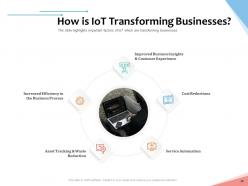
Slide 20: The slide highlights important factors of IoT which are transforming businesses
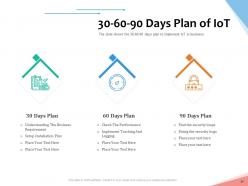
Slide 21: The slide shows the 30-60-90 days plan to implement IoT in business
Slide 22: This slide presents IoT Devices.
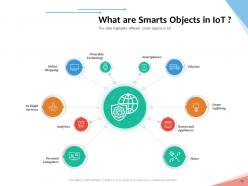
Slide 23: The slide highlights different smart objects in IoT
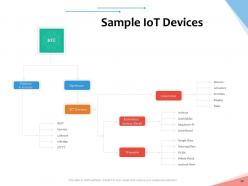
Slide 24: This slide showcases sample IoT Devices in the form of a chart.
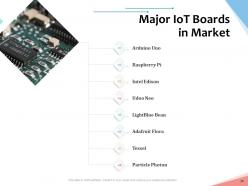
Slide 25: This slide presents Major IoT Boards in the market.
Slide 26: This slide presents IoT Platforms.
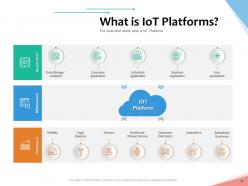
Slide 27: The slide brief about what is IoT Platforms
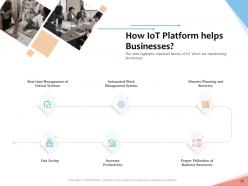
Slide 28: The slide highlights important factors of IoT which are transforming businesses
Slide 29: This slide presents communication in IoT
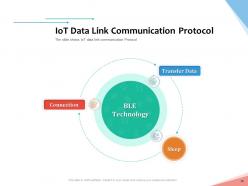
Slide 30: The slide shows IoT data link communication Protocol
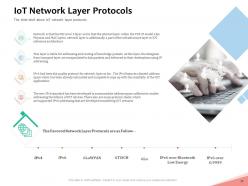
Slide 31: The slide brief about IoT network layer protocols
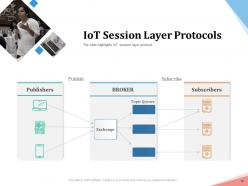
Slide 32: The slide highlights IoT session layer protocol
Slide 33: This slide presents security in IoT.
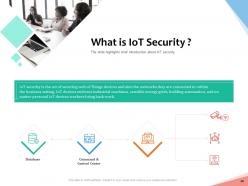
Slide 34: The slide highlights brief introduction about IoT security
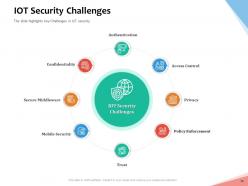
Slide 35: The slide highlights key Challenges in IoT security
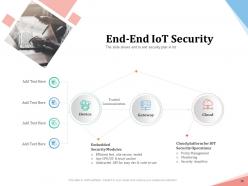
Slide 36: The slide shows end to end security plan in Iot
Slide 37: This is an Icon slide. Use it as per your needs.
Slide 38: This is an Additional Slide
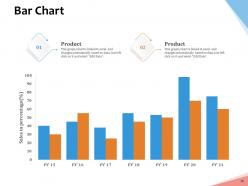
Slide 39: This is a Bar Chart slide that can be used to compare different elements.
Slide 40: This is Our Mission slide to state your mission and vision.
Slide 41: This is About Us slide that can be used to give a brief overivew of your company.
Slide 42: This is GOALS slide. State your goals, aspirations etc. here.
Slide 43: This is a Blub Or Idea image slide to present innovative/ creative aspects.
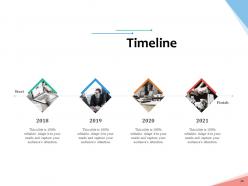
Slide 44: This is a Timeline slide that can be used to present chronological sequence of events.
Slide 45: This is Target image slide to present product/ entity, information etc.
Slide 46: This is a Quotes slide that can be used to present quotes.
Slide 47: This is a Thank You slide for acknowledgment. You can share your contact details here.
Internet of things iot overview powerpoint slides complete deck with all 47 slides:
Use our Internet Of Things IOT Overview Powerpoint Slides Complete Deck to effectively help you save your valuable time. They are readymade to fit into any presentation structure.






FAQs for Internet of things iot overview powerpoint
So basically there are four pieces to any IoT setup. First you've got sensors grabbing data from the real world. Then connectivity - WiFi, cellular, whatever - moves that info around. Processing happens next, either in the cloud or right on the device. Finally there's the user interface so you can actually control things. Your smart thermostat is a perfect example - sensor reads temp, shoots it over WiFi, gets processed somewhere, then you can mess with it through the app. Honestly once you see this pattern you'll spot it everywhere. Just think through these four layers when you're building anything.
IoT security is honestly pretty terrifying when you think about it. Most devices ship with garbage passwords like "admin123" and can't handle proper encryption. Your smart thermostat basically broadcasts when you're home, industrial sensors leak production data - the works. First thing? Change those default passwords immediately. Set up network segmentation so your IoT stuff is isolated. Turn on automatic updates if possible, though half these devices barely support them anyway. End-to-end encryption helps too. Oh, and actually audit what's connected to your network - I bet you'll find random stuff you forgot about.
So the big ones are traffic management and waste collection - cities use sensors to optimize traffic lights and only empty bins when they're actually full. Energy grids get smarter too, like streetlights that automatically dim. Air quality monitoring is everywhere now, which honestly feels way overdue. Public safety systems are another major one. The cool part? It all connects to make cities run smoother and cut down on waste. Less sitting in traffic, better services - basically makes living there less annoying while cities save money.
So edge computing basically processes your IoT data right where it's collected instead of shipping everything to the cloud. Way faster since there's no internet lag, plus your stuff keeps working even when wifi craps out. Bandwidth costs drop too, which is nice. Your devices can actually make split-second decisions without waiting around for cloud responses - super critical for industrial sensors or anything autonomous. Security's better since sensitive data stays local. I know it sounds like just another tech buzzword, but the speed difference is legit impressive. Worth checking out if you're doing anything time-sensitive.
Ugh, IoT interoperability is such a pain! You've got all these devices using different protocols - Zigbee, WiFi, LoRaWAN - and they just don't play nice together. Data formats are all over the place too, plus vendors love creating their own little closed ecosystems. Security's another mess when you're trying to connect everything. Honestly? Plan this stuff from the start instead of trying to fix it later - trust me on that one. Look for standardized protocols like Matter/Thread, and maybe use some middleware to translate between systems. Oh, and definitely pick vendors who actually care about open standards rather than locking you in.
So basically, IoT devices learn your patterns and stop wasting energy automatically. Smart thermostats figure out when you're home, lights dim when nobody's around - that kind of thing. You can track water usage and carbon emissions too. But honestly, the predictive maintenance stuff is where it gets really cool - sensors tell you when equipment's about to fail before it actually breaks. Way better than everything running at max power 24/7. I'd probably start with just smart plugs in one room and see how it goes. Much easier than trying to overhaul everything at once.
So basically, all those IoT sensors on your equipment are spitting out crazy amounts of data - temperature, vibration, pressure, you name it. ML algorithms dig through that mess to figure out what's normal vs. what screams "I'm about to break." Pretty cool stuff, honestly. You'll catch problems before they happen instead of scrambling when something dies. Way less downtime, way fewer emergency repair bills. Oh, and don't try to sensor everything at once - that's expensive. Pick your most critical equipment first and work from there.
Dude, 5G is gonna fix all the annoying stuff about IoT right now. Speed gets crazy fast, latency drops to almost nothing, and you can connect way more devices without everything crashing. Real-time stuff that's impossible today? Autonomous cars, remote surgery, factory robots - all suddenly doable. Your smart city sensors won't randomly disconnect anymore either, which honestly drives me nuts with current networks. Oh, and I'd start thinking about this now if you've got any IoT projects. The companies that figure out 5G integration first are gonna leave everyone else in the dust.
Honestly, start small with a pilot - I've seen companies crash and burn trying to deploy everything at once. Three things matter most: solid device management, network that won't die under pressure, and data systems that scale. Edge computing is clutch for processing stuff locally instead of choking your bandwidth. Oh, and set your security protocols early because fixing that mess later is absolutely brutal. Cloud platform choice matters too - go with something that grows and avoid getting locked into one vendor's ecosystem. Open standards are your friend here.
Okay so basically three big things: consent, being transparent, and not hoarding data like a digital pack rat. IoT stuff is sneaky - it grabs way more personal info than people think, even when devices seem off. Be honest upfront about what you're collecting and why. Don't bury that stuff in fine print nobody reads. Give users actual control over their data. Security's huge too since these devices get hacked constantly. Honestly, just think about how you'd want companies handling your own info and don't collect anything you don't actually need.
So MQTT and CoAP are basically how IoT devices chat with each other and the cloud. Your smart thermostat? It's probably using MQTT to send temperature updates every few minutes. Way more efficient than regular HTTP since these little gadgets run on batteries. CoAP's better for when devices talk directly to each other instead of going through the cloud. Honestly, without these protocols your smart home would be chaos - nothing would communicate properly. MQTT if you need cloud stuff, CoAP for local device conversations. Pretty straightforward once you get it.
Oh totally, COVID was like a massive IoT accelerator. Companies that'd been dragging their feet on digital stuff suddenly had no choice - remote monitoring became essential overnight for health checks, supply chains, everything. Healthcare went crazy with contact tracing and smart building occupancy sensors. Plus everyone being stuck at home meant smart device sales went through the roof (guilty as charged on that one). The whole thing basically forced businesses to modernize systems they'd been avoiding for years. Honestly, if you're pitching IoT projects now, executives are way more receptive than they used to be.
Dude, the IoT health stuff coming out is honestly insane. Smart contact lenses can track your blood sugar now - no more stabbing your finger constantly. There's AI pill dispensers that narc on you to your doctor if you skip doses (kinda creepy but helpful I guess). Wearable patches monitor everything and catch infections or heart problems super early. Oh, and apps are literally prescription treatments for PTSD and addiction now. Remote monitoring cut hospital readmissions by 30% in some studies. If you're diving into this, definitely look at tech companies partnering with hospitals - that's where the money and innovation is.
So IoT gives you eyes on your entire supply chain in real time. Track shipments, watch warehouse temps, get pinged when stuff goes sideways - beats calling carriers all day asking "where's my order?" Sensors grab data on everything: location, temperature, delays, whatever. Honestly, the inventory management part is where it really shines since you're not stuck waiting around for people to manually count boxes. Bottlenecks become obvious fast, and you can tweak routes on the fly. Don't go crazy though - test it on your most important shipments first.
Ugh, IoT compliance is such a mess right now. Every region does their own thing - Europe has GDPR, the US splits it by industry (like FDA handles medical stuff), and Asia's basically a free-for-all with different privacy rules everywhere. Security standards? Don't even get me started on how inconsistent those are globally. Honestly, a lot of places are still scrambling to figure out rules for newer tech like autonomous cars. My advice? Just design everything to meet EU standards from day one since they're usually the pickiest, then hire local experts wherever you're launching. Way easier than retrofitting later.
-
Excellent design and quick turnaround.
-
Use of icon with content is very relateable, informative and appealing.
-
Very well designed and informative templates.
-
Very well designed and informative templates.
-
Awesomely designed templates, Easy to understand.
-
Content of slide is easy to understand and edit.
-
Innovative and attractive designs.