

Internet of things future




Try Before you Buy Download Free Sample Product
 Impress Your
 Audience
 100%
100% Editable
 Save Hours
 of Time


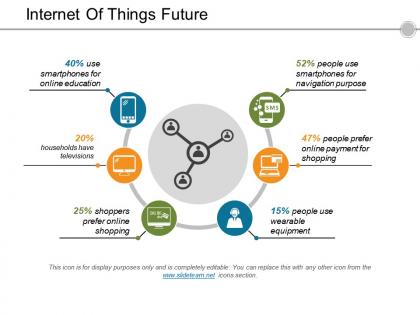
Introducing Internet Of Things Future PowerPoint presentation. With this cloud computing PPT slide, you can illustrate the future scope of IoT in the coming years. You can explain the challenges of cyber-attack and hacking using this artificial intelligence PowerPoint slide. The automation of a huge volume of data in diverse business processes like a smartphone for online education, household television, online shopping can be explained here. Also, applications like a smartphone for navigation purposes, online payment, and wearable equipment can be showcased with their percentage share in the market using our big data PPT theme. IoT platform evolution opens new streams of revenue that can be illustrated with our science & technology PPT template. Using our automation PowerPoint layout, you can discuss the future of the internet of things in sectors like manufacturing, agriculture, medical, transportation, and energy. This digitally connected PPT presentation allows you to bring your company’s IoT analytics focus on the tremendous scope of the web of things in various spheres of the company’s business plan. So download our Internet of Things Template today and start creating powerful IoT presentations that will inspire your audience.
People who downloaded this PowerPoint presentation also viewed the following :
Internet of things future with all 5 slides:
Never feel hard pressed with our Internet Of Things Future. You won't ever be behind the clock.

FAQs for Internet
Honestly, edge computing is huge right now - it's pushing all the processing closer to your actual devices instead of the cloud. 5G is finally making real-time everything possible, which is pretty wild. AI integration keeps getting smarter too. Security's becoming massive (thank god, because it was sketchy for way too long). Industrial IoT and smart cities are exploding everywhere. Oh, and devices can actually talk to each other now thanks to better interoperability standards. Focus on security first, then figure out how edge computing might help whatever you're already doing.
So basically cities are gonna become these massive connected networks where everything's talking to each other. Traffic lights will adjust automatically when there's congestion, garbage bins alert when they're full, air quality sensors ping your phone about pollution levels. Infrastructure gets smarter too - bridges doing their own maintenance checks, water systems catching leaks before your street turns into a crater (which honestly happens way too often). City services become super responsive and efficient for you, but yeah, the privacy stuff is gonna get sketchy with all that data floating around. It's pretty crazy to think about.
Honestly, cybersecurity will make or break IoT success. Think about it - billions of devices all connected, each one a potential entry point for hackers. Most current IoT stuff has garbage security (seriously, so many people never change default passwords). New IoT networks need security baked in from the start, not slapped on later. Device authentication, encrypted communications, regular updates, network segmentation - all that matters. Oh, and if you're planning IoT deployments? Start mapping out your security approach now. Don't wait until you're already knee-deep in it.
Stop collecting random IoT data that just sits there doing nothing. Figure out what you actually want to know first - like why equipment keeps breaking or where customers hang out most. Then build dashboards showing real patterns, not endless spreadsheets nobody reads. Most companies are drowning in useless metrics honestly. Connect your data streams to tools that'll predict problems before they hit you. Oh, and don't try to solve everything at once - pick one clear problem and nail that first. You'll save yourself a lot of headaches.
Dude, 5G is going to be huge for IoT stuff. The speed boost is obvious, but the latency thing is what's really wild - we're talking milliseconds here. That means autonomous cars and remote surgery actually become realistic instead of just tech demos. A million devices per square kilometer can connect now, which is pretty nuts if you think about it. Edge computing finally makes sense too since you can crunch data right where your devices are instead of sending everything to some server farm. Oh, and the rollout's happening way faster than I expected. Worth thinking about how your current projects could use this because it's coming whether we're ready or not.
Dude, IoT is gonna connect everything and collect insane amounts of real-time data. Healthcare's already doing remote monitoring and predicting health issues. Farms use sensors now to track soil and weather - honestly pretty cool stuff. Manufacturing caught on early with machines that predict when they'll break down. We're talking about catching problems before they cost you serious money. All these connected devices just help you make faster, smarter decisions. I'd start looking at what processes in your field could use better data. The amount of info flowing around is kinda crazy when you think about it.
Honestly, it's mostly about consent and who gets your data. These devices are constantly tracking your habits, location, health stuff - way more than you'd think. Companies should tell you upfront what they're collecting, but let's be real, who actually reads those terms? I'm terrible at it too. You can dig into your privacy settings and actually opt out of things, though most people don't bother. My advice? Maybe don't connect every single appliance to wifi. Check your settings once in a while. The convenience is nice but you're basically giving away tons of personal info.
So first thing - audit what protocols your current stuff is using. MQTT and CoAP are solid choices for getting devices to actually communicate. API-first design helps too since it's like having a universal translator between systems. Trust me, those proprietary ecosystems look great until you're stuck trying to add something new later. Edge computing can bridge gaps when you need real-time responses. Oh and definitely standardize on flexible protocols before buying more devices - saves headaches down the road. Start small with what works.
Ugh, IoT is such a double-edged sword environmentally. Smart grids and precision farming can slash energy waste by like 20-30%, which is actually pretty impressive. But then you've got billions of new gadgets needing rare metals and churning out e-waste eventually. Manufacturing all those sensors? Total resource hog. Plus they're constantly pinging data centers that never sleep - kinda defeats the purpose sometimes. I'd say only go for IoT stuff that's genuinely replacing something worse, not just because it sounds cool. Otherwise you're just adding more junk to the pile.
So basically, ML and AI turn your IoT stuff from just collecting data into actually making decisions. Your devices start predicting when equipment's gonna fail, automatically tweaking energy usage, adjusting operations based on what they've learned. They get smarter over time too - no reprogramming needed. Predictive maintenance is where you'll probably see this first, which honestly makes the most sense. Your machines will actually warn you before they break down. I'd say pick one specific thing to try it with first, then expand from there once you see how it works.
Okay so small companies have zero budget and you're doing everything yourself - IT, security, scaling, the whole mess. But big enterprises? Total nightmare in a different way. They've got legacy systems from like 2005, endless approval meetings, and thousands of devices that can't break their current setup. Money isn't their problem, moving fast is. Small companies can actually pivot when something goes wrong, which happens a lot with IoT honestly. My advice though - doesn't matter what size you are, start with a tiny pilot project first. You'll learn way more about what actually breaks than any consultant will tell you.
So basically edge computing processes stuff right on your devices instead of bouncing everything back to the cloud first. Latency drops from like hundreds of milliseconds down to just a few - huge deal for things like self-driving cars or factory equipment. Your IoT stuff won't break every time the wifi acts up either (and honestly, my internet still cuts out way too much). Real-time apps actually become possible this way. I'd look at your current projects and see what could benefit from having that processing power sitting locally instead.
So IoT regulation is definitely heading toward stricter data privacy rules and cybersecurity requirements. The EU's already pushing GDPR-style stuff, and everyone else is copying them. Device interoperability is huge too - like, your smart doorbell should actually work with your thermostat, right? Currently it's such a nightmare. Consent for data collection will get way more rigid, plus they'll probably mandate security updates for connected devices. Oh, and definitely build privacy into your projects from day one. Trust me, trying to add compliance later is gonna cost you big time. Way better to just start with it baked in.
Honestly, IoT is like having a crystal ball for going green. Smart sensors let you see exactly how much energy your building burns or water gets wasted - no more wild guessing. Farmers are crushing it with precision watering and fertilizing. Manufacturing spots problems instantly instead of waiting weeks to figure out what went wrong. Cities even use it for traffic flow and garbage pickup optimization (which sounds boring but actually saves tons of fuel). The trick? Don't try to do everything at once. Just pick one thing - maybe energy monitoring - and start there. You'll see results pretty fast.
Honestly, everything's shifting toward subscriptions and service models now. Instead of selling equipment once, companies are doing predictive maintenance plans or pay-per-use deals. Smart city stuff is huge for this. Data's becoming the real money-maker too - selling insights from all those IoT sensors beats just hawking hardware. Outcome-based pricing is pretty cool though. Like you're not buying machines anymore, you're paying for "guaranteed uptime." Platform models will probably run everything, connecting devices across industries. Worth thinking about how you could turn whatever you're selling into an ongoing relationship instead of one-and-done sales.
-
Great product with effective design. Helped a lot in our corporate presentations. Easy to edit and stunning visuals.
-
Innovative and Colorful designs.