


Iot security challenges internet of things iot ppt powerpoint presentation outline microsoft





Try Before you Buy Download Free Sample Product
 Impress Your
 Audience
 100%
100% Editable
 Save Hours
 of Time


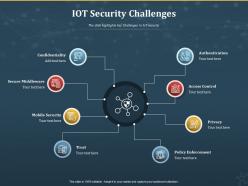
The slide highlights key Challenges in IoT security.
People who downloaded this PowerPoint presentation also viewed the following :
Iot security challenges internet of things iot ppt powerpoint presentation outline microsoft with all 2 slides:
Use our IOT Security Challenges Internet Of Things IOT Ppt Powerpoint Presentation Outline Microsoft to effectively help you save your valuable time. They are readymade to fit into any presentation structure.

FAQs for Iot security challenges internet of things iot ppt powerpoint
Dude, weak passwords are still the worst offender - can't believe devices ship with "admin/admin" in 2024. Most don't encrypt data properly either, and good luck getting firmware updates. Communication protocols are sketchy too, plus APIs leak data like crazy. Change those default passwords right away, that's non-negotiable. Put IoT stuff on its own network so if something gets compromised, it can't access your main devices. Oh, and actually research if the company does security patches before you buy - learned that one the hard way with a smart doorbell that never got updated.
Honestly, you've got to set up signed firmware updates with proper crypto verification. Each update gets digitally signed so your devices can actually verify it came from you and wasn't messed with. Secure boot process is crucial too, plus encrypted delivery channels. I've watched so many IoT products get completely wrecked because companies got lazy with this stuff. Your private signing keys need proper storage and regular rotation. Never let unsigned code run on devices once they're deployed - that's like leaving your front door wide open. Oh, and treat every single update as potentially hostile.
Dude, those default passwords are literally like leaving your front door wide open. Most IoT devices come with garbage like "admin/admin" or "password123" - and let's be real, nobody thinks to change them right away. Hackers know this and run bots that just try these obvious combos on thousands of devices at once. Super lazy but effective, unfortunately. Once they get in, they can steal your stuff, mess with other networks, or turn your smart doorbell into part of some botnet army. Takes like two minutes to change it during setup. Worth it to avoid the headache later.
So encryption is basically what stops people from reading your IoT data when it's flying around between devices and servers. Think of it like scrambling everything so hackers can't peek. You'll want end-to-end encryption plus encrypted storage on the actual devices. The annoying thing is most IoT gadgets are pretty weak processing-wise, so you need lightweight encryption that won't kill the battery. Use TLS 1.3 if you can. Oh, and double-check encryption is actually turned on - you'd be amazed how many devices ship with it disabled by default. That's just lazy manufacturing honestly.
So first thing - figure out what devices you actually have and which ones matter most. Don't skip network segmentation, I can't stress this enough. Put your IoT stuff on separate networks so when something gets hacked (not if, when), it can't reach your important systems. You'll want policies covering everything from setup to retirement, plus strong authentication from the start. Monitor for weird traffic patterns and automate updates where you can. Oh and honestly? Build security in from day one because trying to add it later is such a pain. The whole lifecycle needs to be locked down, not just the fun parts.
Dude, poor IoT data management is basically asking for trouble. Your sensitive stuff gets exposed through crappy encryption. GDPR fines hit hard too - I've seen companies get wrecked by this. Half the time you don't even know what data you're collecting or where it's going. Performance tanks when everything's disorganized, and forget getting useful insights from garbage data. Honestly, most companies just wing it until something breaks. First thing - figure out what you're actually collecting, then get proper encryption and access controls set up. Don't be one of those "we'll fix it later" teams.
Dude, privacy stuff is killing IoT sales right now. People get seriously freaked out thinking about their Alexa recording everything or their fitness watch tracking where they go. Can't really blame them tbh - some of these companies are shady about data. Most folks just won't buy the devices at all because they don't know if their info gets sold to random advertisers. Companies need to be way more upfront about what they're doing with your data and actually let you control the settings. That's really the only way people will start trusting this tech enough to buy it.
Ugh, so the main problem is all your IoT stuff uses totally different security setups. Device A encrypts one way, Device B does something else entirely - it's chaos. You can't patch them the same way either, which honestly drives me crazy. Trying to make them all work with your current security system? Good luck with that expensive headache. Each device is basically speaking its own language, so you get these weird gaps where nothing talks to each other properly. Stick with vendors using NIST standards if you can find them.
Honestly, ML is a game-changer for IoT security. It watches all your device traffic and learns what's normal - then freaks out when something weird happens. Like if your smart doorbell starts blasting data at 2am (nightmare fuel, right?). The cool part? It catches stuff you'd never notice manually. Different devices have their own "personality" and the system picks up on changes instantly. I'd start with some network monitoring tools that can baseline everything. They're pretty good at catching breaches before they spread to other devices. Way better than trying to babysit hundreds of connected gadgets yourself.
Honestly, just changing those default passwords will save you so much headache - those "admin/admin" logins are basically handing hackers the keys. Put your smart stuff on a separate network if you can, keeps them away from your actual computers and phones. Firmware updates are annoying but super important since companies are always fixing security holes. Oh and turn on two-factor auth wherever it lets you. I should probably check what's connected to mine more often too. Really though, updates and keeping things separate from your main devices does most of the heavy lifting.
Look, don't make the same mistake everyone does - build security in from the start instead of scrambling later. Change those default passwords right away and turn on encryption. Network segmentation for IoT stuff is huge too. I get it, you just want to plug everything in and start using it, but trust me on this one. Find solutions that handle security automatically - like updates that run themselves and SSO setups. Your team won't follow complicated security rules anyway. Oh and actually train people on whatever policies you create. Can't tell you how many companies skip that part.
So when you connect your IoT stuff to the cloud, you're basically opening up more ways for hackers to get in - data transmission, cloud storage, API attacks, the whole deal. On the flip side, you get way better security tools and centralized control that most IoT devices just don't have by themselves. Here's what really worries me though: if your cloud provider gets hacked, all your connected devices could be screwed too. My advice? Stick with reputable cloud services that actually encrypt your data properly, and check your device communications regularly for anything sketchy.
Honestly, real-time monitoring is a game changer - you'll catch threats as they're happening instead of discovering breaches weeks later. Like if one of your sensors starts spamming data out of nowhere, you'll know immediately something's off. It's way better than playing detective after the fact. The analytics side helps you spot weird patterns before hackers figure out how to exploit them. I'd start small though, just monitor your most important devices first. Otherwise you'll get overwhelmed with alerts (learned that one the hard way). Once you get the hang of it, expand from there.
Dude, breached IoT devices are a legal nightmare. GDPR fines will destroy your budget if customer data gets out. Privacy laws are getting stricter everywhere too. You've got ethical obligations - users trust you with their data, and honestly, that weight keeps me up sometimes. Plus hackers can turn your devices into weapons against other systems, which is terrifying. Start with privacy-by-design architecture from the beginning. Don't wait. Have your incident response plan drafted now because you will get hit eventually. It's just reality in this space.
Dude, first thing - yank those compromised devices off your network ASAP. Seriously, this stuff can spread to everything else in minutes. Write down what happened while you're dealing with it, then figure out what data got hit and who needs to know. Your incident response plan should cover the notification part (assuming you have one, which hopefully you do). After that, update all the firmware and change those awful default passwords everyone leaves on. Oh, and definitely go through your device inventory - you'll probably find stuff you forgot was even connected. Silver lining though: at least now you know where your weak spots are.
-
Nice and innovative design.
-
Illustrative design with editable content. Exceptional value for money. Highly pleased with the product.
-
Great designs, Easily Editable.
-
Easy to edit slides with easy to understand instructions.