


Fashion Industrys Strategic Group Mapping Analysis




Try Before you Buy Download Free Sample Product
 Impress Your
 Audience
 100%
100% Editable
 Save Hours
 of Time


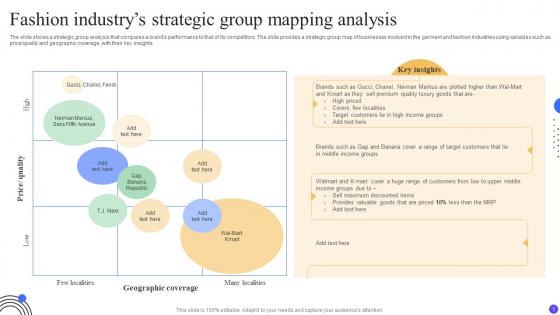
The slide shows a strategic group analysis that compares a brands performance to that of its competitors.The slide provides a strategic group map of businesses involved in the garment and fashion industries using variables such as price quality and geographic coverage, with their key insights.
People who downloaded this PowerPoint presentation also viewed the following :
Fashion Industrys Strategic Group Mapping Analysis with all 6 slides:
Use our Fashion Industrys Strategic Group Mapping Analysis to effectively help you save your valuable time. They are readymade to fit into any presentation structure.





FAQs for Fashion Industrys Strategic
So for fashion strategic groups, you'll want to look at price point, target market, and how they distribute - that's where I'd start. Brand positioning matters too (like luxury vs fast fashion), plus product quality and geographic reach. Honestly, sustainability is becoming a huge factor now which makes everything messier to map out. Companies in the same group basically face the same competitive pressures and run similar business models. I'd suggest plotting brands on a price vs distribution chart first - it usually shows you the clearest group boundaries right off the bat. Works every time.
So basically, you wanna group brands that are actually fighting for the same customers. Like, Shein and Chanel are both fashion but they're not really competitors, you know? Look at who they're targeting - age, income, lifestyle stuff. That shows you the real competition. Then map them out on axes that actually matter to those customers. Price vs quality works well, or maybe style positioning. The whole point is finding brands in similar positioning spaces - whether that's luxury, fast fashion, sustainable, whatever. Demographics help you see which brands are truly going after the same shoppers instead of just being in the same industry.
So you segment the market first - that's your roadmap. Price points, target customers, distribution channels, whatever makes sense. Then you'll see companies naturally clustering together in similar spots. Like Chanel and Hermès are obviously playing the same luxury game, while H&M and Zara duke it out in fast fashion territory. Those clusters? That's your strategic groups right there. Companies in the same group face identical competitive pressures and tend to use pretty similar strategies - makes total sense when you think about it. Start with your segmentation variables, then just look for the patterns.
Yeah, geography basically flips everything on its head. Consumer tastes are so different - what kills it in Milan might totally bomb in Mumbai. Your luxury brand could crush it in Western markets but then struggle against local fast-fashion companies who actually get the culture and have better supply chains there. Labor costs change the game too, plus all those different regulations. I learned this the hard way working on a project last year - you can't just copy-paste your strategy globally. Each major region needs its own strategic group mapping because honestly, trying to force one framework everywhere is just asking for trouble.
Honestly, it all comes down to knowing your lane. Luxury brands like Chanel? They're literally selling dreams - heritage, craftsmanship, that whole exclusivity thing. Meanwhile Zara's crushing it by getting runway looks into stores crazy fast and cheap. Then you've got those premium contemporary brands sitting in the middle with decent quality at reasonable prices. Here's the thing though - you can't be everything to everyone, and trying to will just mess you up. Pick your target customer and go all-in on what makes you special to them. That's where the magic happens.
Dude, sustainable fashion totally messes with how you'd map out competitors in that industry. Price and quality aren't enough anymore - you need axes for sustainability stuff, supply chain transparency, circular models, all that. Fast fashion used to be this huge advantage but now it's almost embarrassing in some markets? Crazy how that flipped. Traditional luxury brands are suddenly going head-to-head with sustainable startups on completely different playing fields. Honestly, I'd throw at least one sustainability axis into any fashion mapping you're doing. That's where brands are actually trying to stand out now.
Just use Tableau or even Excel honestly - don't overthink it. Plot fashion companies on two axes like price vs target demo, or brand positioning vs how they distribute. I've seen people go crazy with fancy analytics tools but a basic scatter plot usually does the trick. The real key is picking dimensions that actually separate competitors in whatever fashion niche you're looking at. Maybe start simple first? You can always add more complex stuff later if needed. Just make sure your axes reflect what really drives competitive advantage in that space.
Look, when new trends hit, they totally mess with how we categorize competitors. Companies start jumping between strategic groups like crazy - one day a luxury brand is all traditional, next thing you know they're acting like some startup with DTC models. It gets messy fast, honestly. Take sustainable fashion - that trend alone made brands completely flip their positioning. Your strategic group maps? Yeah, you can't just make one and forget about it. These shifts create brand new competitive spaces while old boundaries just... disappear. I swear sometimes it feels like you're mapping moving targets.
Fashion collabs are totally changing the competition game right now. Like when luxury brands team up with streetwear or fast fashion works with high-end designers? They're jumping into markets they'd never touch solo. Brand perception shifts crazy fast from these partnerships - sometimes overnight. Companies can suddenly reach totally different customers and compete against groups that were way out of their league before. Oh, and don't just track your direct competitors anymore. You've gotta watch who's partnering with who because those alliances are literally redrawing the whole map. The traditional boundaries between strategic groups are getting super blurry.
Tech and e-commerce are totally scrambling the old rules about who competes with who. Luxury brands now go head-to-head with fast fashion on DTC sites. Meanwhile, tiny startups can hit global markets that used to belong only to the big guys. AI lets everyone do personalization at scale - honestly, it's kind of crazy how that used to be a premium-only thing. Social commerce is flipping distribution power on its head too. Oh, and you gotta keep checking who your real competitors are now because these shifts happen stupid fast. Your biggest threat next month might not even be on your radar today.
So basically you map out where your brand sits compared to competitors using stuff like price, where you sell, who you're targeting - that kind of thing. Think of it like a visual map of the whole fashion scene. Zara and H&M do this all the time to figure out where they can expand without stepping on toes. Plot multiple factors at once and you'll spot gaps in the market. Honestly, it's pretty eye-opening when you see it laid out. Start with where you are now, then hunt for those underserved spots you could actually reach.
Here's the thing - customers basically decide which brands compete against each other in fashion. When people see your brand as totally different (like luxury vs fast fashion or sustainable vs regular), that creates real competitive boundaries. Think about it - shoppers mentally put brands in different "leagues" when they're browsing. So you're not competing with everyone who makes clothes, just the ones customers group you with. Honestly, this matters way more than people realize. You need to figure out how your customers actually categorize brands because that's who you'll be fighting for sales against.
Dude, economic changes mess with fashion strategic groups big time. Recessions make luxury brands scramble to create cheaper lines. Fast fashion gets squeezed even harder when inflation hits - those margins were already razor-thin. Brands literally hop between groups or invent new ones overnight. Remember all those Target designer collabs? Perfect example of luxury going "accessible" when people stopped spending. Interest rates tank, unemployment spikes, confidence drops - companies have to shift their whole positioning. Honestly, if you've got a strategic group map from 2022, it's probably useless now.
You can't just change one thing and expect it to work - successful shifts need multiple moving parts. Zara didn't just speed up production when they went fast fashion. They rebuilt their whole supply chain, changed store layouts, redid pricing, everything at once. H&M pulled something similar but threw in those designer collabs (which was honestly brilliant). Companies that actually pull this off? They build new capabilities first, before making the jump. Oh and map out where you want to end up, then figure out what you'll need to get there. Way easier than winging it.
Dude, global competition totally messes with how companies position themselves. Luxury brands now have to worry about speed because of fast fashion - which is honestly crazy when you think about it. Meanwhile mass market companies are trying to go upscale for better profits. The old boundaries between different types of competitors? Gone. When Zara can copy a runway design in like three weeks, or some online brand skips stores entirely, everything changes. You can't just analyze your local competitors anymore - that's how you miss the real threats coming from anywhere in the world.
-
I loved the hassle-free signup process. A few minutes and, I had this giant collection of beautiful designs.
-
Appreciate the research and its presentable format.