


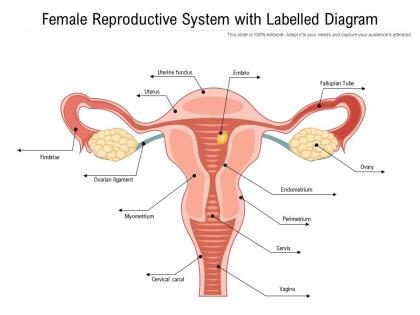
Sistema reproductor femenino con diagrama etiquetado




Try Before you Buy Download Free Sample Product
 Impress Your
 Audience
 100%
100% Editable
 Save Hours
 of Time


Sistema Reproductivo Femenino con Diagrama Etiquetado
Sistema Reproductivo Femenino con Diagrama Etiquetado
Los temas tratados en estas diapositivas son: Femenino, Sistema Reproductivo, Diagrama Etiquetado.
Esta es una presentación de PowerPoint completamente editable y está disponible para descarga inmediata.
Descarga ahora y sorprende a tu audiencia.
People who downloaded this PowerPoint presentation also viewed the following :
Contenido de esta presentación de Powerpoint
¿Sabías que las mujeres nacen con todas las células ováricas potenciales que van a utilizar en su vida? Se estima que son 2 millones. Cuando una mujer llega a la pubertad, los óvulos viables maduran y el número se reduce al 25% del número original. Esta caída es preocupante y también un indicador de envejecimiento. Como si las mujeres ya no estuvieran en riesgo de contraer enfermedades graves, después de la menopausia, su salud es propensa a un mayor deterioro. Estos son los seres vivos que son las dadoras de vida humana y cuidadoras de sus familias. Por lo tanto, su bienestar debe ser lo primero.
Para empezar, el tabú en torno al sistema reproductivo femenino y la salud, primero, debe ser eliminado. Una mujer atraviesa tantas transiciones en la vida, sin embargo, nosotros como sociedad no abordamos sus necesidades psicológicas, físicas y emocionales de la manera correcta.
Si tan solo hubiera un conocimiento correcto, científico y preciso de lo que ocurre en el trasfondo, es decir, el funcionamiento del sistema reproductivo femenino. Entonces, sabríamos que el rostro fuerte y amoroso que una mujer muestra todos los días es a pesar de la guerra que se libra dentro de su sistema biológico.
Educa a tu audiencia sobre la ubicación de los órganos internos con respecto a la apariencia externa de una mujer con esta diapositiva de PPT.
Presentando el esfuerzo de SlideTeam para educar a las masas sobre los sistemas reproductivos femeninos que tanto los estudiantes como el público general pueden utilizar. Muestra la arquitectura de la naturaleza de la maquinaria femenina que agoniza, reconforta y se convierte en una fuente continua de dicha para las mujeres en la tierra. Es una plantilla de presentación diagramática completamente editable diseñada para mostrar la fantástica portadora de bebés de la naturaleza y comprender su funcionamiento.
Plantilla 1: Sistema Reproductivo Femenino con Diagrama
Representa el sistema reproductivo femenino con este diagrama que identifica todos los órganos que forman parte de él. Etiqueta cada órgano mientras explicas su propósito a tu audiencia. Incluso puedes agregar datos relacionados con los ovarios, el útero y su funcionamiento único mientras explicas este poderoso centro de fertilización y desarrollo del feto. Este Diagrama de PPT es particularmente útil para educar sobre la salud reproductiva y sus causas, por lo que el bienestar puede promoverse debido a él.
Un solo diagrama para eliminar el estigma
Educa a tu audiencia de intelectuales o a las masas sobre cómo cuidar a las mujeres y ayuda al género femenino a aprender sobre lo que las hace únicas. Descarga este diseño de PPT para comenzar esta concienciación.
Ovario Trompa de Falopio Útero Vagina Clítoris
Sistema Reproductivo Femenino con Diagrama Etiquetado
FAQs for Female reproductive system
So basically you've got ovaries that make eggs and hormones, then fallopian tubes that carry the eggs to your uterus. That's where a fertilized egg would implant if you got pregnant. Your cervix is like the connection between your uterus and vagina - kind of acts as a gateway. Don't forget the external stuff too like your vulva and clitoris. The whole thing cycles every month because of hormones, which is wild when you think about it. If you're studying this, I'd focus on how everything connects rather than just memorizing each part separately - makes way more sense that way.
Okay so basically your cycle is like a monthly report card for your hormones and overall health. When it's regular (21-35 days), that usually means everything's working well together. But irregular periods? That's often your body saying "hey, something's up" - could be PCOS, thyroid stuff, stress, or even just not eating well enough. Honestly, I think tracking is super underrated. Not just for knowing when your period's coming, but catching weird patterns before they become bigger problems. Just keep a simple diary or use an app - way easier to spot changes that way.
So basically your brain sends out FSH and LH signals that tell your ovaries what to do. Then your ovaries pump out estrogen and progesterone in response. It's honestly pretty cool how coordinated it all is when things are working normally. Estrogen builds up your uterine lining early in your cycle. After you ovulate, progesterone takes over to maintain everything. No pregnancy? Hormone levels crash and you get your period. Once you understand this whole dance, you can actually track your fertility better and spot when something feels weird - which trust me, comes in handy.
Honestly, age is the biggest thing - fertility starts dropping in your late 20s and really tanks after 35 because your eggs aren't what they used to be. But lifestyle stuff can mess you up too. Smoking and drinking too much will screw with your hormones, and being way over or underweight throws everything off. Don't sleep on stress either - I swear it's more powerful than people think. Even crazy workouts or crappy sleep can make your cycle go haywire. If you're trying, just nail the basics first. Get to a healthy weight, cut back on booze, ditch cigarettes if you smoke, and find ways to chill out.
Ugh, where do I even start? Irregular periods are super common, plus UTIs and yeast infections that just keep coming back. PCOS affects way more people than you'd think. Then there's the heavy stuff - endometriosis, fibroids, fertility struggles. I swear doctors used to just brush off period pain like it was no big deal, but that's changing thank god. Heavy bleeding that ruins your plans? Not normal. Cycles all over the place? Also worth checking out. Don't let anyone tell you to just deal with it if something feels wrong.
Okay so basically your ovaries pump out eggs every month, and the fallopian tubes are like these little highways guiding everything toward the uterus. The uterus itself is wild - it can stretch from tiny to baby-sized, then contract like crazy during labor. Your cervix opens and closes when needed (total gatekeeper vibes). The vagina handles all the traffic - sperm going in, periods coming out, babies being born. Honestly the whole system's pretty brilliant when you think about it. Focus on how each part's built exactly for what it does - that's usually what they test you on anyway.
So basically your ovary releases an egg around day 14 - though honestly everyone's different so don't stress if yours isn't textbook perfect. What happens is estrogen builds up, then you get this surge of luteinizing hormone that makes the follicle pop and release the egg. Pretty wild if you ask me! The egg only sticks around for like 12-24 hours before it's done. Cervical mucus changes are your best bet for tracking it, or those ovulation test strips work too.
So basically birth control messes with your cycle in different ways depending on what you use. The pill and hormonal IUDs change your hormone levels - they stop you from ovulating and make your cervical mucus thicker. This usually makes periods lighter and can help with cramps, which is honestly amazing. Condoms don't do anything to your hormones though, they just block sperm physically. Some people love how the pill makes their periods super predictable, but others hate the side effects and stick to non-hormonal stuff. If you're thinking about switching, definitely track your current symptoms first so you can tell your doctor what's been going on.
Ugh, PCOS can really wreck your cycle - like, periods become totally unpredictable or just disappear completely. Makes it super hard to know when you're actually ovulating. It's honestly one of the biggest reasons women struggle to get pregnant, though plenty still do! The hormones being all over the place also ups your chances of miscarriage and stuff like gestational diabetes during pregnancy. Oh, and the insulin resistance thing? That just makes everything worse - it's like a domino effect. But there's definitely hope! Lifestyle tweaks and fertility treatments work really well for most people when they're ready to try.
Girl, this stuff can really mess you up. Chlamydia and gonorrhea? They cause PID which basically destroys your fallopian tubes - hello infertility and ectopic pregnancies. HPV cranks up your cervical cancer risk. Herpes gives you those awful painful outbreaks that come back forever. Don't even get me started on untreated syphilis. The worst part? Most of these have zero symptoms at first, so they're doing damage while you're completely clueless. Seriously though, get tested regularly - I know annual exams suck but catching this stuff early makes treatment so much easier.
Oh man, there's actually tons of options now! IVF is the big one everyone knows - they fertilize eggs outside your body then put them back. But there's also IUI where they just insert sperm directly, plus egg freezing if you want to wait. Donor eggs/sperm are there too if needed. The genetic testing stuff is pretty wild now - they can screen embryos before implanting them. There's even ovarian tissue transplants, though that's newer. Honestly the whole field has exploded in the last few years. I'd definitely find a reproductive endocrinologist who can break down what makes sense for your specific situation.
Oh wow, pregnancy literally changes EVERYTHING down there! Your uterus can expand like 500 times bigger (wild, right?), and all that extra blood flow plus hormones like estrogen and progesterone just reshape your whole system. The cervix gets softer and longer. Your ovaries totally stop releasing eggs. Even your pelvic floor muscles get stretched out big time - which honestly nobody warns you enough about beforehand. Most stuff does go back to normal after you give birth, though how long that takes really depends on you and whether you're breastfeeding.
Ugh, the pain is usually the biggest red flag - like way beyond normal cramps that actually mess with your day. Heavy bleeding's another big one, plus it can hurt during sex or even just going to the bathroom. Between periods you might get that nagging pelvic pain that just won't quit, bloating, feeling wiped out. The tricky thing is these symptoms overlap with so much other stuff. Sometimes the pain shoots down to your back or legs too, which is weird but totally normal for endo. If it's getting worse or interfering with life, definitely push for a gyno appointment.
Look, gynecological checkups are basically like having a security system for your reproductive health. They screen for cervical cancer, STIs, and catch stuff like ovarian cysts or endometriosis before they get nasty. Honestly, it's also the perfect time to ask those weird questions you've been secretly googling instead of just wondering forever. Your doctor can help with birth control decisions, fertility planning - all that fun stuff. I know it's awkward but trust me, early detection makes treatment so much easier. Go annually unless your doctor says otherwise.
Honestly, start with good sex ed resources - Planned Parenthood's website is solid. Cover the basics: periods, birth control options, STI prevention, reproductive rights. Our school systems really failed us on this stuff, didn't they? Look for interactive tools and support groups too, especially ones that actually relate to your audience's background. Figure out what people already know vs. what they're missing. Then mix up how you share info - some folks learn better from videos, others need workshops or just simple pamphlets. Whatever clicks for them.
No Reviews