

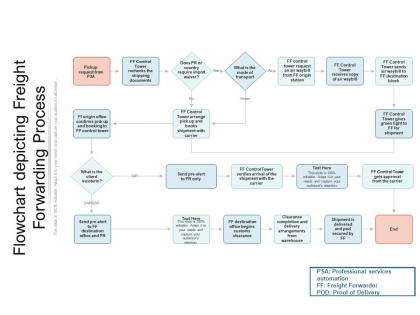
Flowchart depicting freight forwarding process




Try Before you Buy Download Free Sample Product
 Impress Your
 Audience
 100%
100% Editable
 Save Hours
 of Time


Our Flowchart Depicting Freight Forwarding Process are explicit and effective. They combine clarity and concise expression.
People who downloaded this PowerPoint presentation also viewed the following :
Flowchart depicting freight forwarding process with all 2 slides:
Give your audience a fulfilling experience. They will find our Flowchart Depicting Freight Forwarding Process elevating.
FAQs for Flowchart depicting
So basically you've got booking and docs first, then they pick up your stuff and consolidate it at origin. Export customs happens next, plus getting everything to the port/airport. Then comes the actual shipping part - honestly the most nerve-wracking bit where you're just crossing your fingers nothing gets messed up. After that it's import customs at destination, which can be a pain depending on where you're going. Last mile delivery wraps it up. Each step has its own paperwork headaches, so I'd definitely figure out which parts usually slow things down for whatever you're shipping.
Honestly, flowcharts are a game changer for freight forwarding. All that chaos with docs, customs, carriers, timing? suddenly becomes way more manageable when you can see it laid out step by step. Training new people becomes so much easier - no more trying to explain everything at once. Plus you'll catch those annoying bottlenecks before they bite you. My boss swears by them now. Create one for your busiest routes first, trust me on this. Way better than keeping it all in your head and hoping nothing falls through the cracks.
Honestly, freight forwarding flowcharts get messy fast because of documentation delays and customs being a nightmare. Build in decision points for when customs flags stuff or your carrier suddenly has zero space available. Port congestion's another big one - you need backup routes mapped out. Communication breakdowns happen constantly between all the different parties too. Weather delays are inevitable, so don't even get me started on that chaos. The trick is having contingency branches everywhere so when everything goes wrong (and it will), your team actually knows what to do next.
Honestly, tech integration is a game changer for cutting out all that manual stuff that bogs down freight forwarding. APIs let you connect your TMS directly with carriers for instant rates and booking. EDI handles document exchanges without the back-and-forth nonsense. Set up automated tracking so customers get updates automatically - saves you tons of time. IoT sensors are actually pretty sweet for real-time cargo visibility too. The real win? You'll eliminate data entry mistakes that cause major headaches. I'd start with automating rate requests first since that's usually the biggest pain point.
So documentation is literally everything in freight forwarding - without it, you're screwed. The flowchart shows docs at every step: booking forms, customs stuff, bills of lading, delivery receipts. Each piece proves your goods are legit and cleared to move. Miss one signature? Your shipment sits there for days while you scramble to fix it. I learned this the hard way last year. Always triple-check everything before hitting submit. One tiny mistake and customs will hold your stuff hostage indefinitely. It's tedious but totally worth getting right.
Honestly, flowcharts are game-changers for training new people. Instead of dumping all that freight forwarding chaos on them at once, they can actually see how everything connects. Like, customs flows into carrier coordination, then documentation, you know? Way less overwhelming than verbal explanations that jump all over the place. New hires pick up the big picture so much faster when it's visual. Plus when they're freaking out about what happens after cargo hits the port, they can just follow the chart. Oh, and definitely have them walk through real examples using it their first week - makes it stick better.
Honestly, start with the big three: air, ocean, or ground shipping. That's your foundation right there. Documentation is where everything falls apart if you're not careful - seriously, one missing customs form and you're toast. Set up clear yes/no decision points for insurance, routing (cheap vs fast, always a tradeoff), and any special handling stuff like cold storage or hazmat. Cargo consolidation can save you tons if you play it right. Make sure each step shows who approves what and where bottlenecks usually hit. Your team will thank you when they're not scrambling to figure out what's next.
So basically every country throws their own rules at you - different docs, compliance stuff, import requirements, the whole deal. Your flowchart becomes this maze of mandatory checkpoints that you literally can't skip without getting stuck at customs. Some countries are way pickier than others too. You've gotta build in buffer time for inspections that might randomly pop up, plus all the compliance checks along the way. Otherwise you'll have delayed shipments and clients breathing down your neck. It's honestly pretty annoying but that's just how international shipping works - each stage needs the right paperwork or you're screwed.
Start with swimlane diagrams - they're perfect for showing who does what (shipper, forwarder, customs, etc). Value stream mapping works well too since it spots where things get stuck. Walk through the real process with your ops people first though, don't just wing it from your desk. Use standard flowchart stuff - rectangles for processes, diamonds for decisions. Map out the big decision points like doc approval or picking routes. BPMN's nice if you want to get technical about it. Honestly most people make this way harder than it needs to be. Test everything with an actual shipment scenario before calling it done.
Look, each shipping method totally changes your timeline and paperwork. Ocean's cheapest for heavy stuff but takes forever - plus you're stuck dealing with container bookings and port delays (honestly such a pain). Air gets things there fast but packaging rules are super strict and hazmat docs are annoying. Ground transport? Way more flexible with pickups and way less paperwork headaches. Rail's kinda in between for speed and complexity. You really gotta match what your client needs with their budget upfront though. Trust me, trying to switch modes halfway through just creates a mess.
Dude, start with checklists for every step - sounds boring but it works. Get two people checking the important stuff like addresses and customs codes because I swear, one wrong digit will screw your whole timeline. Log everything as it happens, not later when you're trying to remember what you did three hours ago. Set up alerts for deadlines so nothing sneaks up on you. Oh, and keep backup copies of everything important. Honestly, audit whatever system you have now first - you'll probably spot the problem areas pretty quick. Most errors happen in the same places over and over.
Just drop communication checkpoints everywhere customers might get antsy. Booking confirmation first, obviously. Then hit them with pickup updates, customs status, transit progress, delivery confirmation - the whole nine yards. Make it automated but don't sound like a robot (customers hate that). Build in escalation routes too because honestly, freight forwarding is basically Murphy's Law in action. Proactive delay alerts are clutch. The real trick? Think about every single moment they're wondering "seriously, where the hell is my shipment?" and put a touchpoint right there.
Honestly, start with on-time delivery rates and transit times - that's where you'll see if things are actually flowing or if you're constantly putting out fires. Cost per shipment is critical too because those overruns sneak up on you quick. Exception rates matter a lot, plus customs clearance times if you're doing international stuff. Customer satisfaction scores are obvious but easy to forget when you're drowning in logistics. Documentation accuracy is annoying to track but errors will destroy your timelines. My advice? Pick maybe 3-4 metrics that hit your worst problems instead of trying to measure the entire universe at once.
Ugh, supply chain issues are such a headache - they mess up literally every part of freight forwarding. When ports get backed up or carriers suddenly change schedules, your documentation and booking get screwed. Then you've got truck shortages hitting pickup and consolidation, plus warehouse backlogs everywhere. Customs takes forever with skeleton crews running things. Even final delivery gets delayed because there aren't enough drivers or they have to reroute everything. I swear it's like watching dominoes fall in slow motion. Your best bet? Build in extra time for each step and always have backup carriers ready. Disruptions are just part of the game now, unfortunately.
Start by mapping out every step in your current process - it's like being a detective. Bottlenecks and delays will jump out at you once everything's visualized. I've seen companies where literally three people were checking the same documents (waste of time much?). Watch for steps that drag on forever or involve too many handoffs between teams. Communication breakdowns are huge red flags too. The flowchart shows you where shipments sit waiting for approvals or where paperwork bogs things down. Once you can see the whole picture, prioritizing which fixes will save you the most time and money becomes pretty obvious.
No Reviews