


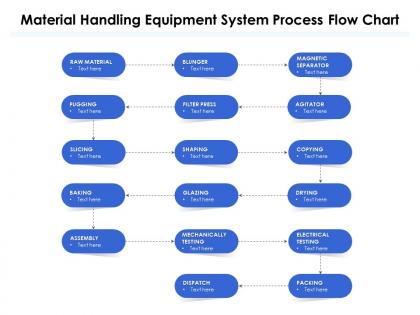
Material handling equipment system process flow chart




Try Before you Buy Download Free Sample Product
 Impress Your
 Audience
 100%
100% Editable
 Save Hours
 of Time


Our Material Handling Equipment System Process Flow Chart are topically designed to provide an attractive backdrop to any subject. Use them to look like a presentation pro.
People who downloaded this PowerPoint presentation also viewed the following :
Material handling equipment system process flow chart with all 2 slides:
Use our Material Handling Equipment System Process Flow Chart to effectively help you save your valuable time. They are readymade to fit into any presentation structure.

FAQs for Material handling equipment system
So you'll need the basics - racks, bins, shelves for storage. Conveyors and forklifts for moving stuff around. The software part is honestly where most people mess up though - get something decent to track inventory or you're screwed. Oh and don't cheap out on loading equipment. Here's what I'd do: map out how materials currently flow through your space first. See where things get jammed up. Then tackle those problem spots with the right gear. Best equipment in the world won't fix a terrible layout, trust me on that one.
Dude, automation is seriously changing the game for warehouses right now. Robots are picking stuff with crazy accuracy, and AI figures out the best routes and layouts. Conveyor systems run 24/7 without getting tired (honestly kind of jealous). RFID tracking gives you instant updates on where everything is, which cuts down on those "wait, where'd we put that?" moments. Your costs drop and orders get filled way faster. I'd totally start looking at what parts of your operation could use this tech - even small changes can make a huge difference in efficiency.
Look, inventory management is literally what makes or breaks your material handling flow. Real-time data means your team knows exactly where stuff is - no more wandering around looking for items. Bad inventory? You're stuck with wasted motion and super annoyed workers. I've seen warehouses where people spend half their shift just hunting for things. Your inventory records need to match what's actually on the shelves, then use that info to figure out the best storage spots. Check your accuracy rates first - anything under 95% and you've got work to do.
Start with 5S - get everything organized with designated spots so materials actually flow smoothly. Just-in-time delivery is huge for cutting down inventory (seriously saves tons of floor space). Map out your current material flow first and spot the biggest time-wasters - that's where you'll see quick wins. Pull systems work way better than push for avoiding overproduction. Value stream mapping helps find those annoying bottlenecks too. Honestly, standardizing your handling procedures makes everything more predictable. The whole lean approach is about eliminating waste and optimizing flow, but don't try to fix everything at once or you'll go crazy.
Each industry has its own headaches, honestly. Pharma's obsessed with contamination and keeping stuff at exact temperatures - mess that up and you're toast. Food processing? Same sterility issues plus everything expires fast. Manufacturing throws crazy volume at you with products that are all different sizes. Auto companies want everything delivered at the perfect moment (good luck with that). E-commerce is wild - one minute you're handling phone accessories, next it's a couch. Oh, and they want the system to magically adapt to both. Best thing you can do is figure out your industry's specific nightmares first, then build around those instead of some cookie-cutter solution.
Honestly, real-time tracking is a game changer - you'll always know exactly where your stuff is without that panic of "wait, where did that shipment go?" Bottlenecks become way easier to catch early, and you can actually fix workflows as problems pop up instead of guessing what's wrong. Manual counting becomes less of a headache since everything logs automatically. The best part though? You can give customers a heads up about delays before they start calling you. Way better than scrambling for excuses later. Oh, and start with your expensive materials first - learned that one the hard way.
Alright, so first things first - everyone needs hard hats, safety shoes, and high-vis gear. No shortcuts there. Check all your equipment before every shift starts, and make sure load limits are posted clearly everywhere. Lockout/tagout procedures are a must for maintenance work. Training's absolutely critical though - hand signals, proper lifting, emergency stops, all of it. Oh, and separate your forklift lanes from where people walk. Trust me on this one, mixing pedestrians with heavy equipment never ends well. The whole thing falls apart if people get lazy about following protocols consistently.
Your equipment choice makes or breaks throughput and costs. Pick the wrong conveyor speed? You're creating bottlenecks everywhere. I've watched companies blow money on these fancy automated systems when they barely needed basic conveyors - such a waste. Match your equipment to actual volume, not what seems cool. Weight, size, how fragile stuff is - all that matters for picking the right setup. Oh, and don't forget peak demand periods hit different than average days. Map out where you're currently losing time first. Then you'll know what actually needs fixing instead of guessing.
So definitely track throughput first - how much stuff you're moving per hour. Then accuracy for picking/sorting mistakes, and cost per unit to see if you're actually saving cash. Labor utilization matters a ton too, honestly probably more than people realize. Your workers shouldn't be standing around waiting for the robots, you know? Equipment downtime and safety incidents hit your profits directly. I'd measure weekly to start - gives you solid baseline data before you get into the weeds with more detailed stuff.
So ergonomics is basically about designing your workflow so workers don't get hurt and can actually be productive. Keep heavy stuff between knuckle and shoulder height - saves people's backs. Trust me, skipping this costs way more later with injuries and people quitting. You want to cut down on weird postures and repetitive stuff. Adjustable surfaces help a ton, plus mechanical aids like hoists. I'd honestly just walk through your current setup first - you'll probably notice obvious problems right away that are super easy to fix.
Dude, warehouses are getting insane right now. AI automation is everywhere, plus these collaborative robots that actually work alongside people instead of replacing them. IoT sensors track literally everything in real-time - kinda overwhelming but the data's actually useful. Cloud-based management systems are probably the biggest game changer though. Oh and everything's going electric now, even the forklifts. What's wild is how it's all connected and can predict issues before they happen. Honestly though? Don't go crazy - pick one thing to automate first and see how it goes.
Honestly, facility layout makes or breaks your material handling efficiency. You want straight-line flows without people zigzagging all over the place - that's just burning money on labor. Map out receiving, storage, picking, and shipping so they actually follow your workflow logically. Every unnecessary turn slows things down and pisses off your workers. Short travel distances are your friend here. Also, don't paint yourself into a corner - leave space for when you inevitably need to expand or swap out equipment. I'd start by watching where people walk the most and see what's causing those extra steps.
Dude, you absolutely need to train your people properly. I can't stress this enough - it's what separates smooth operations from constant headaches. Your team needs to know lifting techniques, how to run equipment safely, all that basic stuff. Honestly, the payback is insane because one untrained person can trash expensive machinery in like a day (seen it happen). Trained workers also catch problems early before they get costly. Start with safety basics, then get into equipment-specific training. Oh, and don't forget refresher sessions - people get sloppy over time.
Dude, start with an energy audit - that'll show you where you're bleeding money. Electric forklifts are a game changer, plus automated systems can slash your energy use by 30%. The payback is actually really good. Smart warehouse layout helps too - less travel distance means less waste. Oh, and inventory management software stops you from overstocking random stuff you don't need. Reusable packaging saves tons over time. Set up recycling for broken items while you're at it. Honestly, the electric equipment upgrade should be your first move - everything else builds from there.
Yeah, it's pricey upfront - anywhere from $50K to millions depending on what you need. Most places break even in 2-3 years though. Labor savings are huge, plus way fewer accidents which your insurance will love. Your workers won't be destroying their backs either, which is honestly just the right thing to do. Operations speed up big time too. I'd crunch the numbers on current labor costs versus system costs over maybe 5-10 years? Oh, and definitely get quotes from at least 3 vendors first - pricing varies like crazy between them.
No Reviews