


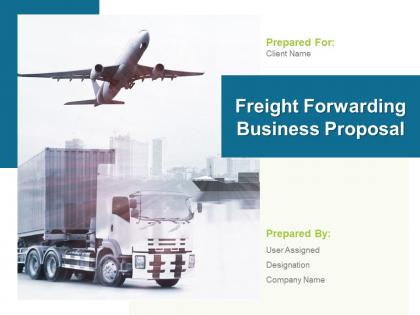
Freight forwarding business proposal powerpoint presentation slides




Try Before you Buy Download Free Sample Product
 Impress Your
 Audience
 100%
100% Editable
 Save Hours
 of Time


Forwarding freight through various mediums like land, rail, marine, and air requires coordination, regulation and agreed upon best practices to ensure that the goods flow in a proficient manner across various borders. Since providing freight services is so challenging and requires much expertise, it is important to pitch your services confidently to attract the attention of the business prospects. If you lack the necessary knowledge or are just looking for a professionally designed proposal template, then this Freight Forwarding Business Proposal PowerPoint Presentation Slides is the right product for you. This template consists of all the constituents that make a good freight forwarding proposal such as a detailed description of all the services that the agency intends to offer, types of clients that they deal in, etc. Everything is explained in brief here in this PPT. Use this PPT to explain all your offerings along with the logistics process outlining all the stages. This will give them an overview of the process which you will be following to move their products. With this PPT, you can easily elaborate on all your services and persuade your clients to hand over their freight forwarding project to your company. Show that you are a reliable resource when it comes to moving their goods from one place to another with this highly researched freight forwarding business proposal slideshow.
People who downloaded this PowerPoint presentation also viewed the following :
Content of this Powerpoint Presentation
The data-rich world of the freight forwarding sector highlights its critical role in boosting global trade. This industry is expected to reach USD 320 billion by 2032, increasing at a CAGR of 5.5%. The sector also handles more than half of international flight freight.
This industry is expanding and offers growth opportunities for businesses. DHL Global Forwarding, FedEx Corp., and Nippon Express Co. Ltd. are among the biggest corporations involved in international shipping.
To find out what should be in a successful restaurant business plan, check out SlideTeam’s one-pager template.
If you’re a part of this worldwide supply chain network, check out SlideTeam’s exclusive PPT Deck on Freight Forwarding Business Proposal. This comprehensive framework helps in connecting stakeholders, processes, and gaps between the exporter and importer. Define financial considerations, operational realities, and commercial environment of your company with this presentation.
Check out this sample proposal for Logistics Services Business.
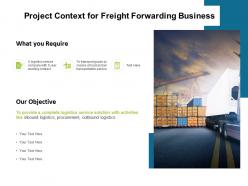
Template 1: Project Context for Freight Forwarding Business
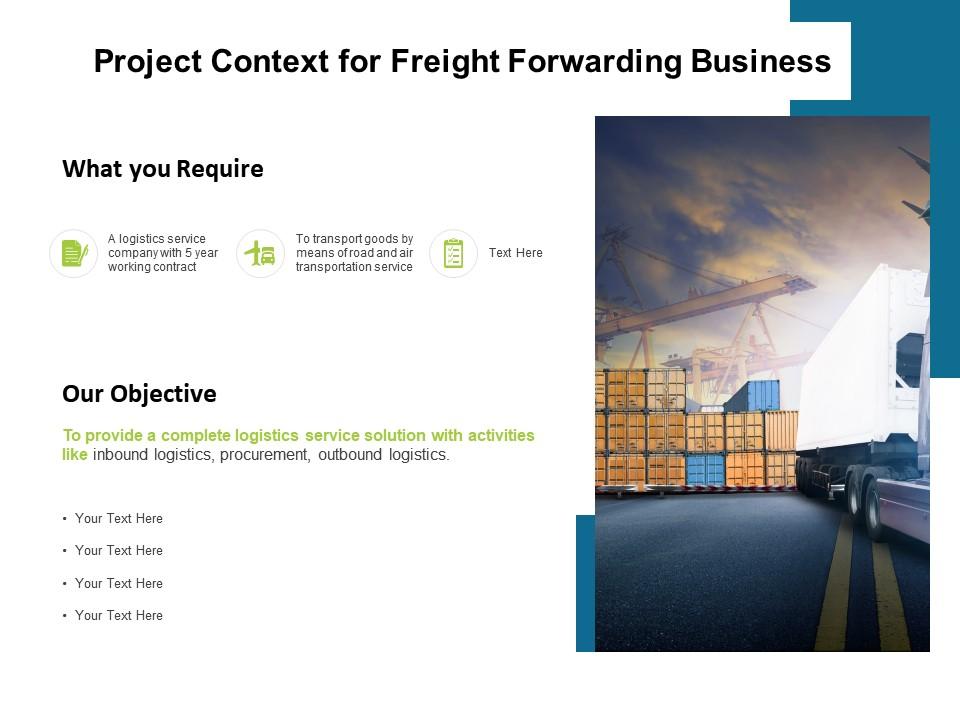
Use this pre-made PPT Template to create a framework for your freight forwarding business services. This provides project goals and context to a business looking for logistics support services. Employ this presentation to discuss the needs of the client and lay out the value proposition of your solution.
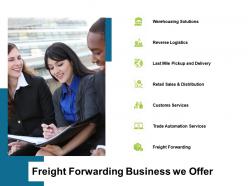
Template 2: Freight Forwarding Business We Offer
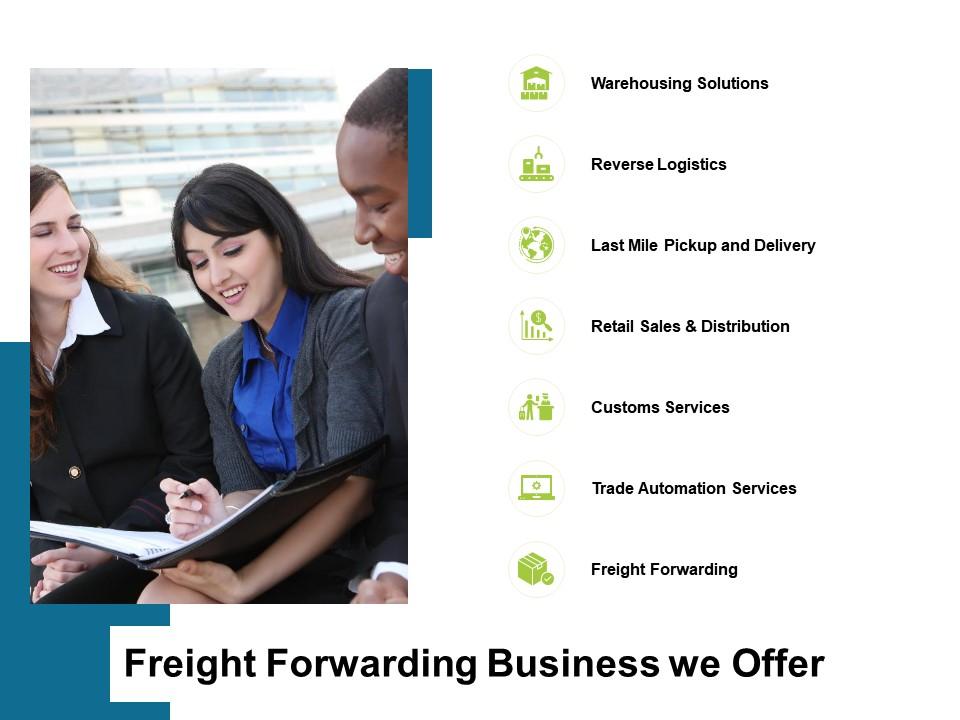
This PPT Layout allows you to showcase your services and offers to potential customers. Use it to promote your services, such as warehousing, customs, reverse logistics, and freight forwarding. The idea is to develop a great pitch for your clients.
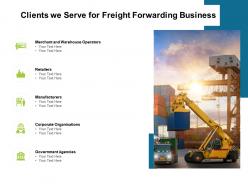
Template 3: Clients we Serve for Freight Forwarding Business
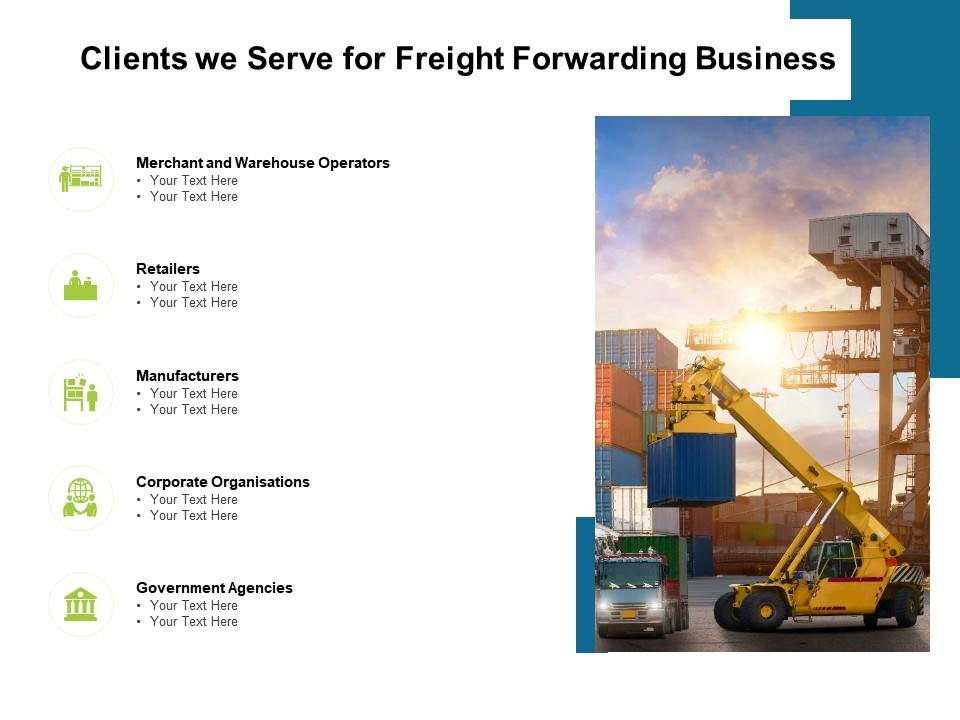
Use this PPT Framework to highlight your clients. This will raise your company’s profile, foster confidence among potential customers, and increase revenue. It provides categories for mentioning your client’s details, such as merchant and warehouse operators, retailers, manufacturers, and so on. This will boost your company’s credibility.
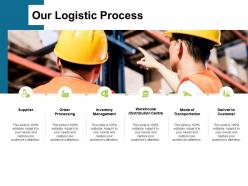
Template 4: Our Logistic Process
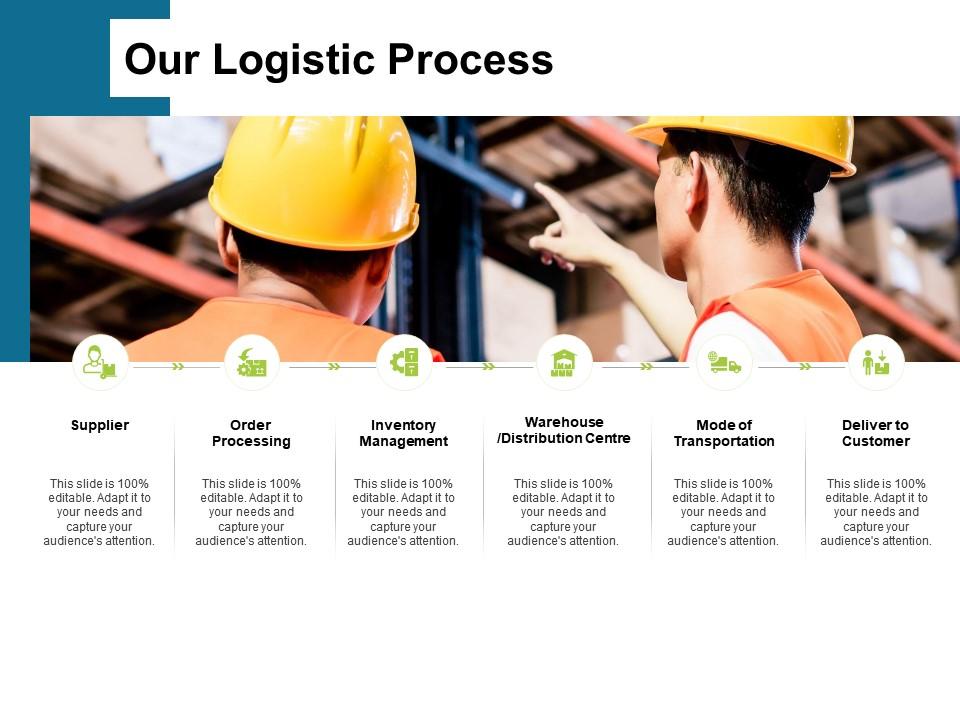
Logistics is an essential component of any organization. Use this PPT Slide to explain your logistics process to your clients. Highlight main actions your business takes to move items from one location to another. This will demonstrate improved inventory control and higher supplier and client satisfaction. It includes information regarding order processing, warehouse/distribution centers, modes of transportation, etc.
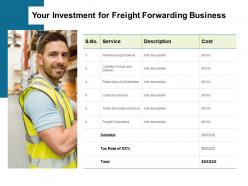
Template 5: Your Investment for Freight Forwarding Business
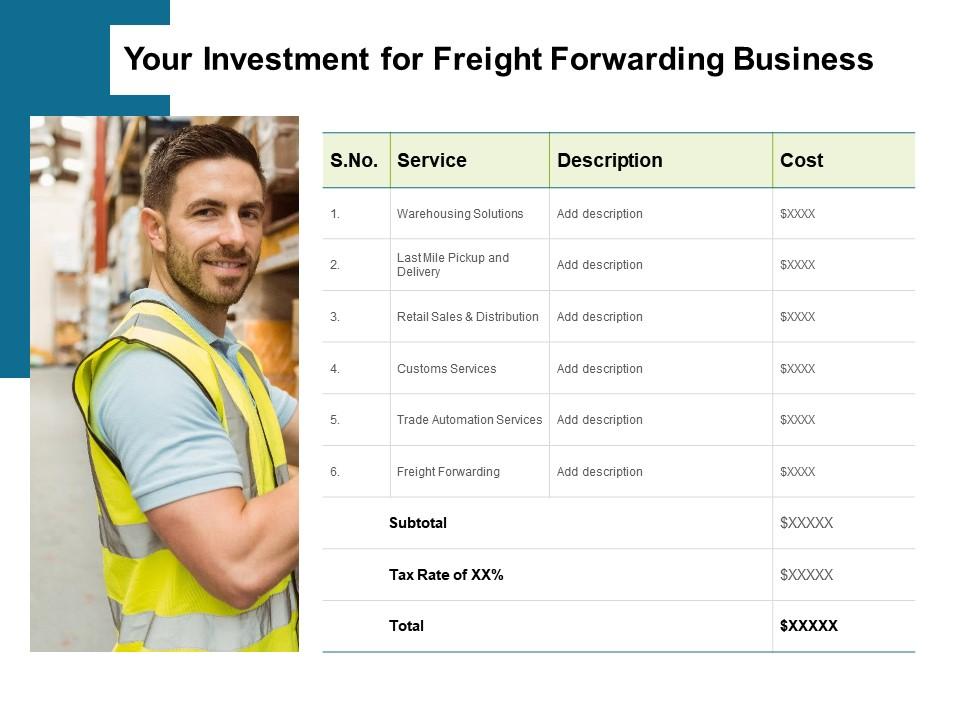
This PPT Preset shows an investment structure for contracting freight forwarding services. It shows prices for services to help clients comprehend the amount of expenditure. Use this presentation to provide a cost estimate for warehousing, customs, trade automation, etc.
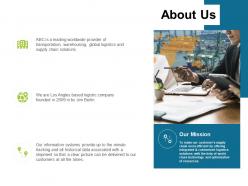
Template 6: About Us
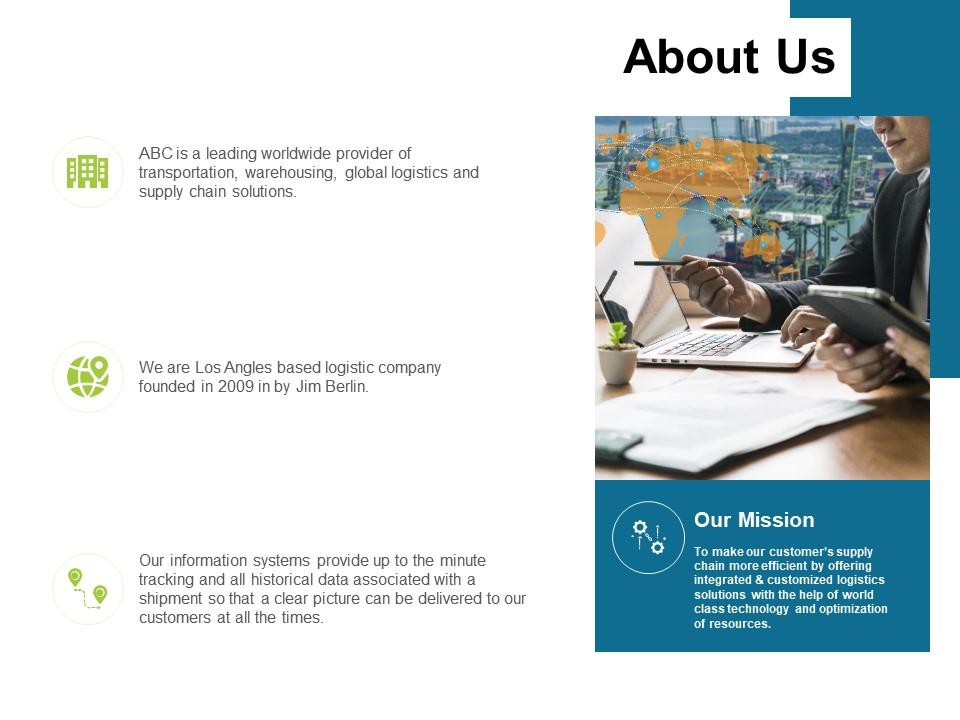
Use this PowerPoint Presentation to introduce potential clients to your company and its methods of operation. This will help discuss your company’s history, work summary, clientele, and successes. Download and edit this template to engage with your clients and form long-term partnerships.
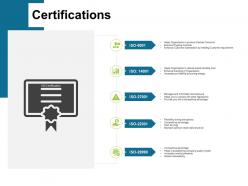
Template 7: Certifications
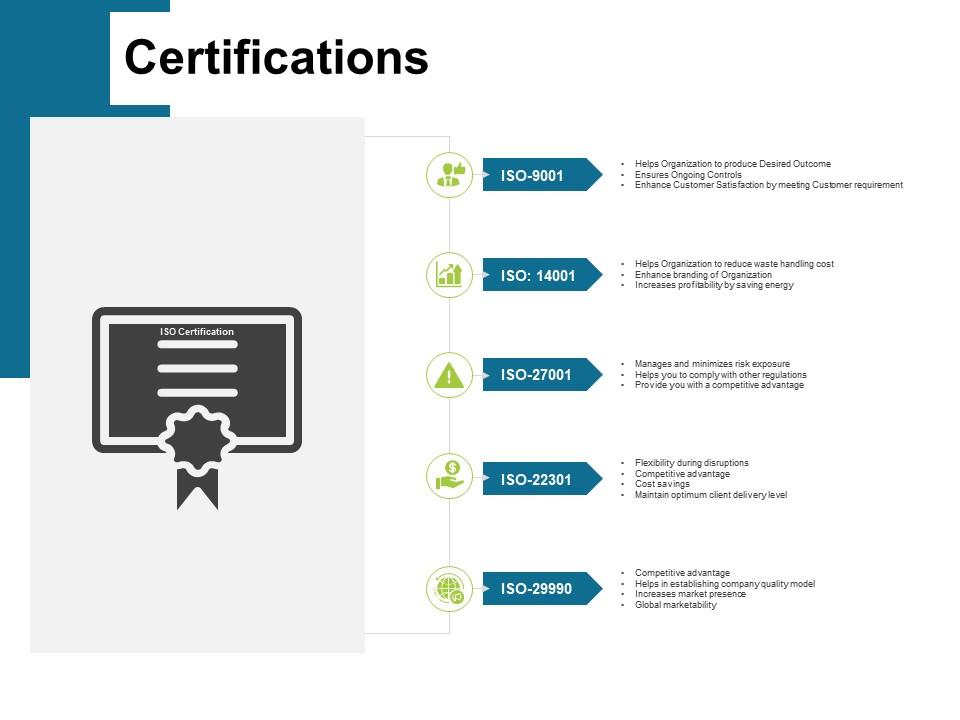
This PPT Template highlights certificates that demonstrate your company’s transportation and logistics experience. Use it as a foundation of credibility to manage the complexities of global trade. Gain remains competitive and boost your company’s bottom line with the use of this slide.
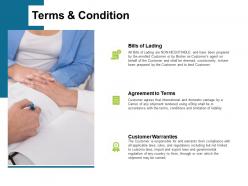
Template 8: Terms & Condition
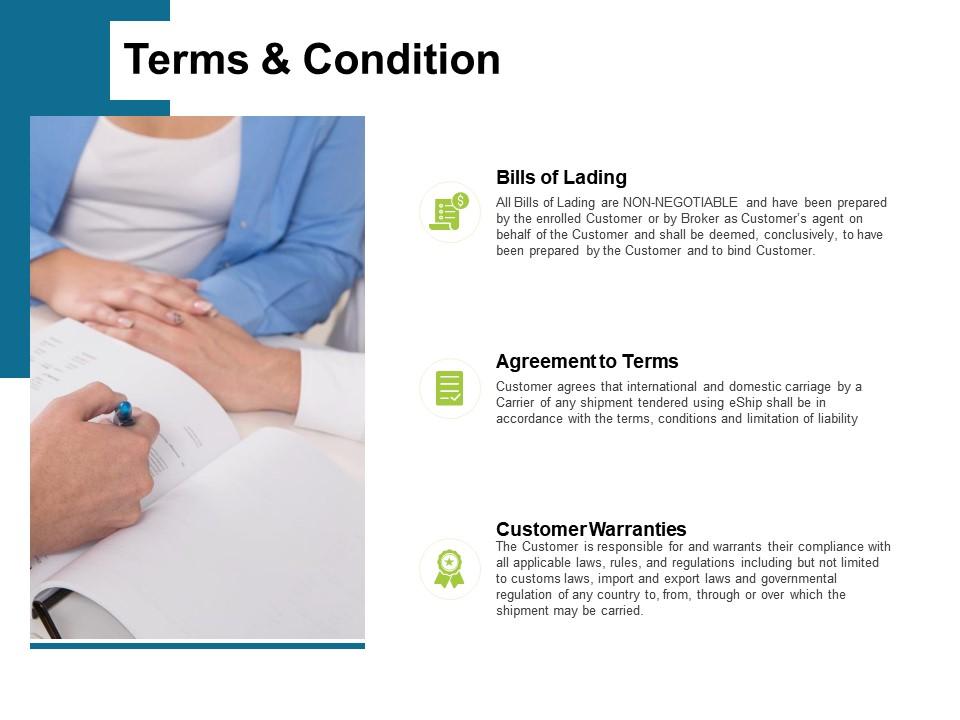
This PPT template serves as a legal agreement between freight forwarders and their consumers. Use it to discuss the terms and conditions for arrangements, services, and payments. This will serve as proof of shipment contract. Bills of lading, an agreement to terms, and customer warranties are all included to prevent any legal or financial issues.
Template 9: Terms & Condition Contd.
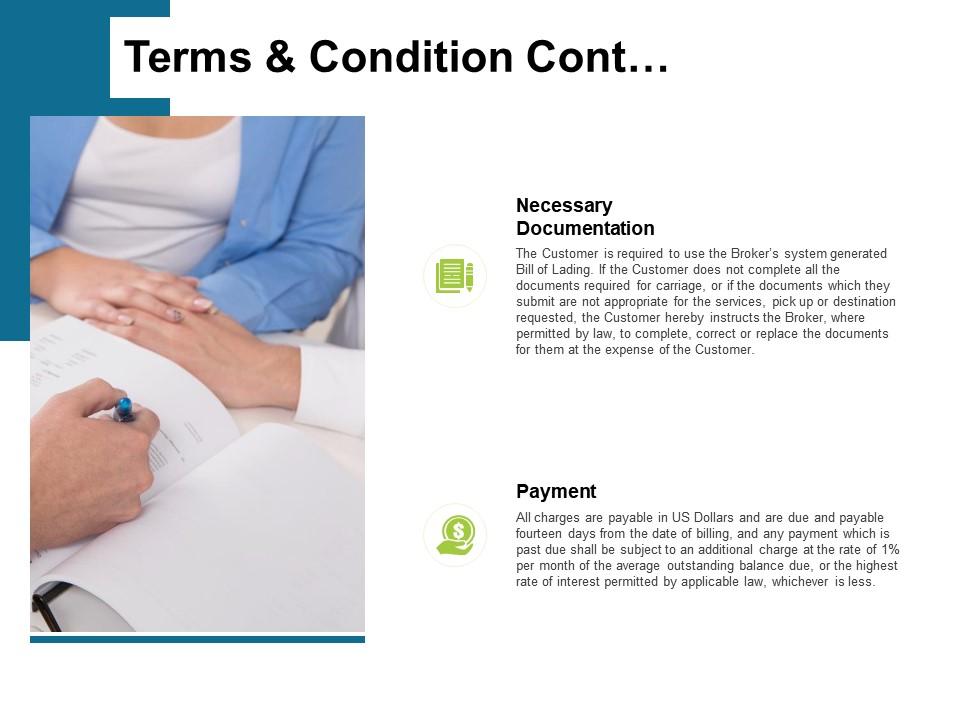
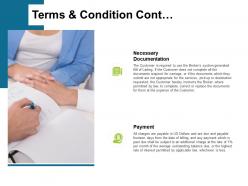
Add weight to your pitch with another PPT Design on freight forwarding agreement. This comprises terms and conditions that ensure the freight forwarder and client are on the same page.
Template 10: Sign Off
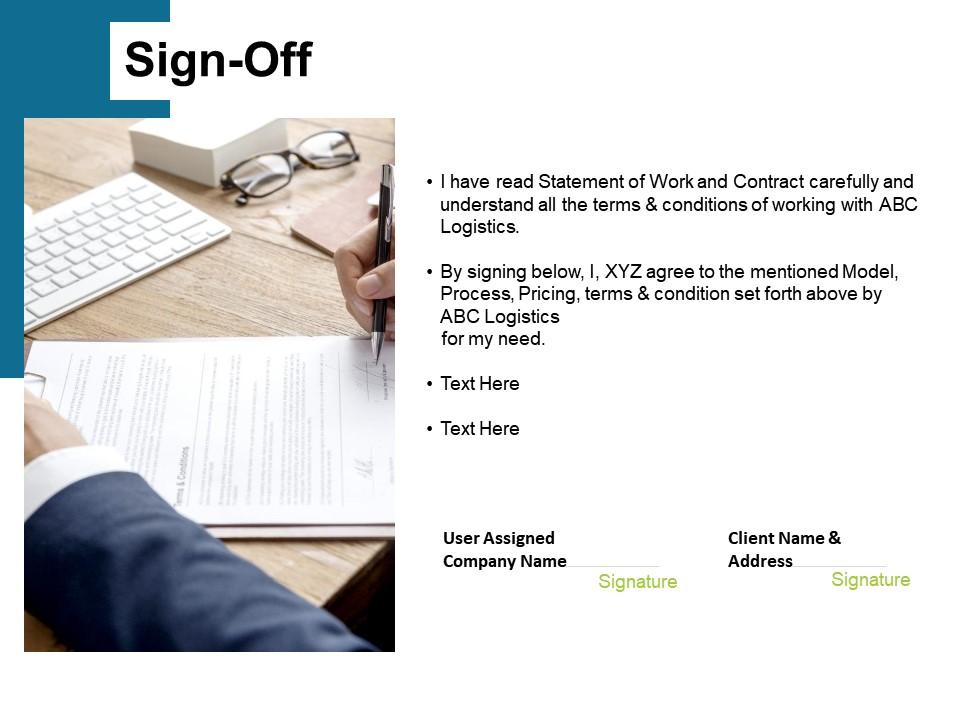
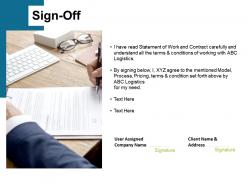
This PPT Design will help you close a deal with your clients. After the proposal has been reviewed, this sign-off page is excellent for binding the company and its clients legally. This guarantees that the client thoroughly understands the contract and want to hire your services.
Moving imports and exports.
Use SlideTeam’s PPT Templates to go deeper into the specifics of freight forwarding companies and organize your proposal.
P.S. Developing a business plan for an immigration consulting firm? To get started, download this pre-designed business proposal.
Freight forwarding business proposal powerpoint presentation slides with all 22 slides:
Use our Freight Forwarding Business Proposal Powerpoint Presentation Slides to effectively help you save your valuable time. They are readymade to fit into any presentation structure.


FAQs for Freight forwarding business proposal
So freight forwarders are like your shipping middlemen - they handle all the crazy logistics of moving stuff internationally. You know, coordinating carriers, dealing with customs paperwork, negotiating shipping rates. Basically they're project managers for your supply chain. They'll also sort out cargo insurance and track everything for you. Honestly, international shipping sounds like a nightmare without them. When stuff goes wrong (and it will), they're the ones fixing it. Oh, and if you're doing any serious international business, you'll want good relationships with forwarders in your main markets. Trust me on that one.
So freight forwarders basically handle all the paperwork nightmare - commercial invoices, packing lists, bills of lading, permits, the whole thing. They figure out the right HS codes for your stuff and calculate what you'll owe in duties. The best part is they work with local customs brokers who actually know what's going on at each port. Rules change all the time and honestly, every country does things differently. They'll catch problems before your shipment gets stuck somewhere. Oh, and seriously - give them every detail about your products upfront. Trust me, being vague just creates problems later.
AI route optimization and IoT tracking are the big game changers right now. Digital freight marketplaces are basically cutting out old-school brokers too. Blockchain's supposed to help with documentation but honestly adoption is crawling - not sure it'll happen anytime soon. Machine learning predicts delays pretty well now, which is cool. Your customers want Amazon-level visibility though, that's the real pressure. They expect real-time tracking and heads up about problems before they happen. You'll need platforms that show everything transparently because without that visibility, you're already behind.
Honestly, go with someone who's handled your type of cargo before - experience saves you so much drama later. Check their coverage in markets you actually ship to. Transparent pricing is huge too, none of that "we'll quote you later" BS. Their tech should let you track stuff easily because radio silence on shipments is the worst. I'd rather pay a bit more for someone who actually responds quickly when things go sideways (and they always do at 3am somehow). Oh, and definitely get references from companies in your space before committing.
So freight forwarders basically look at what you're shipping, your budget, and how fast you need it there. They'll figure out if you should go air (pricey but quick) or ocean (slow but cheap). The really good ones have all these carrier connections and software that does the heavy lifting - honestly makes me jealous sometimes! Your cargo might need special handling too, which they factor in. Just be straight up about what matters most to you. If saving money beats speed, tell them that upfront so they don't waste time quoting you expensive options.
So the big stuff you'll deal with is cargo getting damaged, delays, regulatory headaches, and payment drama with carriers or clients. Documentation screw-ups are honestly what kills most people - super annoying but true. Work with solid carriers, get good insurance, and triple-check your paperwork before anything ships. Stay in touch with everyone during the whole process. Oh, and don't put all your eggs in one basket with carriers. Diversify so you're not screwed if one goes sideways. Insurance isn't sexy but it'll save your ass - trust me on that one.
So freight forwarders are basically middlemen who handle all your shipping chaos. They'll bundle your stuff with other shipments to get better rates, deal with customs paperwork (which is honestly a nightmare), and find the fastest routes. You get their bulk discounts without having to ship massive volumes yourself. The paperwork alone would probably drive you crazy - I tried handling customs forms once and wanted to throw my computer out the window. They also know which carriers are reliable and won't randomly lose your shipments. Worth checking what you're spending on shipping now to see if it makes sense.
Yeah, freight forwarding definitely hits the environment hard. All those trucks, ships, and planes burning fuel adds up fast. Ocean shipping is way cleaner per ton than air freight - honestly the difference is huge - but takes forever obviously. The real killers are bad routing and packaging waste. I'd look for forwarders who actually optimize routes and consolidate shipments together. Carbon offset programs help too. Some companies are getting into electric trucks for city deliveries now, which is cool. Just avoid the ones still doing everything the old wasteful way.
So when everything hits the fan, freight forwarders turn into your lifeline. They'll scramble to find different routes, swap carriers, hunt down backup suppliers - whatever it takes. The experienced ones have connections everywhere and can pull favors you never knew existed. Honestly, the difference between a good one and a mediocre one becomes super obvious during crises. They should keep you in the loop about delays and cost changes constantly. Your part? Give them wiggle room on delivery dates and budget. The more flexibility you can offer, the better they can work around problems and keep things moving.
Hey! So air freight gets there in days but costs like 5-10x more per kg - total wallet killer. Sea freight takes weeks but won't destroy your budget, especially for heavy stuff. Go air for anything urgent, perishable, or super valuable but lightweight. I'd also pick it when storing inventory costs more than just shipping fast. Sea makes sense for big volumes where you're not in a rush and shipping costs actually matter to your bottom line. Most people stress about this way too much honestly. Quick rule: tight deadline = air, want to save money = sea.
Good freight forwarders are basically trade regulation nerds - they're constantly checking government sites, trade publications, all that stuff. When rules change, they update their systems fast. New customs forms? Different tariff codes? They're on it. The smart ones have connections with customs brokers who can actually make sense of the confusing legal jargon. Honestly, pick a forwarder who tells you about regulatory changes before they become your problem. You don't want someone scrambling after your shipment's already stuck at customs.
So shipping insurance is basically your backup plan for when things go sideways - and they will eventually. Cargo insurance handles the usual suspects: damage, theft, lost packages. Then there's liability coverage if your stuff somehow wrecks someone else's day or property. Ocean shipments have their own marine insurance thing too. Your freight forwarder probably includes some basic coverage, but honestly? It's usually pretty bare bones. Worth checking what they actually cover vs. what your stuff is worth. High-value items definitely need the upgrade - learned that one the hard way once.
So basically, decent freight forwarders will hook you up with a tracking portal or app - kinda like Amazon tracking but for your business stuff. You'll get pinged when important things happen like customs clearance or when it actually ships out. The really good ones can plug into whatever systems you're already using through APIs, which honestly saves so much time. I'd straight up ask them what tracking options they have before signing anything. Make sure it actually works for how your team operates. Oh, and push for them to update you automatically instead of making you hunt down info every time.
You definitely want tough corrugated boxes and good cushioning - waterproof stuff too if moisture's an issue. Labels are huge though, seriously. I've watched shipments sit for weeks because someone's printer was running low on ink and the address got all blurry. Your forwarder probably has weird label rules (they always do), so check that first. Get your weights and dimensions right or they'll nail you with extra fees later. Oh, and don't forget hazmat symbols if you need them. Better to double-check everything now than deal with broken products halfway across the world.
So freight forwarders are basically the middleman that handles all your shipping headaches. They've got warehouses, manage your inventory, and coordinate deliveries to customers. The cool part? They have deals with tons of carriers, so you'll get way better shipping rates than if you went direct. Most also do order fulfillment and returns - honestly, it's pretty convenient having everything under one roof. Some even offer same-day delivery in big cities now (which still blows my mind). I'd start by looking for one that knows your specific product type and can handle your volume.
-
Best Representation of topics, really appreciable.