


Freight Forwarding Process Flowchart Transportation Documents Rearrangement International




Try Before you Buy Download Free Sample Product
 Impress Your
 Audience
 100%
100% Editable
 Save Hours
 of Time


Our Freight Forwarding Process Flowchart Transportation Documents Rearrangement International are topically designed to provide an attractive backdrop to any subject. Use them to look like a presentation pro.
People who downloaded this PowerPoint presentation also viewed the following :
Content of this Powerpoint Presentation
As business grows and develops an audience across borders or oceans, there’s a need to master international relations and know about import/export compliances to serve your vast customer base better. Ferrying purchase orders for raw materials or finished goods in a sound state while complying with rules and regulations can be a headache for a company whose primary function isn’t logistics. Still, the logistics department is a crucial part of a company that signs business orders to be sent or received. However, this department must seek help from freight forwarders in moving goods from one place to another. Therefore, understanding a freight forwarding process is crucial for companies to plan expenses, estimate time of delivery, and stay informed about steps involved in transportation.
Presenting SlideTeam’s solution to simplify the complex freight forwarding processes. Streamline your processes from making shipping requests to delivering the cargo to the consignee. Specify the freight forwarding process via airway, sea route, and road using this diagrammatic PPT Presentation. Familiarize your logistics team with the roadmap of goods movement via bold flowchart designs. Let’s check out the best PPT Designs featured in this complete deck.
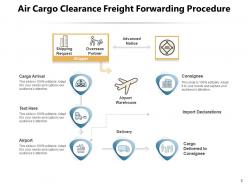
Template 1: Air Cargo Clearance Freight Forwarding Procedure
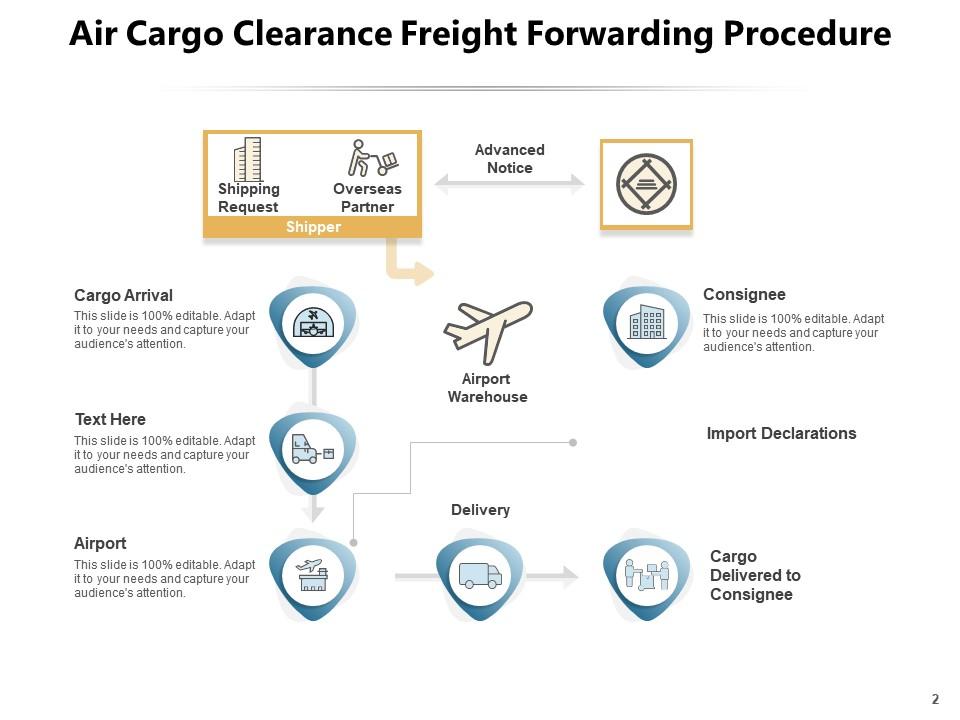
Inform the relevant team and audience about the crucial steps involved in the air cargo procedure, mainly to gain clearance for freight forwarding. Pre-inform the staff about their duties and create awareness of what goes into transporting and delivering articles by air. Use this PPT Flowchart to identify critical points in the process such as airports, consignees, warehouses, and overseas partners. Use this presentation design to impress the importance of coordination and alertness in rendering smooth freight forwarding.
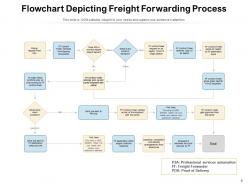
Template 2: Flowchart Depicting Freight Forwarding Process
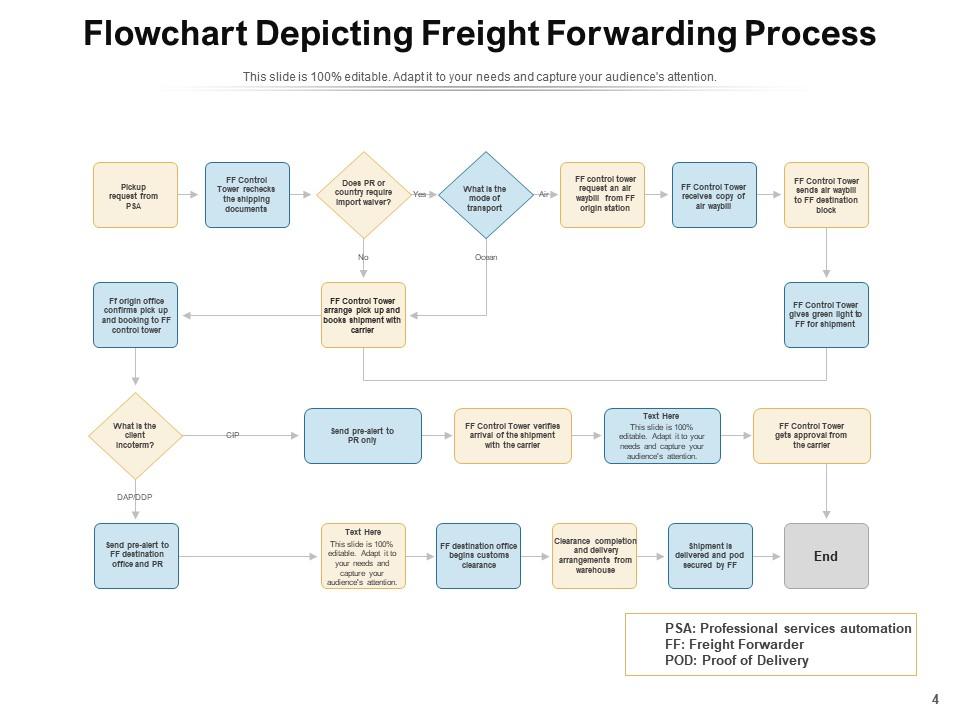
This flowchart diagram creates a detailed roadmap for freight forwarding. Insert necessary determiners to improve the decision-making process of the staff overseeing this operation. Highlight the importance of the control center, gaining approvals, and maintaining proper detailed documents. Invest in this expert-prepared framework now.
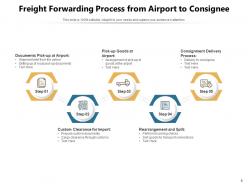
Template 3: Freight Forwarding Process from Airport to Consignee
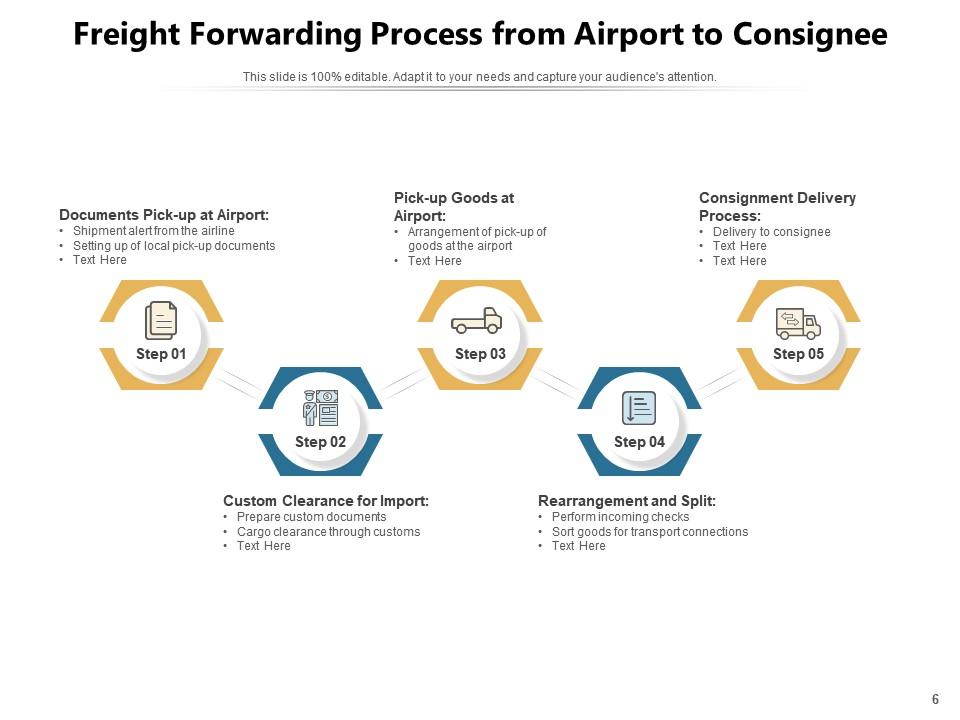
Once an order reaches the destination airport, simplify the details of transporting cargo from there to the consignee with this PPT Diagram. Our experts suggest the major steps as collecting documents at the airport, customs clearing for import, picking up goods, rearrangement and split, and finally, the consignment delivery process. Get this ready-to-use diagram i embellished with relevant icons and having a ready-made alignment.
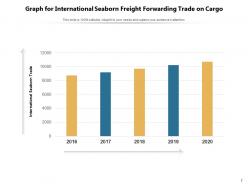
Template 4: Graph for International Seaborne Freight Forwarding Trade on Cargo
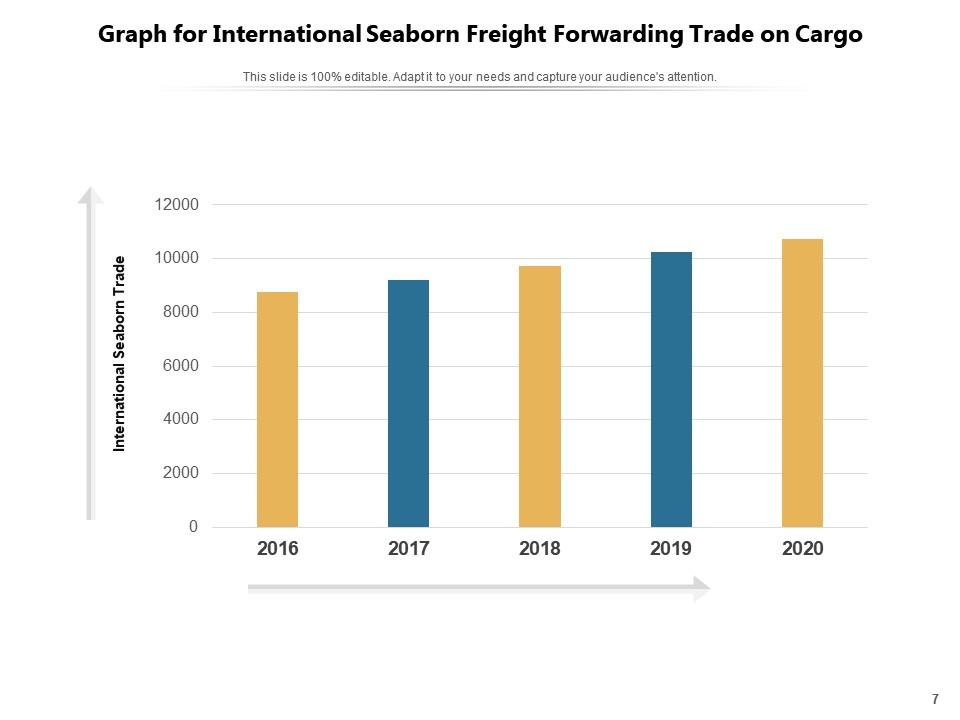
If sea is the most cost-effective and reliable way to conduct freight forwarding for your business, justify the same for international trade with this PPT Template. It’s an Excel-linked slide that allows you to compare the frequency, weight, and profit of goods sold via sea over the years.
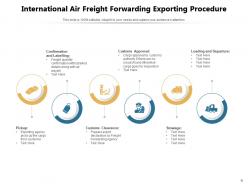
Template 5: International Air Freight Forwarding Exporting Procedure

This flowchart diagram illustrates the process of international export in fair freight forwarding. Specify critical steps like pickup, labeling, custom clearance, custom approval, storage, and departure. Focus on these essential steps to ensure a safe and secure freight export carried via airway.
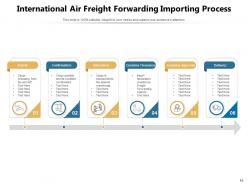
Template 6: International Air Freight Forwarding Importing Process
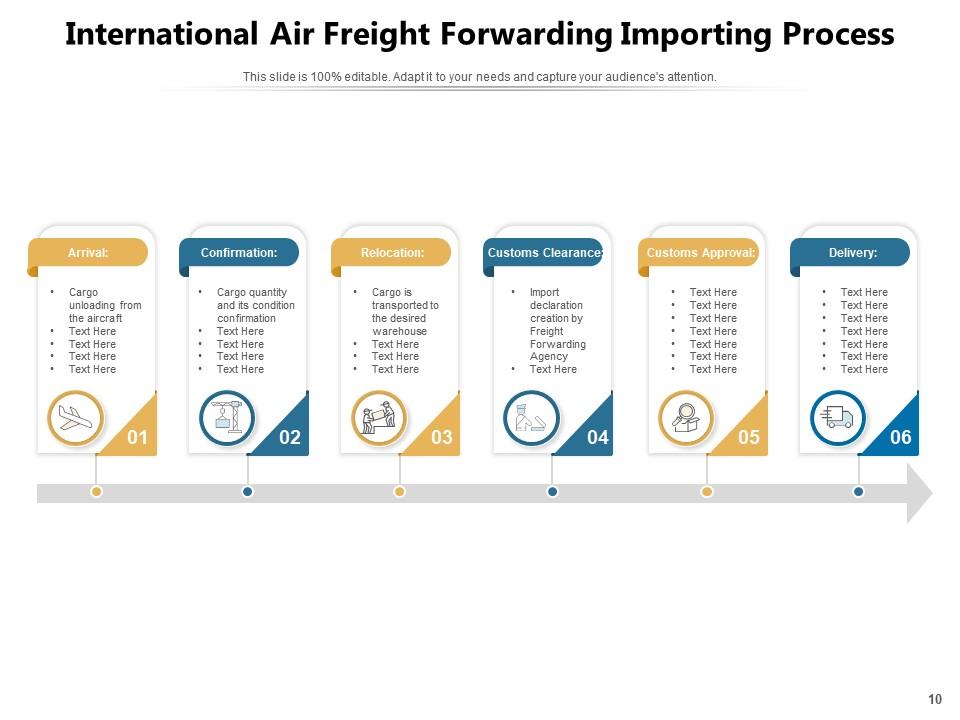
Next, to ensure a smooth freight flow via air, discuss the process of international air freight import with this presentation design. Highlight the crucial steps such as arrival, confirmation, relocation, customs clearance, customs approval, and delivery as guided in this PPT Layout. Pointer format as a drop-down list adds more details to each step involved in safe import and delivery.
Simplify Freight Forwarding
With this readymade PPT presentation, your logistics team can develop clarity about freight forwarding readymade or airway or seaway. This editable PPT Design mentions specific guidelines, contact numbers, and locations to ensure easy and secure transportation of goods. A freight forwarding company that wishes to establish business relationships must use this professional PPT Template to share notes on how they work.
Freight Forwarding Process Flowchart Transportation Documents Rearrangement International with all 11 slides:
Use our Freight Forwarding Process Flowchart Transportation Documents Rearrangement International to effectively help you save your valuable time. They are readymade to fit into any presentation structure.

FAQs for Freight Forwarding Process Flowchart Transportation
Okay so freight forwarders are like your shipping middleman - they don't actually own the trucks or boats but they coordinate everything for you. They'll book your transportation, handle all that customs paperwork (which is honestly a nightmare), and deal with carriers and warehouses. Think of it as having someone who knows all the right people at ports worldwide. They also track your stuff and sort out insurance and bills of lading. The biggest win? These guys have connections everywhere and actually understand international shipping rules. Definitely find one with solid relationships in whatever country you're shipping to.
Okay so freight forwarders are like logistics coordinators - they'll handle your whole shipment process. Regular shipping companies? They just move your stuff from point A to point B, that's it. Here's the thing though - freight forwarders do all the annoying paperwork, find you the best carriers, deal with customs, warehouse management, the works. Super helpful for international stuff where regulations get messy. UPS will deliver your package, but they won't navigate import laws for you. If you're shipping frequently or dealing with complicated routes, honestly a freight forwarder saves you so much hassle.
So there's basically four main ways to ship stuff - ocean, air, trucking, and rail. Ocean freight is super cheap but takes forever, so it's great for heavy things you don't need right away. Air's the opposite - crazy fast but expensive as hell. Most of your domestic stuff will probably go by truck since that handles like 90% of regional deliveries anyway. Rail's good for bulk items going long distances, though honestly I don't see it used as much these days. You should probably just look at what you're shipping most often and work backwards from there to figure out costs.
So freight forwarding tech is honestly a lifesaver. Real-time tracking means you'll actually know where stuff is without calling everyone. Documentation gets auto-generated which saves me like 3-4 hours weekly - that alone makes it worth it. Most systems now connect directly with carriers so you're not juggling ten different logins. Booking becomes way less painful too. Oh, and predictive analytics will flag delays before they screw up your whole schedule. I'd start with a decent TMS that plays nice with whatever you're already using. Game changer for sure.
Ugh, where do I even start? Shipment delays are constant - like seriously, something's always getting held up. Customs is a nightmare, and don't get me started on how regulations change every other week. Peak season capacity issues will make you want to pull your hair out. Then there's the fun of coordinating across time zones with carriers and brokers while dealing with documentation screwups that can tank entire shipments. Oh, and rates? Totally unpredictable thanks to fuel surcharges. Honestly though, if you build solid relationships with good carriers and get decent tracking software, you'll catch problems before clients start freaking out. Trust me on that one.
So basically these international regs are like the rulebook for moving stuff across borders. Customs docs, safety protocols, trade agreements - they all mess with your daily operations. Different countries put their own twist on the standards too, which keeps things interesting (and complicated). Some rules change constantly and honestly it's a pain to track. Your packaging, transit times, everything gets affected. Oh and pro tip - find regulatory experts in your main markets. Trust me, they'll save you so many headaches later. Way better than trying to figure it out yourself.
So customs clearance is like the bouncer at international borders - your stuff literally can't move without it. Your freight forwarder does the heavy lifting here, submitting paperwork and calculating all those fees. They deal with customs officials so you don't have to, which honestly saves your sanity. But here's the thing - you've got to give them spot-on product info upfront. Wrong descriptions or values? You're looking at delays that'll make you want to pull your hair out. Pay the duties, get the stamps, then your cargo finally moves.
So freight forwarders basically weigh cost vs speed vs reliability when picking your routes. They've got connections with tons of carriers plus access to all the rate databases, which helps them compare options fast. Some are genuinely good at this - others just pick whoever pays them the most, honestly. Port congestion and seasonal stuff matters too, especially if you're shipping anything that needs special handling. I learned this the hard way last year lol. Bottom line: find one who actually listens to what you need instead of pushing their preferred carriers on you.
Dude, freight forwarders are a game changer for small businesses. They deal with all the annoying stuff - customs forms, finding carriers, tracking shipments. You'll get way better shipping rates through their connections than trying to negotiate yourself. International shipping solo? Good luck with that mess. I tried it once and spent hours on paperwork that made zero sense. They also cover insurance and make sure you're not breaking any import rules. Saves you tons of time and honestly makes your business look legit to customers.
Here's the deal - freight forwarders get way better rates than you can because they're shipping tons of volume and splitting costs between different companies. They know which routes are cheapest and how to pack containers properly. Honestly, the paperwork alone is worth it since one mistake can cost you big in penalties. Plus they'll catch all those random fees carriers love to sneak in. Just make sure whoever you pick is upfront about their pricing - some can be pretty sketchy about hidden costs. Ask for a breakdown of what you're currently paying so you can actually compare.
Documentation in freight forwarding? Yeah, it's everything. Your cargo literally won't move without the right papers - commercial invoices, bills of lading, certificates of origin, all that stuff. Miss one document and boom, your shipment's stuck at customs for weeks. I learned this the hard way when a client's urgent delivery sat in a warehouse because we forgot one tiny certificate. Each country wants different paperwork too. My rule now? Triple-check that documentation list before anything ships. And seriously, keep digital copies of everything - you'll thank me later when something inevitably goes missing.
Dude, environmental regs are totally changing freight ops. Emissions standards are getting way stricter - trucking and shipping especially. Some ports now have these low-emission zones that'll jack up your costs. Carbon reporting is becoming the norm for most clients, which means more paperwork (ugh). The EU is going crazy with their green policies right now. You can't just think about speed and cost anymore when planning routes - gotta factor in all these new restrictions too. Honestly, I'd start cozying up to carriers who are already compliant. Trust me, it'll save you major headaches later.
Honestly, digital stuff is where everyone's throwing money right now - AI route planning, live tracking, automated paperwork. COVID really messed everyone up so now customers are obsessed with knowing exactly where their shipments are 24/7. Can't blame them though. Sustainability is huge too, like clients actually give a damn about carbon footprints finally. ESG requirements aren't just buzzwords anymore. You should probably look at your tech and green options because that's where you'll beat competitors. Oh and the visibility thing - people want transparency after all those supply chain nightmares we lived through.
So here's the thing - good freight forwarders are basically your logistics MVP. They'll bundle your shipments together to save money, give you real-time tracking (which honestly is a lifesaver), and deal with all that customs paperwork nobody wants to touch. Many handle warehousing too now. The smart ones dig into your data and catch problems you'd totally miss. Don't just pick someone who ships stuff - you want a forwarder who actually thinks about your whole operation. They should spot ways to make everything run smoother, not just move boxes from A to B.
Trade agreements totally change how cross-border shipping works - tariffs drop, customs gets easier (usually), and compliance rules shift around. New deals mean certain goods become cheaper to move, paperwork gets simpler, and you'll need to rethink which shipping routes make sense. Some agreements are huge wins, others barely move the needle. The smart move is watching trade policy news because when big deals get signed, your whole pricing strategy might need tweaking. Oh, and clients will definitely ask why their costs changed, so stay ahead of that conversation. It's honestly one of those things that can make or break your margins.
-
Innovative and Colorful designs.