


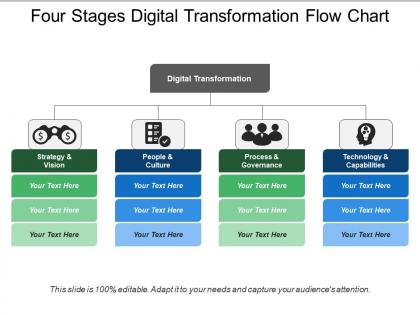
Four stages digital transformation flow chart




Try Before you Buy Download Free Sample Product
 Impress Your
 Audience
 100%
100% Editable
 Save Hours
 of Time


Plant the seeds with our Four Stages Digital Transformation Flow Chart. Your team will grow with your thoughts.
People who downloaded this PowerPoint presentation also viewed the following :
Four stages digital transformation flow chart with all 5 slides:
Develop a cohesive group with our Four Stages Digital Transformation Flow Chart. They will display excellent collaboration.

FAQs for Four stages digital
Honestly, it's mostly about what customers want now - they expect everything to work like Amazon, you know? Competition's brutal too. Some scrappy startup is probably building something right now that'll eat your lunch if you're not careful. But here's the thing - companies actually save money through automation and make better decisions with data. COVID basically fast-forwarded everything by years, which was wild. I'd say start by looking at your customer journey first. Find where people get frustrated - that's usually where you'll see the biggest wins from going digital.
So basically, companies need to be where their customers already hang out - which is pretty much glued to their phones expecting everything instantly. Look at how banks now let you do literally anything through their apps that you used to have to go to a branch for. Same with healthcare - telemedicine is huge now. Even my local coffee place remembers my order through their app (okay, maybe I go there too much). The trick is using customer data to personalize stuff and automate the tedious parts. That way your team can actually build relationships instead of doing busy work. I'd start by figuring out where customers get most frustrated in your process.
Think of data analytics as your GPS during digital transformation - without it, you're basically driving blind. Track user behavior and process efficiency so you can catch problems early. I've watched way too many companies transform first, then wonder why everything still sucks. Set up dashboards from day one. Pick maybe 3-5 metrics that actually matter to your goals and watch them like a hawk. Gut feelings don't cut it when you're spending serious money on changes. The data will tell you what's working and what isn't.
Oh totally! Netflix is the classic one - went from mailing DVDs to streaming to making their own shows. Amazon started just selling books online and now they're basically everywhere, plus all that cloud stuff. Microsoft had to completely change how they think about software, moving from one-time purchases to monthly subscriptions with Office 365. But honestly? Domino's might be the coolest example because they turned pizza ordering into this whole digital experience with tracking and apps. The thing is, none of these companies just slapped on some digital features and called it a day. They actually rethought everything from the ground up.
Honestly, the worst part is dealing with people who just don't want things to change - and I get it, learning new systems sucks. Leadership never seems to have a real plan either, which makes everything harder. Budget's always tight, your team doesn't have the right skills yet, and don't even get me started on trying to make new stuff work with ancient legacy systems. Oh, and suddenly everyone's freaking out about data security. My advice? Start super small with pilot projects. Get some quick wins first so people actually see it working, then you can push for the bigger changes once you've got proof.
Honestly, psychological safety is everything here - nobody's gonna take risks if they're terrified of screwing up. Celebrate the smart failures, not just wins. Google gives people 20% time to mess around with random ideas, and look how that worked out for them. Be curious yourself and actually admit when you're clueless about something. When someone brings you a wild idea, don't immediately shut it down (we've all been there). Listen first. Start small though - find one low-stakes pilot where you can't really lose much but might learn something cool.
Cloud infrastructure should be your starting point - everything builds on that. You're gonna need solid data analytics and AI tools to actually make sense of all the info flowing through. APIs are what connect everything (seriously wish someone told me this earlier lol). Automation platforms are a lifesaver for cutting down on boring repetitive stuff. Cybersecurity can't be an afterthought when you're digitizing processes. Oh, and audit what you've got first! I bet there's useful software just collecting dust that nobody remembers buying.
Honestly? Big companies are stuck with ancient systems and endless red tape while you can pivot super fast. Cloud tools, automation, better customer experience - you can implement all that basically overnight. Social media and online selling actually favor smaller businesses sometimes (I've seen tiny shops crush corporate competitors online). Pick one thing first though - maybe customer management or your online store. Get that down solid, then branch out. The key is those direct customer insights and smoother operations. You're way more nimble than they'll ever be.
You need both business and tech metrics - don't just pick one side. Customer satisfaction scores are huge, plus revenue from your digital stuff and how much faster things actually get done. Tech-wise, track uptime, whether people are using the new tools (spoiler: they probably hate them at first), and how quickly you can ship products. But honestly? Skip the metrics that just make executives feel good. Pick maybe 5-7 that actually matter to what you're trying to accomplish. Check them monthly, not every damn day. I've seen too many teams get buried in dashboards instead of actually improving anything.
Look, digital transformation basically flips your whole supply chain game. Instead of drowning in spreadsheets, you get real-time tracking with IoT sensors and AI that actually predicts when demand's gonna spike. The data visibility is honestly insane compared to the old guessing games. Blockchain keeps everything transparent from suppliers to customers too. Manual errors drop way down since workflows get automated - we're talking decisions that used to take weeks now happen in days. I'd start by figuring out your biggest headaches first, then see which tools could fix those fastest.
Honestly, start with data privacy - how you're collecting and storing customer info matters way more than people realize. Job displacement is tricky too. Be upfront with your team about what automation actually means for their roles instead of dancing around it. Algorithmic bias can really screw you over, especially in hiring decisions. Also think about the digital divide - some folks just don't have the same tech access, so you might accidentally lock them out. Build these conversations into your planning from the start. Don't just slap ethics on at the end.
Security can't be an afterthought - build it in from the start. Zero-trust is your friend here, verify everything and encrypt data coming and going. Strong access controls are non-negotiable too. Oh and privacy by design! Don't be like those companies that rush the tech part then panic about security later (such a mess). Regular audits will save your butt. Train your team as you roll things out - they need to know the new protocols. Honestly, fixing security gaps after the fact costs way more than doing it right initially.
Oh man, healthcare's the worst - they're drowning in ancient systems and compliance nightmares. Plus most doctors hate change anyway lol. Manufacturing's pretty brutal too since replacing equipment costs a fortune and downtime = instant money hemorrhage. Government... well, that's obvious. Takes them like 3 years just to buy pencils. The thing is, all these industries are terrified of risk. They'd rather stick with something crappy that works than gamble on upgrades. Super frustrating but honestly? Skip the fancy demos and just hammer home the ROI numbers. That's what actually moves them.
Oh dude, you absolutely can't skip workforce training - I made that mistake once and it was a disaster. Start by figuring out where your biggest skill gaps are first. Don't just do some one-off workshop either, that's pretty useless tbh. Set up ongoing learning programs instead. Your people need the technical stuff for whatever platforms you're rolling out, plus general digital skills so they won't be lost when things change again (which they will). Train everyone too, not just the frontline folks. Otherwise you'll have new software sitting there while everyone stares at it confused.
Honestly, going digital is one of the best moves for sustainability. You can track energy use with IoT sensors, optimize supply chains with AI, and ditch tons of physical infrastructure by moving to the cloud. Remote work alone cuts your carbon footprint like crazy. The analytics are eye-opening too - you'll spot waste you never noticed before. I'd start small though, maybe digitize whatever process eats up the most paper or resources. The cost savings hit pretty fast, and the environmental stuff follows right behind. Win-win situation.
-
Topic best represented with attractive design.
-
Very unique and reliable designs.