Vendor governance model sample presentation ppt

Rating:
90%
Vendor governance model sample presentation ppt
Slide 1 of 7
Favourites Favourites

Try Before you Buy Download Free Sample Product

Audience Impress Your
Audience
Editable 100%
Editable
Time Save Hours
of Time
The Biggest Sale is ending soon in
0
0
:
0
0
:
0
0
AI-Ready
Upload this template to AI and ask it to make any changes to content or color
100% editable Powerpoint Template for AI-assisted presentations. Finish your work in less time. Download Prompt Kit ​
Works with
Microsoft PowerPoint
Microsoft 365
Claude for PowerPoint
ChatGPT
Google Slides
Microsoft Copilot
Rating:
90%
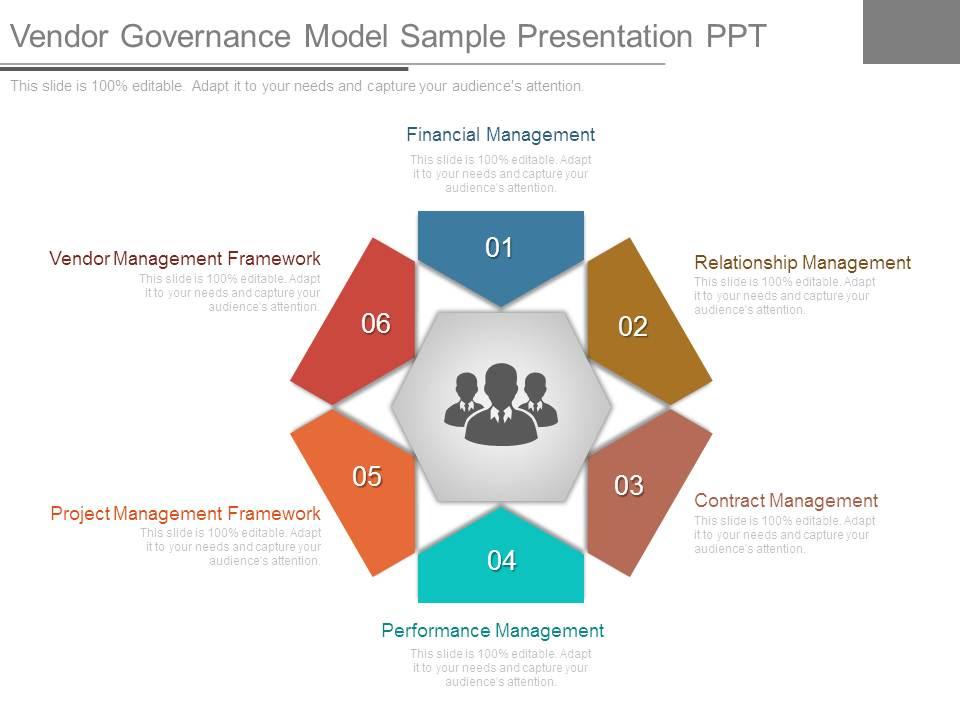
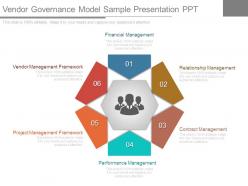
Presenting vendor governance model sample presentation ppt. This is a vendor governance model sample presentation ppt. This is a six stage process. The stages in this process are financial management, relationship management, contract management, performance management, project management framework, vendor management framework.

FAQs for Vendor governance model

You've got four key things to nail down: clear roles, solid risk assessment, regular check-ins, and tight contracts. Honestly, the roles thing trips up most companies - everyone thinks someone else is handling vendor oversight. Do your risk assessments upfront covering financial, operational, and compliance stuff, then keep doing them. Set up consistent performance reviews with real KPIs and escalation plans. Contract-wise, you want proper SLAs, termination clauses, and data protection covered. Oh, and start by mapping who currently does what with vendors - you'll spot the gaps fast. Trust me on that last part.

So vendor governance is basically setting up a system to keep tabs on all your third-party partners. You'll monitor their performance, make sure they're hitting contract terms, and stay on top of compliance stuff. Think of it like a control center for vendor relationships - way better than crossing your fingers and hoping nothing goes wrong. Regular audits catch problems early, plus you get clear escalation paths when things get messy (and they will). My advice? Set up different oversight levels based on how critical each vendor is. Trust me, it beats scrambling when audit season rolls around.

Honestly, you'll go crazy trying to manage vendors without decent tech. Get a vendor management platform - it puts all your contracts, metrics, and compliance stuff in one spot instead of digging through random spreadsheets. Automated workflows are clutch for tracking renewals and catching issues early. Real-time dashboards show you exactly how vendors are performing and where your money's going. Oh, and set up a vendor portal so everyone can actually see the same info instead of playing telephone. Trust me, once you have dozens of vendors, this stuff saves your sanity.

Pick 3-5 solid KPIs that actually matter for your business goals first - delivery times, quality stuff, costs, that kind of thing. Don't skip measuring your baseline though! I've watched companies mess this up and their data becomes useless later. Monthly or quarterly scorecards help you stay on top of everything. Set up those quarterly reviews too - way better to catch problems early than scramble later. Honestly, half the metrics most places track are just busy work. Focus on what moves the needle for your actual outcomes and build from there once you've got the basics down.

Honestly, just document everything right from the start - I can't stress this enough. Get those regular check-ins scheduled with vendors and make sure your contracts are super detailed about what you expect. Shared dashboards work great so you can both see how things are tracking. I've watched so many vendor situations blow up because people didn't clarify the basics upfront, which is just painful to see. Set up standard reporting requirements too, plus clear escalation steps for when stuff goes wrong. Monthly reviews are your friend here. Oh, and definitely get any verbal agreements you've got floating around written down properly.

Review it annually at minimum, but honestly that's bare bones stuff. Big changes should trigger immediate reviews - new regulations, major business pivots, vendor screwups, whatever. Most companies I know do quarterly check-ins since it catches issues early without becoming a total time suck. Stick to outdated models and you'll regret it when your risk tolerance has completely shifted. Oh and actually put it on your calendar now - treat it like any other must-do business review or it'll never happen.

Oh man, the resistance is real - teams hate when you mess with their vendor relationships. They've got their own systems and don't want more oversight (obviously). Each department does things totally differently too, which is a nightmare. Getting people to actually use whatever new process you roll out? Good luck with that. Plus most companies totally underestimate how much time and people this stuff actually needs. Oh, and forget about having consistent metrics across the board. Honestly though, just pick your riskiest vendors first, get some wins there, then slowly expand. Way easier than trying to boil the ocean.

Look, good vendor governance basically saves you from looking like an idiot when your boss asks random questions about spending. You get clear visibility into who's actually performing, what everything costs, and where the real risks are hiding. Makes it way easier to spot consolidation opportunities or know when to dump a vendor that's not cutting it. Regular check-ins with standardized metrics are clutch here - you're making calls based on real data instead of just whoever called you last week. Honestly, it beats the hell out of frantically digging through messy spreadsheets during budget meetings.

Honestly, aligning vendor governance with your business goals is a game changer. Instead of vendors just doing their thing, they actually start acting like they care about your success. You'll see better performance across the board - risk management improves, they come to you with ideas that actually help. The whole renewal process becomes way less painful too since everyone knows what good looks like. I learned this the hard way after dealing with vendors who seemed completely disconnected from what we were trying to achieve. Start by figuring out which business goals map to specific vendor metrics.

Ok so basically you'll want to tier your vendors by risk level and how critical they are to your business. High-risk ones? Keep them on a tight leash with detailed contracts and regular check-ins. Lower-risk vendors can have more freedom as long as they hit their targets. Here's the thing though - don't micromanage the "how" part or you'll drive yourself crazy. Set clear boundaries upfront, then let them figure out their process within those limits. Quarterly reviews work well for adjusting things based on how they're actually performing. I'd start by just categorizing what you have now into different risk buckets, then build your oversight approach from there. Way easier than trying to treat everyone the same.

Honestly, I'd focus on the stuff that actually moves the needle. SLA compliance and cost savings are obvious ones. Contract renewals tell you a lot too - if vendors keep bailing, something's wrong. Track risk incidents because those'll bite you when you least expect it. Performance scores are solid, plus how happy your internal teams are with the whole vendor process. Oh, and onboarding speed matters more than people think. Don't go crazy though - pick maybe 5-7 metrics that align with what your business cares about. Monthly reviews work well for staying on top of things without overdoing it.

Getting different people involved in vendor stuff makes such a huge difference. You want IT, finance, legal - whoever actually deals with these vendors day-to-day. Each person spots different red flags and brings their own expertise. Honestly, vendors can't get away with as much BS when multiple eyes are on them. Your contracts end up better, you catch problems faster, and performance actually improves. I'd start by figuring out who's really affected by each vendor relationship - sometimes it's not obvious at first. Then just get them in on the regular check-ins.

Yeah, cultural stuff can totally wreck your vendor relationships if you don't think about it upfront. Like, some cultures are super hierarchical while others are more collaborative - affects everything from who makes decisions to how people communicate. I've seen companies try the same governance approach everywhere and it just doesn't work. Your escalation processes need to flex based on whether you're dealing with direct communicators or people who are more indirect. Honestly, it's way easier to bake this awareness into your model from the start than scramble to fix things later when everything's already awkward.

Honestly, good communication with vendors is a game-changer - it stops problems before they even happen. Set up monthly check-ins and make sure everyone's using the same reporting format. That way there's no confusion about expectations or deadlines. You'll want clear escalation paths too, so your vendor knows exactly who to call when stuff hits the fan. I learned this the hard way on a project last year. Be proactive about it rather than scrambling to fix communication breakdowns later. Trust me, having that shared understanding of success metrics upfront saves you so many headaches down the road.

Look, there are three big things you can't ignore: contracts, liability, and compliance stuff. Your vendor agreements need rock-solid terms about who does what, how they handle data, and what happens if things go south. Insurance and indemnification are absolutely critical - trust me on this one. Then there's all the regulatory headaches like GDPR or HIPAA depending on your field. Most people totally blow it during contract negotiations though. Get a lawyer to review the important agreements upfront. Way cheaper than dealing with a nightmare later when something breaks.

Ratings and Reviews

90% of 100
Review Form
Write a review
Most Relevant Reviews
  1. 80%

    by Curtis Herrera

    Out of the box and creative design.
  2. 100%

    by Cyrus Ellis

    Very well designed and informative templates.

2 Item(s)

per page: