

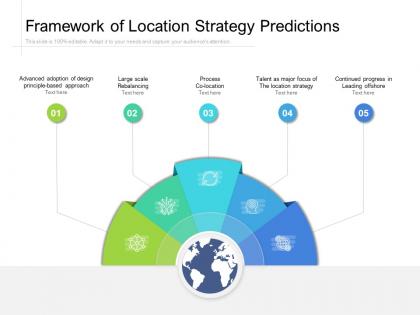
Framework of location strategy predictions




Try Before you Buy Download Free Sample Product
 Impress Your
 Audience
 100%
100% Editable
 Save Hours
 of Time


Solve the puzzle with our Framework Of Location Strategy Predictions. They will bring all the pieces together.
People who downloaded this PowerPoint presentation also viewed the following :
Framework of location strategy predictions with all 2 slides:
Hit the bullseye with our Framework Of Location Strategy Predictions. Your ideas will score maximum points.
FAQs for Framework of
Honestly, start with who your customers are and how close they'll be. Check out the competition - too much is bad, but zero competition might mean no demand. Foot traffic and parking are huge, obviously. Don't let rent eat your whole budget even if the spot seems perfect (learned that one the hard way). Look into local rules and regulations before you fall in love with a place. Future construction plans matter too - could make or break you down the line. Make a simple scoring sheet for your top spots instead of just winging it. Way better than choosing based on feelings alone.
So demographic analysis is basically figuring out if your ideal customers actually live around your potential location. Look at stuff like age, income, family size - does it match who you're trying to reach? Census data and local market reports are your best friend here. Like, you wouldn't open a daycare in a retirement community, obviously. Check if the area's growing or dying too - I learned that one the hard way with a friend's business. Income levels matter way more than people think. Short version: make sure there are enough of the right people with enough money before you sign any lease.
Honestly, transportation stuff can make or break your location choice. Bad infrastructure will eat your profits alive with crazy shipping costs. Good connections though? That opens up markets you'd never reach otherwise. I'd map out your main shipping routes first - then see which spots actually connect well to those networks. Roads, ports, rail, airports - whatever matters for your business. Companies pay extra for locations with better access all the time, and it's usually worth it. Don't get stuck somewhere that looks cheap but costs you more in the long run.
Dude, location planning is totally different now. Cloud computing and remote work mean you don't have to be glued to suppliers or customers anymore. Data analytics will show you where people actually are vs where you assume they are - that part's honestly pretty cool. Good internet is basically the new highway access. I'd probably start by figuring out what tech you actually need, then find spots that work with that instead of against it. Way more flexibility than the old days.
Honestly, it's all about trade-offs. Cities give you access to investors, talent pools, and customers right at your doorstep. But holy hell, the rent will destroy your budget and everyone's fighting for the same opportunities. Going rural? Way cheaper overhead and maybe less competition breathing down your neck. Finding good employees though - that's rough. Also make sure your internet doesn't suck if you're doing anything tech-related. The feedback loops in cities are just faster. You can meet partners for coffee instead of endless Zoom calls. Really comes down to your specific business and how much runway you've got.
Honestly, just think about where your customers actually hang out. Young professionals? Go urban - good transit, cool neighborhoods. Families want suburbs with parking (trust me on this one). B2B stuff works better near business districts. Really depends on how people want to shop too. Some folks are all about online ordering, others still want to walk in and touch everything. I'd map out where your ideal customers are first, then find spots that make it super easy for them to get to you. Location's everything.
Ugh, competition is such a pain but you gotta figure it out before picking a spot. Too many competitors and you'll be fighting for scraps - your marketing costs will be insane. But weirdly, some competition is actually good because it proves people want what you're selling. I'd map out who's already there and see if there's something they're missing that you could do better. The perfect scenario? Somewhere with decent demand but not totally crowded. Just don't go somewhere completely dead either - learned that the hard way with my cousin's coffee shop disaster.
So GIS is basically map software that stacks different data layers - demographics, where competitors are, traffic flow, all that stuff. You can spot patterns that'd be impossible to see in boring spreadsheets. Like you might find your customers all live in similar income brackets or notice certain intersections get crazy busy at specific times. Honestly the visual part makes such a difference. I'd mess around with Google My Maps first (it's free) or maybe QGIS if you want something more robust. No point dropping money on fancy enterprise tools until you know what you're actually looking for, you know?
Check climate risks first - floods, hurricanes, wildfires can wreck your operations and jack up insurance costs. Environmental regulations matter too, though stricter rules might actually protect you long-term. Renewable energy access is becoming massive for cutting costs and hitting sustainability targets. Your environmental impact on locals affects reputation and how regulators treat you - something people overlook way too often. Climate risks are honestly getting scarier every year, so I'd start by mapping those out for your top spots. Then work through the regulatory landscape from there.
Honestly, labor stuff is probably the biggest factor when you're picking a site. Think about it - if you're doing tech, you need to be where the developers actually are. Universities help, but established tech areas are gold. Manufacturing's different though, you just need reliable workers who can show up consistently. Cost matters too obviously. Sometimes you'll find cheaper labor but then realize nobody can even get to your location without a car. Public transit access is weirdly overlooked but super important. My advice? Figure out exactly what roles you need first, then scout areas where those people already live. Way easier than trying to recruit from scratch.
Dude, zoning laws will totally screw you over if you don't check them first. They control what businesses can go where - some spots are residential only, others do mixed-use, industrial has different rules. My buddy almost got burned signing a lease for manufacturing in a commercial zone... that would've been a nightmare. Also check if they're planning any zoning changes that could mess with you later. Get the current zoning rules in writing from the planning department - don't just trust what the landlord says.
Dude, culture is everything when you're picking a spot for your business. What crushes it in NYC might totally bomb in small-town Texas - people shop differently, have different values, work different hours. You've got to think about language, religious stuff, social norms, all that. Like my cousin opened this trendy coffee shop in a super traditional area and... yeah, that didn't go well. Consumer habits change completely depending where you are. Even how you hire people and run day-to-day operations needs to match what locals expect. Do your homework on the specific area first - it'll save you tons of headaches later.
Don't put everything in one spot - spread across different markets. Research local rules, how stable the economy is, plus infrastructure before you commit to anything. Make your lease flexible so you can pivot if things go sideways. Honestly, I'd start with small test locations first. Way too many businesses I know jumped into expensive prime spots and totally regretted it. Find local people who actually know the area - they'll save you from rookie mistakes. Test it out small, see what works, then expand from there once you've got proof it's worth it.
Honestly, you've got to look at way more than just what's happening right now. Check out demographic shifts and economic forecasts for the next decade. Infrastructure plans matter too - are they building new roads, expanding transit? I'd also dig into whether any big competitors are sniffing around the same spot. That info is pure gold, trust me. Labor market sustainability is huge, plus you want local policies that won't screw you over long-term. Build out some best/worst case scenarios so you're not flying blind. Oh, and set up quarterly check-ins to see how your predictions actually pan out.
Make a simple scoring system for the big stuff - demographics, competition, foot traffic, accessibility, costs. Sounds boring but trust me, it stops you from falling for some "amazing" spot that's actually terrible for parking or whatever. Hit up potential locations at different times, not just when the broker shows you around. Chat with other business owners nearby, they'll give you the real tea. Oh and bring your team along for visits - they always spot things I totally miss. Take tons of photos too because honestly all these places start blending together after a while.
No Reviews