


Frozen Foods Detailed Industry Report Part 1 Powerpoint Presentation Slides




Try Before you Buy Download Free Sample Product
 Impress Your
 Audience
 100%
100% Editable
 Save Hours
 of Time


Gain valuable insights into the thriving frozen food industry with our comprehensive Frozen Foods- Detailed Industry Report template. This expertly crafted presentation provides a detailed overview of the global frozen food industry, including statistics, market size in European countries, and market segmentation. Delve into the market share, drivers, challenges, and future growth opportunities of the industry, and gain a deep understanding of key players such as Nomad, ConAgra, General Mills, Bakkavor, and Greencore Group with their 5-year financial summaries. Explore Porters 5 forces model, SWOT analysis, consumer behavior towards frozen food, go-to-market strategies, and customer demographic-based market strategies. The report also covers promotional activities to attract consumers, pricing and growth strategies, business models, and risk mitigation strategies. Whether you are a market researcher, industry professional, or business owner, this industry report is an invaluable resource. Download the Frozen Foods- Detailed Industry Report template now and stay ahead in the rapidly growing ready-to-eat food market.
People who downloaded this PowerPoint presentation also viewed the following :
Content of this Powerpoint Presentation
Slide 1: This slide introduces Frozen Foods Detailed Industry Report. State your company name and begin.
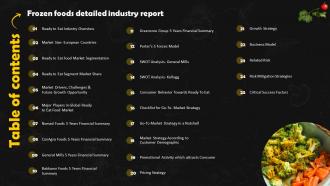
Slide 2: This slide shows Table of Content for the presentation.
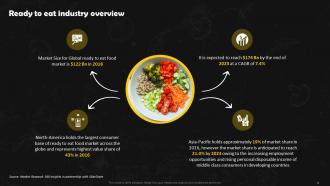
Slide 3: This slide displays Ready to eat industry overview.
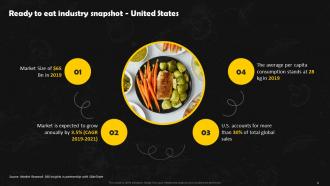
Slide 4: This slide presents Ready to eat industry snapshot - United States.
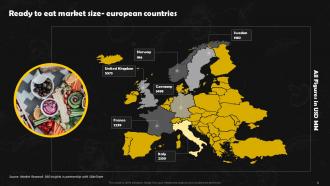
Slide 5: This slide represents Ready to eat market size- european countries.
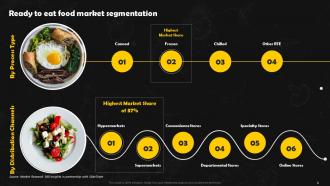
Slide 6: This slide showcases Ready to eat food market segmentation.
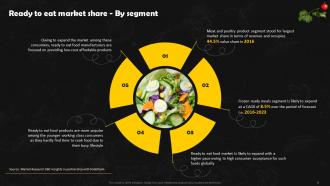
Slide 7: This slide shows Ready to eat market share - By segment.
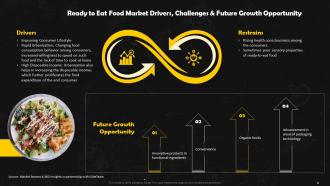
Slide 8: This slide presents Ready to Eat Food Market Drivers, Challenges & Future Growth Opportunity.
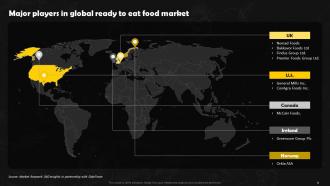
Slide 9: This slide presents Major players in global ready to eat food market.
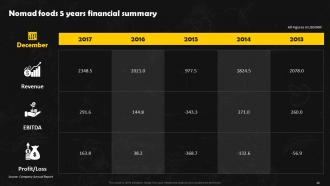
Slide 10: This slide displays Nomad foods 5 years financial summary.
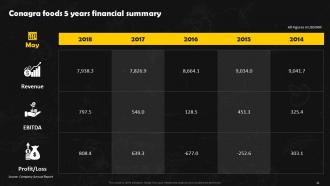
Slide 11: This slide represents Conagra foods 5 years financial summary.
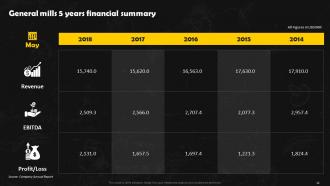
Slide 12: This slide showcases General mills 5 years financial summary.
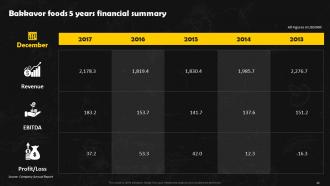
Slide 13: This slide shows Bakkavor foods 5 years financial summary.
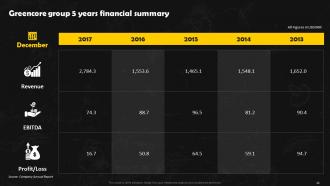
Slide 14: This slide presents Greencore group 5 years financial summary.
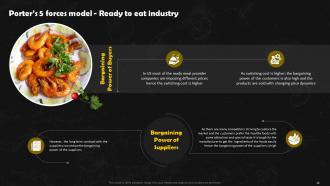
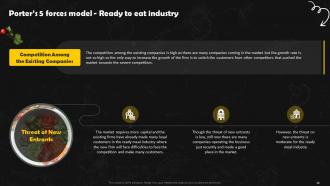
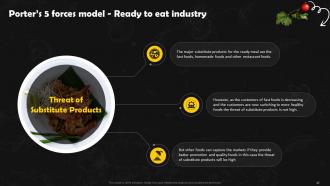
Slide 15: This slide displays Porter’s 5 forces model - Ready to eat industry.
Slide 16: This slide represents Porter’s 5 forces model - Ready to eat industry.
Slide 17: This slide showcases Porter’s 5 forces model - Ready to eat industry.
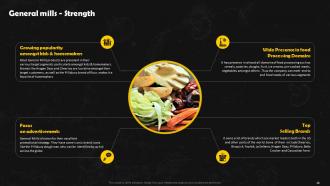
Slide 18: This slide shows Wide Presence in food Processing Domains.
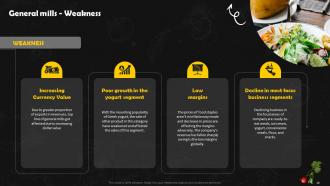
Slide 19: This slide shows Weakness of General mills.
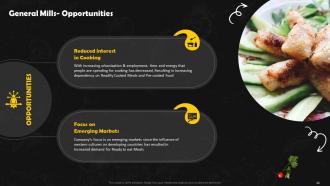
Slide 20: This slide shows Opportunities of General mills.
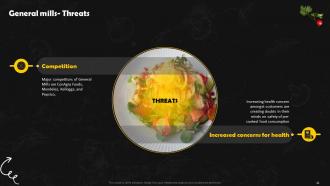
Slide 21: This slide shows Threats of General mills.
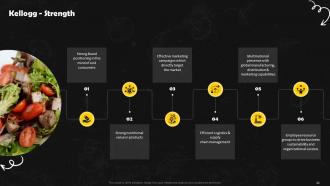
Slide 22: This slide shows Strength of Kellogg.
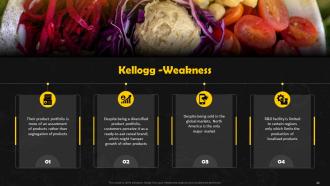
Slide 23: This slide shows Weakness of Kellogg.
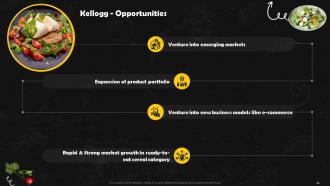
Slide 24: This slide shows Opportunities of Kellogg.
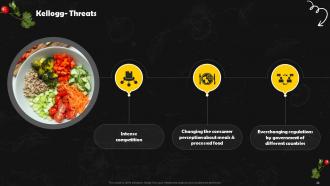
Slide 25: This slide shows Threats of Kellogg.
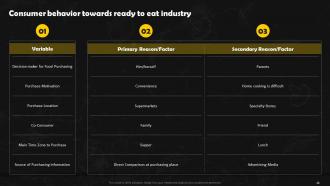
Slide 26: This slide presents Consumer behavior towards ready to eat industry.
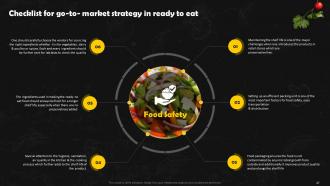
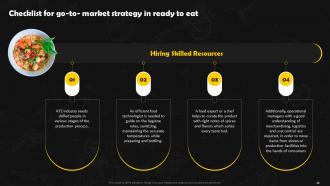
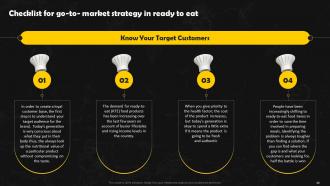
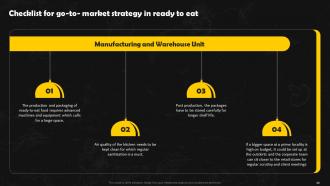
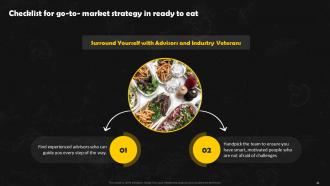
Slide 27: This slide displays Checklist for go-to- market strategy in ready to eat.
Slide 28: This slide represents Checklist for go-to- market strategy in ready to eat.
Slide 29: This slide showcases Checklist for go-to- market strategy in ready to eat.
Slide 30: This slide shows Checklist for go-to- market strategy in ready to eat.
Slide 31: This slide presents Checklist for go-to- market strategy in ready to eat.
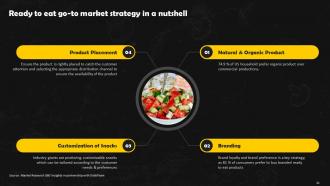
Slide 32: This slide displays Ready to eat go-to market strategy in a nutshell.
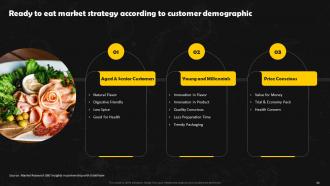
Slide 33: This slide represents Ready to eat market strategy according to customer demographic.
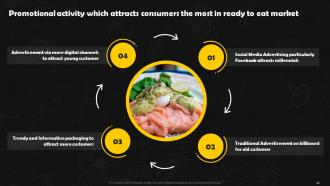
Slide 34: This slide showcases Promotional activity which attracts consumers the most in ready to eat market.
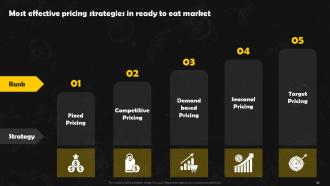
Slide 35: This slide shows Most effective pricing strategies in ready to eat market.
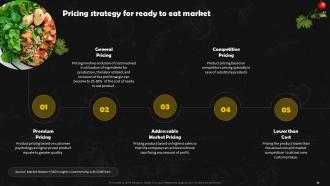
Slide 36: This slide presents Pricing strategy for ready to eat market.
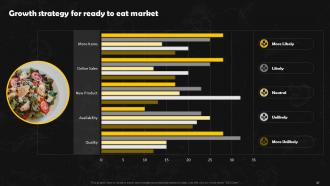
Slide 37: This slide displays Growth strategy for ready to eat market.
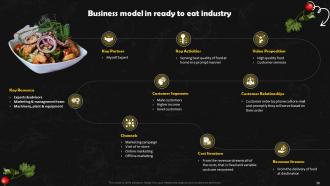
Slide 38: This slide represents Business model in ready to eat industry.
Slide 39: This slide showcases Risk & Risk Mitigation.
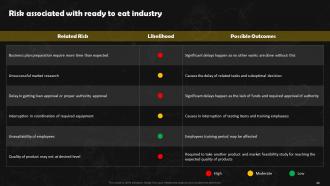
Slide 40: This slide showcases Risk associated with ready to eat industry.
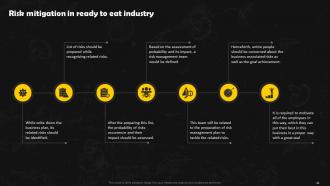
Slide 41: This slide shows Risk mitigation in ready to eat industry.
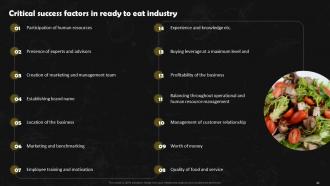
Slide 42: This slide presents Critical success factors in ready to eat industry.
Frozen Foods Detailed Industry Report Part 1 Powerpoint Presentation Slides with all 47 slides:
Use our Frozen Foods Detailed Industry Report Part 1 Powerpoint Presentation Slides to effectively help you save your valuable time. They are readymade to fit into any presentation structure.






FAQs for Frozen Foods Detailed Industry Report Part 1
Honestly, it's all about convenience meeting health right now. People want quick meals but they're not willing to eat garbage anymore. Plant-based frozen stuff is exploding, plus all those single-serve portions and international flavors. Premium brands are killing it because frozen food finally shed that cheap reputation - took long enough! COVID definitely helped since everyone started stocking up instead of seeing it as last resort food. Clean ingredients and authentic flavors are where the money is. I'd watch brands focusing on that combo if you're thinking about investing or whatever.
Dude, plant-based frozen stuff is totally changing how people shop. Even my meat-loving dad grabbed some veggie burgers last week - wild! The quality's gotten insane, some taste better than the real thing honestly. Shoppers don't mind paying more for cleaner ingredients now. It's not just the vegan crowd anymore either. Regular families are buying plant-based pizzas and ice cream because they're actually good. You'll see freezer sections getting bigger for this stuff. Retailers know it's not going anywhere - though my grocery store still puts the fake meat next to like, frozen peas for some reason.
Okay so tech is huge for frozen food quality - literally makes or breaks everything. Flash-freezing locks in way more nutrients than the old methods. IQF prevents those gross ice crystals that destroy texture (hate when that happens). Smart packaging uses modified atmospheres to keep stuff fresh longer. The monitoring systems are actually pretty neat - sensors track temps through the whole supply chain. You'll know exactly what went wrong if something does. When you're checking out suppliers, ask about their freezing tech and how they monitor the cold chain. Trust me on this one.
Yeah, frozen foods are getting hammered right now. Transportation costs are insane - especially the refrigerated trucks. Your suppliers are probably dealing with way longer lead times and having to jack up prices because of all the logistics headaches. Port congestion is still messing things up, plus distribution centers can't find enough workers. Cold chain shipping is already complicated on a good day, so when something goes wrong it just cascades everywhere. Honestly? I'd start ordering way earlier than usual and maybe find some backup suppliers if you can. Buffer time is your friend right now - learned that one the hard way.
Biggest issue is all that energy for freezing and keeping stuff cold during transport - refrigerated trucks are gas guzzlers. The plastic packaging sucks but honestly it does prevent food waste, so there's that. Here's something wild though - frozen veggies can actually be better for the planet than fresh ones shipped from far away since they're processed right after harvest. No crazy long-distance shipping. When you're looking at suppliers, definitely ask about renewable energy use and whether they're cutting back on packaging. Cold chain logistics are just brutal for emissions.
Oh totally - winter is when frozen food sales go crazy. People are home more, making hearty meals, stocking up when it's nasty outside. Northern states see the biggest bump obviously, while places like Florida stay pretty steady. Summer's weird though - everything drops except ice cream and frozen fruit (smoothie season I guess). But honestly? Those holiday months from November to January are make-or-break time. That's when you want your inventory stocked and marketing cranked up. Spring and summer you can ease off unless you're pushing frozen treats.
Frozen food is all about convenience now. People literally just want to heat something up and eat - no prep, no thinking. The pandemic made everyone lazy about cooking (myself included honestly). Bowl meals are huge right now, plus those family skillet things and breakfast stuff. Basically anything that solves "what's for dinner" in under 10 minutes is killing it. Companies are getting smarter too - they're making restaurant-quality options and ethnic foods that would normally take forever to make. Who's got time for that anymore? If you're thinking about this market, focus on the dump-and-go solutions.
So there's some cool stuff happening with frozen food packaging right now. Smart indicators that change color if something accidentally thaws - which honestly should've been invented years ago. Lots of companies are switching to plant-based films instead of plastic, and resealable pouches are finally becoming standard. Thank god, because I'm so tired of freezer-burned vegetables from ripped bags. You can also get microwaveable packaging that goes straight from freezer to table now. Some brands are even doing QR codes for cooking tips, though that feels a bit extra to me. If you're buying for business, definitely ask about their sustainability plans since stores are really pushing the eco-friendly angle these days.
Stop trying to compete on price - that's a losing game. Find actual problems to solve, like "ready in 90 seconds" or restaurant-quality stuff people can make at home. Premium ingredients and clean labels work too. The healthy frozen space is still a total mess, which is good news for you. Packaging matters way more than you'd think since people decide in like 3 seconds in that freezer aisle. Maybe partner with trendy local restaurants for co-branded items? Or go super niche - keto, plant-based, specific ethnic foods. Pick one underserved segment and completely dominate it first.
Clean label stuff is huge right now - people actually read ingredient lists and want things they can pronounce. Plant-based frozen foods are everywhere, especially with Gen Z who care about the environment. Everyone's obsessed with protein too, so brands are cramming it into frozen veggies and meals. Lower sodium and organic options sell like crazy. The whole "frozen food is junk" thing? Pretty much over. Oh, and keto-friendly products are still doing well if you're into that. Bottom line: be transparent about what's in your products and don't be shy about calling out the good stuff like added fiber.
So basically, frozen food brands are going crazy with international flavors right now. Korean corn dogs, Japanese karaage, all that stuff is hitting regular grocery stores because people want authentic flavors without the hassle. Supply chains make it easier to get weird ingredients globally, though shipping's still expensive as hell. There's this whole "glocalization" thing happening - brands take global flavors but tweak them for American palates. Honestly, it's pretty smart. Pro tip: watch what's blowing up in food cities like Tokyo or Mumbai. Those flavors usually show up in our freezer sections within a year or so.
Frozen food's having a moment thanks to e-commerce solving that whole cold chain nightmare. You can literally order Ben & Jerry's at midnight now and it shows up still frozen - wild, right? The pandemic definitely pushed this forward when we all got obsessed with cooking at home (or pretending to). Brands don't have to beg grocery stores for freezer space anymore either. They're going straight to customers, which honestly makes way more sense. If you're thinking about this space, focus on getting your direct-to-consumer game tight and find delivery partners who won't turn your ice cream into soup.
So stores are basically going all-in on frozen stuff now. They're putting freezers in prime real estate spots instead of hiding them in back corners. More aisle space, fancier premium sections, the whole deal. Some places even do frozen food samples which feels super random but I guess people are into it? Single-serve meals are huge since everyone wants convenience. Oh, and they're teaming up with meal kit companies too. If you're doing layouts, definitely make freezer sections visible and group by meal type rather than brand - way easier to shop that way.
Ugh, labeling and temperature stuff will drive you crazy - every region wants something different. EU is obsessed with allergen disclosure and nutritional labels. US cares more about HACCP and FDA registration. Asia's a nightmare honestly, each country has its own import rules and some make you do local inspections. At least temperature documentation is pretty standard everywhere, so there's that. Seriously though, figure out the rules for wherever you're selling before you do anything else. Trying to fix compliance issues later? Total money pit. Oh and mapping this out early saved my cousin's company like $50k last year.
Dude, frozen food totally had a glow-up during COVID. People were hoarding groceries and actually discovered frozen veggies don't suck - who knew? That whole "fresh or nothing" attitude basically died when everyone realized frozen stuff lasts forever and tastes fine. Now shoppers think buying frozen makes them smart planners instead of lazy. It's wild how the perception flipped from "desperate times" to "I'm being strategic." If you're selling this stuff, play up that angle. Nobody wants to feel lazy but everyone wants to feel prepared, you know?
-
Fantastic collection. Loved how we can personalize these templates as per the requirements.
-
I had them make a presentation for an office retirement party. They were very helpful in understanding what we wanted and delivered the perfect presentation. Highly recommended!